

The high-stakes political investigations inside the United States Department of Justice suffered an unexpected leadership setback on Thursday afternoon when veteran prosecutor Joe DiGenova abruptly tendered his resignation. DiGenova, who had been handpicked by Attorney General Todd Blanche to helm a sweeping and politically sensitive "grand conspiracy" investigation aimed at high-ranking officials from both the Obama and Biden administrations, stepped down effective immediately.
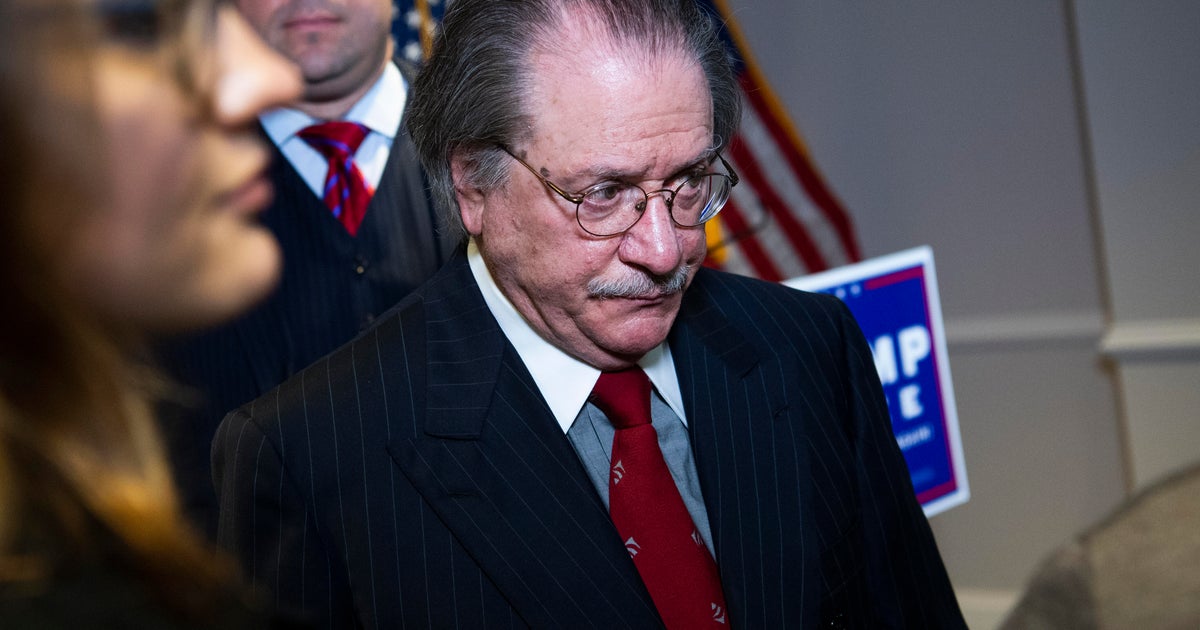
In a brief telephone conversation with journalists, DiGenova confirmed that he officially submitted his resignation letter to Attorney General Blanche at 3:00 p.m. Eastern Time. Reflecting briefly on his brief tenure at the helm of the probe, DiGenova stated that it had been an honor and a privilege to serve both the presidency and the Department of Justice. Furthermore, he noted that his wife and frequent legal collaborator, prominent attorney Victoria Toensing—who had joined him as part of the specialized federal prosecution team operating out of Fort Pierce, Florida—would similarly conclude her service, officially departing the agency on Friday.
DiGenova declined to elaborate on the precise motivations behind his sudden exit, leaving legal analysts and political observers to speculate on the internal dynamics driving the leadership vacuum. The Justice Department did not immediately issue a comprehensive statement addressing the departure, though inquiries from the media were pending as officials scrambled to assess the continuity of the sprawling probe. The sudden leadership shift casts immediate uncertainty over an inquiry that has already drawn intense scrutiny from Capitol Hill, civil liberties organizations, and legal scholars alike.
Background Context and the Origins of the Grand Conspiracy Probe
The investigation overseen by DiGenova represents one of the most polarizing legal initiatives undertaken by federal prosecutors in recent history. Commissioned under Attorney General Todd Blanche—whose appointment and confirmation philosophy sparked fierce debate regarding the traditional operational independence of the Justice Department from the executive branch—the probe was designed to look into alleged institutional overreach and conspiracies involving intelligence and law enforcement figures from prior administrations.
The mandate given to DiGenova and his specialized team in Fort Pierce focused on examining actions taken by officials during the Obama and Biden years, particularly concerning the origins and handling of high-profile counterintelligence investigations, foreign influence probes, and the alleged weaponization of federal agencies. Critics of the probe have consistently characterized it as a politically motivated retaliatory exercise designed to target political adversaries of the White House. Conversely, supporters of the investigation argue it is a necessary accountability measure to uncover alleged abuses of power and restore public trust in federal institutions.
The appointment of DiGenova, a well-known defense attorney and former U.S. Attorney for the District of Columbia with decades of experience in Washington legal circles, was viewed by many as a clear signal of the administration’s intent to pursue the matter aggressively. His decades-long career, which included prominent television commentary and defense work for high-profile figures, made him a lightning rod for controversy even before he assumed leadership of the Fort Pierce prosecution team.
Chronology of Events Leading to the Resurgence and Sudden Departure
To understand the weight of DiGenova’s departure, it is essential to trace the rapid sequence of events that brought the probe to this juncture:
Early Appointments and Team Assembly: Following the confirmation of Attorney General Todd Blanche, the Department of Justice established a dedicated prosecutorial task force based in Fort Pierce, Florida. This location was chosen to operate somewhat independently from Washington headquarters, mirroring structures used in prior high-profile special counsel investigations.
The Tapping of Joe DiGenova: Attorney General Blanche officially selected Joe DiGenova to lead the investigation. DiGenova quickly assembled a core group of legal professionals, including his wife and longtime law partner Victoria Toensing, to spearhead the day-to-day investigative work, witness interviews, and document reviews.
Escalation of Scrutiny: Over the subsequent months, the task force issued various subpoenas and information requests directed at former intelligence community leaders, Department of Justice officials, and White House aides from the previous two administrations. The probe drew sharp rebukes from Democratic lawmakers, who accused the department of abusing federal prosecutorial powers for partisan objectives.
The Thursday Resignation: At approximately 3:00 p.m., DiGenova formally delivered his resignation letter to Attorney General Blanche, ending his tenure abruptly without prior public warning or an explicit explanation for the exit.
Reactions and Official Responses from Legal and Political Sectors
The abrupt resignation sent immediate shockwaves through Washington, prompting swift reactions from legal experts, ethics watchdogs, and lawmakers on both sides of the aisle.
Legal scholars focused heavily on the institutional implications of the departure. Former federal prosecutors noted that the sudden loss of a lead supervisor in an investigation of this magnitude typically signals one of three scenarios: a profound disagreement over prosecutorial strategy or ethics within the department, personal or health-related considerations, or an impending structural reorganization directed from the upper echelons of Main Justice. Because DiGenova offered no detailed explanation, legal analysts cautioned against premature conclusions while emphasizing that the operational momentum of the Fort Pierce team will inevitably stall in the interim.
On Capitol Hill, reactions sharply divided along partisan lines. Republican defenders of the administration downplayed the resignation as a routine personnel transition within a complex investigative team, expressing confidence that Attorney General Blanche would quickly name a capable successor to maintain continuity. They reiterated their stance that the underlying investigation remains vital for ensuring transparency and uncovering past executive branch overreach.
In contrast, Democratic lawmakers and government oversight organizations seized upon the departure as further evidence of deep-seated dysfunction and political corruption within the Justice Department. Critics argued that the probe was structurally flawed from its inception and that DiGenova’s departure underscores the untenable nature of an investigation widely viewed as an instrument of political retribution. Several congressional committees signaled renewed intent to demand briefings from the Justice Department regarding the status of the investigation, the criteria used to select prosecutors, and the budget allocated to the Fort Pierce task force.
Broader Impact and Implications for the Justice Department
The departure of Joe DiGenova creates an immediate operational crisis for the Department of Justice’s grand conspiracy task force. Investigations of this scale require deep institutional knowledge, meticulous coordination among investigative agencies like the FBI, and a clear chain of command. With both DiGenova and Victoria Toensing exiting the department within a 24-hour window, the leadership void is total at the top of the Fort Pierce operation.
Attorney General Todd Blanche now faces mounting pressure to name a replacement who can command the respect of career prosecutors while navigating the treacherous political waters surrounding the probe. Any new supervisor will face immediate scrutiny from Congress, the federal judiciary, and the public regarding their independence, legal background, and commitment to objective fact-finding.
Furthermore, this development renews the national debate over the boundaries of executive authority and the traditional firewall separating the White House from prosecutorial decision-making. Observers note that Blanche’s previous public statements—asserting that an attorney general should not pledge absolute independence from the executive branch—have placed the department in a persistent state of tension with career civil servants and institutional traditionalists.
As the Department of Justice works to stabilize its leadership structure in Florida, the long-term viability of the grand conspiracy investigation remains uncertain. Whether the probe will accelerate under new leadership, be scaled back quietly, or face protracted legal challenges in federal court depends heavily on the next steps taken by Attorney General Blanche and the resilience of the investigative team left behind. For now, the legal community watches closely as one of the most controversial chapters in modern American jurisprudence enters an unpredictable new phase.

