
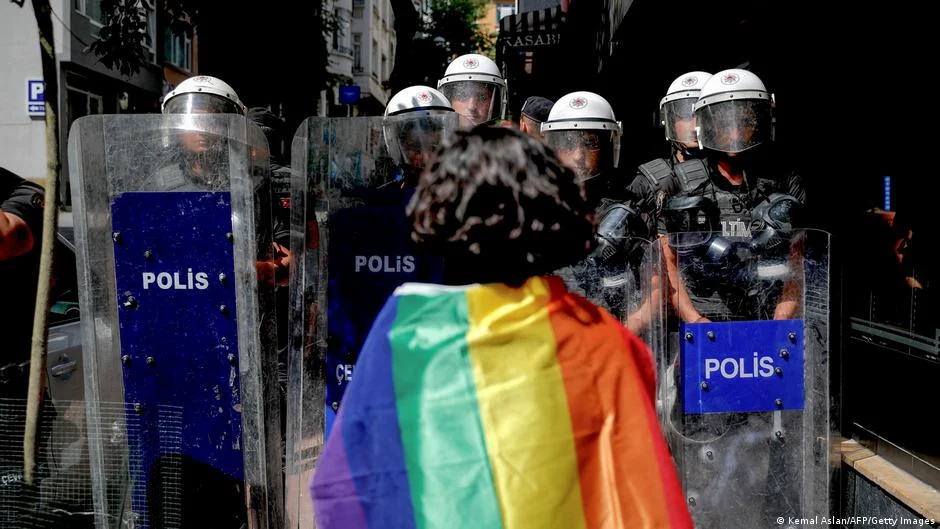
A wave of coordinated police raids across Turkey’s major urban centers, including Istanbul, Ankara, and Izmir, has resulted in the arrest of 162 individuals and the systematic silencing of over 100 digital media accounts. The weekend operation, described by Turkish authorities as a necessary measure for national security and public morality, has sent shockwaves through civil society and drawn sharp condemnation from the European Union, international human rights monitors, and a broad coalition of domestic advocacy groups.
The arrests represent a significant escalation in the government’s "Decade of Family and Population" initiative. Formally introduced by President Recep Tayyip Erdogan in May 2025, the policy was designed to reverse Turkey’s declining birthrate and reassert conservative, traditionalist values. However, critics argue that the initiative has morphed into a blunt instrument for suppressing political dissent and marginalizing non-conforming identities.
Chronology of the Escalation
The events of this past weekend did not occur in a vacuum; they represent the culmination of years of increasing friction between the state and progressive civil society.
- May 2025: President Erdogan announces the "Decade of Family and Population" strategy, citing economic and demographic stability as the justification for state intervention in social life.
- September 13, 2026: An Istanbul court issues a sweeping ruling authorizing the Bakirkoy Public Prosecutor’s Office to investigate and suspend accounts deemed to be spreading "obscene content and LGBTQ+ propaganda."
- September 26-27, 2026: Authorities initiate mass raids. By Sunday evening, 162 people are in custody. Simultaneously, 32 digital accounts are suspended.
- September 28, 2026: The number of blocked digital channels, including those belonging to prominent NGOs and media outlets, surpasses 100.
- September 29, 2026: Massive protest rallies take place in Istanbul. Joint declarations are issued by 120 women’s rights organizations and various legal advocacy groups, challenging the constitutionality of the arrests.
The Scope of Digital Censorship
The crackdown has extended far beyond the immediate detention of activists. By targeting the online infrastructure of civil society, the Turkish government has effectively limited the ability of organizations to coordinate, fundraise, or disseminate information. Among the high-profile entities whose digital presence has been restricted are Amnesty International Turkey, the left-leaning newspaper Evrensel, the "Academics for Peace" collective, and the Media and Law Studies Association (MLSA).
Legal experts note that the government is utilizing "national security" as a catch-all justification for these blocks. While homosexuality remains legal under the Turkish Penal Code, the government’s rhetorical pivot—referring to the community as a "perversion" or "foreign-funded threat"—serves to circumvent traditional legal protections, effectively criminalizing the identity without the need for formal legislative changes.
A Coalition of Resistance: Civil Society Responds
The backlash against these measures has been swift and diverse. On Tuesday, a coalition of 120 women’s rights organizations published a scathing joint declaration, framing the government’s actions as part of a broader authoritarian pivot.
"As women, we stand against the operations carried out in the name of ‘keeping the family safe,’" the statement read. "We know that the repression of our bodies, our lives, our identities, and our right to organize is part of the same authoritarian politics. Being LGBTQ+ is not a crime!"
Yildiz Taghizade of Women for Women’s Human Rights (WWHR) argues that the government’s narrative regarding the "protection of the family" is a strategic distraction. "The government is trying to justify its actions by invoking the protection of families, but this narrative doesn’t hold up," Taghizade stated. "When we look at the reality of Turkish households, the true factors of instability are poverty, the housing crisis, unemployment, and systemic violence against women. The operation is designed to prevent the LGBTQ+ community from engaging in politics or maintaining a presence in the public sphere."

Erkan Bas, chairman of the Workers’ Party of Turkey (TIP), echoed these sentiments, accusing the judiciary of being an arm of government suppression. "They would love nothing more than to enshrine the criminal offense of ‘being an opponent of the government’ into law," Bas remarked, calling for the immediate release of all detainees.
International and Professional Repercussions
The Turkish Medical Association (TTB) has formally condemned the raids as a fundamental violation of human rights. In a statement, the TTB argued that treating sexual orientation and gender identity as a criminal matter is a regressive step that undermines the medical ethics and individual rights protections that Turkey is obligated to uphold.
From Brussels, the European Union has expressed deep concern. Commission spokesperson Christian Wigand emphasized that Turkey, as an official EU accession candidate, is bound by international human rights standards. "Stigmatization and discrimination are contrary to the values of the union," Wigand stated, noting that the bloc expects Ankara to ensure respect for the dignity of all individuals, regardless of their gender identity or sexual orientation.
Emma Sinclair-Webb, the Turkey director at Human Rights Watch, characterized the arrests as a chilling preview of the state’s long-term strategy. According to Sinclair-Webb, the current administration is moving toward a model of "de facto" criminalization, where existing laws are interpreted so broadly that the mere act of association or public advocacy becomes grounds for police intervention.
Socio-Economic Context and Analytical Implications
The "Decade of Family and Population" strategy is framed against a backdrop of economic anxiety. Turkey has grappled with high inflation, a volatile currency, and a significant housing shortage for several years. Political analysts suggest that the government’s focus on "traditional values" serves two functions: it creates a convenient scapegoat for social anxieties, and it consolidates the support of the conservative electoral base during times of economic hardship.
However, the cost of this strategy is high. By targeting civil society, the government risks further isolating itself from international human rights benchmarks and discouraging the investment and intellectual exchange necessary for long-term economic stability.
The move also highlights a growing tension between the executive branch and the legal profession. When the state bypasses the legislative process to limit the freedom of assembly and speech through administrative court rulings, it weakens the institutional framework of the republic. As the legal challenges to the arrests begin to move through the courts, the case will serve as a bellwether for the future of democratic participation in Turkey.
For now, the LGBTQ+ community and its allies remain in a state of high alert. The "My family is safe" slogan, which once promised a vision of national prosperity, is now viewed by many as a warning of an encroaching surveillance state. With over 162 citizens now facing potential charges and the digital landscape increasingly fractured, the government’s next steps—whether to pursue formal prosecutions or to maintain the current state of intimidation—will determine the trajectory of Turkey’s social and political landscape for the remainder of the decade.
The situation remains fluid, with ongoing reports of further arrests and legal appeals pending in the Istanbul court system. Human rights monitors continue to document the proceedings, preparing for what many expect to be a prolonged legal and social confrontation between the state and those advocating for the protection of marginalized identities.

