
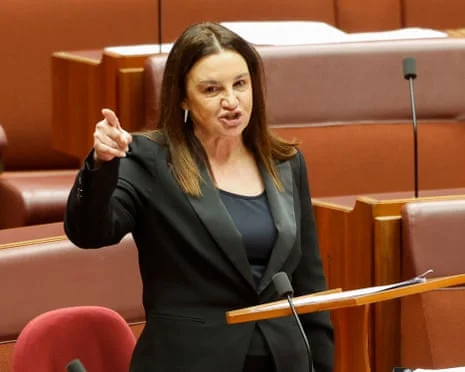
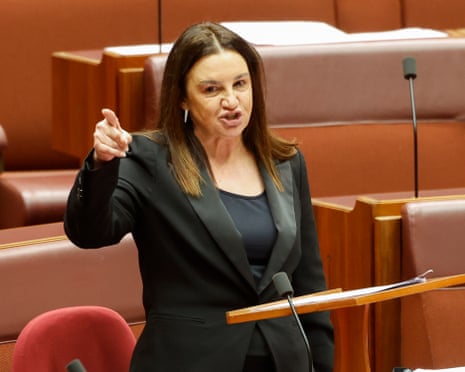
Senator Jacqui Lambie has launched a scathing and impassioned critique of One Nation leader Pauline Hanson, imploring the Australian electorate to reject what she termed the "dangerous and delusional" brand of populist politics gaining traction across the nation. Speaking during the Senate adjournment, the Tasmanian independent senator drew sharp parallels between Hanson and high-profile international populist figures, warning that working-class Australians ultimately bear the brunt of divisive political rhetoric.
The fiery parliamentary address follows a turbulent week in Australian politics, which has seen One Nation dominate the national conversation through a series of controversial campaigns, digital cartoon attacks targeting prominent political figures, and internal scrutiny regarding remote work arrangements. Lambie’s intervention highlights a growing anxiety among centrist and independent parliamentarians regarding the normalisation of polarizing tactics within domestic discourse, mirroring international trends seen across Western democracies over the past decade.
Anatomy of Populism: Lambie’s Senate Warning
Addressing the chamber during late-night proceedings, Lambie laid bare the mechanisms of what she described as the populist playbook. Her remarks were prompted by a torrent of online abuse she received after fiercely defending Liberal MP Andrew Hastie. Hastie had recently been branded a "traitor" in an animated cartoon series produced and distributed by One Nation as part of an aggressive digital media strategy.
"One Nation whips up the anger and they tell people who to blame. That’s the populist trick," Lambie told the Senate. "It’s a trick, Australia, and we’ve got to wake up to it. Because every time a populist leader, like Trump or Farage, get any power, the lives of working people don’t get better. They get worse."

Lambie did not mince words when connecting domestic right-wing populism to international geopolitical figures, specifically targeting former United States president Donald Trump and British political figure Nigel Farage. She singled out Hanson’s vocal support for Trump’s aggressive foreign policy posture—specifically referencing potential conflicts involving Iran—and questioned the wisdom of aligning Australian strategic interests with unpredictable foreign interventions.
"You’d put Australian soldiers back in another American forever war?" Lambie challenged, before declaring Hanson not only dangerous, but fundamentally delusional.
The Tasmanian senator argued that such leaders master the art of convincing ordinary citizens that they are champions of the working class, while ultimately serving their own self-interests. "Senator Hanson will be fine in her retirement, as will Nigel and Donald in theirs, because once again they are feathering their own nests," Lambie said. She urged voters to reject the temptation of fear-based politics, emphasizing that the nation’s political culture should be anchored in respect, pragmatic problem-solving, and cross-partisan cooperation.
Broader Political Flashpoints: Abortion Debates and Regional Rallies
Lambie’s parliamentary broadside forms part of a wider tapestry of intense political maneuvering involving One Nation and associated minor parties across Australia’s state and federal jurisdictions. Tensions escalated further in New South Wales, where the state leader of One Nation, Mike Newman, fronted a high-profile anti-abortion rally outside Sydney’s Parliament House.
Newman appeared alongside representatives from various fringe political organizations ahead of an anticipated upper house vote on a private member’s bill introduced by Libertarian member John Ruddick. The proposed legislation seeks to restrict late-term and what proponents label "sex-selective" abortions. During his address to the gathered crowd, Newman stumbled over his remarks while attempting to outline the party’s platform on reproductive rights, inadvertently declaring a desire to halt same-sex rights before correcting himself to focus on abortion restrictions.

The legislative push has deeply divided the NSW parliament, with debates adjourned from earlier winter sittings. Crossbench and major party sources indicate that the conscience vote on Ruddick’s bill is expected to be razor-thin, with several key crossbench members—such as Shooters, Farmers and Fishers MLC Robert Borsak—potentially absent. Senior parliamentary insiders suggest that without full attendance from conservative and rural crossbenchers, the numbers required to pass the bill may fall just short, mirroring the intense lobbying efforts seen in June when One Nation’s federal figurehead, Barnaby Joyce, publicly pressured National Party MPs to support similar restrictive measures.
National Security and Defense Commitments Under Scrutiny
Amidst the domestic political sparring, federal defense policy and international alliances also faced scrutiny in Canberra. Deputy Prime Minister and Minister for Defence Richard Marles addressed lingering questions regarding the AUKUS security pact, specifically responding to recent reports from the United Kingdom suggesting that the newly elected Labour government might delay the commencement of its next-generation nuclear-powered attack submarine construction program by two years, pushing the timeline to 2028.
Appearing on the Australian Broadcasting Corporation’s 7.30 program, Marles firmly rejected the notion that the British timeline adjustments represented a "red flag" for Australia’s strategic defense roadmap. He maintained that Australia’s tripartite arrangement with the UK and the United States remained entirely on schedule regarding foundational technology transfers and workforce training.
"The ultimate number of submarines is not the key issue here; the key issue is the development of the design, the pace of that which is happening," Marles told the public broadcaster. He emphasized that the UK remains on track to cut steel for its first SSN-AUKUS submarine in the coming year, with production hulls scheduled to roll off assembly lines in the late 2030s. According to the defense minister, this timeline aligns perfectly with Australia’s strategic acquisition milestones, offering reassurance to defense analysts concerned about potential capability gaps.
Artificial Intelligence Governance and the Call for Safeguards
In addition to defense and domestic culture-war flashpoints, the federal government has faced mounting pressure to establish robust regulatory frameworks for emerging artificial intelligence technologies. The debate was supercharged following an essay published by Dario Amodei, chief executive of prominent AI safety firm Anthropic, who urged global governments and technology developers to intentionally slow the pace of frontier AI development until foolproof safety architectures can be established.
Marles welcomed the intervention from industry leadership, telling interviewers that Amodei’s warnings provided a comforting validation of Australia’s cautious regulatory approach. Rather than calling for a permanent halt to innovation, the deputy prime minister argued that the primary objective must be ensuring that safety mechanisms outpace technological capabilities.
"The technology is being developed very quickly, and from an Australian point of view, our focus is making sure that in seeing this as a revolutionary technology which can be doing so much good in Australia, we do have in place AI safeguards which make sure that this is a technology which benefits Australians and not the other way around," Marles stated. The federal government is currently weighing submissions from tech leaders, academic institutions, and creative industries demanding strict copyright protections and mandatory safety testing before high-risk AI models are deployed across critical public and private infrastructure.
Consumer Protections and Cost-of-Living Relief
While federal parliamentarians grapple with national security and technological disruption, state-level policy changes are directly impacting the daily lives of Australian citizens. In New South Wales, a major reform to the rental market officially took effect, allowing tenants to transfer their existing rental bonds directly from one property to another through the newly introduced "Smart Rental Bonds" initiative.
The digital scheme, which carries a nominal administration fee of $25, is projected to save over two million renters across the state up to $4,000 in upfront costs every time they relocate. Under the previous system, tenants frequently faced severe financial strain by having to secure a new bond while waiting weeks for their previous landlord or property manager to release their original funds. Under the government-backed scheme, the state acts as an intermediary, paying out the old bond to the exiting landlord while the tenant gradually repays or transfers the balance for their new tenancy. Any discrepancy in bond amounts between properties is adjusted via straightforward refunds or top-up payments, provided no formal disputes have been lodged.

This reform builds upon a broader legislative package enacted by the NSW government aimed at rebalancing power dynamics in the residential property market. Recent regulatory updates include comprehensive bans on "no-grounds" evictions, strict limitations restricting rent increases to a maximum of once per year, the mandatory provision of fee-free rent payment methods, and streamlined processes allowing tenants to keep pets without arbitrary landlord refusals.
Regulatory Enforcement in the Digital Wagering Sector
Simultaneously, federal regulatory bodies have flexed their enforcement powers within the commercial sector, issuing a landmark penalty against online wagering operators. The Australian Communications and Media Authority (ACMA) handed down a fine exceeding $1 million against sports betting company Dabble after an extensive investigation uncovered systemic failures in adhering to national responsible gambling protocols.
The watchdog found that Dabble had persistently targeted individuals enrolled in the federal government’s self-exclusion register, BetStop. Investigators discovered that the company sent more than 800 promotional messages and push notifications to 165 self-excluded gamblers who had explicitly requested complete separation from online wagering platforms. Furthermore, ACMA identified that Dabble failed to promptly close the wagering accounts of 157 registered individuals and neglected to include mandatory helpline and consumer protection notices in over 2,000 push notifications sent to vulnerable customers.
In total, ACMA levied a financial penalty of $1,069,200 against the company alongside a court-enforceable undertaking requiring structural overhauls of Dabble’s customer management systems to guarantee future compliance. Carolyn Lidgerwood, an ACMA authority member, condemned the infractions as severe breaches that actively undermined the federal government’s broader public health and harm-minimisation strategies.
"People who register with BetStop have made a clear decision to exclude themselves from online wagering. Providers must respect that decision by closing their accounts promptly and ensuring they are not targeted with gambling promotions," Lidgerwood said in an official statement. "BetStop is an important consumer protection measure, but it only works if wagering companies follow the rules. The Acma will take action where wagering providers fail to meet their obligations."

Implications for the Australian Political Landscape
As the legislative term progresses, Jacqui Lambie’s direct appeal against Pauline Hanson underscores a deeper ideological battleground within the Australian electorate. While populist political movements seek to capitalize on economic anxieties, cost-of-living pressures, and cultural disaffection, centrist and independent voices are attempting to reframe the political debate around institutional trust, pragmatic governance, and cooperative policymaking.
Whether voters will heed Lambie’s warning against the politics of division remains to be seen. However, with state elections, contentious social legislation, and rapid technological transformations converging in Canberra and state capitals alike, the fault lines of Australian politics are sharper than they have been in years. The coming months will test whether constructive policy debate can cut through the noise of populist rhetoric or if anti-establishment figures will successfully capture the public imagination ahead of the next electoral cycle.

