
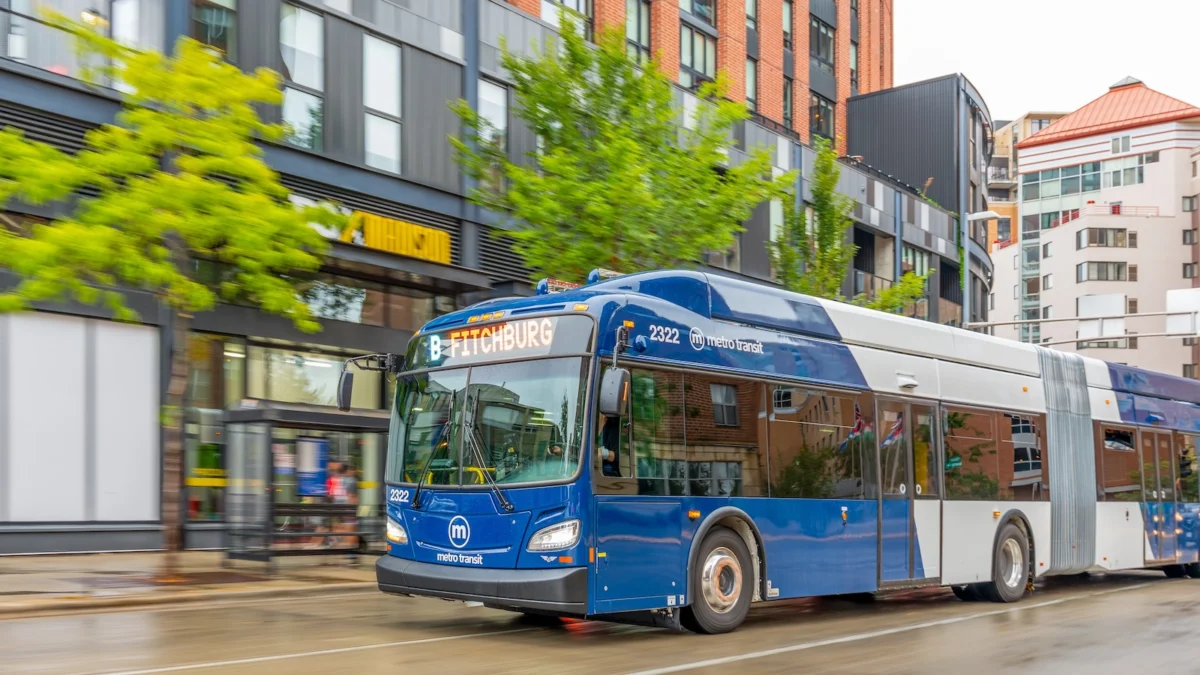
For millions of Americans, the promise of mobility is not tied to the convenience of a personal vehicle but to the availability of a bus, a van, or a regional rail line. Yet, as the current federal transportation funding cycle approaches its sunset at the end of this year, a legislative cloud hangs over the nation’s transit networks. The proposed BUILD America 250 Act, intended to reauthorize the programs established by the 2021 Infrastructure Investment and Jobs Act (IIJA), is currently under intense scrutiny. Far from an expansion of mobility, transportation advocates and policy researchers warn that the bill represents a contraction, one that threatens to leave rural communities stranded and urban transit systems in a state of terminal decline.
A Chronology of Transit Funding
To understand the gravity of the current legislative crossroads, one must look at the recent history of federal investment. In 2021, the Biden administration signed the Infrastructure Investment and Jobs Act, a $1.2 trillion package that served as a rare bipartisan effort to modernize American infrastructure. The IIJA set a five-year baseline of $119.9 billion for public transportation, an amount that advocates argued was already insufficient to meet the post-pandemic demands of a shifting workforce and aging infrastructure.
As that funding authority nears its expiration in late 2026, the focus has shifted to the BUILD America 250 Act. While proponents frame the bill as a necessary step to maintain federal support for surface transportation, the American Public Transportation Association (APTA) has identified a stark reality: the act authorizes only $103.3 billion for transit over five years. This represents a $16.5 billion nominal decrease compared to the IIJA baseline. When factoring in the erosion of purchasing power due to sustained inflation, the Urban Institute estimates the actual funding gap is closer to $24 billion, effectively forcing local agencies to do significantly more with significantly less.
The Rural Mobility Crisis: A Snapshot of Southern Idaho
In southern Idaho, the consequences of this legislative shift are not abstract; they are measured in the isolation of vulnerable populations. Jeremy Maxand, executive director of the Living Independent Network Corp, oversees a system that functions as a "bare-minimum lifeline." His organization serves individuals with disabilities who have no alternative to the regional transit network, which is financed through a combination of federal formula funds and local contributions.
"When the federal funding goes away, everything goes away," Maxand explains. In rural regions, transit is not merely a convenience; it is a critical health intervention. Without subsidized rides, many of his clients are relegated to a state of forced homebound existence, unable to access medical care or engage in community life. The prospect of an 18 percent cut—the highest percentage reduction in federal formula funding projected for any state—threatens to collapse the fragile network that Maxand has spent years cultivating. For his clients, he notes, the cuts feel like removing the electricity from a ventilator while expecting the machine to continue functioning.
National Data and the Disproportionate Impact
The Urban Institute’s analysis reveals that the impact of the BUILD America 250 Act is not geographically neutral. While major metropolitan centers like New York City face a staggering $2.3 billion reduction over the five-year period, smaller states and rural regions face a different kind of existential threat. In Maine, where the state Department of Transportation is already grappling with a $400 million shortfall—partly due to a 2011 decision to freeze gas taxes—a 16 percent reduction in federal formula funding could be catastrophic.
Josh Caldwell of Transportation for Maine notes that the state’s current transit standard is already far below the "gold standard" of 15-minute service intervals. With nearly 40 percent of Maine’s transit budget dependent on federal dollars, the proposed cuts leave little room for operational maintenance, let alone service expansion.

The situation in Indiana provides another cautionary tale. Austin Gibble, a transit planner in Indianapolis, warns that the ripple effects will be felt in bus procurement. "Agencies will be forced to delay the purchase of new vehicles," Gibble says, "which will lead to an aging fleet, higher maintenance costs, and a decline in service reliability." In Hamilton County, where there is no fixed-route service, the reliance on reservation-based transit is already oversubscribed. A further reduction in federal support would likely result in waitlists growing from weeks to months, effectively cutting off access for those without personal automobiles.
The Structural Inequity of Highway-First Policy
The debate surrounding the BUILD America 250 Act has reignited long-standing criticisms regarding how the United States prioritizes its transportation spending. Representative Jerry Nadler, the lone Democrat on the House Transportation and Infrastructure Committee to oppose the bill, characterized the legislation as a continuation of a "familiar pattern."
"Highways are treated as the default national priority, while rail and transit are left fighting for insufficient resources," Nadler stated. This sentiment is echoed by policy analysts who point out that while the U.S. continues to prioritize highway expansion and road maintenance, public transit systems are simultaneously struggling with a post-pandemic ridership recovery and the high costs of electrification.
Critics of the bill, such as Danny Pearlstein of the Riders Alliance, argue that the legislative approach to bipartisanship has become a roadblock to progress. "The Biden infrastructure bill was not the high-water mark," Pearlstein says. "We shouldn’t hold up bipartisanship as a core value when we have such sharply diverted views on the role of government in investing in people and communities."
Economic and Societal Implications
The economic argument against these cuts extends beyond the transit agencies themselves. LeeAnn Hall, campaign manager for the National Campaign for Transit Justice, emphasizes that transportation is the second-highest expenditure for the average American household. By reducing transit options, the federal government may inadvertently force low-income families to purchase and maintain personal vehicles.
"They have to pay more for gasoline, more for insurance, and handle maintenance and repair," Hall explains. "It is an expansion of the household budget that creates a cycle of poverty." Conversely, she argues that robust public transit is a macroeconomic benefit, reducing traffic congestion, improving road safety, and opening the labor market to those who would otherwise be excluded.
Looking Toward an Uncertain Future
As the year draws to a close, the fate of the BUILD America 250 Act remains a focal point for transit advocates who believe the current proposal fails to reflect the modern needs of a growing nation. The technical nature of "formula funding" often masks the human cost, but the testimonies from Idaho, Maine, and Indiana serve as a warning of what happens when federal support is withdrawn from essential infrastructure.
The tension between fiscal austerity and the need for public investment is the defining conflict of this legislative session. With fuel prices remaining high and the cost of living straining household budgets, the proposed reduction in transit funding stands in stark contrast to the administration’s earlier, more ambitious goals for national infrastructure. For communities that rely on these services for their daily survival, the coming months will determine whether their lifeline is reinforced or severed. The reality remains that whether one resides in a dense urban corridor or a remote rural township, the functionality of the national economy is tethered to the accessibility of its transportation networks—a reality that, according to critics, the BUILD America 250 Act risks ignoring.

