
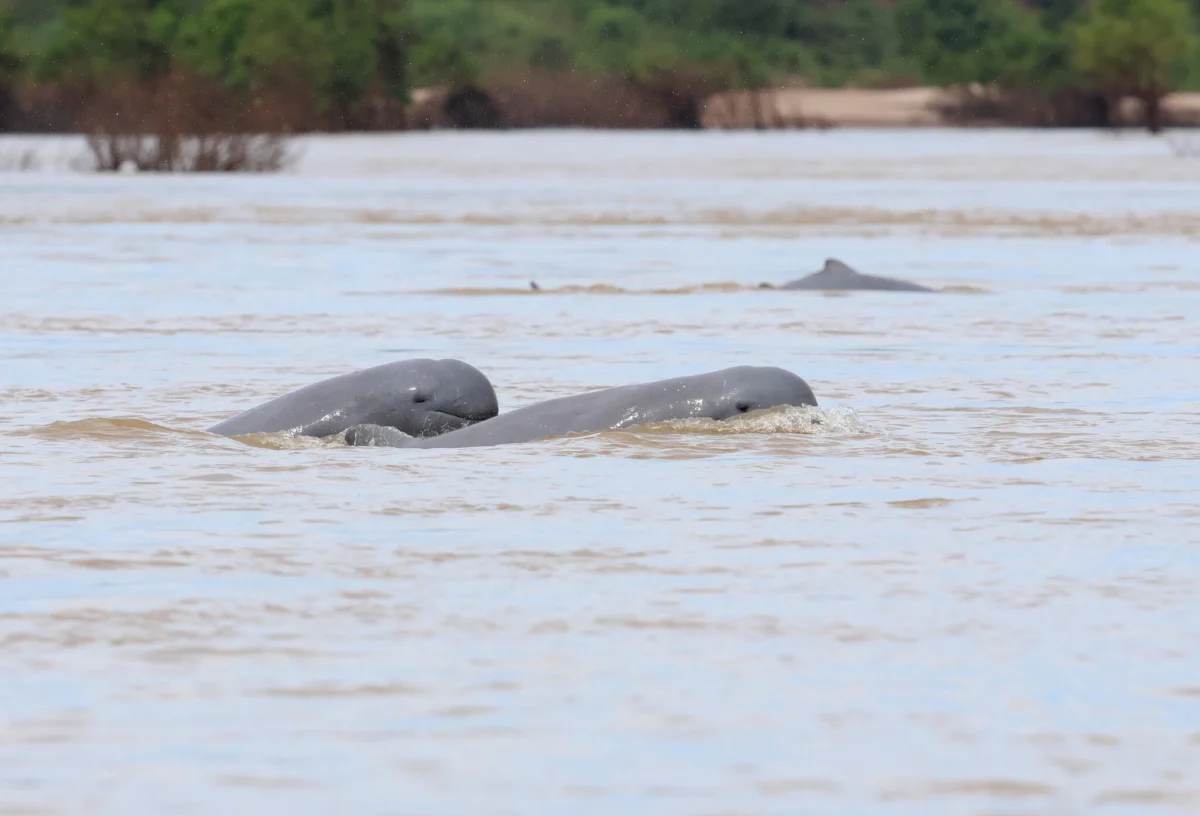
Every morning, as the sun begins its ascent over the Mekong River in Cambodia’s Kratie province, Heang Koeurn initiates a routine he has meticulously performed for over a decade. He steers his boat into the Kampi pool, kills the engine, and settles into a familiar posture: elbows resting on his knees, eyes scanning the water’s surface for the telltale gray curve of a dorsal fin. This quiet vigil is not merely a job; it is a pursuit of one of the world’s most elusive and endangered freshwater mammals: the Irrawaddy dolphin (Orcaella brevirostris). While the presence of these animals draws curious tourists from around the globe, their survival is increasingly tethered to a tenuous balance between local economic necessity and a rapidly degrading river ecosystem.

The Irrawaddy dolphin serves as an apex indicator species for the health of the Mekong, yet the population has faced a precipitous decline over the last quarter-century. Once numbering in the hundreds, the population in the Cambodian stretch of the river has dwindled to roughly 118 individuals. This collapse is the result of a multifaceted crisis involving habitat loss, the proliferation of hydroelectric infrastructure, and the persistent, lethal threat of illegal fishing practices.
A Chronology of Decline and Conservation
The historical range of the Irrawaddy dolphin was once vast, encompassing the Mekong Delta, the Tonle Sap Lake, and the river’s numerous tributaries. However, by the late 1990s, the population was already showing signs of significant stress, with estimates suggesting roughly 200 individuals remained. The turn of the century brought accelerated development, particularly in the form of large-scale dam construction, which fundamentally altered the river’s hydrology.

In 2012, recognizing the urgency of the situation, the Cambodian government established a 180-kilometer protected core habitat zone spanning Kratie and Stung Treng provinces. This period also saw the recruitment of 72 river guards tasked with enforcing bans on gillnets and electrofishing within these critical zones. Despite these efforts, the species continued to vanish from parts of its range. The most harrowing milestone occurred in February 2022, when the last known dolphin in the Anlong Chheu Teal pool—a transboundary section of the river near the Laos border—died after becoming entangled in illegal fishing gear. This event effectively signaled the local extinction of the species in that segment of the river, leaving behind only bones as a somber reminder at the local community hall.
The Impact of Hydropower and Habitat Degradation
The Mekong River, which sustains millions of people across Southeast Asia, currently hosts more than 160 operational dams, including 13 on the mainstream. While experts such as Professor Ian Baird of the University of Wisconsin-Madison note that these dams do not necessarily kill dolphins directly, their indirect impact is profound. The dams act as barriers to fish migration, which disrupts the food supply for dolphins, and they alter the seasonal flooding cycles that maintain the flooded forests—critical nursery habitats for fish.

The Don Sahong Dam, located less than two kilometers from the Cambodian border in southern Laos, stands as a prominent example of this infrastructure. Since its operation began in 2020, it has been identified by researchers as a significant obstacle in the Lower Mekong Basin. The resulting shifts in water levels and sediment flow have led to a cascade effect, degrading the river’s overall biodiversity and making the already vulnerable dolphin population more susceptible to secondary threats.
The Scourge of Illegal Fishing
While industrial development looms large, the immediate cause of mortality for the Irrawaddy dolphin remains entanglement in fishing equipment. Gillnets and long-line hooks, often set clandestinely in protected zones, pose a lethal threat, particularly to calves. Enforcement remains a significant challenge for the Fisheries Administration (FiA). In 2022, authorities confiscated over 36,000 meters of gillnets and 7,000 fishing hook nets, yet illegal fishers remain highly adaptive.

Veang Tino, a patroller at the Kampi Conservation Centre, emphasizes that the issue is not merely one of capacity, but of danger. Patrollers, who are often under-resourced and earn a meager daily wage of between $5 and $7.50, frequently face intimidation and physical threats from illegal operators who sometimes carry weapons. The logistical burden of patrolling vast, complex stretches of the river, coupled with low pay, has created a situation where conservation is driven more by the personal commitment of the guards than by robust systemic support.
Economic and Cultural Significance
For communities like those in Kampi and Anlong Chheu Teal, the dolphin is more than a biological curiosity; it is a source of national and local pride, as well as a cornerstone of the local economy. In Cambodia and Laos, the dolphins are considered sacred, representing the ancestral spirit of the river.

However, the economic reality is stark. As Phoy Vanna, a community leader, observed, the loss of the dolphins in his area led to a 60% decline in tourism revenue. Visitors who once traveled to see the dolphins now have little incentive to visit, leading to a contraction of local livelihoods. This economic shift creates a feedback loop: as alternative income streams dry up, some residents may be driven back to unsustainable fishing practices, further endangering the very species that once anchored their local economy.
Signs of Resilience and the Path Forward
Despite the grim trajectory of the last two decades, there are glimmers of hope. In June 2026, conservationists confirmed the birth of six new calves along the Kratie and Stung Treng stretches, providing a vital, if small, demographic boost. This development underscores the species’ reproductive resilience, provided that human-induced threats are adequately mitigated.

The Fisheries Administration, in partnership with organizations like WWF-Cambodia, continues to advocate for a community-based approach. Since 2014, initiatives have been in place to help fishing households diversify their incomes, reducing the necessity of relying on wild fish caught in sensitive areas. I Sanaroth, the Kampi fisheries chief, maintains that the population increase is a direct result of these joint conservation efforts, yet he admits the work is far from complete.
Implications and Future Outlook
The plight of the Mekong’s Irrawaddy dolphins is a microcosm of the broader struggle to balance economic development with environmental stewardship. The loss of a species, as Frances Gulland of the U.S.-based Marine Mammal Commission aptly put it, is "like losing a star from the sky." If the Mekong’s dolphins were to go extinct, the loss would not only be a biological tragedy but also an indictment of the regional inability to manage the river’s resources sustainably.

Moving forward, the survival of the Irrawaddy dolphin will likely depend on three critical factors:
- Transboundary Cooperation: Because the Mekong is a shared resource, unilateral conservation in Cambodia cannot fully mitigate the impacts of dams and fishing practices originating in upstream nations like Laos.
- Enhanced Enforcement and Support: Providing adequate equipment, fair wages, and legal protection for river guards is essential to curbing illegal fishing.
- Sustainable Development Policies: Future hydropower projects must undergo more rigorous environmental impact assessments that prioritize the connectivity of the river and the survival of endemic species.
As the morning sun continues to rise over the Kampi pool, the future of the Irrawaddy dolphin remains in the balance. Whether these creatures continue to grace the Mekong depends on the resolve of the communities, governments, and international bodies to recognize that the river’s "ecological treasure" is not an infinite resource, but a fragile legacy requiring urgent, sustained, and unified protection. The birth of new calves offers a window of opportunity—a chance to reverse the decline before the silence of the river becomes permanent.

