
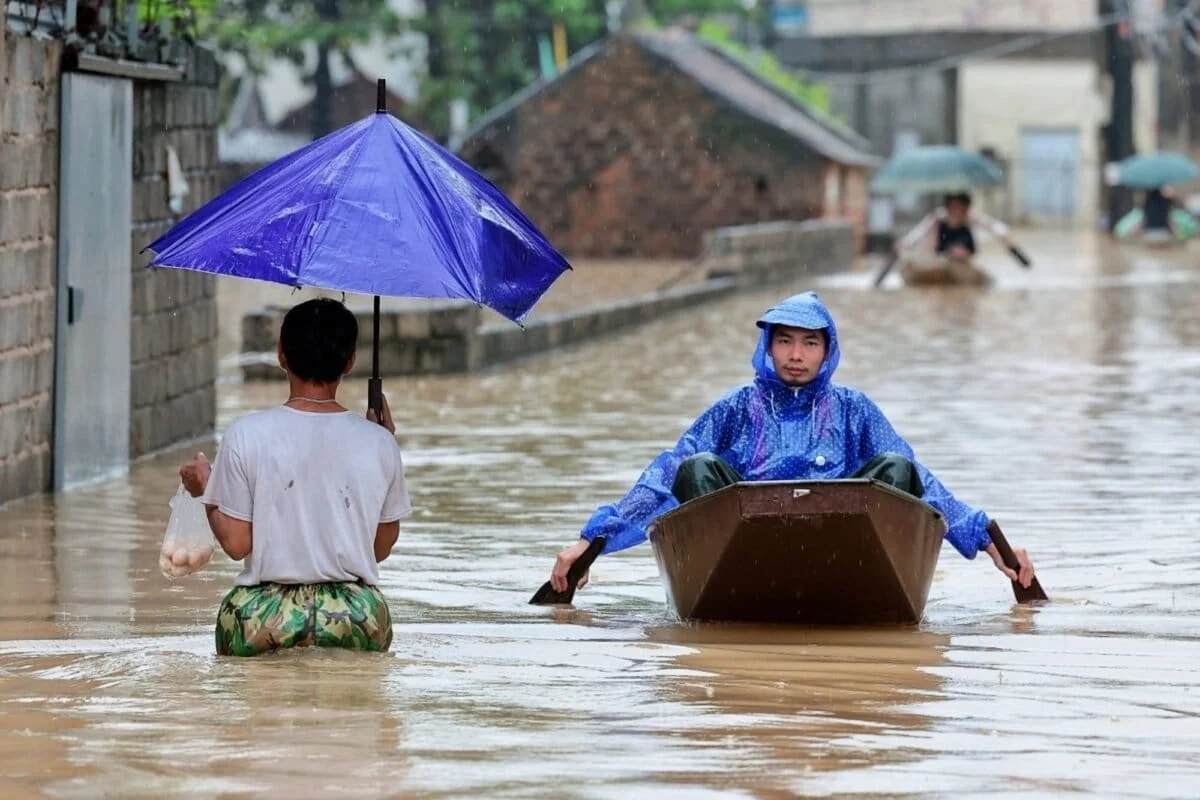
HANOI, Vietnam — A massive surge of persistent rainfall has inundated northern and north-central Vietnam this week, paralyzing major transit arteries, submerging thousands of residential properties, and forcing emergency evacuations across the region. As water levels in several key rivers breach critical thresholds, the disaster prevention department has reported that some regions have absorbed upwards of 50 centimeters (19.7 inches) of precipitation since the onset of the weather event. The crisis has prompted an urgent mobilization of military and civil defense units, particularly in the provinces of Ninh Binh and Thanh Hoa, where lowland and hilly terrain have left communities isolated and vulnerable.
The Scope of the Disaster
The scale of the impact is extensive, with more than 2,000 homes currently reported as submerged and over 1,000 households cut off from essential services. Transportation infrastructure, the lifeblood of the regional economy, has been severely compromised. In Hanoi, the capital city, the situation reached a critical point on Thursday morning as streets were transformed into waterways, with some areas reporting flood depths of nearly one meter (3.2 feet). This sudden rise in water levels has effectively halted urban mobility, forcing the closure of numerous schools and universities, many of which have transitioned to remote learning platforms to ensure the safety of students and faculty.
In the southwestern outskirts of Hanoi, the rising banks of the Bui River have created a precarious situation for riverside residents. State media reports indicate that hundreds of soldiers have been deployed to assist local communities in relocating belongings to higher ground, reinforcing dikes, and providing logistical support to those whose homes have been surrounded by encroaching floodwaters.
Agricultural Devastation and Economic Toll
Beyond the urban centers, the agricultural heartlands of northern and central Vietnam are grappling with catastrophic losses. Approximately 10,014 hectares (24,745 acres) of vital rice paddies and various other crops have been lost or severely damaged. The provincial authorities in Ninh Binh, Thanh Hoa, and Nghe An have identified these areas as the most significant sites of agricultural destruction.
The human impact is compounded by the loss of livestock and poultry, which represent a significant portion of the local economy and food security. While residents like Ninh Binh local Tran Ngoc Tai have told national broadcaster VTV that they have developed a level of stoicism—prepared as they are with emergency stocks of food and water—the cumulative economic pressure on rural families is substantial. Each year, the cycle of seasonal flooding forces these communities to rebuild, creating a recurring barrier to long-term financial stability.
Meteorological Forecast and Regional Outlook
The current weather system is far from reaching its conclusion. Meteorologists from the Southern Regional Hydro-Meteorological Center have issued urgent warnings regarding a cold air mass currently migrating southward. This system is expected to persist for at least five days, beginning September 17, with a high probability of intense, sustained rainfall extending into the southern regions of the country.
Ho Chi Minh City, Vietnam’s financial capital and a major economic hub, is bracing for the impact. Forecasters predict that the city may receive between 10 and 20 centimeters (4 to 8 inches) of rain, with localized areas likely to experience even higher totals. The warning extends through September 21, with authorities urging citizens in low-lying areas and near canal networks to remain vigilant. The potential for flash flooding in urban environments with aging drainage systems remains a primary concern for municipal planners.
A Pattern of Climate Vulnerability
The events of this week are part of a broader, more alarming trend for Vietnam, which is frequently cited by international climate agencies as one of the nations most vulnerable to the impacts of a warming planet. The frequency and intensity of extreme weather events have strained the nation’s disaster management infrastructure.

Looking back at the recent past, 2025 served as a harrowing reminder of these risks. The year was marked by a relentless series of environmental crises. In July, Tropical Storm Wipha brought severe rain and flooding, which was followed in August by the dual impact of Tropical Storm Kajiki, causing widespread landslides and property destruction. By September 2025, Typhoon Bualoi claimed at least 26 lives, and in October, the historic cultural centers of Hue and Hoi An were submerged under record-breaking rainfall. These successive events have forced the Vietnamese government to re-evaluate its disaster preparedness protocols, leading to increased investments in early warning systems and more robust community-based emergency response teams.
Official Response and Strategic Management
In response to the current emergency, provincial governments have taken proactive measures, including the mandatory closure of schools to prevent students from navigating hazardous roads. The government’s disaster prevention department is actively coordinating with local committees to distribute aid and medical supplies.
The government’s shift toward more proactive management is a direct response to the lessons learned from previous years. Authorities are increasingly focusing on “living with the water” strategies, which include the construction of elevated community shelters and the modernization of water drainage systems in major urban centers. However, the sheer volume of rainfall, which has exceeded 15 centimeters in just a few hours in some localized areas, continues to outpace the capacity of current infrastructure.
Analysis of Implications
The repetitive nature of these floods poses significant questions regarding the long-term sustainability of development in flood-prone regions. As Vietnam continues to industrialize and urbanize, the loss of permeable land—replaced by concrete and asphalt—exacerbates the speed and severity of runoff.
Experts suggest that while immediate relief efforts are essential, the long-term solution lies in a multi-faceted approach. This includes:
- Infrastructure Hardening: Upgrading urban drainage and dike systems to handle higher volumes of water than historically recorded.
- Agricultural Diversification: Helping farmers shift to flood-resilient crop varieties or alternate livelihoods that are less susceptible to total loss during monsoon-induced flooding.
- Climate-Resilient Urban Planning: Implementing stricter zoning laws that prevent residential development in the most high-risk basins of the Bui and other volatile rivers.
The reliance on military support during such crises, while effective for short-term evacuation, highlights the strain placed on state resources. As the nation prepares for the next five days of expected rainfall, the resilience of the Vietnamese people remains the most critical asset in the face of these natural threats. The upcoming week will be a litmus test for the effectiveness of the updated disaster management policies implemented in the wake of the 2025 storms.
For now, the focus remains firmly on the immediate safety of the population. As the sun sets on a water-logged Hanoi and the surrounding provinces, the sound of rain on rooftops remains a constant reminder of the volatile intersection of geography, climate change, and human development. The international community, watching these developments closely, notes that Vietnam’s experience serves as a microcosm for the challenges faced by many Southeast Asian nations in the current climate era. The endurance of these communities, supported by a state that is increasingly learning how to manage the unpredictable, remains the primary barrier against the total disruption of life in the region.
Authorities have advised that residents monitor national weather updates and follow all directives issued by local disaster prevention committees as the situation evolves throughout the week.

