
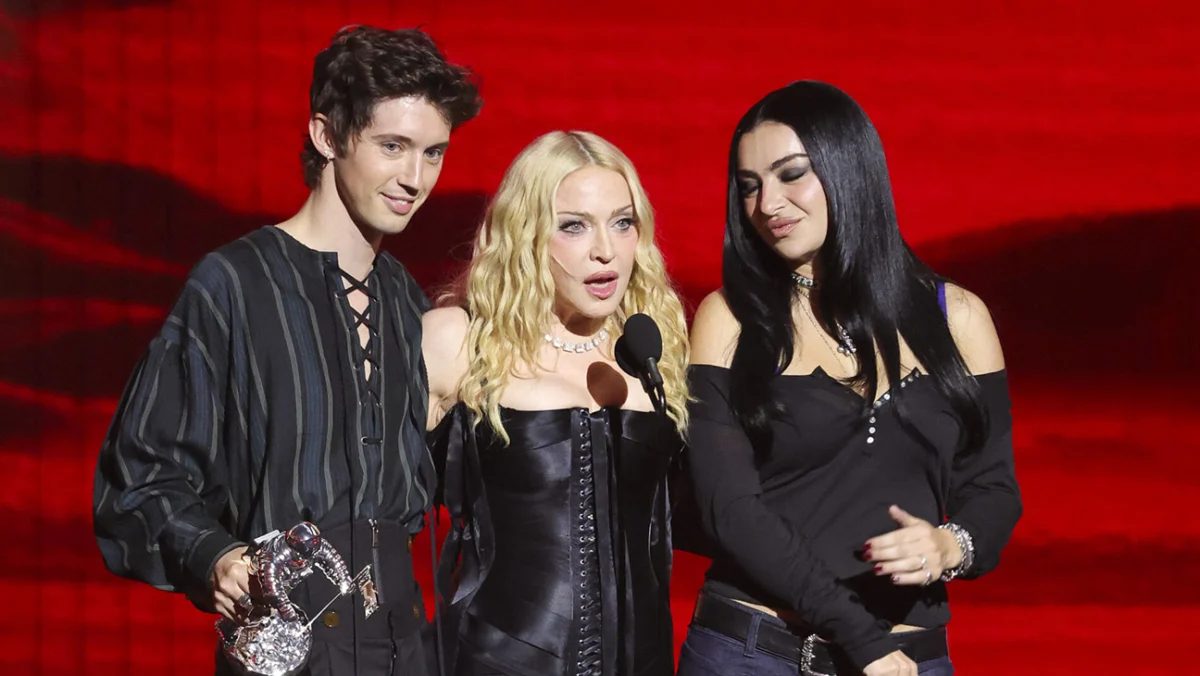
The 2026 MTV Video Music Awards delivered a night of high-stakes spectacles, historic milestones, and powerful musical homages as the ceremony returned to Los Angeles for the first time in nearly a decade. Broadcast live from the Peacock Theater on Sunday evening across MTV, CBS, and Paramount+, the event captured the shifting dynamics of the contemporary music industry by blending legacy acts with global superstars. From Madonna’s theatrical opening to Taylor Swift’s record-breaking evening and a poignant Video Vanguard honor for Nirvana, the ceremony offered a comprehensive snapshot of modern pop culture.
A Star-Studded Return to Los Angeles
The decision to bring the VMAs back to Los Angeles for the 2026 edition—marking the first time the show was held in the city since Katy Perry hosted the 2017 ceremony at The Forum—set an energetic tone for the evening. Comedian and rapper Snoop Dogg assumed hosting duties, immediately establishing a celebratory atmosphere that leaned heavily into his West Coast roots.
Opening his monologue with a nod to the city’s vibrant nightlife, Snoop Dogg welcomed the industry’s biggest names while injecting humor into the proceedings. His opening remarks playfully targeted Madonna, who had just set the stage ablaze with a career-spanning performance. "Madonna just killed it. Now, that is an icon. One thing I wanna say is, she ain’t a virgin no more," Snoop joked to the roaring crowd, before promising a night defined by top-tier entertainment and unbridled celebration.
Pop Royalty Opens the Show: Madonna, Sabrina Carpenter, Charli XCX, and Lisa
Pop music ruled the opening minutes of the 2026 VMAs, anchored by a multi-artist medley that drew immediate comparisons to legendary moments in award show history. Madonna kicked off the night by performing a medley of "Bring Your Love" and "Danceteria Afterhours" alongside contemporary pop hitmakers Sabrina Carpenter and Charli XCX.
Madonna began her performance of "Bring Your Love" spread-eagle atop a black grand piano, with Carpenter playing the keys below before the two joined forces for a tightly choreographed routine. Dancers then transported Madonna onto a moving platform that soared across the stage, accompanied by a choir dressed in veiled white nun habits. The performance seamlessly transitioned as Charli XCX emerged to perform "Danceteria Afterhours" inside a set meticulously crafted to resemble the restrooms of the legendary New York City nightclub of the same name.
The ambitious staging immediately drew parallels to Madonna’s infamous 2003 VMA performance, during which she shared an onstage kiss with Britney Spears and Christina Aguilera. Sunday’s appearance marked Madonna’s first return to the VMA stage since that iconic moment, reinforcing her enduring influence on successive generations of pop artists.
Moments after the opening spectacle, global K-star Lisa secured the award for Best Pop for her single "Dream," featuring Kentaro Sakaguchi. Lisa later returned to the stage for her first-ever televised performance of her recent single, "SaWaDiKa," backed by a troupe of dancers in a high-energy routine that previewed her upcoming EP, Press Play, scheduled for an October release.
Taylor Swift Extends Records and Unveils "Patient Zero"
Taylor Swift cemented her dominant position in VMA history by extending her record for the most wins in the coveted Video of the Year category. Swift took home the night’s top prize for "The Fate of Ophelia," adding to a historic legacy that already includes previous wins for "Bad Blood," "You Need to Calm Down," "All Too Well: The Short Film," "Anti-Hero," and "Fortnight."
Accepting the award at the Peacock Theater, Swift reflected on the technical challenges of the winning video, which was designed to mimic one continuous shot. She expressed gratitude to her collaborators, including choreographer Mandy Moore, production designer Ethan Tobman, editor Chancler Haynes, and cinematographer Rodrigo Prieto, whom she credited with giving her the confidence to direct her own visual projects.
In addition to her competitive wins, Swift premiered the music video for her latest single, "Patient Zero," following her acceptance of the inaugural Artist Director honor, presented by Dakota Johnson. The cinematic video stars Swift alongside Johnson and Colin Farrell, tracing a dark narrative of betrayal and poisoning that concludes with Johnson leaving a rose at Swift’s gravesite.
Nirvana Honored With the Video Vanguard Award
Rock history took center stage when Public Enemy frontman Chuck D presented the Michael Jackson Video Vanguard Award to the surviving members of Nirvana. Honoring the band’s enduring countercultural impact, Chuck D praised their refusal to bow to mainstream formulas.
"Nirvana never bent to the will of the mainstream; they always stayed true to their vision," Chuck D told the audience. "Their sound was loud, beautiful, daringly open. The lyrics were raw and deeply human. Their music videos defined an era."
Following a retrospective montage celebrating the band’s iconic 1990s visuals, Dave Grohl and Krist Novoselic accepted the award alongside guitarist Pat Smear, who smoked a cigarette onstage. Novoselic used the moment to direct the audience’s attention to the creative force behind the band’s visual identity, stating, "The ideas for those videos all grew out of the vision of one of the greatest artists of all time, Kurt Cobain."
Tributes to Music Icons: Dolly Parton and George Michael
The ceremony balanced contemporary releases with emotional tributes to foundational music figures. Country music star Kacey Musgraves honored the late Dolly Parton—who passed away on August 25 at the age of 80—with a powerful virtual performance of Parton’s timeless 1973 ballad, "I Will Always Love You." Though Musgraves did not attend the Los Angeles ceremony in person, her televised rendition echoed previous heartfelt tributes she delivered on her tour stops following Parton’s passing.
Later in the evening, the VMAs marked the upcoming 40th anniversary of George Michael’s landmark solo album, Faith, with an expansive multi-artist medley. The tribute expanded beyond the 1987 record, featuring performances by Sombr—who wore Michael’s actual customized leather jacket from the Faith era—and Raye, who delivered a soulful take on Michael and Aretha Franklin’s "I Knew You Were Waiting." Teddy Swims commanded the stage for "Careless Whisper," before surprise performer Adam Lambert emerged from backstage to deliver a triumphant, high-energy rendition of "Freedom ’90."
Breakout Performances and Closing Highlights
British singer Raye also made waves earlier in the evening with her VMA performance debut, delivering a red-hot, high-energy rendition of her viral social media hit "Where Is My Husband!" Dressed in crimson to match the single’s music video aesthetic, Raye was flanked by her backup singers in one of the night’s standout vocal showcases.
The ceremony concluded with a kinetic performance by Gener8ion and Yung Lean, who recreated their viral video for "Storm" utilizing choreography by Damien Jalet. The visually striking routine earned one of the most enthusiastic audience responses of the night, bringing numerous attendees to their feet and closing out a fast-paced evening that bridged decades of musical evolution.
Broader Implications and Industry Impact
The 2026 MTV Video Music Awards served as more than just a celebration of individual achievements; they functioned as a strategic barometer for the current music landscape. By positioning legacy acts like Madonna, Nirvana, and George Michael alongside modern heavyweights like Taylor Swift, Lisa, and Raye, the network underscored the interconnected nature of contemporary pop culture.
Industry analysts noted that the heavy emphasis on cinematic storytelling—exemplified by Swift’s narrative-driven video premiere and the elaborate choreography of the night’s opening and closing acts—demonstrates that visual presentation remains a primary currency for artists aiming to secure long-term cultural relevance. Furthermore, the successful integration of global artists like Lisa highlights the continued decentralization of the American music market, ensuring that the VMAs remain a crucial global platform in an increasingly fragmented media ecosystem.

