
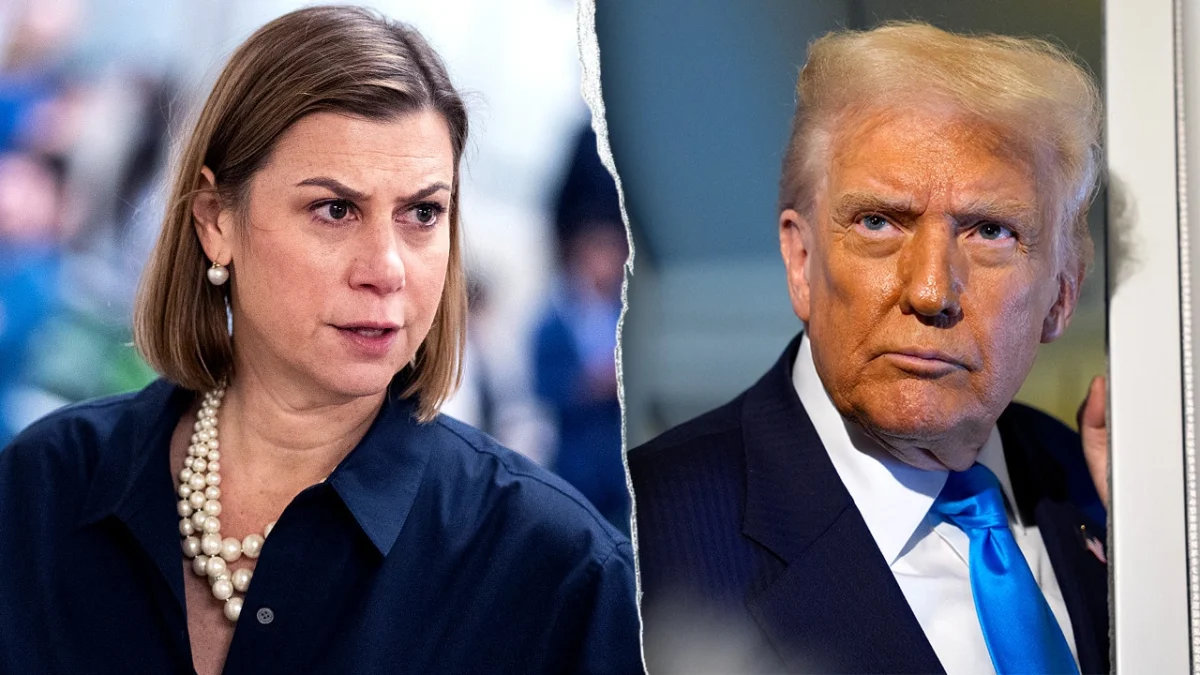
The political landscape in Washington is bracing for a potential escalation in institutional conflict as Democratic lawmakers, emboldened by the prospect of reclaiming legislative majorities, signal an intent to conduct a rigorous and sweeping oversight campaign against the incoming Trump administration. This growing trend, characterized by proponents as essential accountability and by critics as a form of "lawfare," has triggered alarm among conservative organizations that were previously subjected to intense scrutiny during the Biden-era special counsel investigations.
At the heart of this tension is a debate over the limits of congressional subpoena power and the appropriate use of federal investigative resources. The rhetoric from high-profile Democrats, most notably Sen. Elissa Slotkin (D-Mich.), regarding the need to send a "deterrence message" to young professionals contemplating service in the Trump administration, has moved the conversation beyond traditional oversight into a realm of direct intimidation, according to conservative stakeholders.
The Evolution of Investigative Playbooks
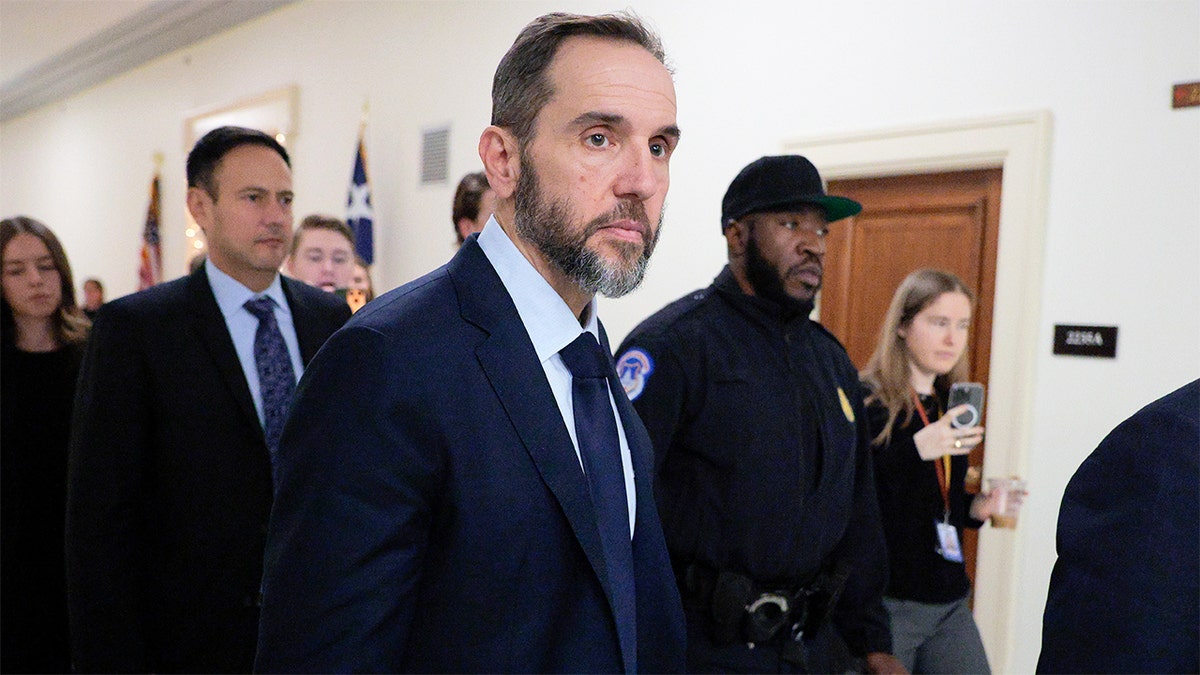
The concerns currently circulating within conservative circles are rooted in the precedent set by former special counsel Jack Smith’s investigation into the 2020 election. During that inquiry, various conservative organizations, including the Conservative Partnership Institute (CPI), were served with extensive subpoenas. Rachel Bovard, vice president of programs at CPI, argues that Smith’s methodology served as a blueprint for future political investigations.
"Jack Smith was a test run in how to do this," Bovard stated in recent discussions regarding the potential for future congressional overreach. "The objective was to map the right, and that information remains on file at the FBI and the Department of Justice. It is essentially sitting there, waiting for the next administration to pick it up and utilize it for a new round of inquiries."

For organizations like CPI, the cost of compliance was not merely administrative; it involved millions of dollars in legal fees and the production of highly sensitive internal documents, including health records and private benefits data, which critics argue were irrelevant to the stated scope of the federal investigation. This "investigative fatigue," where the process of compliance becomes a financial penalty in itself, is now being cited as a potential tool that could be weaponized by a future Democratic-controlled Congress.
The "Deterrence" Rhetoric and Its Implications
The intensity of this debate spiked earlier this month following comments made by Sen. Slotkin at an event hosted by the University of Chicago’s Institute of Politics. Slotkin suggested that the Democratic agenda should prioritize sending a "deterrence message" to those considering employment within the Trump administration, emphasizing a focus on the "people who enabled him" rather than just the president himself.
While supporters of this approach argue it is a necessary check on executive power, legal scholars warn that such public declarations of intent can undermine the legitimacy of future investigative actions. Abhishek Kambli, a former federal prosecutor and current partner at Holtzman Vogel, points out that the legal justification for a congressional subpoena must be rooted in legitimate legislative duties rather than punitive law enforcement.
"When members of Congress openly discuss an ‘accountability agenda’ that focuses on punishing individuals, they are creating a record that can be used to challenge those subpoenas in court," Kambli explained. "If they rely on boilerplate language regarding a ‘legislative purpose,’ anyone challenging those subpoenas will have a clear evidentiary record to demonstrate that the actual motivation is anything but that."
Chronology of Investigative Tension
The current atmosphere of distrust is the culmination of years of heightened partisanship regarding the use of federal and legislative power:

- 2012: The House of Representatives holds Attorney General Eric Holder in contempt of Congress regarding the "Fast and Furious" investigation. The subsequent refusal of the Department of Justice to prosecute established a significant precedent regarding the limits of enforcement for congressional subpoenas.
- 2023-2025: Special Counsel Jack Smith conducts an expansive investigation into the 2020 election aftermath, issuing a wide array of subpoenas to political organizations and media entities, sparking widespread debate over the breadth of "mapping" political movements.
- Late 2025: President Trump signals a willingness to issue preemptive pardons for administration officials, citing as justification the potential for politically motivated "lawfare" and pointing to the precedent of President Biden’s pardon of Dr. Anthony Fauci.
- Early 2026: Sen. Elissa Slotkin articulates the "deterrence" strategy during public remarks, leading to a polarized reaction regarding the ethics of targeting civil servants and young professionals.
The Constitutional and Legal Landscape
Despite the political optics, legal experts note that Congress holds broad authority to investigate the agencies it creates and the executive branch it oversees. Michael Morley, a professor at the Florida State University College of Law, acknowledges that while the rhetoric from some lawmakers may be inconsistent with historical norms, it does not necessarily cross the threshold of unconstitutionality.
"I don’t think that is consistent with our norms, and I certainly don’t think it’s something that we’d like to see become a routine part of our discourse," Morley said. "However, the institutional power of Congress to conduct investigations remains robust. The challenge for any legal challenge is proving that the investigative intent is strictly punitive rather than oversight-oriented."
Furthermore, the mechanism of enforcement remains a point of friction. Even if Congress votes to hold an individual in contempt for failing to comply with a subpoena, the final decision to prosecute rests with the Department of Justice. As demonstrated by the Holder precedent, this creates a situation where the political party in control of the White House effectively acts as the ultimate arbiter of which subpoenas are enforced.
The Human and Financial Cost of Oversight
Beyond the constitutional arguments, there is a tangible concern regarding the impact on the individuals caught in the crosshairs. The threat of prolonged, expensive litigation acts as a barrier to entry for young professionals who may otherwise be willing to serve in government roles.
"There is no doubt that some members of Congress intend to use that process to bankrupt people who cannot afford legal representation," Kambli noted. "That is a real threat, regardless of whether anyone is ultimately prosecuted. The process itself becomes the punishment."
This dynamic has led to a climate where "preemptive protection" is becoming a standard operating procedure. President Trump’s recent comments regarding mass pardons highlight a shift in how political operatives view their vulnerability. What was once a rare executive act is now being discussed as a necessary defense mechanism against what many in the conservative movement view as a systemic, partisan application of the law.
Looking Toward the 2028 Horizon
As the nation moves toward the 2028 election cycle, the prospect of a unified government—where one party controls both the White House and both chambers of Congress—looms large. Legal experts and political strategists alike agree that this scenario would provide the most significant opportunity for either party to utilize the "investigative playbook" to its fullest extent.
If a Democrat were to win the presidency in 2028 while maintaining control of Congress, the potential for comprehensive investigations into former Trump administration officials would reach an unprecedented level. The current discourse suggests that such an environment would likely lead to a cycle of "tit-for-tat" oversight, where the legislative branch is used as a tool to dismantle the legacy of the previous administration.
For now, the standoff continues as both sides prepare for a period of heightened oversight. Whether this serves as a legitimate check on executive power or degrades into a cycle of political retribution remains the defining question of the current political era. For the young professionals who find themselves at the center of this debate, the reality is a heightened awareness of the risks associated with public service in an increasingly polarized capital. As the political rhetoric continues to heat up, the line between holding power accountable and utilizing power for political gain remains as blurred as ever.

