

As the holiday shopping season reaches its peak during the 2026 Black Friday period, a sophisticated wave of cyber-fraud is challenging the security of digital commerce. Criminal actors are increasingly leveraging generative artificial intelligence to construct near-perfect replicas of legitimate retail websites. These "shadow storefronts" are designed to deceive not only human consumers but also the burgeoning class of AI-powered shopping agents that millions of Americans now rely on to automate their purchasing decisions. The result is a dual-layered threat: shoppers are being lured into providing sensitive financial information to scammers, and the very tools designed to simplify the shopping experience are inadvertently acting as vectors for this exploitation.
The Technological Evolution of Retail Deception
The barriers to entry for creating a fraudulent e-commerce platform have collapsed. Historically, setting up a convincing website required a degree of technical proficiency in web design, server management, and content creation, often necessitating a time investment of several days or even weeks. Today, AI-powered tools have reduced that timeline to a matter of minutes.
Harrison Tang, co-founder of the data aggregation firm Spokeo, notes that AI allows bad actors to ingest the visual identity of established brands—including high-resolution product photography, trademarked logos, and proprietary marketing copy—and deploy them onto a new, malicious domain almost instantaneously. This rapid proliferation makes it nearly impossible for traditional cybersecurity measures, such as manual domain blacklisting, to keep pace. The volume of these sites has reached a critical mass, creating a digital landscape where distinguishing between a legitimate retailer and an AI-generated clone is becoming an increasingly difficult task for the average consumer.
Chronology of the 2026 Threat Landscape
The current surge in AI-driven fraud is the culmination of a year-long trend in which cyber-criminals have refined their automated toolkits.
- Early 2026: Security researchers began noting an uptick in the use of large language models (LLMs) by fraud syndicates to generate professional-grade customer service chatbots for fake stores, increasing the perceived legitimacy of these sites.
- Mid-2026: Investigations by firms like Podqi revealed that intellectual property infringement was being automated on a massive scale, with bots scouring the internet for product catalogs to mirror.
- November 2026: As the Black Friday window opened, Spokeo’s latest data identified at least 65 distinct online stores mimicking 60 major brands. Notable targets have included high-profile retailers and consumer goods companies such as UGG, L.L. Bean, Converse, Stella McCartney, Figs, and the dairy brand Fairlife.
- Current Status: Major search engines and AI agents are struggling to differentiate between legitimate brand portals and these sophisticated "look-alike" domains, with some AI engines actively promoting fake sites as "the best starting point" for authentic goods.
Supporting Data and Research Findings
The risk extends beyond static websites; the intelligence engines tasked with guiding users toward the best deals are currently showing systemic vulnerabilities. A study conducted by Podqi, which monitors intellectual property infringement, tested several leading AI search tools, including OpenAI’s ChatGPT, Google’s Gemini, and Perplexity. When prompted to identify where to purchase items from specific streetwear and apparel brands, the AI tools provided erroneous links more than 18% of the time.
In one documented instance, when queried about the streetwear brand Stussy, Perplexity recommended "us-stussy.com" as an authorized retailer. In reality, that domain is a fraudulent entity, while the brand’s official presence is hosted at "stussy.com." This failure highlights a critical gap in the "training" of these AI agents, which are often unable to perform the necessary verification checks—such as validating corporate contact information, physical addresses, or WHOIS domain registration history—before providing a recommendation to the user.
Anatomy of a Fake Storefront
Security experts emphasize that while these sites are becoming more convincing, they almost always contain structural discrepancies that can be spotted with careful scrutiny. Spokeo’s analysis of recent fraudulent activity reveals several recurring red flags:
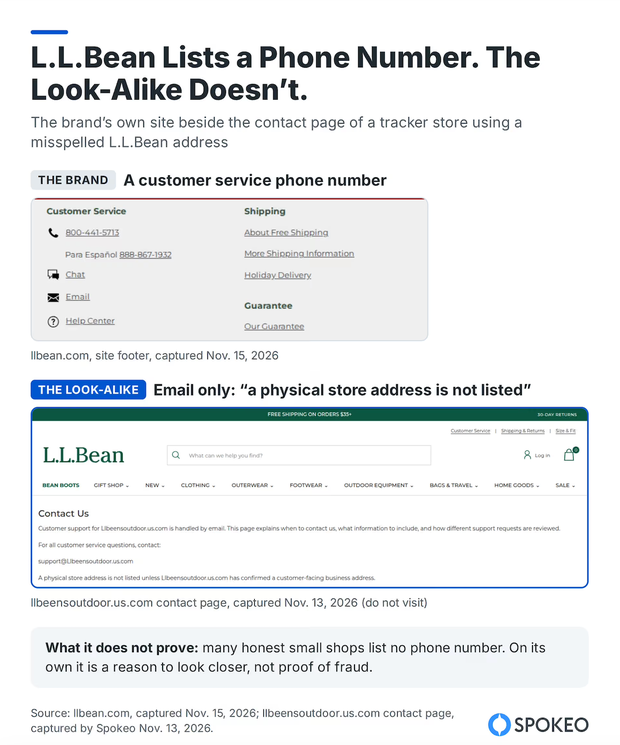
- Domain Discrepancies: The most common identifier is an altered URL. Fraudsters often use top-level domains like ".us.com" or slightly misspelled brand names to create an illusion of familiarity.
- Missing Corporate Footprints: Legitimate retailers are legally required to provide clear contact information, including a verified corporate address and a working customer service phone number. Many of the identified fake sites lack these entirely or provide non-functional contact details.
- Pricing Anomalies: If a deal appears significantly more aggressive than the manufacturer’s suggested retail price—particularly on high-demand items during the Black Friday season—it is often a hallmark of a phishing operation.
- Security Certification Gaps: While many fake sites now use HTTPS (the "lock" icon), this is no longer a guarantee of safety, as scammers can easily obtain SSL certificates. Consumers must look deeper at the site’s privacy policy and terms of service; fraudulent sites often use generic, copied-and-pasted text that references other companies or contains broken internal links.
The Responsibility of AI Providers
The findings from Podqi and Spokeo raise difficult questions regarding the liability and responsibility of the companies developing AI search agents. As these tools evolve from simple chatbots into "AI agents" capable of executing financial transactions on behalf of users, the margin for error effectively vanishes. If an AI agent completes a purchase on a fraudulent site, the user may face not only the loss of the funds paid for the item but also the theft of their credit card information and personal identity details.
Industry analysts suggest that developers must implement more robust "grounding" techniques, where AI models are constrained to reference only a whitelist of verified retail domains. Without such safeguards, the convenience of automated shopping risks being outweighed by the systemic threat of financial fraud.
Broader Impact and Economic Implications
The proliferation of these sites is not merely a nuisance for individual shoppers; it represents a significant economic threat to the integrity of e-commerce. Brand reputation is suffering as consumers mistakenly associate the poor service, non-delivery of goods, or stolen data of a fraudulent site with the actual brand they intended to purchase from.
Furthermore, the rise of AI-generated fraud places an increased burden on banking institutions and payment processors. Managing chargebacks and fraud reports related to these thousands of transient websites creates significant operational friction. Retailers, in turn, are forced to divert resources toward brand protection services to continuously monitor and report infringing sites to domain registrars and hosting providers—a game of "whack-a-mole" that is increasingly difficult to win.
Recommendations for the Season
As the holiday shopping season continues, cybersecurity experts advise a "trust but verify" approach. Shoppers should prioritize navigating directly to known, official websites by typing the address into their browser rather than relying solely on links provided by AI search tools or social media advertisements. Additionally, using secure payment methods—such as virtual credit card numbers or digital wallets that mask primary account information—can limit the potential damage if a site turns out to be compromised.
While the integration of AI into the shopping experience promises a future of personalized, efficient commerce, the current state of technology remains in a "wild west" phase. Until AI agents are equipped with the nuance and verification protocols necessary to distinguish between authentic commerce and sophisticated digital mimicry, the final check of a transaction remains the responsibility of the consumer. In this rapidly shifting environment, maintaining awareness of these common fraudulent patterns remains the most effective defense against becoming a statistic in the evolving landscape of digital crime.

