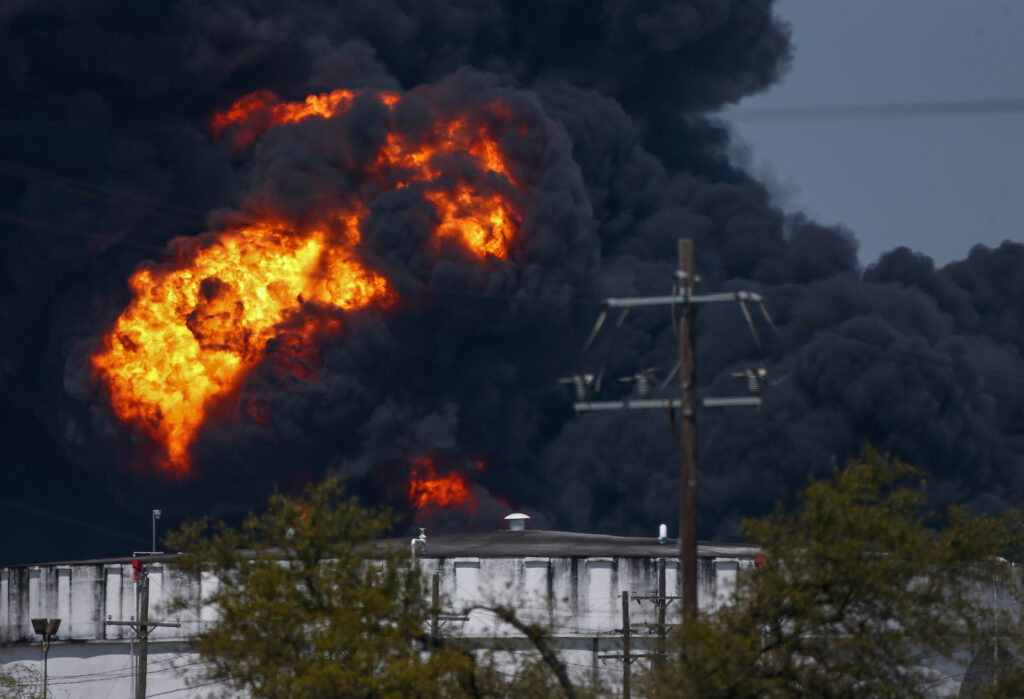
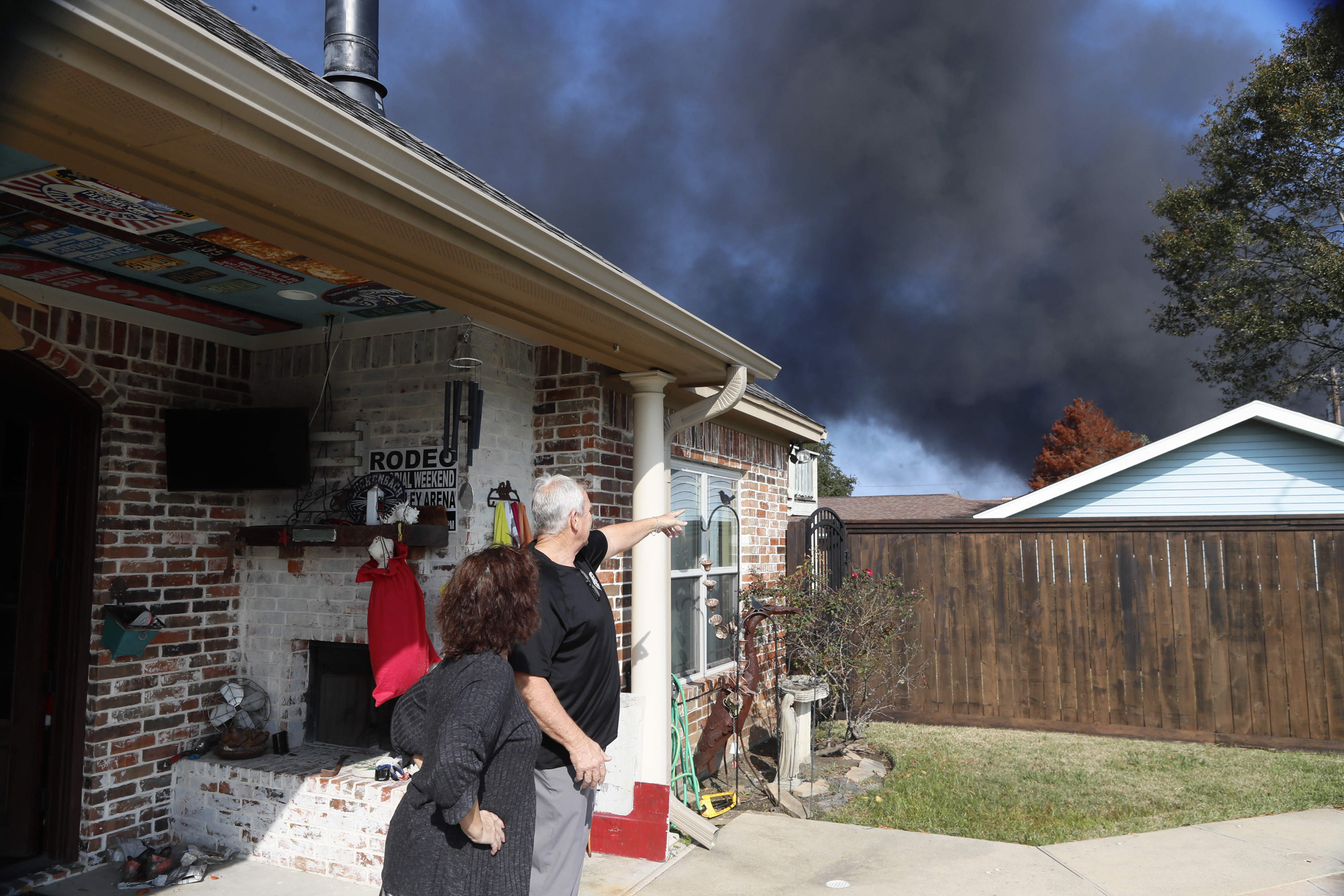
Raschelle Grandison had just stepped onto her porch on a frigid March morning in 2019 to retrieve an item from her vehicle when the horizon stopped her in her tracks. Approaching her Houston neighborhood was what appeared to be a massive, nuclear-style mushroom cloud, a dark and ominous plume of smoke that blotted out the Texas sky. As her mother rushed outside to join her, the two watched in silence as the black shroud hurtled toward them from the direction of the Houston Ship Channel. Moments later, the silence was shattered by the blaring of sirens and emergency alerts: a mandatory shelter-in-place order had been issued.
For Grandison and thousands of others living in the shadow of the nation’s largest petrochemical complex, the event was a visceral realization of a constant, underlying fear. When a shelter-in-place order is called, residents are trapped in a paradox: they are told to stay inside for safety, yet the very air around their homes is thick with potential toxins. As Grandison recalled, the isolation is total; no one can leave, no one can enter, and the community is left to wait out the disaster in a state of terrifying uncertainty.
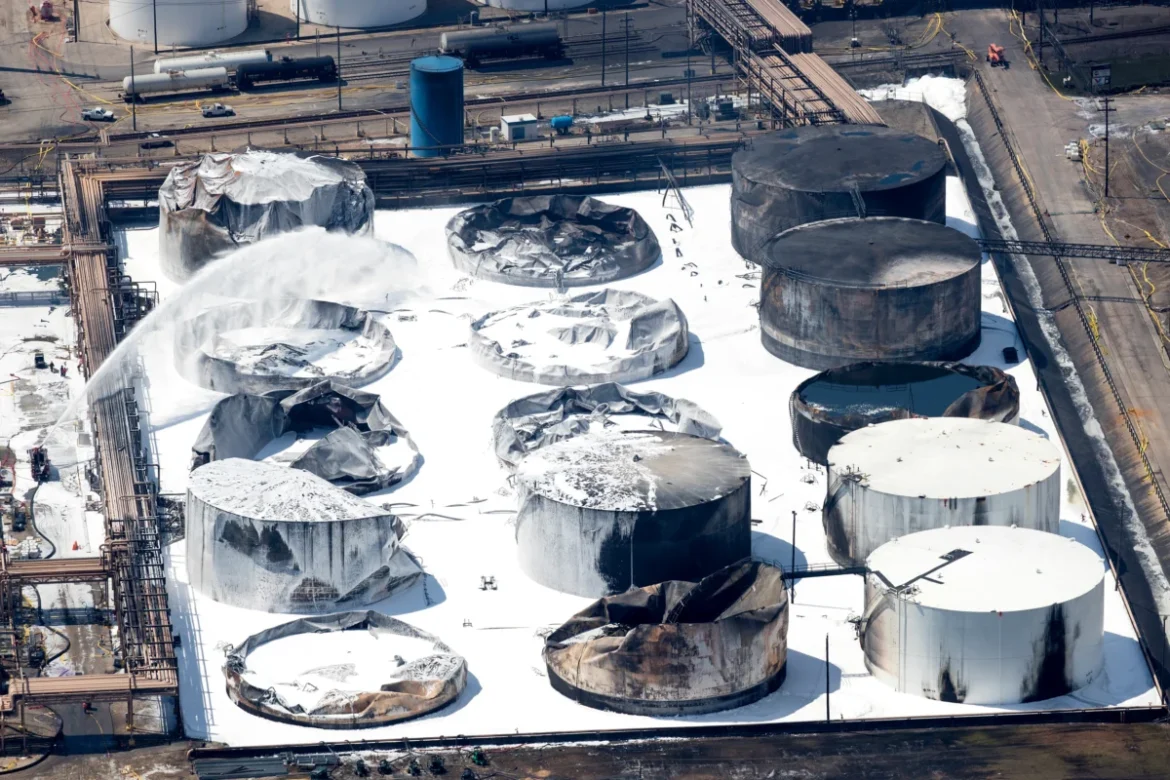
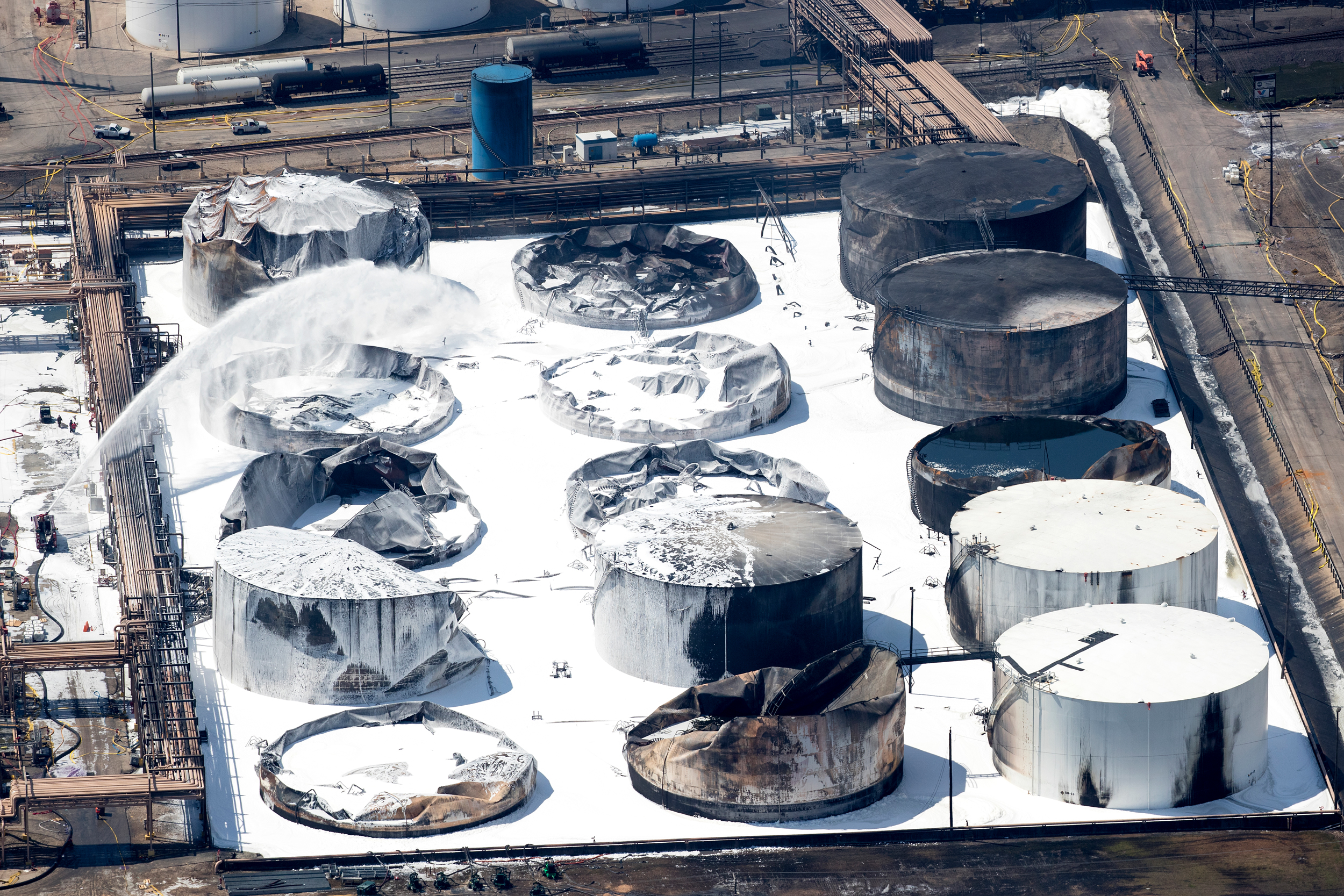
The source of the apocalyptic scene was a massive fire at a bulk-liquid storage facility operated by Intercontinental Terminals Co. (ITC). Located just five miles from Grandison’s home, the conflagration began when a faulty pump ignited naphtha—a highly flammable hydrocarbon essential for gasoline and plastic production—within an 80,000-barrel tank. The fire quickly spiraled out of control, spreading to 14 surrounding tanks. For three days, the black cloud dominated the Houston skyline. By the time emergency crews extinguished the flames, a containment wall had breached, spilling hundreds of thousands of barrels of toxic compounds into local waterways, devastating wildlife and contaminating the regional ecosystem.
The National Scope of Chemical Risk
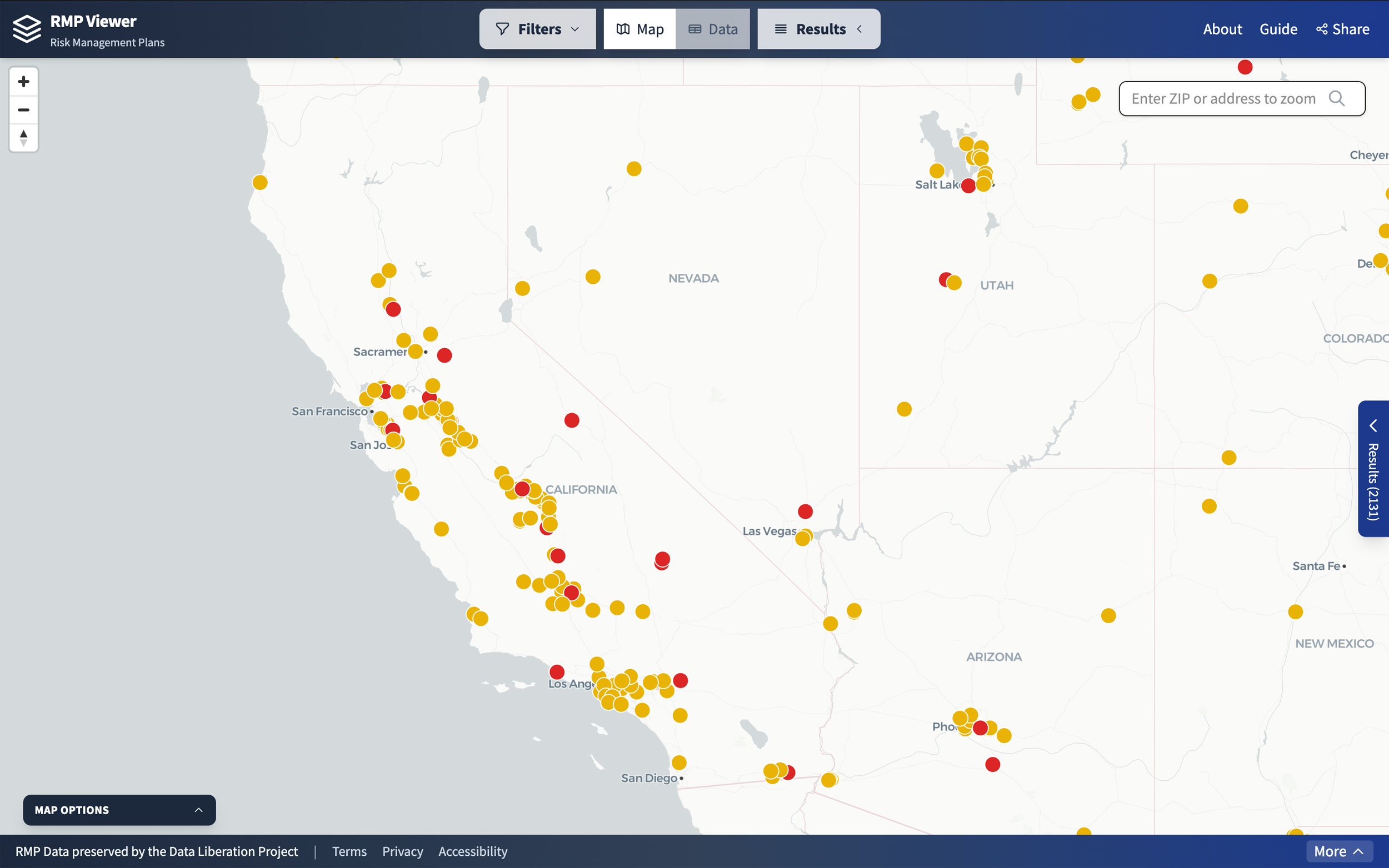
The disaster in Houston is not an isolated vulnerability. Approximately 180 million Americans—more than half the U.S. population—live within range of one of the 12,000 facilities across the country capable of producing what the Environmental Protection Agency (EPA) defines as a "worst-case scenario" chemical accident. These facilities, ranging from oil refineries and chemical manufacturers to water treatment plants and fertilizer storage sites, are central to the American economy but pose a significant threat to public health.
The risk is compounded by the escalating effects of climate change. A 2022 report from the Government Accountability Office (GAO) revealed that roughly one-third of these high-risk facilities are located in areas prone to natural hazards such as wildfires, hurricanes, and sea-level rise. As the planet warms, these "double disasters"—where a natural event triggers a secondary chemical catastrophe—become increasingly likely. Hurricanes can disable cooling systems, as seen during Hurricane Harvey, while floods can rupture storage tanks or disrupt power supplies needed to monitor volatile reactions.
Despite these documented risks, the regulatory landscape is currently undergoing a dramatic shift. The Trump administration, supported by significant backing from the oil and gas industry, has moved to dismantle key safeguards designed to prevent such disasters and keep the public informed about the risks in their own backyards.
The Regulatory Pendulum: From Obama to Trump
The primary mechanism for regulating these sites is the EPA’s Risk Management Program (RMP), established under the Clean Air Act. The program requires facilities handling hazardous substances to develop plans for preventing and responding to accidental releases. Over the past decade, the RMP has become a political battleground, with regulations being strengthened under Democratic administrations and systematically rolled back under Republican ones.
Following the 2013 explosion at a fertilizer plant in West, Texas—which killed 15 people and leveled parts of a town—the Obama administration finalized a set of "Safer Communities" requirements. These rules mandated that facilities conduct "Safer Technology and Alternatives Analysis" (STAA), undergo third-party safety audits after accidents, and increase transparency by providing the public with information about the chemicals stored nearby.
However, the first Trump administration successfully delayed and eventually rescinded many of these provisions, arguing they placed an "unnecessary burden" on industry. When President Biden took office, his EPA moved to restore and even strengthen these protections, citing the need to protect "fenceline" communities—areas disproportionately populated by Black, Latino, and low-income residents who live closest to industrial sites.
Now, the Trump administration has signaled a return to aggressive deregulation. Shortly after Lee Zeldin was appointed as EPA Administrator in early 2025, trade groups representing the petrochemical industry urged the agency to remove a public data tool that allowed residents to see the risks posed by nearby plants. By April 2025, the tool had been scrubbed from the EPA website. The agency has since proposed revisions to the RMP that would once again rescind requirements for safer technology analyses and worker participation in safety planning.
A History of Lessons Ignored
The push for deregulation often overlooks the specific findings of accident investigations. History is replete with examples where the very safeguards now being targeted could have saved lives.

In February 1999, a refinery in Martinez, California, experienced a disaster remarkably similar to the Houston fire. Workers discovered a pinhole leak in a pipe containing naphtha. Despite the known danger, management pushed to keep the unit running while repairs were attempted. The pipe eventually gushed naphtha onto hot equipment, igniting a fire that killed four workers. A subsequent third-party audit—the kind now being labeled as "unnecessary" by industry lobbyists—found that the disaster was caused by an "adversarial relationship" between management and labor, where production was prioritized over safety, and communication systems were unreliable.
Similarly, the 2019 explosion at the Philadelphia Energy Solutions refinery highlighted the dangers of hydrofluoric acid, a chemical so toxic it can create a lethal vapor cloud that travels for miles. The blast sent a 19-ton piece of equipment flying across a river and released over 5,000 pounds of the acid. While the facility eventually closed, the incident reinforced the need for safer alternative technologies—a requirement that the current EPA proposal seeks to eliminate.
The Chemical Safety Board (CSB), an independent agency tasked with investigating these incidents, has consistently recommended the very protections now on the chopping block. However, the CSB itself is under threat. With a modest budget of $14 million and only about 40 investigators to cover the entire nation, the board is chronically underfunded. The Trump administration has previously proposed eliminating the CSB entirely, dismissing its work as "unprompted studies."
The Human and Environmental Cost
For residents like Raschelle Grandison, the debate over "regulatory burdens" feels divorced from the reality of living in a sacrifice zone. Her family has lived on their land in Houston since the 1800s, long before the industrial giants moved in. She describes the soil as having "blood in it," a reference to the generations of people who have lived and died in the shadow of industry.
The health impacts are often long-term and difficult to quantify. Grandison’s mother, Theresa Williams, had no history of respiratory issues until the 2019 ITC fire. She was 92 years old when the mushroom cloud appeared over her home; from that day until her death, she struggled with breathing problems. The lack of transparent information means that many residents do not even know what they are being exposed to until it is too late.
The environmental impact is equally staggering. The ITC fire released toxic compounds that killed thousands of birds and contaminated the Houston Ship Channel, a vital waterway. When these incidents occur, the "containment" systems often fail, turning a localized fire into a regional environmental catastrophe. According to an analysis by Earthjustice, an industrial chemical release occurs in the United States every two days on average. Between 2004 and 2025, over 3,900 releases were reported, many resulting in injuries, evacuations, or long-term environmental damage.
Economic Arguments vs. Public Safety
The EPA and industry groups argue that the Biden-era rules make U.S. facilities less competitive and create national security risks by making chemical data public. Lee Zeldin and other proponents of the rollback claim that "common sense" regulation is needed to balance safety with economic prosperity. They point to a 45 percent reduction in reportable incidents over the last decade as evidence that current voluntary and existing measures are sufficient.
However, safety experts and labor unions dispute these figures. Darius Sivin of the United Auto Workers (UAW) has argued that the EPA’s incident database is fundamentally flawed. Because facilities only report every five years and many report late or not at all, the numbers are consistently undercounted. Furthermore, catastrophic accidents that lead to a plant’s closure—like the Philadelphia refinery blast—are often omitted from the long-term data, creating a skewed perception of safety trends.
Paul Orum, an expert on chemical safety policy, argues that the "national security" justification for withholding information is a red herring. If the goal were truly to reduce the risk of a terrorist attack, the most effective strategy would be to replace high-risk chemicals with safer alternatives, thereby removing the target altogether. Instead, the current policy creates what Orum calls a "know-nothing, do-nothing environment" where hazards are allowed to persist in secret.
Conclusion: The Path Forward
The proposed rollbacks to the Risk Management Program represent a significant victory for the petrochemical lobby, but they leave millions of Americans in a state of heightened vulnerability. As the EPA moves toward finalizing these revisions, fenceline communities and environmental advocates are bracing for a future with less oversight and less information.
For the 12,000 schools located within a mile of high-risk facilities, the stakes could not be higher. During the Houston fire, six school districts were forced to cancel classes, disrupting the lives of thousands of students and employees. Without the "Right to Know" and the mandate for safer technologies, these communities are left to rely on the hope that industry will prioritize safety over profit—a hope that history has repeatedly shown to be fragile.
As Raschelle Grandison continues to advocate for her community, she remains haunted by the image of the mushroom cloud. For her, the fight for stronger regulations is not about politics or economic competitiveness; it is about the fundamental right to breathe clean air and live without the constant threat of an industrial apocalypse. "Without the opportunity to speak out," she said, "they will erase us."