The recent Israeli military actions in Lebanon, which tragically resulted in over 300 fatalities and more than 1,000 injuries, have been presented by some conservative commentators as a pre-emptive strike that disrupted a significant political conspiracy. This narrative, however, lacks official confirmation and has been met with considerable skepticism by analysts and fact-checkers. Instead, a closer examination reveals a complex interplay of geopolitical tensions, internal Lebanese dynamics, and the rapid spread of unverified information through digital channels.
The Emergence of a Controversial Claim
In the immediate aftermath of the devastating Israeli assault last week, a compelling but unsubstantiated story began to circulate: Israel’s military intervention had, in fact, thwarted an imminent coup attempt by the powerful Lebanese Shiite movement, Hezbollah, against the legitimate government in Beirut. Erick Stakelbeck, a prominent conservative American commentator known for his YouTube channel focusing on Middle Eastern affairs, enthusiastically propagated this theory just two days after the attacks. With over a million subscribers, Stakelbeck declared, "It seems Israel uncovered this plot by Hezbollah to essentially overthrow the Lebanese government. And Lebanon apparently averted a major disaster here, thanks to the Israeli air force."
This assertion, while captivating to his substantial audience, quickly became a focal point of scrutiny. The sheer scale of human suffering from the Israeli strikes – hundreds dead and thousands wounded – meant that any justification for such military action would naturally undergo intense examination. The claim that this devastation was a necessary evil to prevent an internal Lebanese power grab offered a compelling, albeit unverified, rationale.
Tracing the Origins: From Social Media to Mainstream Echoes
The investigation into the origins of this "coup" story reveals a pattern common in the age of rapid digital information dissemination. While initial rumors suggested Israeli media might have first reported the coup attempt, DW’s inquiries indicate a different genesis. The earliest identifiable mention online originated from Sufyan al-Samarrai, a social media user with close to 225,000 followers, known for his fervent anti-Iran and pro-Israel commentary.
Barely an hour after last Wednesday’s attacks commenced around 2 p.m., al-Samarrai posted on X (formerly Twitter), in Arabic, that "Israel thwarted a… coup against the Lebanese government." Crucially, al-Samarrai’s tweet provided no source or corroborating evidence for this explosive claim. Nonetheless, its provocative nature ensured its rapid amplification across various social media platforms, often by users sharing similar ideological leanings and a propensity for inflammatory commentary.
From these digital echoes, the narrative began to permeate regional media. Several outlets in Lebanon, publishing in both Arabic and French, subsequently reported on the alleged coup. Lebanon’s MTV, for instance, a day after the Israeli attack, cited "informed sources" claiming Hezbollah planned to "arrest ministers, members of parliament and political figures, and to target the prime minister by bombing the Grand Serail or his residence." The report explicitly stated that the "Beirut coup" was intended to "terrorize the Lebanese people" and was ultimately "thwarted by the Israeli strike." This propagation across various media, despite the lack of official confirmation, lent the story an air of credibility for many.
The Absence of Official Confirmation and Dubious Evidence
A critical aspect of the unfolding narrative is the resounding silence from official channels regarding any confirmed coup plot. Neither Hezbollah, the alleged orchestrator, nor the Lebanese or Israeli governments, supposedly involved in its thwarting, have offered any corroboration. DW’s specific inquiries to Israel’s Ministry of Defense and military regarding the alleged plot remained unanswered by the time of publication, further underscoring the lack of official validation.
Despite this absence of official backing, several factors contributed to the "coup" story’s initial believability, leveraging existing tensions and circulating rumors. One such element was the announcement by Lebanon’s Prime Minister, Nawaf Salam, on April 12, that he would not travel to the United States for scheduled talks with Israel, citing "current internal circumstances." For some observers, this abrupt change in plans was interpreted as a veiled acknowledgment of an unfolding internal crisis, specifically a potential coup.
Another widely circulated rumor, quickly debunked, suggested that Israel had managed to target mid-tier Hezbollah members during the Wednesday attacks because they were all participating in a Zoom call, thereby inadvertently revealing their locations. This technologically improbable scenario gained traction, perhaps due to the allure of a dramatic intelligence coup. However, a spokesperson from Zoom unequivocally refuted this rumor to DW, explaining that the platform collects only "approximate geographic data" via IP addresses – typically a city or region, not a precise address suitable for air strikes. Furthermore, Zoom does not retain this data. This incident highlights the susceptibility of public discourse to technically unsound explanations during times of conflict.
Adding to the perceived plausibility of a Hezbollah power grab is the group’s well-documented history of friction with other factions within the Lebanese government. Even with its political allies, such as the Amal party, holding ministerial positions in the cabinet, Hezbollah’s critics frequently argue that the organization exerts undue influence, effectively having "captured the Lebanese state to a degree." This background of internal political struggle created fertile ground for such a narrative to take root.
Hezbollah’s Role in Lebanon: A State Within a State
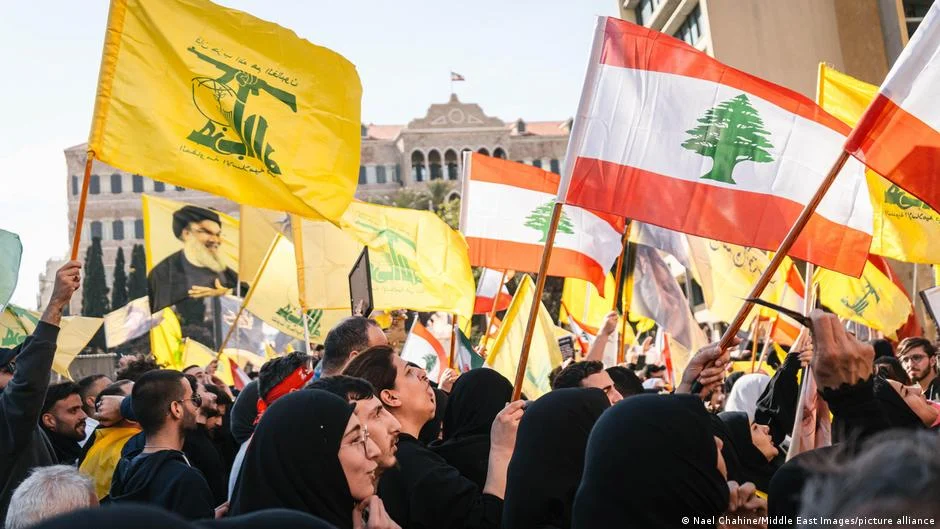
To understand the complexity of the alleged coup, it is essential to contextualize Hezbollah’s profound and multifaceted role in Lebanon. Often described as a "state within a state," Hezbollah represents a significant portion of Lebanon’s Shiite Muslim population, estimated at around 30%. Its influence extends far beyond mere political representation, encompassing a vast network of social services, educational institutions, healthcare facilities, and a formidable military wing. This military component is widely considered more potent and better equipped than Lebanon’s own national army, giving Hezbollah unparalleled leverage within the country.

Hezbollah’s self-proclaimed mission is to defend Lebanese sovereignty, particularly against Israeli aggression. In line with this, the group is currently engaged in active conflict with Israel along Lebanon’s southern border, where Israel has established what it terms a "buffer zone" for security purposes. However, Hezbollah’s close alliance with Iran and its role within the "Axis of Resistance" complicate its position as a purely national defender. In early March, following Israel’s assassination of a senior Iranian commander, Hezbollah retaliated by firing rockets into Israel, triggering a significant escalation in Israeli retaliatory strikes on Lebanese territory. This dynamic has led to widespread criticism from many Lebanese, who accuse Hezbollah of prioritizing Iran’s regional agenda over Lebanon’s national interests and of dragging the country into conflicts it wishes to avoid.
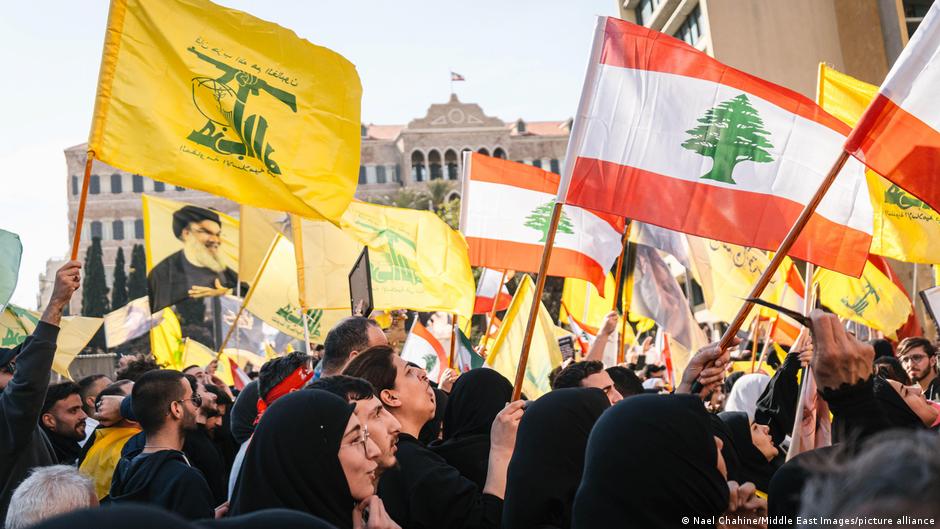
More recently, senior Hezbollah figures have openly voiced their disapproval of the Lebanese government’s willingness to engage in negotiations with Israel. This internal dissent underscores the ideological chasm between Hezbollah and elements of the state it ostensibly operates within. Protests in Beirut have seen locals accuse Prime Minister Nawaf Salam of being a "traitor" and an "Israeli supporter," with some even burning his effigy, vividly illustrating the deep divisions.
Expert Consensus: Why a Coup is Improbable
Despite the political rhetoric and internal tensions, experts on Lebanese politics and Hezbollah widely dismiss the notion of a coup being a realistic or strategic move for the group at this juncture. Amal Saad, a political scientist and leading expert on Hezbollah at the UK’s Cardiff University, highlights Hezbollah’s historical aversion to civil strife. "Hezbollah has always been averse to civil strife but is even more so in the war context because of the displaced," Saad explains. "There are over a million of them, and if there was civil unrest, they would suffer. That’s why a coup now is not on the cards." The current humanitarian crisis, with over a million Lebanese displaced from southern Lebanon, would be catastrophically exacerbated by internal conflict, a scenario Hezbollah is unlikely to precipitate given its stated commitment to the welfare of its constituents.
Even a former senior Israeli defense official, speaking off the record during an online panel, expressed skepticism regarding a coup. "I don’t think a coup is a real possibility," he stated. He further elaborated on the internal dynamics of the Lebanese military: "I was also told that if Hezbollah initiated a coup, the Shia soldiers in the army would fight with the Lebanese army. Whereas if the Lebanese army decided to dismantle Hezbollah, they’d likely defect or not participate." This assessment suggests that while Hezbollah’s influence within the military is significant, a direct confrontation with the state that would alienate its own Shiite base is unlikely to succeed and would run counter to its strategic interests of maintaining a powerful, yet semi-autonomous, position within the Lebanese framework.
While Hezbollah has demonstrated its capacity for assertive action, such as in 2008 when its fighters briefly took control of parts of western Beirut following government attempts to dismantle its telecommunications network, the current context is markedly different. The ongoing regional conflict and the humanitarian crisis create a distinct set of constraints and strategic calculations. Indeed, senior Hezbollah member Mahmoud Qomati, in a YouTube interview last month, while likening the Lebanese leadership to France’s collaborationist Vichy government, also explicitly stated, "we are committed to stability in the country. We are capable of turning the country upside down, we are capable of overthrowing the government… but we are not doing anything." This statement, while containing a veiled threat, ultimately reiterates a strategic choice against internal destabilization.
The Diplomatic Chessboard and Alternative Interpretations
The "Hezbollah coup" narrative, whether believed or not, has become deeply intertwined with the ongoing diplomatic efforts concerning Lebanon and the broader regional conflict. On Tuesday, talks between Lebanon and Israel commenced in Washington, a development that, to some extent, is perceived by various factions as a direct consequence of last Wednesday’s Israeli attack. This perception is particularly salient given the recent US-Iran ceasefire agreement, which initially sparked hopes for a broader regional de-escalation. However, it soon became clear that Lebanon was not explicitly included in that agreement, leaving its status and the role of Hezbollah unresolved. The new talks with Israel are specifically designed to address Hezbollah’s future role in Lebanon.

For some analysts, the timing and nature of the Israeli attack, coupled with the subsequent "coup" narrative, point to a strategic move aimed at influencing these diplomatic processes. Makram Rabah, a professor at the American University of Beirut, articulates this perspective in an article for Now Lebanon: "The country woke up to the possibility of peace under the mistaken impression that the Iran-US ceasefire somehow included Lebanon. Hezbollah, instead of asking how the displaced might return to their homes, appears to have moved directly to the more urgent national priority of toppling a government still invested in ending the bloodshed." This view implies that the coup story distracts from the humanitarian crisis and potentially serves Hezbollah’s agenda of undermining diplomatic engagement with Israel.
However, a contrasting and more critical interpretation views the "coup" narrative as a calculated diversion. Libnanews, a local Francophone citizen media initiative, countered directly, arguing that "The Israeli account of a Hezbollah coup appears to be a pretext for disproportionate bombing of Lebanon." The publication contends that "What bothered Israel was not an imaginary putsch. What bothered Israel was the dynamics of negotiations [between the US and Iran]." According to this viewpoint, the US-Iran talks had opened a pathway for a regional ceasefire that would inevitably constrain Israel’s military options and freedom of action in Lebanon. By launching a significant offensive and then allowing the "coup" narrative to propagate, Israel could justify its actions as necessary for regional security, thereby disrupting diplomatic momentum and gaining leverage.
Broader Implications: Information Warfare and Regional Stability
The episode surrounding the alleged Hezbollah coup in Lebanon serves as a stark illustration of information warfare in modern conflict zones. The rapid dissemination of unverified claims, often originating from highly partisan social media accounts, can quickly shape public perception and influence geopolitical narratives, even in the absence of factual corroboration. The ease with which such stories transition from niche online communities to mainstream regional media highlights the porous boundaries of contemporary information ecosystems.
The incident also underscores the inherent fragility of Lebanon’s political landscape. A country already grappling with a severe economic crisis, deep sectarian divisions, and the humanitarian burden of over a million displaced citizens, is particularly vulnerable to both external military pressures and internal destabilization. The very possibility of a coup, regardless of its veracity, exposes the deep mistrust and power imbalances that characterize Lebanese politics.
Ultimately, whether the "coup" was an intentional fabrication or a genuine misinterpretation, its impact on the ground is undeniable. It diverted attention from the immediate human cost of the Israeli strikes and fueled a contentious debate that further polarized Lebanese society. As Washington-led talks attempt to navigate the complex relationship between Lebanon, Israel, and Hezbollah, the legacy of disputed narratives and the real-world consequences of military actions will undoubtedly cast a long shadow over any prospects for lasting peace and stability in the volatile region.