
Perched precariously on a homemade wooden bed, Hassan Koko gazes out over the majestic, undulating hills of the Nuba Mountains in South Kordofan, Sudan, a landscape of profound natural beauty that belies the brutal realities of conflict. Despite the comforting late afternoon breeze and the spectacular vista, a deep unease clouds his face. Just three months prior, on November 29, the 50-year-old community health worker had concluded a training course and was enjoying a moment of peace with sweet tea when the familiar, ominous hum of a drone pierced the tranquility. The unmanned aerial vehicle struck once, then returned, hitting those already wounded, claiming the lives of several of Koko’s colleagues. “The drone struck once, then came back again, hitting those who were already wounded,” he recounts with a shudder, the memory etched into his very being.
Koko survived the assault, but the attack left an indelible mark, both psychological and profoundly physical. He points to his left knee, where a sharp metal fragment remains clearly visible beneath the skin, a constant, painful reminder of that horrific day. “My family was happy I survived. They thought I would die,” he reflects, his voice tinged with resignation. “But life is not the same anymore. Sometimes, I walk down to the nearby market, but mostly, I’m just stuck at home.” His ordeal encapsulates the persistent terror and the enduring trauma faced by countless individuals in a region that has known little peace for decades, now grappling with a new, complex layer of conflict.
A Landscape Scarred by Conflict and Decades of Marginalization

The Nuba Mountains, a rugged and diverse region in southern Kordofan, has long been a flashpoint in Sudan’s tumultuous history. Home to over 50 distinct ethnic groups, collectively known as the Nuba people, this territory, roughly the size of Austria, has historically suffered from systemic marginalization by successive central governments in Khartoum. Their distinct cultural and religious identities, coupled with their rich agricultural lands and strategic location, have often placed them at the heart of Sudan’s internal conflicts.
The current chapter of conflict dates back to 2011, a pivotal year that saw the birth of independent South Sudan. The Nuba Mountains, despite its close historical and cultural ties to the south and its significant role in the liberation struggle, was controversially excluded from the political settlement that led to South Sudan’s secession. This exclusion ignited a fresh wave of hostilities, deepening long-standing grievances and leading to a renewed armed struggle against the Sudanese Armed Forces (SAF). The Sudan People’s Liberation Movement-North (SPLM-N), emerging from the very liberation movement (SPLA) that now constitutes South Sudan’s military, was founded that same year, in 2011, with the explicit aim of representing the Nuba populations’ demand for self-rule and a more equitable share in Sudan’s governance. For over a decade, the people of the Nuba Mountains, under SPLM-N control, grew accustomed to the intermittent but often devastating attacks from the SAF, living under the constant threat of aerial bombardment and ground assaults.
The Shadow of the Drone: A New Dimension of Warfare
Hassan Koko’s harrowing experience with the drone attack underscores the evolving nature of warfare in Sudan. While traditional ground battles and artillery exchanges have been commonplace, the increasing deployment of drones adds a terrifying dimension, allowing for precision strikes that sow fear and inflict casualties with little warning. These unmanned aerial vehicles, often operated remotely, transform the battlefield and blur the lines between combatants and civilians, particularly when they target areas where community health workers are gathered, as in Koko’s case. The psychological impact of such attacks is immense, fostering a pervasive sense of vulnerability and undermining the safety of even basic humanitarian activities. The repeated targeting of already wounded individuals, as Koko described, speaks to a particularly brutal tactic aimed at maximizing casualties and terror.

An Unholy Alliance Forged in Fire: SPLM-N and RSF
A significant and highly controversial shift in the conflict landscape occurred in February 2025, when the SPLM-N, faced with persistent hostilities from the SAF and the broader chaos gripping Sudan, decided to join forces with the paramilitary Rapid Support Forces (RSF). This alliance sent shockwaves through the region and among international observers. The RSF, a successor to the notorious Janjaweed militias, has a deeply troubling history, implicated in widespread atrocities in Darfur in the early 2000s and, more recently, accused of systematic killings, sexual violence, and other vicious war crimes in the ongoing Sudan war. For the SPLM-N, a movement that has historically championed the rights of marginalized communities against state oppression, aligning with such a force was seen by many as a precarious and morally fraught decision.
Jalale Getachew Birru, a senior analyst at the Armed Conflict Location & Event Data (ACLED) project, argues that this alliance, however controversial, must be understood as a pragmatic response to the current geopolitical realities in Sudan. Both the RSF and the SPLM-N share a common enemy in the SAF, led by General Abdel Fattah al-Burhan. Furthermore, Birru suggests, they share a broader, albeit perhaps divergent, desire for a future federal system in Sudan, one that would ideally grant greater autonomy to peripheral regions and potentially dilute the power of the central military establishment. “Both sides have a common interest, and that’s why they are aligned at this moment, to push back against the SAF,” she explains, highlighting the transactional nature of the partnership. This strategic convergence, despite profound ideological and historical differences, reflects the desperate calculus of survival and power in a fractured nation.
Sudan’s Wider War: A Humanitarian Catastrophe Unfolding

The SPLM-N and RSF alliance plays out against the backdrop of the devastating Sudan war, which erupted in April 2023 between the SAF and the RSF. What began as a power struggle between rival generals has rapidly escalated into what the United Nations and numerous humanitarian organizations describe as the world’s most severe humanitarian crisis. The conflict has plunged Sudan into unprecedented levels of violence, displacement, and food insecurity. According to various estimates, the war has resulted in more than 150,000 deaths, though the true toll is likely far higher and largely unrecorded. The scale of forced displacement is staggering, with some 14 million civilians uprooted from their homes, constituting the largest internal displacement crisis globally.
The conflict has decimated Sudan’s already fragile infrastructure, particularly its healthcare system, with countless hospitals and clinics destroyed or rendered non-functional. Disease outbreaks, including cholera and measles, are rampant, exacerbated by lack of clean water, sanitation, and medical supplies. Food insecurity has reached catastrophic levels, with millions facing famine-like conditions, especially in conflict-affected regions like Darfur, Khartoum, and Kordofan. The World Food Programme (WFP) has repeatedly warned of impending famine, citing significant challenges in accessing vulnerable populations due to insecurity and bureaucratic hurdles. UN OCHA reports indicate that over 25 million people – more than half of Sudan’s population – are in need of humanitarian assistance.
The Nuba Mountains: A Fragile Haven for Millions
Amidst this national catastrophe, the Nuba Mountains, ironically, has become a reluctant haven for millions fleeing the violence. In urban centers like Kauda, the SPLM-N headquarters, RSF soldiers are now a common sight, casually roaming the streets, chatting at cafes, and selling recently looted items – cars, beds, fuel, fertilizers, electronic devices – from across Sudan’s war-torn territories. Their presence, while providing a degree of military strength against the SAF, also introduces a volatile and unpredictable element into the local communities.

Jalal Abdulkarim, who coordinates the SPLM-N’s humanitarian efforts in the so-called "liberated areas," sits stiffly behind his desk in Kauda, the weight of the crisis palpable. He does not hide the immense pressure his movement is under. Abdulkarim hands over a yellow slip of paper with a stark number: “2,885,393.” This figure represents the staggering number of refugees received in SPLM-N-controlled areas since the beginning of the Sudan war, a testament to the region’s unexpected role as a sanctuary. This influx has overwhelmed local resources and infrastructure, pushing the Nuba Mountains to its breaking point.
Funding for these massive refugee programs largely depends on external NGOs and UN agencies, but Abdulkarim laments that these organizations are also under severe financial strain. He points to a significant downturn in international aid, exacerbated by global shifts in foreign policy and humanitarian priorities. “If an NGO previously donated $1 or $2 million, today it’s just $500,000 or $200,000. This is one of the biggest challenges we face,” he explains, highlighting a trend of dwindling support that impacts essential provisions like food, water, shelter, and sanitation for the new arrivals. The International Organization for Migration (IOM) estimates that Kordofan hosts "more than a million" internally displaced persons. However, with the absence of a visible UN presence in Kadugli, the capital of South Kordofan State, and most international NGOs having suspended or significantly reduced their operations in the region, these figures are likely conservative and subject to considerable inaccuracies. The humanitarian data vacuum further complicates aid efforts and obscures the true scale of suffering.
Life in the Camps: A Daily Struggle for Survival and Dignity
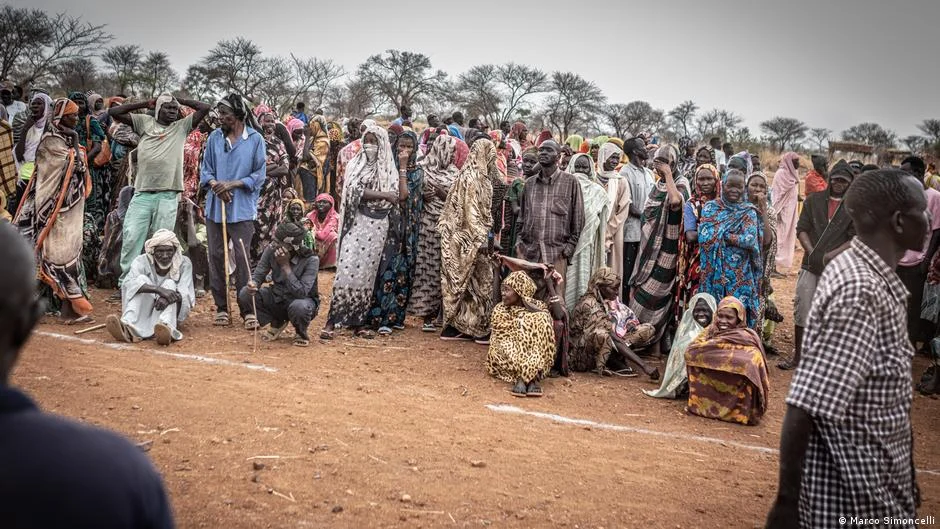
Deeper into the rugged terrain of the Nuba Mountains lies the Umm Dulo Reception Camp, a barren expanse transformed into a sprawling settlement where internally displaced people have erected temporary shelters from sticks and plastic, often beneath the sparse shadows of acacia trees. In Zone 12, at the far end of this camp, which now houses over 34,000 people, the newest arrivals seek refuge. Fatma Eisa Kuku, a 76-year-old, recounts the terrifying life she fled in Kadugli, the state capital. “I couldn’t sleep. Every night was rat-tat-tat-tat,” she says, mimicking the relentless sound of gunfire that became her lullaby of terror.

In Umm Dulo, Kuku has found temporary shelter and, crucially, a return to peaceful sleep. Yet, the trauma of her flight remains, particularly the sudden abduction of three men she knew. “They came between dawn and dusk, and I haven’t seen my brothers since,” she recounts, her voice heavy with sorrow and helplessness. “I don’t know who these people were. If you ask about their identities, you’ll be faced with a lot of rudeness.” Her testimony reflects the arbitrary violence and pervasive fear that define the experience of displacement, where perpetrators often operate with impunity, their identities shrouded in the chaos of war. The conditions in Umm Dulo, while offering a respite from direct conflict, are precarious, with constant struggles for adequate food, clean water, and medical care, compounded by the psychological toll of displacement and loss.
Tensions Beneath the Surface: The RSF’s Precarious Welcome
While the SPLM-N and RSF maintain their military alliance, the integration of RSF forces into Nuba communities is far from seamless. Although locals may not explicitly voice their concerns, a pervasive tension hangs in the air. The RSF rarely blends into the local communities, their presence often perceived as an unfamiliar and unsettling layer added to years of inherited anxiety. Their distinctive uniforms, vehicles, and the visible signs of their looted acquisitions create a distinct separation.
Moreover, the presence of SPLM-N’s new ally around critical civilian infrastructure like hospitals and markets has inadvertently turned these crowded spaces into potential war targets for the SAF. This predicament is all too familiar to the Nuba peoples, who have long endured the deliberate targeting of civilian areas during their conflict with Khartoum. The strategic advantage gained by the alliance comes at the cost of heightened risk for the very civilians the SPLM-N purports to protect.

Little is known about the precise military agreement underpinning the RSF and SPLM-N alliance. However, Jalale Getachew Birru cites credible reports of the RSF establishing military training camps within SPLM-N-controlled territories, indicating a deeper operational integration than might be publicly acknowledged. This suggests a more substantial commitment to joint operations and shared military objectives, at least for the time being.
Strategic Maneuvers and Uncertain Futures
Despite the current alignment, Birru remains unconvinced about the alliance’s long-term longevity. She points to recent events, such as when the SAF successfully broke the siege of Kadugli earlier this year – a strategic city long controlled by the SPLM-N and RSF. Following this setback, the allies reportedly began blaming each other for the loss, exposing cracks in their united front. “There was a clash where we were keeping an eye to see whether it was a sign for this alliance to finally break, and for them to go separate ways,” she explains. Such internal squabbles highlight the fragility inherent in a pragmatic alliance forged out of necessity rather than deep ideological unity. For now, however, the alliance holds, driven by the immediate imperative to counter the SAF.
The strategic implications of this alliance are far-reaching. It complicates the broader Sudanese conflict, potentially drawing the Nuba Mountains deeper into the national power struggle. It also raises questions about the future political landscape of Sudan, particularly concerning federalism and regional autonomy, should the RSF and SPLM-N achieve their objectives against the SAF. However, the inherent risks for the Nuba people are considerable, potentially turning their homeland into a proxy battleground for external forces.

Voices from the Frontlines and the Hospitals
At the Mother of Mercy Hospital, the largest medical facility in the SPLM-N-controlled areas located in Gidel, the harsh realities of the war are visible. Three young, wounded RSF soldiers have dragged their beds outside into the shadows, seeking refuge from the oppressive afternoon heat. These are the foot soldiers of a force described as one of the most relentless militias of our time. What motivates them?
“We are fighting because the government [in Sudan] is not doing enough. There are not enough hospitals, infrastructure, and schools,” explains Hassan Hamid, one of the injured RSF fighters. His words reflect a common grievance among marginalized groups in Sudan, echoing the very complaints that fueled the SPLM-N’s struggle for decades. This shared discontent with the central government’s failure to provide basic services and equitable development forms a crucial, if tenuous, ideological link between the two disparate groups. For now, Hassan Hamid and his comrades have found an unexpected refuge in the Nuba Mountains, and there is no indication that they are leaving anytime soon. “I want to stay here,” he states. “I want to live in the Nuba Mountains forever.” This sentiment, while perhaps a personal aspiration, also hints at the RSF’s strategic interest in establishing a permanent presence in the region.
Global Indifference and Local Resilience

The situation in the Nuba Mountains is a microcosm of the wider crisis gripping Sudan, a crisis that continues to unfold largely away from the international spotlight. Despite the staggering humanitarian figures and the documented atrocities, the global response has been inadequate, characterized by donor fatigue and competing international priorities. This indifference leaves communities like the Nuba people, and the millions of displaced persons they host, to bear the brunt of a brutal conflict with dwindling resources and uncertain futures.
Yet, amidst the pervasive fear, the physical scars, and the constant threat of violence, there is an enduring resilience. Hassan Koko, despite his injury and confinement, represents the determination to survive. Fatma Eisa Kuku, finding peace in sleep even as she mourns the abducted, symbolizes the human spirit’s capacity to seek solace amidst despair. The SPLM-N, burdened by millions of refugees and dwindling aid, continues its efforts to provide a semblance of order and care. The Nuba Mountains, a land of majestic beauty and profound suffering, remains a testament to the complex, tragic, and often contradictory dynamics of war, where alliances shift, loyalties are tested, and the human cost continues to mount. The fate of this region, and indeed of Sudan, hangs precariously in the balance, awaiting a resolution that remains elusive.

