
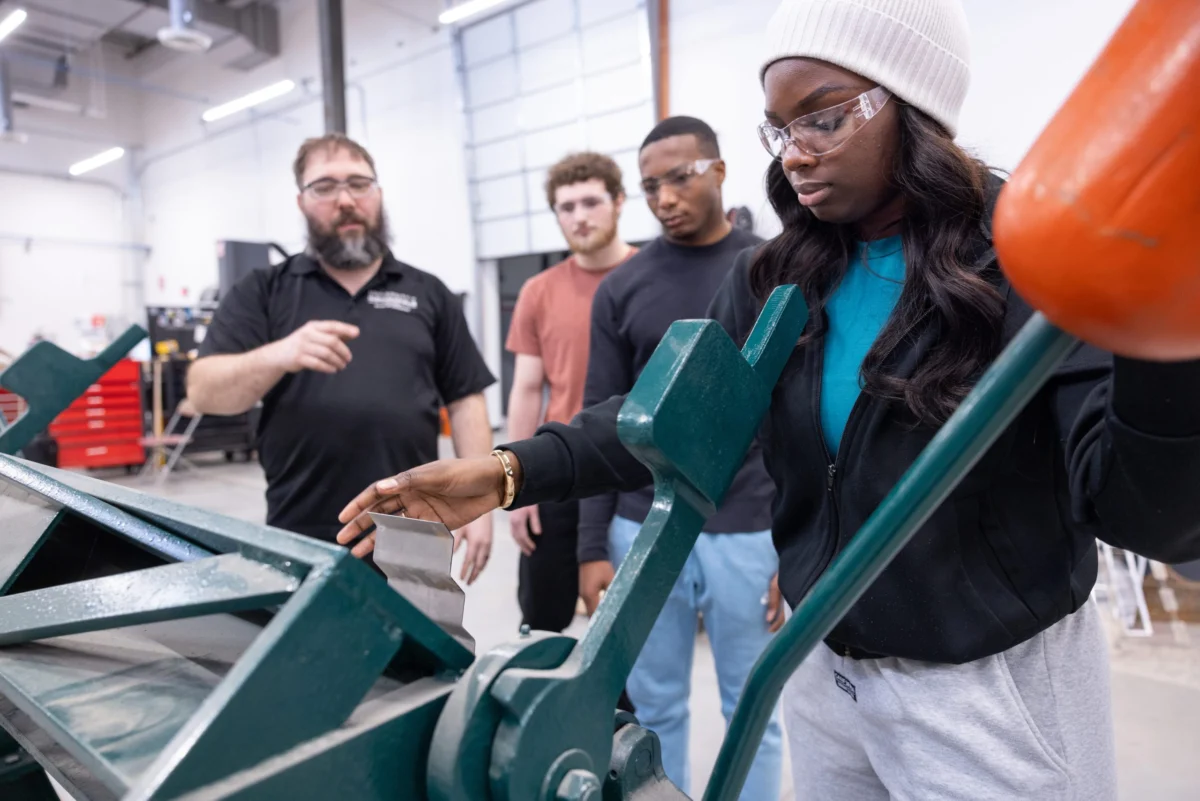
In one of Denver’s wealthiest suburbs, where median family income consistently exceeds $150,000 and the cultural expectation of a four-year college degree is deeply ingrained, a quiet revolution is taking hold: high school students are increasingly lining up for trade certifications and technical credentials. This shift in the Cherry Creek School District reflects a broader national movement challenging the decades-old "college-for-all" paradigm. As families and educators grapple with rising tuition costs and persistent underemployment among bachelor’s degree holders, the focus is pivoting toward a more nuanced, flexible approach to career readiness that integrates technical proficiency with traditional academic pursuits.
The Erosion of the College-for-All Mandate
For over forty years, American educational policy and parental expectations have been anchored in the belief that a four-year university degree is the essential, singular gateway to the middle class. Following the post-WWII economic expansion, the "college-for-all" movement gained political and social momentum, rebranding the high school experience primarily as a staging ground for university applications.
However, current labor market data suggests this standardized approach has reached a point of diminishing returns. According to data from the Burning Glass Institute, more than 50 percent of college graduates are underemployed within their first year of graduation, holding positions that do not require the degrees they spent four years—and significant tuition dollars—to obtain. A decade after commencement, nearly 45 percent of these graduates remain in roles that do not fully utilize their academic qualifications.
This discrepancy highlights a critical failure in the current educational pipeline. The "college-for-all" philosophy, while well-intentioned, has effectively treated higher education as a vague "career exploration strategy" rather than a targeted investment. Students often arrive at universities without sufficient exposure to professional environments, resulting in costly changes of majors, extended graduation timelines, and the accumulation of significant student loan debt for programs that may not align with their actual career interests or aptitude.
A Chronology of the Skills Gap
The roots of the current crisis can be traced back to the late 20th century, when vocational training—often branded as "shop class"—was systematically marginalized. By the 1990s and early 2000s, many school districts shuttered technical programs to prioritize college-preparatory curricula, fueled by the fear that vocational pathways would "track" students away from higher education.
By 2010, the unintended consequences of this shift became apparent: a growing mismatch between the skills taught in classrooms and the needs of the evolving economy. As the U.S. labor market shifted toward high-tech manufacturing, advanced healthcare, and specialized trade industries, employers began reporting record-level talent shortages.
According to the Georgetown University Center on Education and the Workforce (CEW), the United States currently faces an annual shortage of nearly 712,000 workers possessing industry-recognized certificates or associate degrees. These fields—ranging from aviation maintenance and cybersecurity to advanced medical imaging—frequently offer starting salaries exceeding $55,000, often without the crushing debt associated with a four-year degree.
The Cherry Creek Model: A Case Study in Innovation
The Cherry Creek Innovation Campus (CCIC) serves as a modern blueprint for how high schools can bridge the gap between academic theory and practical application. Unlike the vocational schools of the past, the CCIC is a high-tech facility where students spend part of their day gaining hands-on experience in fields like computer science, health science, and aerospace engineering.
The program is designed to complement, not replace, traditional high school requirements. Students are transported from their home schools to the innovation center, allowing them to participate in high-level trade certification programs while maintaining their core academic progress.
The diversity of career paths pursued by these students underscores the necessity of a multifaceted approach. One student might use the center to gain foundational knowledge for an engineering degree, while another might earn an industry credential to begin working as a chef or a construction manager immediately after graduation. By the time these students reach the end of high school, they are not just "college-bound"—they are "career-informed." They enter higher education with a sense of purpose, reducing the likelihood of the "lost phase" common among students who arrive at university without a clear professional focus.
Economic Nuance: ROI and the Long-Term View
Economic analysts have begun to scrutinize the return on investment (ROI) of different educational pathways. CEW data reveals a complex reality: while bachelor’s degrees often yield higher long-term earnings—with the ROI gap widening significantly after 15 years—shorter-term credentials and associate degrees frequently outperform four-year degrees in the first decade post-completion.
For families concerned with immediate economic stability, the logic is clear. A student who graduates with a specialized certificate can enter the workforce, begin earning a salary, and avoid the negative net worth that follows many college graduates. If that student later decides to pursue a bachelor’s degree, they do so with a resume, a professional network, and a clearer understanding of how that degree will advance their existing career.
Professional Perspectives on Workforce Development
The stigma surrounding non-university pathways is rapidly fading as industry leaders and educators align on the necessity of skills-based hiring. Patrick O’Donnell, CEO and co-founder of the nonprofit Ridgeline, has been at the forefront of this shift, particularly in the San Francisco Bay Area.
Ridgeline’s maritime career exploration program offers a glimpse into the future of secondary education. By connecting students with hands-on experience in ship engineering and port management, the program demonstrates that "trade" does not mean "low-wage." Many of these maritime roles lead to six-figure salaries. O’Donnell argues that the separation between "college-track" and "career-track" is a false binary that harms all students. "Every high school should offer students the opportunity to graduate with a diploma and an industry-recognized credential," O’Donnell notes.
This sentiment is echoed by workforce analysts who emphasize that the modern economy requires a "stackable" approach to education—where credentials, certificates, and degrees can be earned at different intervals throughout a lifetime.
Broader Implications and Policy Shifts
The movement toward integrated career readiness has significant implications for state and federal policy. Policymakers are increasingly looking at ways to incentivize school districts to incorporate vocational training into standard graduation requirements. The challenge, however, remains one of funding and cultural shift. Transforming the perception of vocational training requires significant investment in equipment, instructor training, and partnerships with local businesses.
Furthermore, the "college-for-all" movement created an administrative infrastructure focused entirely on university placement. Shifting this infrastructure to accommodate career counseling that includes apprenticeship pathways and technical certification requires a wholesale redesign of school guidance departments.
The data suggests that the status quo is becoming unsustainable. As universities face a "demographic cliff"—a decline in the number of high school graduates—and as employers grow increasingly frustrated by the lack of skilled labor, the pressure to reform secondary education will only intensify.
Conclusion: A New Standard for Secondary Education
The goal of the modern educational system should not be to force a choice between college and career, but to provide the resources for students to pursue both simultaneously. By recognizing that a diploma is only the beginning of a professional journey, schools can provide students with the agency to navigate a complex economy.
Whether a student chooses an immediate path into the maritime industry, a technical certificate in computer science, or a traditional four-year engineering degree, the common denominator must be clarity and purpose. By abandoning the "college-for-all" mantra in favor of a "skills-for-all" approach, the United States can better serve the next generation of workers, ensuring that they enter the workforce not as underemployed graduates, but as highly skilled, confident professionals ready to meet the demands of the 21st-century economy.
The transition from a university-centric model to one that values industry-recognized credentials is not an indictment of higher education; it is an evolution of it. As the Cherry Creek and Ridgeline programs demonstrate, the most effective path forward is one that acknowledges the diverse talents and aspirations of students, ensuring that every individual has the tools to build a sustainable and rewarding career.

