
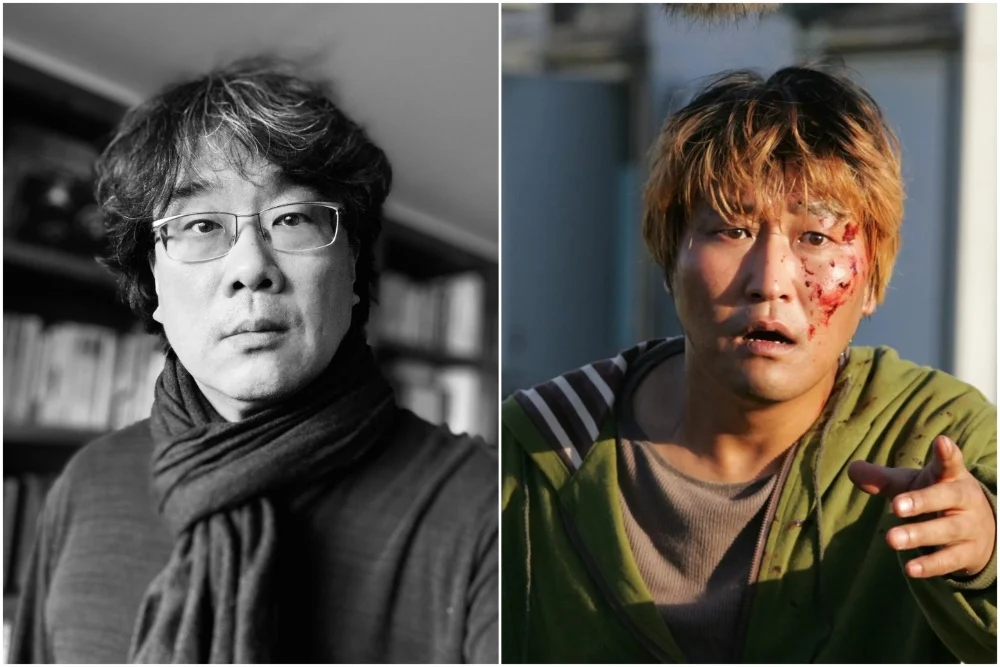
Two decades after it first terrorized audiences at the Cannes Film Festival, Bong Joon Ho’s seminal monster movie The Host is set to return to the big screen. Magnolia Pictures has announced a nationwide theatrical run for the film’s 4K restoration, scheduled to begin on November 20. The re-release serves as more than a nostalgic exercise; it provides a platform to re-examine the director’s prescient satire regarding institutional failure, government misinformation, and the fragility of public trust.
The film, which originally premiered in 2006, solidified Bong’s reputation as a master of genre-bending cinema. By blending horror, dark comedy, and profound social critique, Bong crafted a narrative that transcended the creature-feature tropes of the era. As the film returns to theaters, it invites a new generation of viewers to witness a story that remains as technically impressive as it is thematically relevant.
A Chronology of a Modern Classic
The genesis of The Host dates back to the early 2000s, a period defined by shifting geopolitical tensions and emerging public health anxieties. Bong Joon Ho, already recognized for his distinct directorial voice, drew inspiration from the SARS outbreak and the controversial rhetoric surrounding the Iraq War. The film’s plot—in which a mutation birthed from the Han River snatches a young girl, only for the government to fabricate a viral threat to mask its own negligence—was a pointed allegory for the systemic deception witnessed during the lead-up to the 2003 invasion of Iraq.
- 2006: The Host premieres at the Cannes Film Festival to widespread critical acclaim. It becomes a record-breaking box office success in South Korea, cementing Bong’s status as a household name.
- 2006–2019: The film gains a cult following internationally, influencing a new wave of monster movies that prioritize character-driven drama over simple jump scares.
- 2019: Bong reaches the pinnacle of global recognition with Parasite, which makes history as the first non-English-language film to win the Academy Award for Best Picture. This milestone sparks a renewed interest in his earlier filmography.
- 2024: Production begins on the 4K restoration process, utilizing digital technology to recapture the aesthetic of the original 35mm Fuji film stock.
- November 20, 2024: The remastered version of The Host receives a wide theatrical release in North America, accompanied by special event screenings featuring a dialogue between Bong and British director Edgar Wright.
Technical Restoration and Artistic Integrity
The restoration process presented unique challenges for Bong and his team. Because the film was produced in an era before 4K digital workflows were standard, the visual effects—originally handled by The Orphanage with creature models from Weta Workshop—required careful upscaling.
Bong emphasized that the objective of this restoration was not to "modernize" the film, but to replicate the experience of viewing a pristine 35mm print. By working closely with cinematographer Kim Hyung-ku, the team sought to recover the specific color palettes and tonal richness of the original Fuji stock.
In a statement to industry observers, Bong expressed a philosophical stance on the nature of artistic evolution. While he acknowledged the technical temptation to "clean up" certain CGI sequences that have aged in the two decades since their creation, he ultimately opted against such revisions. He likened the film to a historical document or a personal journal, arguing that an artist’s work should represent their capabilities and vision at the specific point in time it was created. This restraint echoes a broader industry debate regarding the "Director’s Cut" phenomenon—a practice popularized by figures like Ridley Scott—and whether later edits serve the art or merely satisfy the ego.
The Mirror of History: Misinformation and Public Health
The film’s thematic weight has only grown with time. When The Host was released, its depiction of a government creating a fictional "yellow dust" virus to control public panic was seen as a satire of the post-9/11 security state. However, in the wake of the COVID-19 pandemic, the film’s commentary on the speed at which official misinformation can propagate has shifted from allegorical to eerily familiar.
Bong noted in a recent interview that the world seems caught in a cycle of repeating its failures. Whether it is the lack of accountability in military conflicts or the mishandling of public health crises, the director perceives a persistent human tendency to ignore past lessons. By revisiting the film now, audiences are confronted with the reality that the "monstrous" elements of the story—the corruption and the bureaucratic ineptitude—are as prevalent today as they were in 2006.
Industry Impact and Future Trajectory
The re-release of The Host also highlights the shifting landscape of cinematic distribution. As digital platforms prioritize new content, the theatrical return of restored classics provides an essential service: preserving the communal experience of cinema. The partnership with Magnolia Pictures ensures that the film reaches audiences on the large screens for which it was originally designed, complete with potential upgrades to Dolby Atmos sound mixing to complement the 4K visual fidelity.
Beyond the restoration, industry analysts are closely watching Bong’s upcoming projects. After his work on the animated feature Ally, the director has confirmed a return to the crime and horror genres. His intent to "return home" to the narrative structures that defined his early career suggests that while he has reached the height of international prestige, he remains committed to the gritty, genre-focused storytelling that characterized his breakout years.
The Role of Sound and Atmosphere
Central to the success of The Host was its innovative sound design, which Bong oversaw at the Seoul-based facility Livetone. The creature’s distinct, guttural vocalizations were a complex hybrid of processed sea lion sounds and the vocal performance of actor Oh Dal-su. This commitment to tactile, organic soundscapes is a hallmark of Bong’s filmography, persisting through his transition to global hits like Okja and Parasite.
The director’s decision to maintain the original sound library—while potentially optimizing it for modern formats—underscores his meticulous nature. By retaining the core components of his early work while leveraging modern technology to present them as they were originally intended, Bong provides a masterclass in film preservation.
Looking Toward the Future
As the 20th anniversary of The Host approaches, the film stands as a testament to the longevity of well-crafted, intellectually rigorous genre cinema. It bridges the gap between the regional sensibilities of early 2000s Korean film and the global, multi-genre appeal that Bong has since perfected.
For fans of the director, the re-release is an opportunity to see how the foundations of his current success were laid. For the uninitiated, it is an entry point into a body of work that refuses to shy away from the complexities of modern society. As the film prepares to return to theaters nationwide, it does so not as a relic of the past, but as a living piece of cinema that continues to evolve alongside the world that inspired it. The legacy of The Host is, ultimately, one of endurance—both for the film itself and for the themes that Bong Joon Ho remains committed to exploring.

