
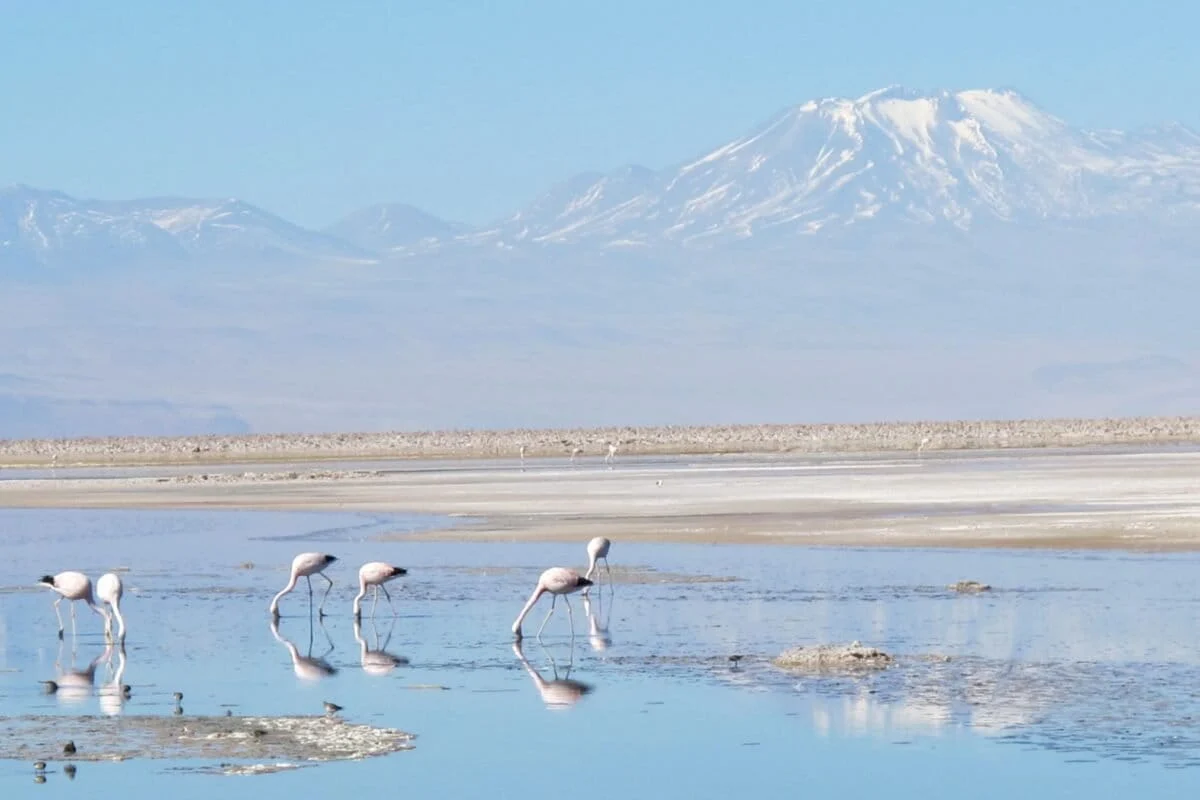
In the hyper-arid expanse of northern Chile, the Atacama Desert stands as a testament to the extremes of the natural world. Known globally as one of the driest places on Earth, some sectors of this vast landscape have not seen a drop of rain in recorded history, while others receive a meager dusting only a few times each century. This extreme aridity creates a profound existential challenge for the rural communities and settlements that dot the region. For decades, local governments and residents have relied on expensive and logistically complex solutions, such as trucking in water from distant sources or drilling deep into ancient, non-renewable underground aquifers. However, as climate change intensifies and groundwater levels dwindle, a group of innovative researchers and community leaders are looking to the sky—not for rain, but for the dense, low-hanging clouds known locally as the camanchaca.
The practice of "fog harvesting" has emerged as a potentially revolutionary, low-tech, and sustainable method to provide freshwater to the most isolated reaches of the Atacama. By using specialized mesh nets to intercept the moisture-rich fog that rolls in from the Pacific Ocean, communities are beginning to transform thin air into a reliable water source for drinking, agriculture, and reforestation.
The Science of the Camanchaca: Turning Mist into Liquid Gold
To understand the potential of fog harvesting, one must first understand the unique meteorological conditions of northern Chile. The phenomenon is driven by the cold Humboldt Current flowing along the Pacific coast. As warm air passes over the cold water, it cools and condenses into a thick layer of stratocumulus clouds. These clouds are frequently pushed inland by prevailing winds but are blocked by the steep coastal mountains of the Atacama, which can rise over 1,000 meters (3,300 feet) above sea level.

When these clouds collide with the mountain slopes, they settle at ground level as a dense fog. Camilo del Río, director of the Catholic University’s Atacama Desert Center, explains that the water is already there, waiting to be collected. "In a very simple way, we have to understand that clouds are made up of water droplets," del Río told Mongabay. "They’re already formed, they’re already condensed. So whenever a cloud is transported by wind and comes into contact with the Earth’s surface, what is touching the surface is thousands and thousands of liters of water."
The technology used to capture this water is deceptively simple. It involves the installation of large, vertical mesh screens—typically made of polyolefin or Raschel mesh—supported by two poles. As the wind blows the fog through the mesh, tiny water droplets snag on the fibers. As more droplets accumulate, they merge and grow heavy enough to trickle down the mesh into a collection trough at the base. From there, the water is channeled through pipes into storage tanks.
A History of Innovation: From Ancient Trees to Modern Mesh
While the modern "fog catcher" is a Chilean innovation, the concept of harvesting moisture from the air is centuries old. Historically, indigenous populations in arid regions around the world observed how certain plants and geological formations naturally collected dew and mist. In the Canary Islands, the Bimbache people collected water dripping from "fountain trees," such as junipers and pines, which acted as natural fog interceptors. Similarly, in Oman, ancient communities built stone cisterns beneath trees to catch the runoff from branches during the monsoon season.
The transition to a systematic, engineered approach began in the early 20th century. Researchers in South Africa were among the first to modify rain gauges to measure "occult precipitation"—moisture captured by vegetation that does not show up in standard rain measurements. By 1969, South African scientists had developed plastic screens specifically designed to intercept fog.

However, the real breakthrough occurred in northern Chile during the mid-20th century. In the 1950s, researchers in the Antofagasta region began experimenting with synthetic nets. This culminated in 1987 with the Chungungo project, which was, at the time, the world’s most ambitious fog-harvesting initiative. The fishing community of Chungungo, which previously relied entirely on water trucks, installed 100 large fog collectors. These devices provided approximately 33 liters (8.7 gallons) of clean water per day for each of the community’s 300 residents. Though the project eventually faced maintenance challenges, it proved that the technology could sustain human settlements in the heart of the desert.
The Atacama Fog Catchers: A Grassroots Movement
The legacy of the Chungungo project lives on through individuals like Orlando Rojas Figueroa, president of the Atacama Fog Catchers Group. Rojas, who was initially skeptical of the technology, joined the movement in the 1990s after being recruited by university researchers.
"They called them the crazy cloud people," Rojas recalled, describing the early reactions from local communities. "People would say, ‘What are these guys going to do with the clouds?’"
Despite the mockery, Rojas and his colleagues spent decades refining the process. They discovered that placement was the most critical factor for success. By hauling equipment up steep hills and navigating isolated desert tracks, they identified "sweet spots" where the wind and fog density were optimal.

The results have been staggering. In the early 2000s, the group was harvesting roughly 1,000 liters (264 gallons) per day. Today, their yields can reach as high as 12,000 liters (3,170 gallons) on particularly foggy days. This water has transformed the local economy; the Atacama Fog Catchers now use the harvested water to cultivate a variety of crops, including potatoes, lettuce, lemons, peaches, pomegranates, and figs. They have even begun bottling the water for sale, providing a sustainable source of income for the community.
Scientific Analysis and the Alto Hospicio Study
While grassroots efforts have proven successful, researchers are now looking to scale the technology to a municipal level. In 2023, a comprehensive study was launched in Alto Hospicio, an urban area that has historically struggled with water security and a near-total reliance on dwindling groundwater.
The study, led by Virginia Carter, an associate researcher at the Atacama Desert Center and a National Geographic explorer, utilized Standard Fog Collectors (SFCs) to map the area’s potential. By analyzing meteorological data—including air temperature, solar radiation, relative humidity, and wind speed—the team identified high-potential zones just outside the urban limits, situated between 700 and 1,100 meters above sea level.
The findings suggested that if Alto Hospicio invested in 1,000 square meters of fog-collecting surface, the community could generate between 200 and 4,900 liters of water per day. However, the study also highlighted the inherent variability of the resource. Fog density changes with the seasons and daily weather patterns, meaning fog harvesting is best viewed as a "complementary" resource rather than a total replacement for traditional water systems.

Carter’s work also includes the development of a "fog-water map" for the coastal town of Paposo. "My goal is to strengthen the role of fog collection in water policy," Carter said. "By promoting it, we’ll be able to expand the use of this technology beyond isolated pilot projects."
Economic and Political Hurdles to Scaling Up
Despite the clear benefits, fog harvesting has yet to be fully integrated into Chile’s national water management strategy. Several factors contribute to this hesitation. First is the issue of reliability; unlike a pipeline or a well, fog cannot be "turned on" at will. This variability makes it difficult for government officials to commit large budgets to the technology.
Second is the economic model. Nicolás Prado, an official in Alto Hospicio’s tourism and heritage office, notes that there is still a lack of political will to invest in decentralized, low-cost solutions. "There’s still a need to move beyond the idea of making money from these things," Prado said. "Fog collectors are something anyone can build at home with very simple materials."
From a cost-benefit perspective, however, fog harvesting is increasingly attractive. A 2024 OECD Environmental Performance Review of Chile highlighted the rising costs and environmental impact of trucking water and over-extracting groundwater. Fog harvesting requires a relatively low initial investment and has negligible operational costs compared to desalination plants or long-distance water transport.

Environmental Implications and Future Outlook
Beyond human consumption, fog harvesting plays a vital role in preserving the Atacama’s unique biodiversity. The desert is home to "lomas" ecosystems—isolated oases of vegetation that survive solely on fog moisture. These areas support specialized species like Tillandsia (air plants), which absorb water directly from the atmosphere through their leaves.
Local initiatives in Alto Hospicio are already using fog harvesters to support these ecosystems and raise environmental awareness. The tourism and heritage office organizes tours for school groups, showcasing how the desert can provide life-sustaining resources if managed correctly. There are even plans to establish a center for environmental education that could double as a tourist attraction, highlighting the "fog ecosystem" as a cultural and natural treasure.
The future of fog harvesting in the Atacama will likely depend on a hybrid approach: grassroots community management supported by scientific mapping and modest government subsidies. While it may not solve every water challenge in Chile, it offers a blueprint for resilience in arid regions worldwide. As the world faces a future of increasing water scarcity, the "crazy cloud people" of the Atacama may well be remembered as pioneers of a new, sustainable relationship with the environment.
By turning a meteorological phenomenon into a tangible resource, Chile is proving that even in the driest place on Earth, the solutions to our most pressing problems are often hidden in plain sight—drifting through the air on the back of a desert wind.

