
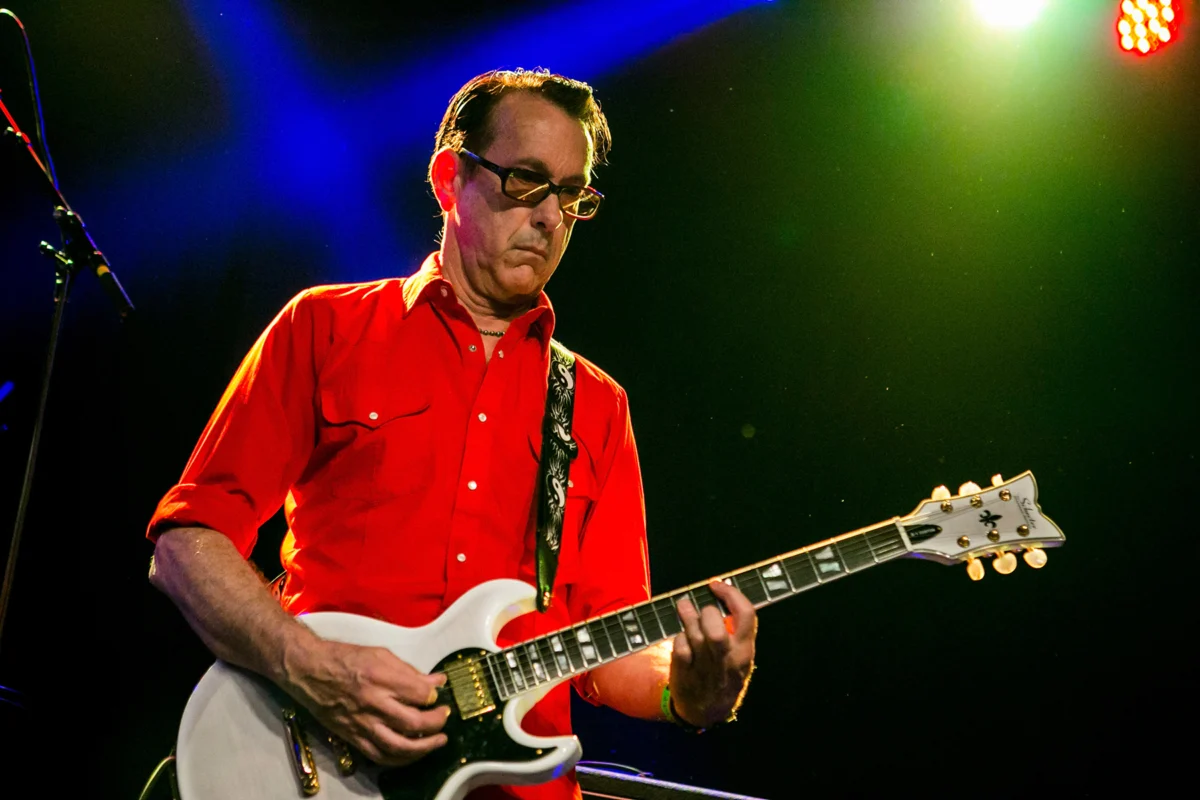
The punk rock community has received sobering news from one of its most enduring architects, as East Bay Ray, the pioneering lead guitarist and founding member of the legendary political punk band Dead Kennedys, has been diagnosed with Parkinson’s disease. The announcement, which was formally released through the band’s management channels via social media, marks a poignant moment for the San Francisco-based outfit that helped shape the trajectory of hardcore punk and alternative rock music globally. Despite the degenerative neurological diagnosis, representatives for the musician and the group have confirmed that the guitarist remains resilient, expressing an unwavering commitment to his craft and his audience for as long as his physical health permits.
The disclosure arrives amidst a challenging period for the extended family of the Dead Kennedys, highlighting both the enduring legacy and the advancing age of the generation that birthed the genre. While the band’s current lineup continues to navigate the realities of aging within the demanding landscape of live rock and roll performance, fans and industry veterans alike have rallied around the pioneering musician. As the band looks toward an upcoming slate of West Coast tour dates, the spotlight shines brightly on a career spanning nearly five decades of provocative musical expression, sociopolitical commentary, and uncompromising artistic integrity.
Main Facts and the Parkinson’s Announcement
The official notification regarding East Bay Ray, born Raymond John Pepperell, was disseminated on Tuesday via the band’s verified social media platforms, including Instagram. Accompanying a stark, classic black-and-white portrait of the guitarist, the management statement delivered the diagnosis directly to the public while offering reassurance regarding his immediate future in music.
"Ray says he plans to continue performing and touring with Dead Kennedys for as long as his health allows, and expressed his appreciation to everyone for their continued support," the band’s official statement read.
Parkinson’s disease is a progressive disorder of the nervous system that affects movement, often developing gradually, sometimes starting with a barely noticeable tremor in just one hand. While the condition can cause stiffness, slowing of movement, and balance impairments—challenges that present distinct hurdles for a touring instrumentalist—the guitarist’s determination to remain on stage underscores his deep connection to live performance. The announcement immediately prompted an outpouring of support from fans, fellow musicians, and punk rock historians worldwide, reflecting the profound cultural footprint left by the band since its inception in the late 1970s.
Historical Chronology and the Evolution of Dead Kennedys
To understand the weight of East Bay Ray’s diagnosis, one must examine the foundational role he played in the genesis of American punk rock. Co-founding Dead Kennedys in San Francisco in June 1978 alongside original frontman Jello Biafra, Ray helped forge a sound that blended the raw, high-energy velocity of British punk with a uniquely American, surf-rock-infused guitar style characterized by heavy tremolo, dissonant chords, and razor-sharp precision.
The band’s timeline is marked by critical milestones, intense controversy, and enduring influence:
- 1978: Dead Kennedys form in San Francisco, quickly establishing themselves as a premier force in the burgeoning West Coast hardcore punk scene.
- 1980: The release of their iconic, anti-establishment anthem "Holiday in Cambodia" and their critically acclaimed debut studio album, Fresh Fruit for Rotting Vegetables, which remains a cornerstone of punk history.
- 1986: Following years of intense touring, legal battles, and internal friction, the band officially disbands, leaving behind a legacy of uncompromising political satire and sonic aggression.
- 2001: East Bay Ray, bassist Klaus Flouride, and drummer D.H. Peligro reunite under the Dead Kennedys banner, though original vocalist Jello Biafra declines to participate, sparking long-running legal disputes over control of the band’s catalog and name.
- 2008: Vocalist Ron "Skip" Greer assumes the role of lead singer, ushering in a decades-long era of consistent international touring.
- 2022: Longtime drummer D.H. Peligro passes away at the age of 63, leading to the recruitment of current drummer Steve Wilson.
- 2026: Management publicly announces East Bay Ray’s Parkinson’s disease diagnosis, while confirming his intent to perform on upcoming dates.
Upcoming Tour Dates and Live Performance Outlook
The announcement of East Bay Ray’s health status directly precedes a scheduled run of West Coast tour dates, testing the logistical and physical realities of the band’s touring schedule. The itinerary is slated to commence on October 6 at the historic Showbox at the Market in Seattle, Washington, and will culminate on October 11 at the Riverside Municipal Auditorium in Riverside, California.
According to statements from the band’s management, audiences attending these performances can expect to see East Bay Ray on stage, provided his health conditions remain stable throughout the run. The band has emphasized a flexible approach to their touring commitments, prioritizing the health and well-being of their founding member while honoring their obligations to a dedicated international fanbase. Concert promoters and venue operators have noted strong ticket sales for the regional routing, a testament to the enduring commercial and cultural viability of the group’s live show.
Broader Health Context Within the Band
The news of East Bay Ray’s diagnosis comes on the heels of another major health event involving a foundational figure from the band’s history. Earlier this year, Jello Biafra—the provocative founding vocalist who fronted the group during its classic 1978–1986 tenure but did not participate in subsequent reunions—suffered a stroke.
Updates provided via Biafra’s official social media channels in May offered a cautiously optimistic outlook on his recovery trajectory. Representatives reported that Biafra’s speech had largely returned to normal and that his cognitive faculties remained entirely unaffected by the medical emergency. While residual weakness on his left side persisted, the updates indicated steady physical rehabilitation progress.
The simultaneous health challenges faced by two of the primary architects of the original Dead Kennedys lineup serve as a stark reminder of the passage of time for the pioneering generation of punk rock musicians. Despite historical legal estrangements and philosophical differences that fractured the band’s internal unity decades ago, both artists continue to command immense respect for the cultural framework they constructed.
Fact-Based Analysis of Implications and Legacy
The revelation of East Bay Ray’s Parkinson’s diagnosis carries significant implications for the legacy, future operations, and archival preservation of Dead Kennedys. Musically, Ray’s distinctive guitar style—frequently cited by critics as an innovative hybrid of spy movie soundtracks, heavy metal crunch, and traditional punk velocity—was central to defining the genre’s sonic palette. Any potential reduction in his touring capacity inevitably shifts the operational calculus for a band that has relied heavily on continuous live performances to sustain its global brand.
Furthermore, the situation underscores broader conversations within the contemporary music industry regarding the aging demographic of legacy rock artists. As founding members of the 1970s and 1980s punk and alternative movements enter their late sixties and seventies, management teams, promoters, and fans are increasingly forced to balance the desire for live nostalgia with the humane management of chronic and degenerative medical conditions.
For Dead Kennedys, East Bay Ray’s determination to continue performing stands as a continuation of the tenacious, DIY ethos that characterized the band’s inception during the height of the Reagan-era political climate. Whether through studio recordings, archival releases, or select live appearances, the guitarist’s contributions remain permanently etched into the foundation of modern alternative culture. As the band prepares to take the stage in Seattle this October, the focus of the global punk community remains firmly fixed on supporting a musician whose six-string pyrotechnics helped alter the course of modern music history.

