
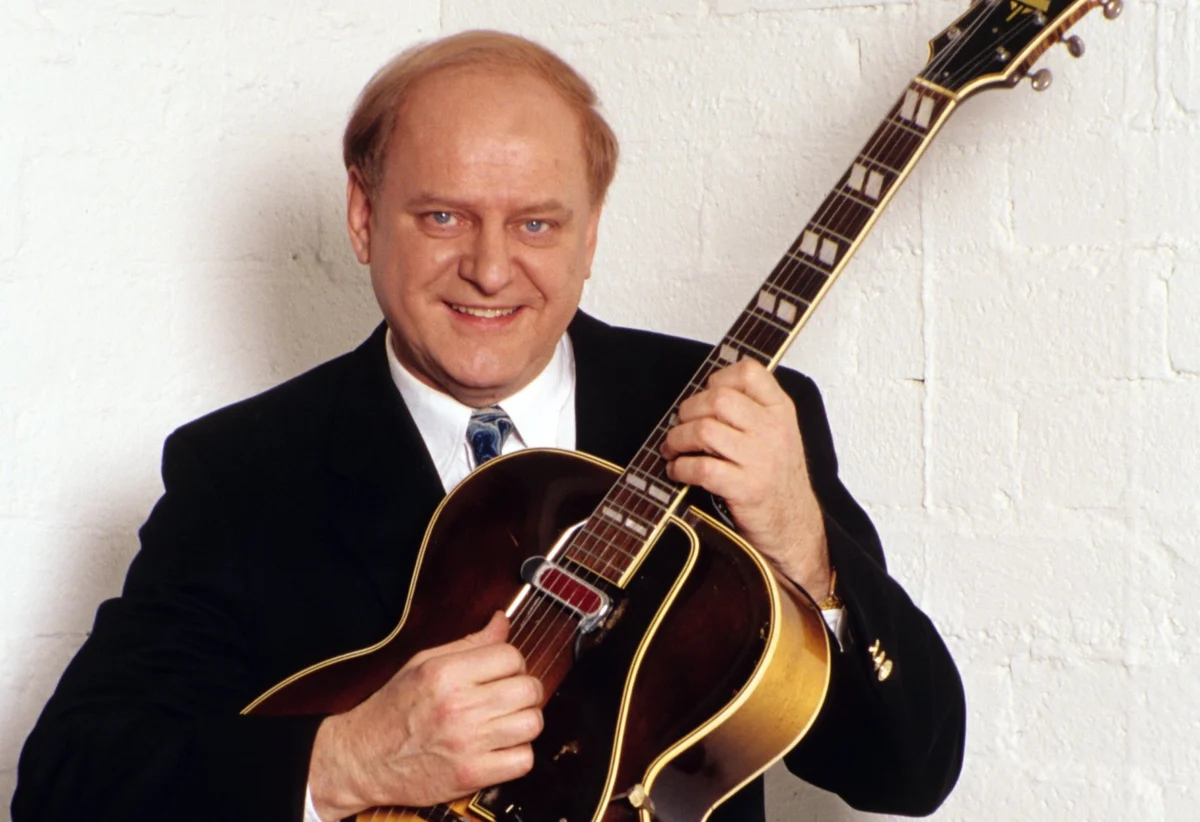
Del Casher, a versatile musician, visionary inventor, and pivotal figure in the evolution of modern electric guitar tone, has passed away at the age of 88. Casher died on October 1 following a prolonged battle with cancer, a loss confirmed through a GoFundMe campaign established to support his widow, Eiko Casher, with medical and end-of-life care expenses. While news of his passing circulated quietly within musician circles, it was formally brought to broader public attention by reports from outlets like TMZ.
Throughout a career spanning decades, Casher left an indelible mark on popular music. He performed alongside legendary acts ranging from early country and pop mainstays like Gene Autry and Lawrence Welk to avant-garde rock icons like Frank Zappa. Yet, his most enduring contribution to music history was conceptual: the invention of the wah-wah pedal. This simple yet revolutionary foot-operated effect transformed the sonic landscape of rock, funk, soul, and blues, becoming a staple for generations of guitarists.
Early Life and Musical Beginnings
Born Delton Kacher in Hammond, Indiana, Casher displayed an early affinity for music and technology. Driven by a desire to make his electric guitar stand out in crowded band configurations, he began experimenting with amplification, tone manipulation, and recording techniques.
In the formative years of his professional career, Casher relocated to Southern California, where he quickly integrated into the bustling studio and live performance scene. He performed with a diverse roster of artists, including the smooth vocal pop group The Three Suns and country-western icon Gene Autry. These early engagements honed his technical proficiency and placed him at the intersection of traditional music performance and the burgeoning technological revolution in instruments during the post-World War II economic boom.
Casher’s restless curiosity extended beyond playing notes on a fretboard; he sought to manipulate electricity to alter the very voice of the instrument. His exploratory mindset led him to collaborate with major music technology companies of the era, positioning him as both a formidable sideman and an innovative technician.
The Genesis of the Wah-Wah Pedal
The defining moment of Casher’s inventive career occurred in the early 1960s while he was working as a demonstrator for the Thomas Organ Company, playing with their Vox Ampliphonic Orchestra. Seeking a way to replicate the expressive, vocal quality of a muted jazz trumpet on an electric guitar, Casher collaborated with engineer Brad Plunkett.
While Casher consistently credited Plunkett with engineering the physical circuitry of the device, the core concept—a rocker pedal that swept audio frequencies to produce a distinctive "wah" sound—was Casher’s brainchild.
Initially dubbed the "Cry Baby" pedal by Thomas Organ, the device was brought to market in 1967. To promote the invention, Casher recorded a promotional single and a series of instructional demonstrations aimed at retail instrument stores, showing retailers how the foot-controlled filter could breathe new life into standard guitar riffs. Despite its clever design, the initial commercial launch failed to capture the immediate imagination of the broader music-playing public, and the pedal risked becoming a commercial footnote.
Frank Zappa, Jimi Hendrix, and the Rock Revolution
The trajectory of the wah-wah pedal—and popular music history—shifted dramatically when avant-garde composer and guitarist Frank Zappa encountered the device. In 1966, Casher sat in with Zappa’s boundary-pushing band, The Mothers of Invention, utilizing the prototype effect live on stage. Recognizing its revolutionary potential, Zappa embraced the pedal and subsequently gifted one to an emerging guitar virtuoso named Jimi Hendrix.
Hendrix’s mastery of the wah-wah pedal permanently secured its place in the pantheon of rock music technology. Hendrix integrated the sweeping filter effect across his landmark 1968 double album, Electric Ladyland, applying it to tracks that would become defining anthems of the counterculture era, including "Voodoo Child (Slight Return)," "Burning of the Midnight Lamp," and his iconic cover of Bob Dylan’s "All Along the Watchtower."
Simultaneously, other guitar luminaries recognized the expressive power of Casher’s invention. Eric Clapton famously utilized a wah-wah pedal on Cream’s psychedelic classic "Tales of Brave Ulysses." Within a few years, virtually every major rock guitarist of the late 1960s and 1970s—including Jimmy Page of Led Zeppelin, Tony Iommi of Black Sabbath, and David Gilmour of Pink Floyd—was experimenting with the pedal to create soaring, vocal-like guitar solos.
Broader Impact and Mainstream Crossover
While the wah-wah pedal became synonymous with psychedelic rock, its sonic footprint quickly expanded far beyond the genre. By 1971, the pedal achieved mainstream pop culture immortality when Isaac Hayes employed it on the "Theme From Shaft." The wah-wah-drenched opening of the track drove the song to the number one spot on the Billboard Hot 100 and earned Hayes an Academy Award for Best Original Song, cementing the effect as a fundamental building block of 1970s funk and soul music.
Beyond the wah-wah pedal, Casher’s engineering and inventive spirit left other lasting contributions to audio technology. He was credited with contributing to the development of the Ecco-Fonic and the Fender Electronic Echo Chamber, pioneering tape-delay units that allowed musicians to create lush, repeating echo effects before the advent of digital delay.
In addition to his technological innovations, Casher maintained an active career as a working studio musician and performer. He crossed paths with the biggest names in entertainment, notably appearing as a musician in Elvis Presley’s 1964 musical comedy film Roustabout. Later in his career, Casher transitioned into composing and arranging original film scores, applying his vast sonic expertise to cinematic storytelling.
Reflections and Legacy
Despite the massive commercial success that the wah-wah pedal eventually achieved for various manufacturing companies, Casher rarely received the widespread household recognition afforded to the rock stars who popularized his invention. However, he remained remarkably pragmatic and at peace with his place in music history.
In a 2011 interview with The New York Times, Casher reflected on his contributions with characteristic humility: "I feel gratified that I was there at the beginning. I would just like guitar players to think of me once in a while. The only thing I ask is: remember me."
Del Casher’s passing marks the end of an era for the mid-century pioneers who bridged the gap between traditional musicianship and modern electronic wizardry. As generations of guitarists continue to press down on wah-wah pedals on stages and in studios worldwide, the sonic vibration of Casher’s imagination endures, ensuring that his request to be remembered will be fulfilled every time a note is bent and shaped through the magic of his invention.

