
A federal judge has intervened in the escalating dispute over the future of the John F. Kennedy Center for the Performing Arts, issuing a stern directive that mandates the Trump administration provide thirty days’ notice before initiating any demolition or structural removal at the historic site. The order, handed down by U.S. District Judge Christopher Cooper on Thursday, serves as a significant legal safeguard for the cultural landmark, emerging less than 24 hours after President Trump suggested the facility could be "ripped down" during a public exchange.
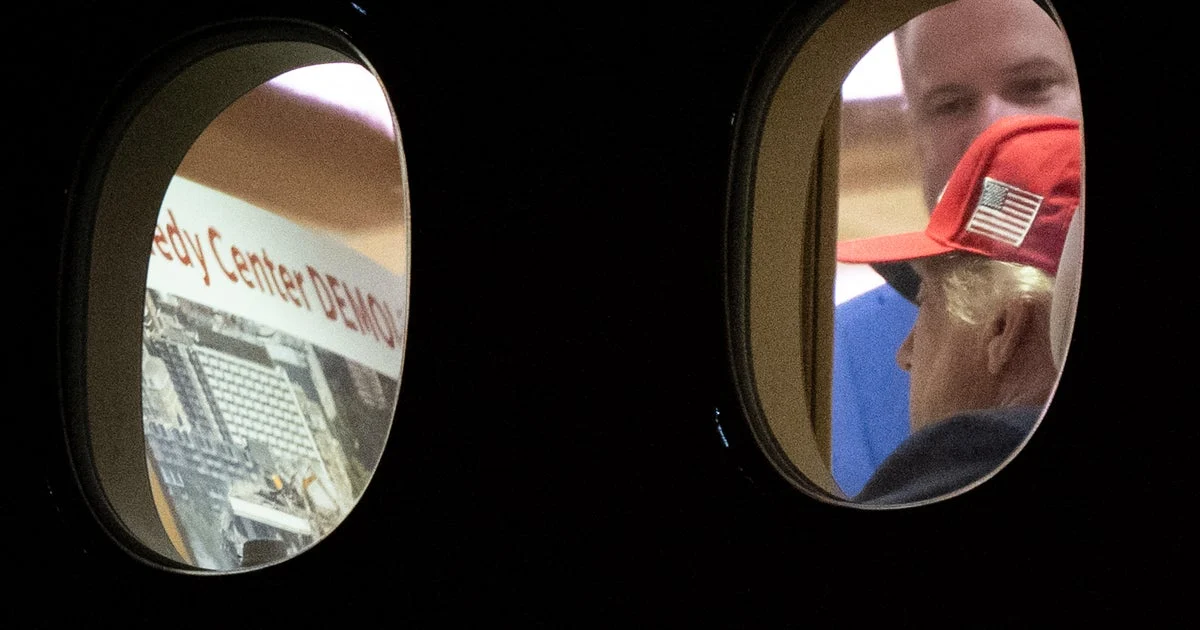
The controversy centers on a photographic image captured aboard Air Force One, which showed President Trump reviewing a document bearing the stark heading "Kennedy Center Demolished." This visual evidence, submitted as part of an emergency motion by Representative Joyce Beatty, an ex officio board member, has intensified concerns regarding the administration’s long-term intentions for the center. While the administration maintains that recent activity at the site is purely related to emergency structural maintenance, the judicial order signals a high level of skepticism from the bench regarding the transparency of these operations.
Chronology of Escalating Tensions
The friction surrounding the Kennedy Center is not an isolated incident but the latest chapter in a protracted legal and political battle. The following timeline outlines the progression of the current standoff:
- 2025–2026 (Pre-September): Following the allocation of over $250 million by Congress for the restoration of the Kennedy Center, the board—largely composed of Trump-appointed allies—has repeatedly attempted to influence the scope of renovations.
- Early September 2026: Judge Cooper rules that the Trump administration cannot unilaterally affix the President’s name to the building, noting that such a change requires congressional approval, which has not been granted.
- September 16, 2026: Fencing is erected around the perimeter of the facility. Reports surface of heavy machinery, including a forklift, making contact with the building’s pillars.
- September 16, 2026 (Evening): President Trump suggests that without proper "recognition" for his administration’s involvement in fundraising or renovation efforts, the center’s future remains precarious, stating it could be "ripped down." Simultaneously, photographs are taken on Air Force One of the President reviewing a document labeled "Kennedy Center Demolished."
- September 17, 2026: The Kennedy Center’s executive director, Matt Floca, confirms in court filings that a temporary closure is in effect due to "acute risks to public safety."
- September 17, 2026: Judge Cooper orders the Justice Department to submit a detailed report on the closure and denies Representative Beatty’s request for an immediate emergency hearing, opting instead to enforce the 30-day notice requirement for any future demolition.
Technical and Safety Justifications
In the court documents filed by the Justice Department on behalf of the center’s management, executive director Matt Floca argued that the decision to close the facility was dictated by urgent safety concerns. Floca’s declaration highlights that "continued structural deterioration" necessitated the restricted access. According to these filings, the closure is currently slated for a duration of one week, though management has reserved the right to extend this period on a week-to-week basis, pending ongoing safety evaluations.
Floca was explicit in distinguishing this emergency closure from the controversial board vote to shutter the building for broader renovations. "To be clear, this is not a decision to effectuate the Board’s separate vote to close the building for renovation," Floca wrote in an internal email submitted to the court. "It is a distinct decision by management to address imminent life-safety risks pending the Court’s ruling on that vote."
However, critics, including Representative Beatty, have cast doubt on these claims. In her filing, Beatty suggested that the "unlawful closure" might be a tactical maneuver to create a fait accompli—a scenario where the administration makes the facility inaccessible to the public so thoroughly that demolition becomes the only remaining option, thereby bypassing judicial oversight.
Official Responses and Public Statements
The administration and the Kennedy Center’s public relations arm have actively sought to distance the current activities from the specter of demolition. Roma Davari, the Vice President of Public Relations for the Kennedy Center, stated on the program "Real America’s Voice" that claims of impending demolition were baseless. "Nothing is being demolished," Davari asserted, urging the public to disregard media reports suggesting the destruction of the site, noting that no such directive has ever originated from within the institution.

Despite these assurances, the rhetoric from the White House remains ambiguous. President Trump’s comments regarding the necessity of "recognition" for his administration’s role in the center’s future have fueled speculation that the threat of closure is being used as political leverage. By linking the survival of the national cultural center to the administration’s desire for legacy-building, the President has effectively transformed a bureaucratic renovation project into a high-stakes constitutional dispute over federal property rights.
Broader Impact and Implications
The Kennedy Center, opened in 1971, holds a unique status as a "living memorial" to President John F. Kennedy. As such, it is protected by specific federal statutes that govern its maintenance, operation, and naming conventions. The current conflict highlights a fundamental tension between the executive branch’s desire to exert control over federal institutions and the legislative branch’s authority to dictate the use of congressionally appropriated funds.
The implications of this dispute extend beyond the specific fate of the building. Should the courts find that the board’s actions—specifically the push for renaming and the subsequent, potentially arbitrary closure—violate the spirit of the legislation governing the center, it could set a precedent for how other national monuments and cultural institutions are managed under future administrations.
Furthermore, the involvement of the Justice Department in defending the board’s actions underscores the administration’s commitment to this position. By treating the Kennedy Center not merely as an arts venue but as a piece of federal real estate subject to executive policy, the administration is challenging the traditional independence of the center’s board.

Economic and Cultural Context
With over $250 million in federal funding earmarked for restoration, the economic stakes are significant. The Kennedy Center is a major driver of tourism and a focal point for the performing arts in Washington, D.C. A prolonged, unexplained closure threatens not only the administrative functions of the center but also the contractual obligations it holds with national and international touring companies, artists, and staff.
As the case moves forward, the primary focus for Judge Cooper will be determining the legality of the board’s recent vote to close the center for renovations. While the court has yet to rule on the validity of that vote, the current injunction against demolition acts as a "status quo" order, preventing the administration from making irreversible changes to the physical footprint of the site.
The coming week will be critical. The Department of Justice is under court order to provide a comprehensive update on the safety hazards and the status of the "temporary" closure by next Wednesday. Until then, the fencing surrounding the center remains, and the legal battle persists as a test of the boundaries of executive authority over America’s national cultural heritage. Whether the administration will comply with the spirit of the court’s order or continue to press for its own vision of the site’s future remains a subject of intense scrutiny from both legal observers and members of Congress.

