
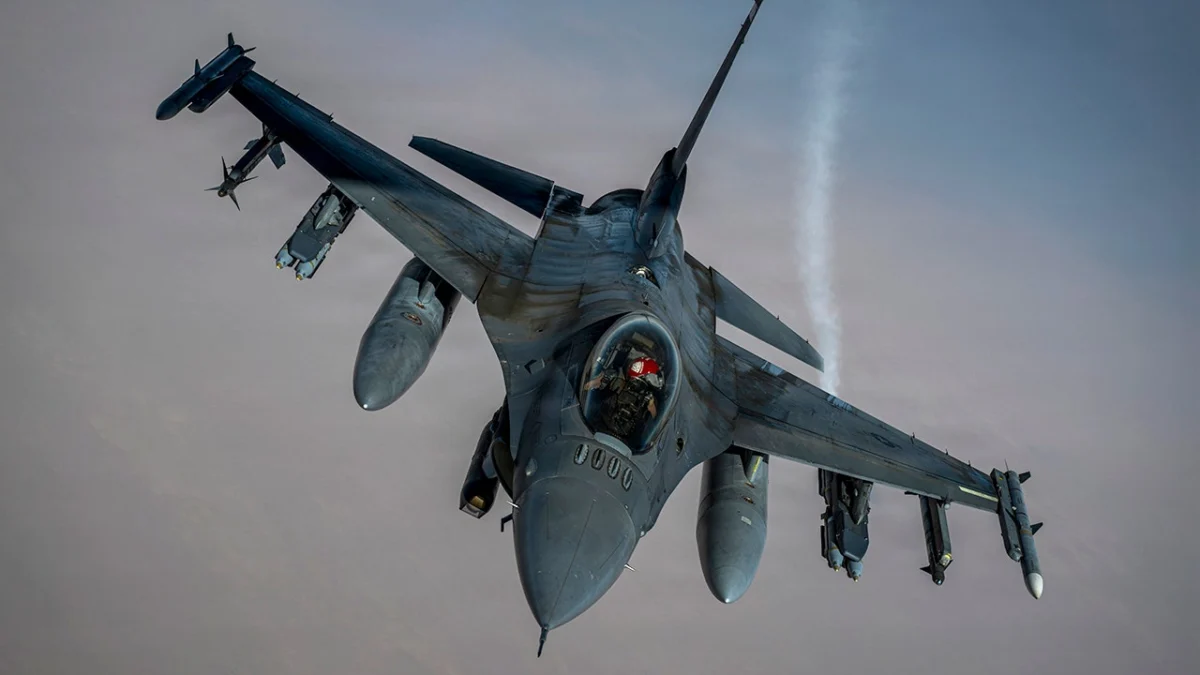
A routine training mission for the Texas Air National Guard took a dramatic and dangerous turn on Thursday afternoon when an F-16 Fighting Falcon fighter jet suffered an unspecified catastrophic mishap over Michigan, forcing the pilot to safely eject just moments before the aircraft impacted the ground. The incident, which occurred approximately seven miles south of Grand Traverse, triggered an immediate and coordinated multi-agency emergency response, localized evacuations, and intense public scrutiny as military aviation authorities launched a formal investigation into the root cause of the crash.
The pilot, assigned to the esteemed 149th Fighter Wing operating out of Joint Base San Antonio-Lackland in Texas, successfully deployed their ejection seat before the multi-million-dollar fighter jet plummeted into an unpopulated or sparsely populated sector of northern Michigan. According to preliminary statements issued by military public affairs officers, the aviator survived the high-velocity ejection and was promptly recovered by first responders. Medical evaluations confirmed that the pilot is currently in stable condition, though officials have withheld specific details regarding any sustained injuries, the pilot’s identity, and the precise trajectory of the flight prior to the emergency.
The sudden loss of the aircraft and the subsequent emergency response have reverberated across both local and federal levels, highlighting the inherent risks associated with high-performance military aviation training operations conducted within domestic airspace.
Immediate Chronology and Emergency Response
The sequence of events unfolded rapidly on Thursday afternoon, catching local residents and emergency services off guard. Based on preliminary incident reports, emergency dispatch logs, and statements from local authorities, the timeline of the mishap and subsequent response developed as follows:
- Pre-Flight and Mission Departure: The F-16 Fighting Falcon took off as part of a scheduled, routine training sortie. The aircraft was under the operational control of the 149th Fighter Wing, a unit renowned for training F-16 pilots and maintaining high standards of tactical readiness.
- The In-Flight Emergency: While operating in designated airspace roughly seven miles south of Grand Traverse, Michigan, the aircraft experienced an unforeseen and rapid technical malfunction or catastrophic event.
- Pilot Ejection: Facing an unrecoverable situation, the pilot executed emergency protocols and successfully ejected from the cockpit of the descending aircraft.
- Ground Impact and Plume: The unmanned F-16 subsequently crashed into terrain. Eyewitness reports and video footage shared across social media platforms soon after the event depicted thick, dark plumes of smoke billowing into the Michigan sky from the impact zone.
- Evacuation Orders: Recognizing potential hazards associated with residual jet fuel, ordnance, or toxic composite materials, the Grand Traverse Emergency Management Agency acted swiftly. Officials issued a mandatory evacuation order for all residents and personnel within a one-mile radius of the crash site, specifically directing individuals to move away from the intersection of County Road 633 and Jefferson Place and to strictly follow instructions from on-scene emergency personnel.
- Medical Recovery: Search-and-rescue teams, alongside local emergency medical services, located the pilot. The aviator was assessed and transported to a medical facility, where military liaisons confirmed they were in stable condition.
Local and Federal Reactions
The incident immediately drew the attention of regional lawmakers and federal officials, who mobilized to ensure public safety and demand transparent oversight regarding the mishap.
U.S. Senator Gary Peters of Michigan took to social media shortly after news of the crash broke to address his constituents and express relief regarding the pilot’s survival. "I’m aware of the plane crash near Traverse City," Senator Peters wrote. "I am closely monitoring the situation as we work to get more information on the incident. I am praying that the pilot and folks on the ground are safe."
Local emergency management and law enforcement agencies worked in tandem throughout Thursday afternoon and evening to secure the perimeter, manage traffic disruptions, and mitigate any environmental or physical hazards posed by the wreckage. The cooperation between civilian first responders and military safety boards highlights the established protocols designed to protect local communities whenever military training exercises encounter unforeseen emergencies within civilian jurisdictions.
Background Context: The 149th Fighter Wing and F-16 Operations
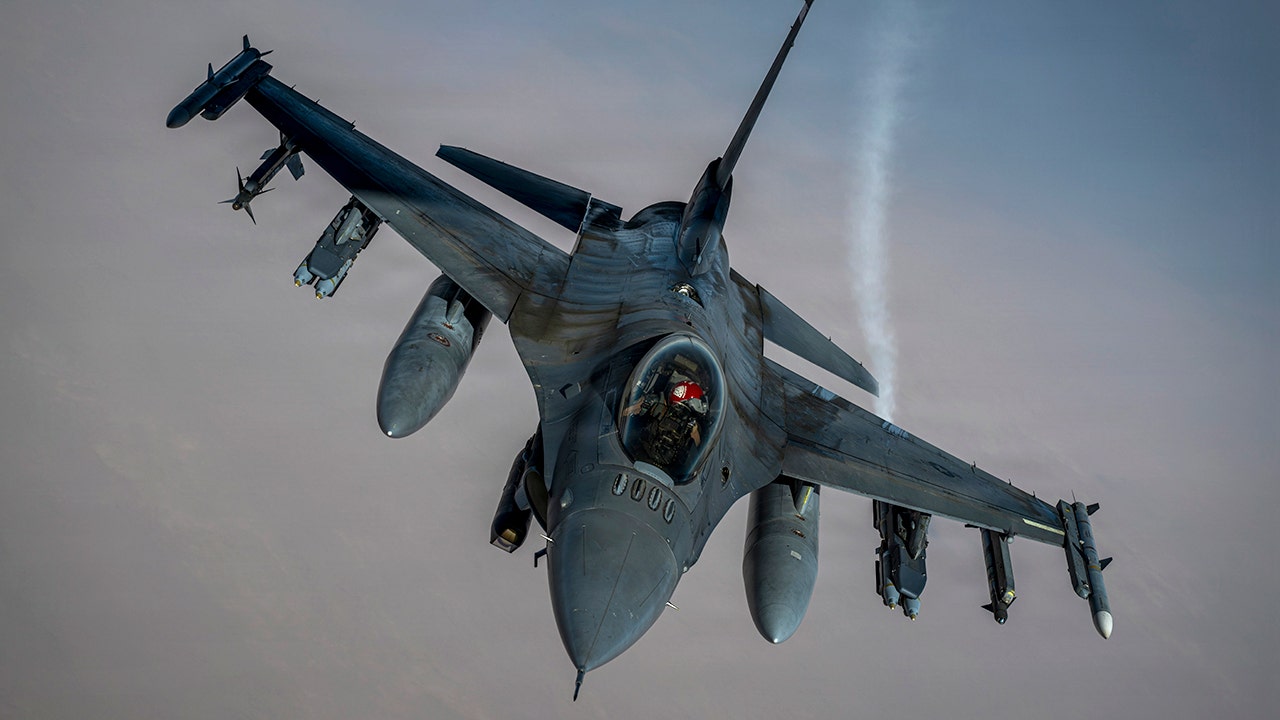
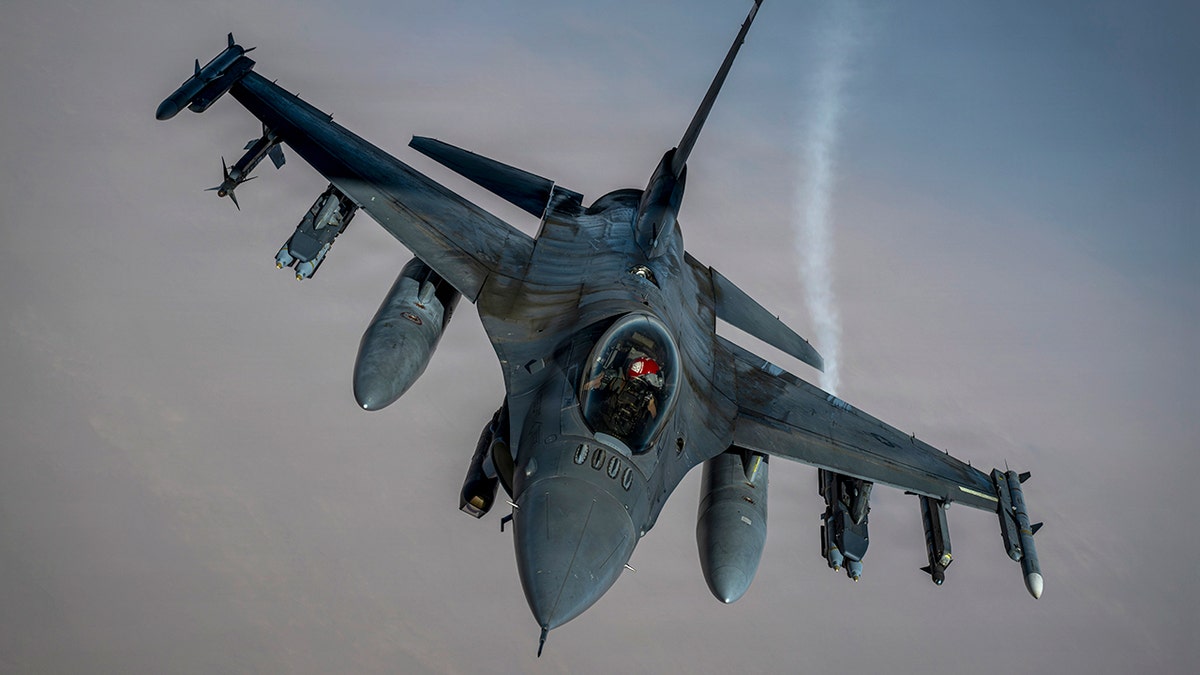
To understand the weight of Thursday’s incident, it is essential to examine the operational footprint of the unit involved. The 149th Fighter Wing is a premier unit of the Texas Air National Guard, stationed at Joint Base San Antonio-Lackland. The wing’s primary mission involves training active duty, guard, and reserve pilots to fly the General Dynamics (now Lockheed Martin) F-16 Fighting Falcon, a cornerstone of the United States Air Force’s tactical fighter fleet.
The F-16 Fighting Falcon is a single-engine, highly maneuverable supersonic fighter aircraft originally developed for the United States Air Force in the 1970s. Over decades of service, the platform has undergone extensive avionics and structural upgrades, earning a reputation as one of the most reliable and combat-proven fighter jets in global military history. However, operating complex tactical aircraft at high speeds and under rigorous gravitational forces inherently carries operational risks. Training missions frequently involve simulated combat maneuvers, low-altitude navigation, and complex system checks that test both the pilot and the machine to their limits.
National Guard units routinely deploy their aircraft across various regions of the United States to utilize specialized airspace, diverse weather conditions, and unfamiliar terrain. Training in states far from home stations—such as Michigan—allows pilots to gain invaluable cross-country navigation and tactical experience in varied geographic environments.
Safety Protocols and Investigation Procedures
Following any Class A mishap—defined by the U.S. military as an accident resulting in a fatality, permanent total disability, or property damage totaling $2.5 million or more, or the total destruction of an aircraft—a rigorous investigative protocol is immediately triggered.
The U.S. Air Force will assemble a formal Accident Investigation Board (AIB) alongside a Safety Investigation Board (SIB). While the SIB focuses exclusively on determining the root cause of the mishap to prevent future occurrences and grants confidentiality to witnesses to encourage open testimony, the AIB conducts a transparent, public-facing inquiry to compile a comprehensive factual record of the event.
Investigators will examine a multitude of factors, including:
- Maintenance and Engineering Logs: Reviewing the complete mechanical and service history of the specific F-16 airframe, including engine performance, avionics health, and recent part replacements.
- Flight Data Recorders ("Black Box"): Retrieving and analyzing digital flight data and cockpit voice recordings to reconstruct the final moments of the flight down to the split-second.
- Environmental Conditions: Assessing weather patterns, wind shear, visibility, and air traffic control communications in the Grand Traverse airspace at the time of the mishap.
- Human Factors: Evaluating pilot fatigue, physiological responses, training records, and decision-making processes under duress.
Broader Implications for Military Readiness and Safety
Thursday’s crash near Traverse City underscores the persistent tension between the necessity of rigorous, realistic military training and the safety of civilian populations living beneath flight corridors. While military aviation safety records have improved significantly over the decades due to advancements in ejection seat technology, avionics redundancy, and strict maintenance protocols, mechanical failures and unforeseen in-flight emergencies can never be entirely eliminated.
For the Texas Air National Guard, the immediate priority remains the full recovery of the pilot and a thorough understanding of why the F-16 failed. As the investigation unfolds, the findings will likely be shared across the broader fighter community to update safety directives, inspection intervals, and emergency procedures for F-16 fleets worldwide.
For the residents of Grand Traverse, the incident serves as a stark reminder of the complex national security apparatus operating quietly above American skies every day—and of the profound professionalism and sacrifice exhibited by military aviators when things go catastrophically wrong.

