
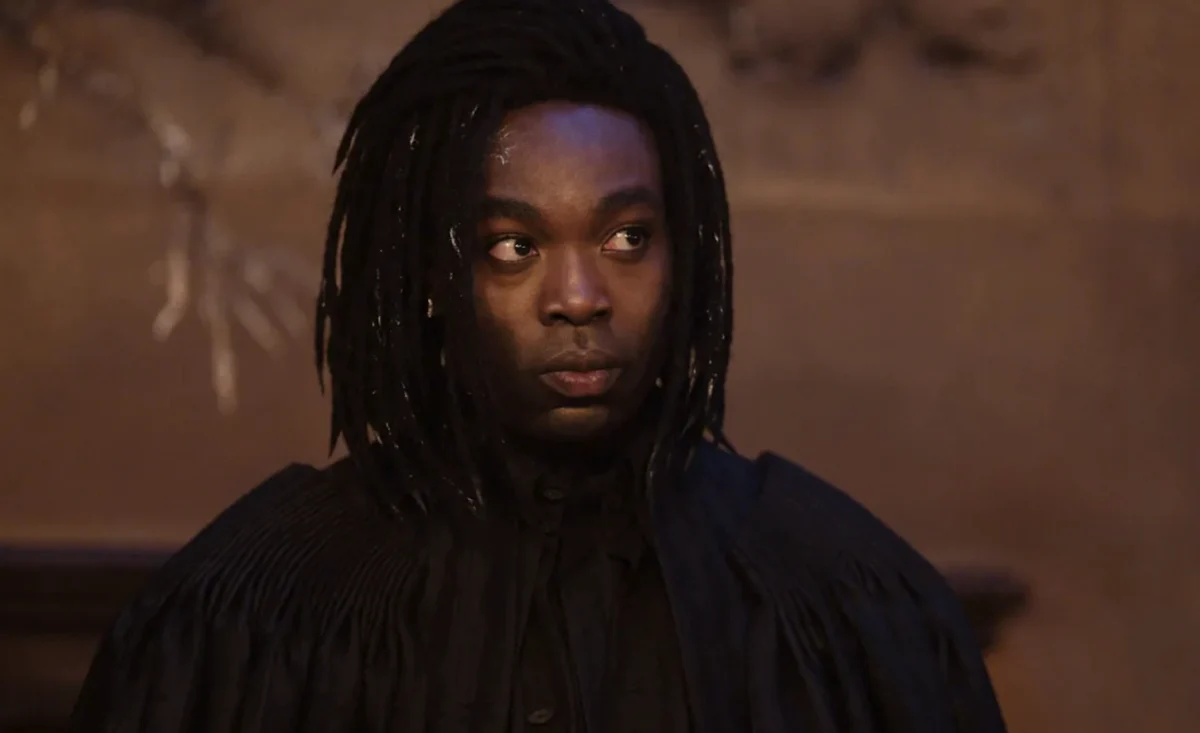
The highly anticipated television adaptation of J.K. Rowling’s Harry Potter franchise has become the center of a volatile cultural debate, primarily surrounding the casting of Emmy-nominated actor Paapa Essiedu as the iconic potions master, Professor Severus Snape. While the production team remains focused on the upcoming December 25 debut on HBO and Max, the lead-up to the series has been marred by a persistent campaign of racism and targeted harassment directed at Essiedu. Showrunner Francesca Gardiner has recently stepped forward to offer a full-throated defense of her lead actor, denouncing the hostility and reaffirming the production’s commitment to his performance.
A Timeline of Escalation and Online Harassment
The tension surrounding the casting choice did not manifest overnight. Since the announcement of Essiedu’s involvement in the production, a vocal segment of online critics has utilized social media platforms to express their disapproval, citing his race as the primary catalyst for their opposition.
The chronology of this conflict began in early 2026, when production details were finalized. By March, the situation had shifted from general online criticism to direct, violent intimidation. Essiedu, known for his critically acclaimed work in I May Destroy You, revealed in an interview with The Sunday Times that he had been subjected to explicit, racially motivated death threats.
“I’ve been told, ‘Quit or I’ll murder you,’” Essiedu disclosed during the March interview. “The reality is that if I look at Instagram I will see somebody saying, ‘I’m going to come to your house and kill you.’”
While Essiedu has maintained a pragmatic stance—acknowledging the absurdity of receiving death threats for a role in a fantasy series—he has been clear that the emotional toll is significant. Despite the severity of the threats, the actor has remained committed to the project, noting that he is fully aware of the environment he has entered. By the time of the TIME100 Next Gala last month, Essiedu confirmed that the HBO production team had provided a robust support system, helping him navigate the toxicity that has accompanied his casting.
The Perspective of the Creative Team
Francesca Gardiner, the showrunner tasked with translating the massive literary franchise for the small screen, addressed the vitriol during a recent profile for Vanity Fair. Her stance serves as a formal rebuke of the behavior, emphasizing that the focus should remain on the artistic merit of the production.
“It’s appalling that anyone should be subjected to that kind of abuse in any circumstances,” Gardiner stated. “He has handled it with incredible grace, and I have nothing but the greatest respect for him. Paapa has absolutely nailed the role, and it is that performance that deserves our attention.”
Gardiner’s intervention is significant within the context of modern television production. As streaming services and major studios face increasing pressure regarding diversity, equity, and inclusion (DEI) initiatives, the public support of a high-profile showrunner provides a necessary buffer for talent facing digital harassment. The production team’s collective support, as noted by Essiedu, highlights a unified front against the segment of the fanbase attempting to dictate casting through intimidation.
Distinguishing Criticism from Bigotry
In his recent media appearances, Essiedu has made a careful distinction between legitimate artistic critique and racially driven animosity. He acknowledges that any actor stepping into a role as iconic as Severus Snape—previously immortalized by the late Alan Rickman—will face scrutiny.
“There’s some people who are just like, ‘I’ve done my research, and I know what kind of actor you are, and you suck.’ And they’re totally entitled to their opinion,” Essiedu noted. However, he clarified that the nature of much of the feedback he has received transcends artistic disagreement. “Then there are the people who are like, ‘You are bad because you are Black’—which, to me, is racist. There is a racially driven animosity.”
This distinction is crucial for understanding the current climate surrounding the franchise. While fandoms often engage in passionate debates over character portrayals, the introduction of racial prejudice signals a shift from discourse to harassment. The reality of these threats—which have included physical violence—has forced the production to grapple with security concerns and the broader implications of modern digital toxicity.
Navigating the Cultural Landscape of the Harry Potter Franchise
The controversy is further complicated by the political landscape surrounding the franchise’s creator, J.K. Rowling. Essiedu has previously taken a public stance in support of transgender rights, a position that stands in direct contrast to the views frequently expressed by the author. In the past, Essiedu was a signatory to an open letter criticizing a U.K. Supreme Court ruling regarding the legal recognition of transgender individuals.
This ideological clash led to speculation that the author might object to his casting. However, in May, Rowling addressed the situation on the social media platform X (formerly Twitter). In a statement, she wrote: “I don’t have the power to sack an actor from the series and I wouldn’t exercise it if I did. I don’t believe in taking away people’s jobs or livelihoods because they hold legally protected beliefs that differ from mine.”
Despite this statement, the underlying friction between the values of some cast members and the creator remains a point of interest for the public. When prompted by interviewers to discuss the author, Essiedu has largely avoided the topic, opting to focus on the professional mandates of his role. “I don’t want to talk about Jo at all,” he told Vanity Fair. Instead, he reaffirmed his own guiding principles: “I believe, in my bones, that trans people, queer people, people of all creeds and color have got the right to be treated with respect and dignity and safety at all times.”
Implications for Future Adaptations
The situation involving Paapa Essiedu serves as a case study for major studios attempting to modernize legacy franchises. The transition from literary source material to television necessitates a casting process that reflects a contemporary global audience. However, as evidenced by this case, such efforts can trigger a reactionary response from segments of the existing fanbase who perceive diversity initiatives as an affront to the "canon" or the original vision of the work.
Data regarding online harassment in entertainment industries suggests that actors of color are disproportionately targeted by coordinated "review-bombing" and social media abuse. The HBO Harry Potter series is likely to be a litmus test for how industry leaders handle these challenges moving forward. By providing public, unified support for their leads, studios are attempting to redefine the parameters of acceptable fan behavior.
Moving Toward the Premiere
With the premiere date of December 25 approaching, the production is entering its final promotional phase. Essiedu remains focused on the finished product, expressing pride in the labor of the entire crew.
“I’m really proud of what I’ve seen so far,” Essiedu said. “There are so many people who worked so hard on this project—and who it means so much to. It’s been a long time coming. It’s been a long time that people have been saying a lot of things, and now’s the time for people to engage with what we made.”
As the series prepares to launch on HBO and Max, the industry will be watching to see if the quality of the adaptation can transcend the controversies that have defined its production. For Essiedu, the goal is clear: to move past the noise and deliver a performance that justifies the faith placed in him by the production team. Ultimately, the success of the series will likely be measured by its ability to engage a new generation of viewers, regardless of the vocal minority that has sought to disrupt the project’s development.
The incident involving the harassment of the lead actor serves as a stark reminder of the complexities of modern fandom. As platforms continue to provide anonymous avenues for aggression, the role of production houses in protecting their talent will remain a critical, and likely contentious, component of the entertainment business for the foreseeable future.

