
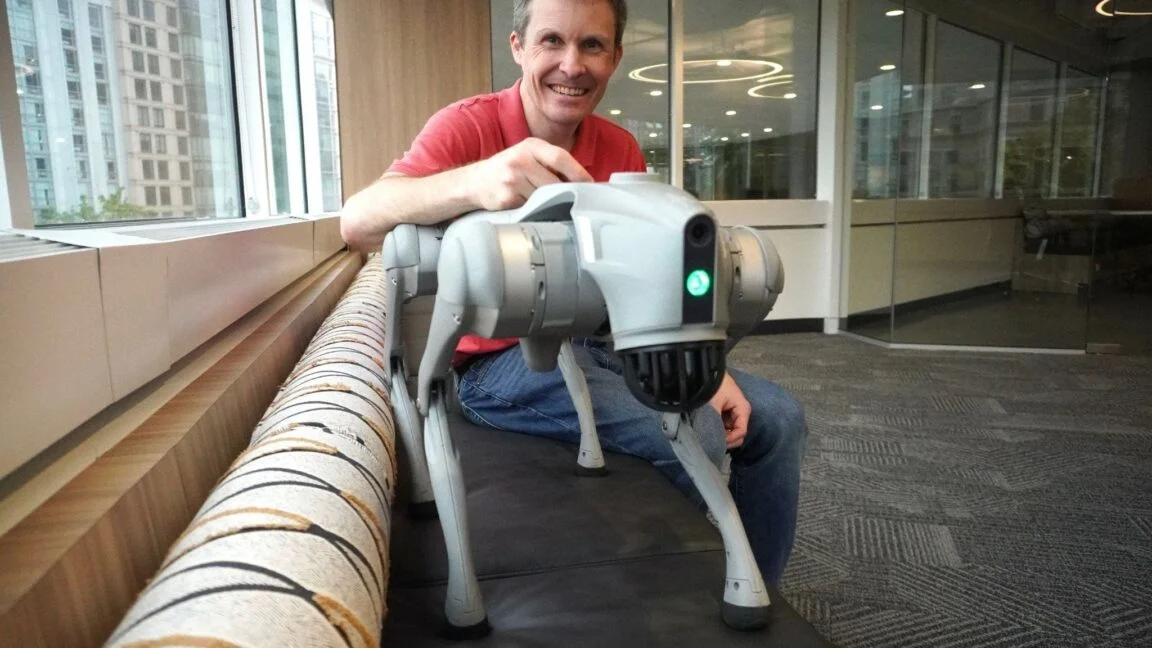
The global robotics landscape is undergoing a profound structural transformation, driven largely by rapid advancements and aggressive pricing models originating from Chinese hardware manufacturers. Among these, Unitree Robotics has emerged as a pivotal entity, fundamentally reshaping the accessibility and commercial trajectory of both quadruped and humanoid robotics. What was once an exclusive domain restricted to elite academic research institutions and heavily funded industrial laboratories—typified by high-end systems costing tens or hundreds of thousands of dollars—is rapidly pivoting toward a consumer-accessible paradigm. This democratization of legged locomotion mirrors past technological disruptions, drawing direct comparisons to the early commercialization of personal computing and aerial drone technology.
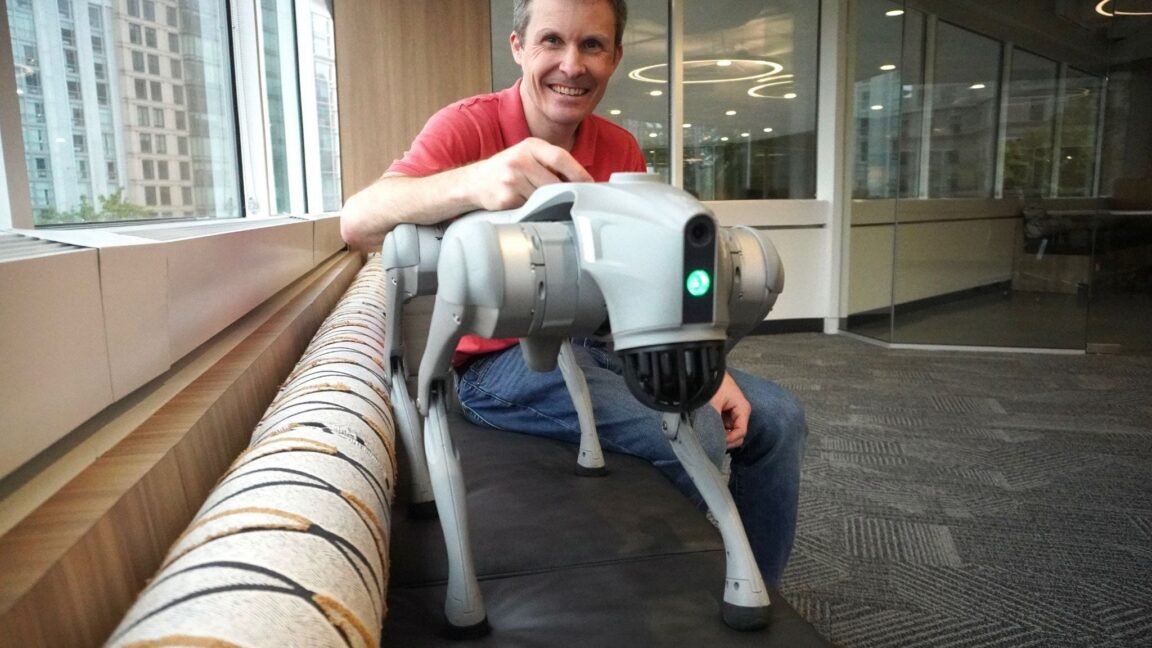
The Rise of Consumer-Grade Quadruped Robotics
The journey of Unitree Robotics from a niche academic project to a dominant global hardware force illustrates the velocity of modern manufacturing scaling. Founded in May 2016 by Wang Xingxing following his master’s thesis development of a crude quadruped known as XDog at Shanghai University, the company drew early inspiration from foundational work by Boston Dynamics. While early industry pioneers like Boston Dynamics developed complex, heavy-duty platforms such as BigDog and WildCat—powered by internal combustion engines and hydraulic actuators that rendered them loud, polluting, and economically prohibitive for widespread use—Wang pursued a different mechanical philosophy.
Unitree pivoted heavily toward electric-motor-driven systems, launching initial research-focused models like the Laikago in 2017 and AlienGo in 2019. However, the true inflection point arrived with the commercial introduction of the Go1 line in 2021, followed by the highly popular Go2 series in 2023. Offering entry-level models starting at roughly $1,600 and advanced configurations under $3,000, Unitree slashed the cost barrier for quadruped platforms by over 97 percent compared to industry stalwarts like Boston Dynamics’ Spot, which historically started around $75,000.
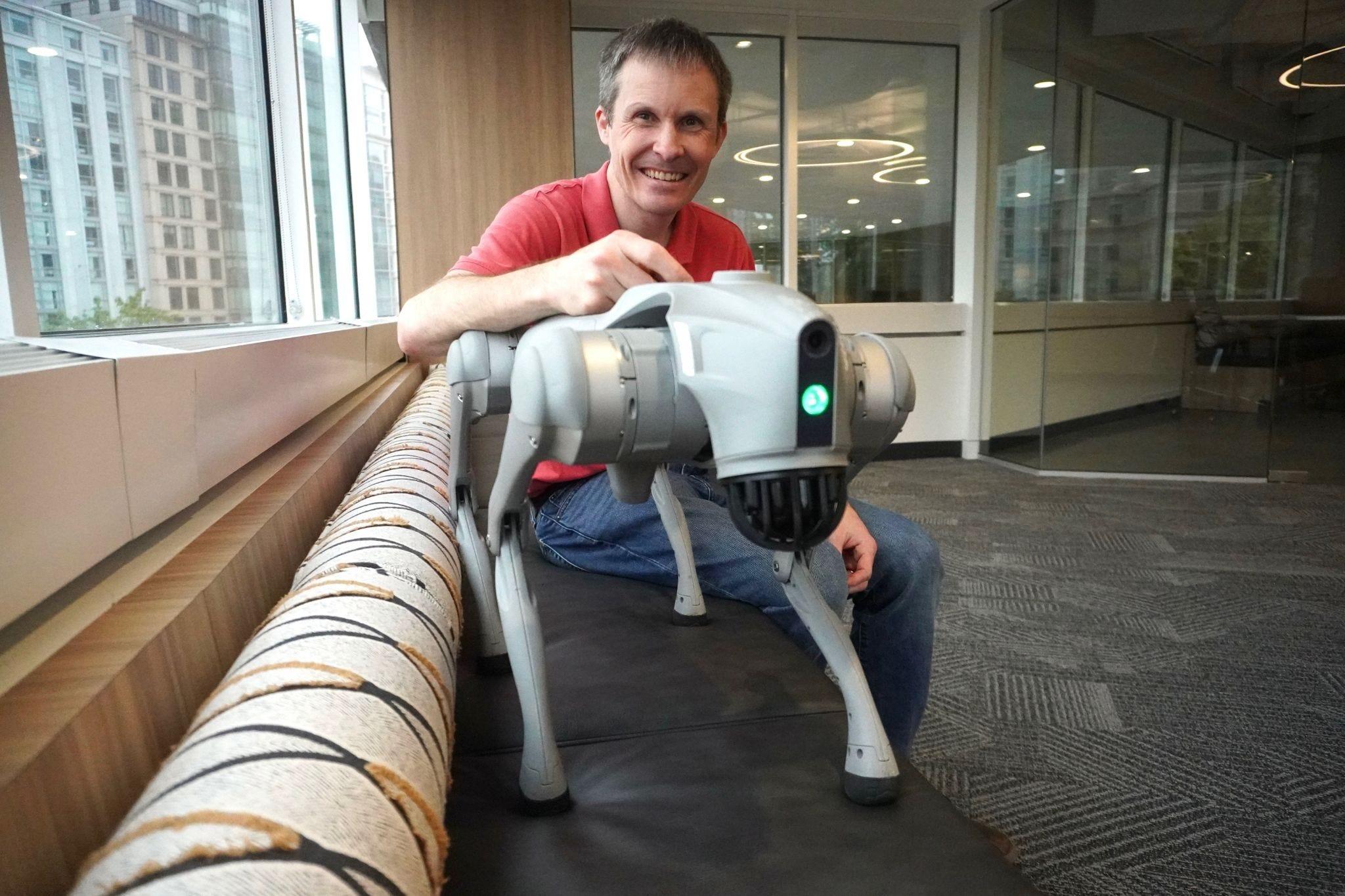
This dramatic reduction in cost opened the floodgates for widespread deployment. Academic institutions, such as the robotics lab directed by Professor Xuesu Xiao at George Mason University, suddenly found themselves able to acquire fleets of quadruped units for research rather than rationing access to a single legacy machine. Beyond academia, consumer adoption began to trickle upward, allowing independent researchers, technology reviewers, and hobbyists to experiment firsthand with dynamic locomotion platforms that were previously unattainable.
Engineering Innovations and Cost-Reduction Strategies
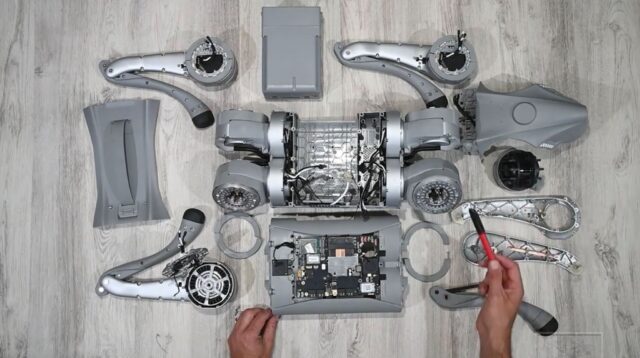
The ability of Unitree to undercut Western competitors so drastically is not merely a byproduct of cheap labor, but rather the result of distinct engineering choices and aggressive component optimization. Deconstruction analyses performed by engineering firms such as Simplexity have highlighted several key design strategies that drive down manufacturing expenses while maintaining robust operational capability.

First, Unitree utilizes a high degree of part standardization. A typical Unitree Go2 quadruped employs twelve identical motors across its four legs—three per limb. By standardizing the shoulder angles and joint segments, the company minimizes unique part counts, simplifies assembly lines, and streamlines field repairs. According to mechanical analysts, a damaged leg assembly on a Unitree quadruped can be swapped out in under a minute due to this modular architecture.
Second, Unitree challenges traditional industrial design by deploying larger, more powerful motors paired with remarkably low gear reduction ratios (such as 6.33-to-1) rather than the heavy, complex, and expensive high-ratio reducers (like 51-to-1) found in traditional precision robotics. While high gear ratios offer microscopic precision, they increase rigidity, reduce backdriveability, and add immense cost. Unitree’s lower gear ratios, compensated for by sophisticated software control loops and machine learning simulations, result in more dynamic, agile movements—such as continuous balancing during complex handstands—while significantly lowering production expenditures. Furthermore, the company has increasingly brought the manufacturing of critical components, including motors, gearboxes, LiDAR sensors, and cameras, completely in-house. Independent industry analyses indicate that Unitree’s self-produced motors run at a fraction of the cost of equivalent Western components, giving the firm a compounding cost advantage.

Transition to Humanoids and Market Dominance
Leveraging its mature supply chain and deep engineering expertise developed through years of quadruped production, Unitree executed a strategic pivot into the humanoid robotics market. Debuting its first humanoid, the H1, in 2023, the company quickly followed up with the G1, a more capable and significantly cheaper system with a consumer base price starting around $13,500.
This aggressive pricing strategy has propelled Unitree into a position of global market leadership. Financial disclosures associated with the company’s public debut on the Shanghai stock market—where shares initially surged more than fivefold, establishing a multi-billion-dollar valuation—reveal the staggering speed of this transition. Between financial reporting cycles, Unitree’s humanoid revenue experienced explosive multi-fold growth, quickly overtaking quadruped sales to account for the majority of the company’s total revenue.
Market observers frequently compare this trajectory to the meteoric rise of DJI in the global drone market over a decade prior. Much like DJI introduced affordable aerial photography platforms that unlocked entirely new industries—from real estate marketing to local media and agricultural surveying—Unitree is systematically lowering the threshold for humanoid deployment. While competing Chinese firms like AgiBot have also made significant shipment gains in recent months, Western counterparts such as Tesla, Figure, and 1X have yet to achieve equivalent commercial consumer availability at scale.
Practical Limitations and Real-World Friction
Despite the profound economic and market implications of Unitree’s hardware ecosystem, practical applications for consumer-grade quadrupeds remain somewhat limited. Independent field testing highlights numerous operational hurdles. Unlike wheeled delivery robots, which are significantly faster and more energy-efficient, or aerial drones optimized for wide-area surveying, quadruped robots lacking manipulator arms possess restricted utility for domestic household chores.

Real-world deployment also reveals considerable software and hardware polish issues. Accompanying control applications frequently suffer from bugs, and flagship autonomous behaviors—such as stair climbing and human-following tracking demonstrated in promotional marketing material—often struggle under unpredictable environmental conditions. Thermal management and battery efficiency under load present ongoing challenges; rigorous real-world testing in adverse weather conditions, such as steep inclines during high summer temperatures, can push internal components past safe thermal thresholds, occasionally resulting in unexpected system shutdowns or structural collapses.
Geopolitical Pressures and Future Industry Implications
As Unitree and its domestic rivals consolidate their dominance over the global hardware supply chain, the commercial success has increasingly intersected with geopolitical friction. Policymakers in Western nations have expressed growing alarm regarding the rapid proliferation of Chinese robotics.

In mid-2026, a bipartisan coalition in the United States House of Representatives introduced targeted legislation explicitly aiming to restrict the importation of foreign-owned robotic systems, specifically citing Unitree by name. Shortly thereafter, regulatory bodies such as the Federal Communications Commission (FCC) enacted broad new rules governing foreign-made hardware to safeguard domestic technological infrastructure.
These regulatory actions mirror ongoing trade disputes observed in the electric vehicle sector, where manufacturers like BYD face severe market barriers in the United States while continuing to expand aggressively throughout Europe, Asia, and Latin America. Industry analysts caution that restrictive trade policies intended to curb the growth of foreign hardware giants risk isolating domestic markets, potentially leaving local industries trailing behind in foundational hardware manufacturing capabilities while global commercial adoption accelerates elsewhere.

