
Methane, a colorless and odorless hydrocarbon, has emerged as one of the most significant hurdles and opportunities in the global effort to stabilize the Earth’s climate. While carbon dioxide (CO2) often dominates the conversation regarding greenhouse gas emissions due to its long-term persistence in the atmosphere, methane (CH4) is increasingly recognized by scientists and policymakers as a "climate super-pollutant" that demands immediate attention. Accounting for approximately one-third of the global warming experienced since the Industrial Revolution, methane is the primary component of natural gas and is significantly more potent than CO2 in the short term. Over a 20-year period, methane is estimated to trap 86 times more heat per unit of mass than carbon dioxide, making its reduction the fastest way to slow the rate of global temperature rise.
The current state of the climate crisis is underscored by a stark reality: atmospheric methane concentrations reached a record 1,934 parts per billion (ppb) in 2023, a 265 percent increase over pre-industrial levels. With human activities responsible for approximately 60 percent of these emissions, the international community faces a critical window. According to the Intergovernmental Panel on Climate Change (IPCC), methane emissions must be slashed by roughly 34 percent by 2030 to keep the goal of limiting global warming to 1.5 degrees Celsius within reach. Failure to act could see these emissions rise by another 13 percent by the end of the decade, potentially triggering irreversible environmental feedback loops.
The Evolution of Methane Science and Measurement Techniques
The history of methane awareness has shifted from treating the gas as a minor byproduct of industrial and biological processes to recognizing it as a primary driver of the greenhouse effect. Geologically, methane is formed over millions of years as heat and pressure act on organic matter deep underground—the same process that creates oil and coal. Biologically, it is the result of methanogenesis, a process where microorganisms known as archaea produce gas in oxygen-free environments like wetlands, rice paddies, and the digestive tracts of ruminant animals.

As the stakes of the climate crisis have risen, so too has the sophistication of methane measurement. Traditionally, scientists relied on "bottom-up" inventories. These estimates are calculated by taking a known emission source—such as a single cow or a specific type of valve at a gas plant—and multiplying its average emissions by the total number of cows or valves in a region. However, this method often fails to account for "super-emitters," which are localized incidents where massive amounts of gas are released due to equipment failure or intentional venting.
In recent years, "top-down" measurement has revolutionized the field. Utilizing airplanes, high-altitude sensors, and advanced satellite constellations like GHGSat and the Environmental Defense Fund’s MethaneSAT, researchers can now detect plumes of methane from space. This technological leap has revealed a significant "measurement gap." For instance, studies have shown that actual methane emissions from U.S. oil and gas operations are often 60 percent higher than estimates provided by the Environmental Protection Agency (EPA). In 2022 alone, satellites identified over 1,000 super-emitting events, including a massive leak in Turkmenistan that released methane at a rate equivalent to the hourly emissions of the entire nation of France.
Identifying the Primary Drivers of Human-Caused Emissions
The global methane profile is dominated by three sectors: agriculture, fossil fuels, and waste management. Understanding the nuances of each is essential for developing effective mitigation policies.
The Agricultural Footprint: Livestock and Rice
Agriculture is the largest source of anthropogenic methane, contributing approximately 40 percent of the global total. Within this sector, livestock—specifically cattle, sheep, and goats—are the primary contributors through enteric fermentation. As these animals digest fibrous plants, microbes in their stomachs produce methane, which is then released primarily through burping. The global demand for meat and dairy, particularly in developing economies, continues to drive the expansion of livestock populations, with emissions projected to increase significantly by 2030.

Rice cultivation is another major agricultural source, responsible for 8 percent of human-caused emissions. The traditional practice of flooding rice paddies creates the anaerobic conditions that archaea thrive in. As the global population grows, the challenge remains to produce more food while reducing the "methane intensity" of every kilogram of rice and meat produced.
Fossil Fuels: Extraction, Transport, and Abandoned Infrastructure
The fossil fuel industry accounts for 35 percent of human-caused methane emissions. This occurs through the venting and flaring of gas during oil extraction, as well as leaks throughout the vast network of pipelines and processing facilities. Natural gas, often marketed as a "cleaner" alternative to coal, is essentially methane; therefore, any leak in the supply chain directly undermines its perceived climate benefits.
Coal mining also contributes 12 percent of emissions. Methane is naturally trapped within coal seams and is released during the mining process for safety reasons or through seepage from abandoned mines. Currently, underground mines are responsible for the vast majority of these emissions, as they require extensive ventilation systems to prevent explosive gas buildups.
Waste Management: Landfills and Wastewater
Approximately 20 percent of human-caused methane comes from the decomposition of organic matter in landfills and wastewater treatment plants. As waste piles up in oxygen-poor environments, it becomes a breeding ground for methanogens. With solid waste production expected to rise by 73 percent by 2050, the waste sector is currently the fastest-growing source of methane emissions globally.

The "Bridge Fuel" Myth and the Risks of LNG Expansion
A major point of contention in international energy policy is the role of Liquefied Natural Gas (LNG). For years, proponents have argued that natural gas serves as a "bridge fuel" that helps nations transition away from coal. Because natural gas emits about half as much CO2 as coal when burned at a power plant, it was seen as a pragmatic middle ground.
However, recent climate modeling and leak detection data have largely debunked this narrative. Because methane is so potent, even a small leak rate—as low as 0.2 percent—can make natural gas as damaging to the climate as coal over a 20-year horizon. A 2023 study found that when total lifecycle emissions are considered, including the energy-intensive process of liquefying and shipping gas across oceans, LNG may have a 33 percent greater global warming potential than coal. Despite these findings, the U.S. and other nations have rapidly expanded LNG export infrastructure, a move that climate advocates warn could lock in decades of high methane emissions and "cancel out" progress made in the renewable energy sector.
Natural Feedback Loops and Tipping Points
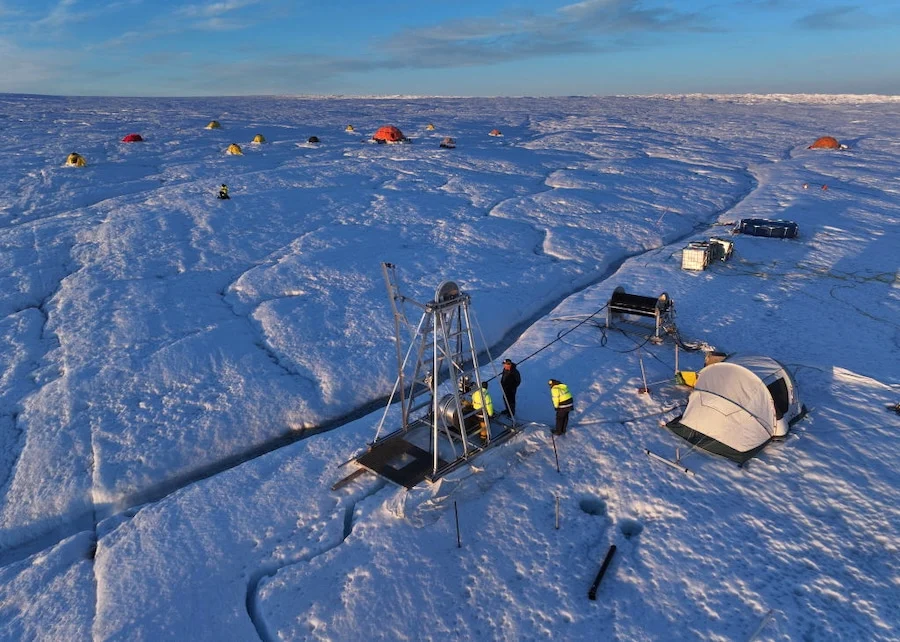
Beyond human activity, the climate crisis is beginning to trigger natural methane releases that are outside of direct human control. This is known as a positive feedback loop. The most concerning of these is the thawing of the Arctic permafrost. The permafrost acts as a massive carbon freezer, holding approximately 2.5 times more carbon than is currently in the atmosphere. As the Arctic warms at four times the global average, this frozen ground melts, allowing microbes to digest long-dormant organic matter and release methane.
Similarly, the "wetland methane feedback" is a growing concern. Warmer temperatures and changing rainfall patterns are expanding tropical wetlands and accelerating microbial activity, leading to "exceptional growth" in natural emissions. Between 2020 and 2021, wetland emissions surged at rates higher than even the most pessimistic scientific models had predicted. These natural surges make the reduction of human-caused emissions even more urgent, as they reduce the "carbon budget" available to stay within safe temperature limits.

Public Health Implications: The Ozone Connection
While the primary focus on methane is its role in global warming, it also has a direct impact on human health. Methane is a key precursor to the formation of ground-level ozone (smog). Unlike the protective ozone layer in the stratosphere, ground-level ozone is a toxic air pollutant. It damages lung tissue, exacerbates asthma, and is linked to approximately 500,000 premature deaths annually.
Furthermore, ozone is detrimental to global food security. It interferes with the ability of plants to photosynthesize, leading to significant yield losses in essential crops like wheat, soy, and rice. Experts estimate that every million metric tons of methane reduced would not only slow warming but also prevent thousands of emergency room visits and save hundreds of thousands of tons of crops from ozone damage.
Strategies for Global Mitigation and Progress to Date
The path to reducing methane is multifaceted, involving both high-tech industrial fixes and shifts in global consumption. In the fossil fuel sector, the International Energy Agency (IEA) estimates that 70 percent of methane emissions can be eliminated using existing technology, with 40 percent of those cuts coming at no net cost because the captured gas can be sold. Strategies include regular leak detection and repair (LDAR) programs and the phasing out of non-emergency flaring.
In agriculture, solutions include the use of feed additives like seaweed (3-NOP), which has been shown to reduce enteric methane in cattle by over 80 percent in some trials. For rice, "Alternate Wetting and Drying" techniques can reduce emissions by 45 percent by simply allowing fields to dry periodically, breaking the anaerobic cycle.

On the policy front, the Global Methane Pledge, launched at COP26 in 2021, represents the most significant international commitment to date. With 159 countries on board as of early 2025, the goal is to reduce global methane emissions by 30 percent by 2030. However, despite the political rhetoric, global emissions have yet to show a sustained downward trend. The "implementation gap" between government pledges and actual industrial regulation remains the primary obstacle to progress.
Broader Impact and Future Outlook
The trajectory of methane emissions over the next decade will likely determine whether the international community can avoid the most catastrophic impacts of climate change. Unlike CO2, which remains in the atmosphere for centuries, methane breaks down in about 12 years. This means that a concerted effort to stop methane leaks today will result in a measurable reduction in global warming rates within our lifetime.
The challenge is as much political as it is technical. It requires a fundamental shift in how we manage energy systems, produce food, and handle waste. As satellite technology continues to pull back the curtain on the world’s biggest emitters, the era of "invisible" methane pollution is ending. The focus now shifts to whether global leaders will use this data to enforce strict regulations or continue to allow methane to undermine global climate goals. The "low-hanging fruit" of climate action is clearly identified; the task now is to ensure it is harvested before natural feedback loops take the decision out of human hands.

