
The state of Massachusetts has officially entered the vanguard of the clean energy transition with the launch of a pioneering vehicle-to-grid (V2G) pilot program. This initiative, spearheaded by a powerhouse coalition including Eversource, National Grid, EnergyHub, Sunrun, and The Mobility House, aims to transform electric vehicles (EVs) from mere consumers of electricity into active, distributed energy resources capable of stabilizing the regional power grid. By allowing EV owners to sell energy stored in their car batteries back to the utility during times of peak demand, the program promises to create a new revenue stream for drivers while simultaneously lowering the cost of electricity for all ratepayers.
The launch marks a significant evolution of the existing ConnectedSolutions program, a demand-response framework that previously focused on residential battery storage and smart thermostats. By integrating EV batteries—which typically possess five to ten times the storage capacity of a standard home backup battery—the utilities are tapping into a massive, underutilized reservoir of energy. As the nation grapples with an increasingly fragile grid and the rapid electrification of heating and transport, this Massachusetts pilot serves as a critical test case for a technology that could redefine the relationship between motorists and the energy infrastructure.
The Mechanics of Vehicle-to-Grid Technology
At its core, V2G technology utilizes bidirectional charging to allow electricity to flow in two directions: from the grid into the vehicle, and from the vehicle back into the grid. While most EVs currently on the road are designed for one-way charging, a growing number of manufacturers are equipping newer models with the necessary onboard hardware to support bidirectional flow.
During a "demand response" event—typically triggered by extreme weather such as a summer heatwave or a winter cold snap—the utility sends a signal to participating vehicles. If the vehicle is plugged in, it can discharge a portion of its stored energy to help meet the sudden spike in demand. This process reduces the need for utilities to fire up "peaker plants," which are often the most expensive and most polluting fossil fuel plants in the energy mix.
"It’s really a small number of hours per year that you’re actually discharging the battery," noted Russell Vare, vice president of vehicle-grid integration at The Mobility House North America. "It’s not necessarily a daily discharge. It’s specifically during those peak times when the grid is under the most stress."
For the consumer, the process is designed to be seamless. Participants can use mobile applications to set "buffer" limits, ensuring the car always retains enough charge for their daily commute or emergency trips. In exchange for this flexibility, utilities provide financial compensation, effectively turning the EV into a mobile asset that pays for itself over time.
A Convergence of Grid Pressures
The push for V2G in Massachusetts comes at a time of unprecedented pressure on the New England power grid. Utility providers are facing a "triple threat" of escalating challenges: rising demand, the retirement of traditional power plants, and the inherent variability of renewable energy.
First, the demand for electricity is projected to soar. The proliferation of power-hungry data centers, driven by the explosion of artificial intelligence, is straining existing capacity. Simultaneously, state mandates to decarbonize are driving a rapid shift from internal combustion engines to EVs and from gas furnaces to electric heat pumps. While these shifts are essential for meeting climate goals, they represent a massive new load on a grid that was built for the 20th century.
Second, the transition to clean energy introduces the challenge of intermittency. Wind and solar power are essential for reducing carbon emissions, but they do not produce power around the clock. To maintain a steady supply, utilities must find ways to "bank" energy produced during sunny or windy periods for use when the air is still or the sun has set.
Finally, the cost of traditional grid upgrades is skyrocketing. Utilities are currently spending billions of dollars to bury power lines to prevent wildfires and storm damage, costs that are ultimately passed on to consumers. V2G offers a way to mitigate these costs by utilizing existing "batteries on wheels" rather than building massive, stationary storage facilities from scratch.
The Economic Argument for Distributed Storage
The economic implications of V2G extend far beyond the individual EV owner. According to industry experts, the widespread adoption of bidirectional charging could save billions of dollars in avoided infrastructure costs. By using EVs to shave off the "peaks" of energy demand, utilities can delay or cancel the construction of new substations and transmission lines.
"It’s the cheapest cost of flexible energy storage that will be available for the grid," Vare emphasized. Because the cost of the battery is already baked into the purchase price of the vehicle, the utility does not have to amortize the capital expenditure of building its own storage.
This efficiency benefits even those who do not own an EV. When the grid operates more efficiently and avoids the use of expensive peaker plants, the overall wholesale price of electricity drops. This "system-wide benefit" is a primary reason why state regulators are increasingly supportive of V2G pilots.
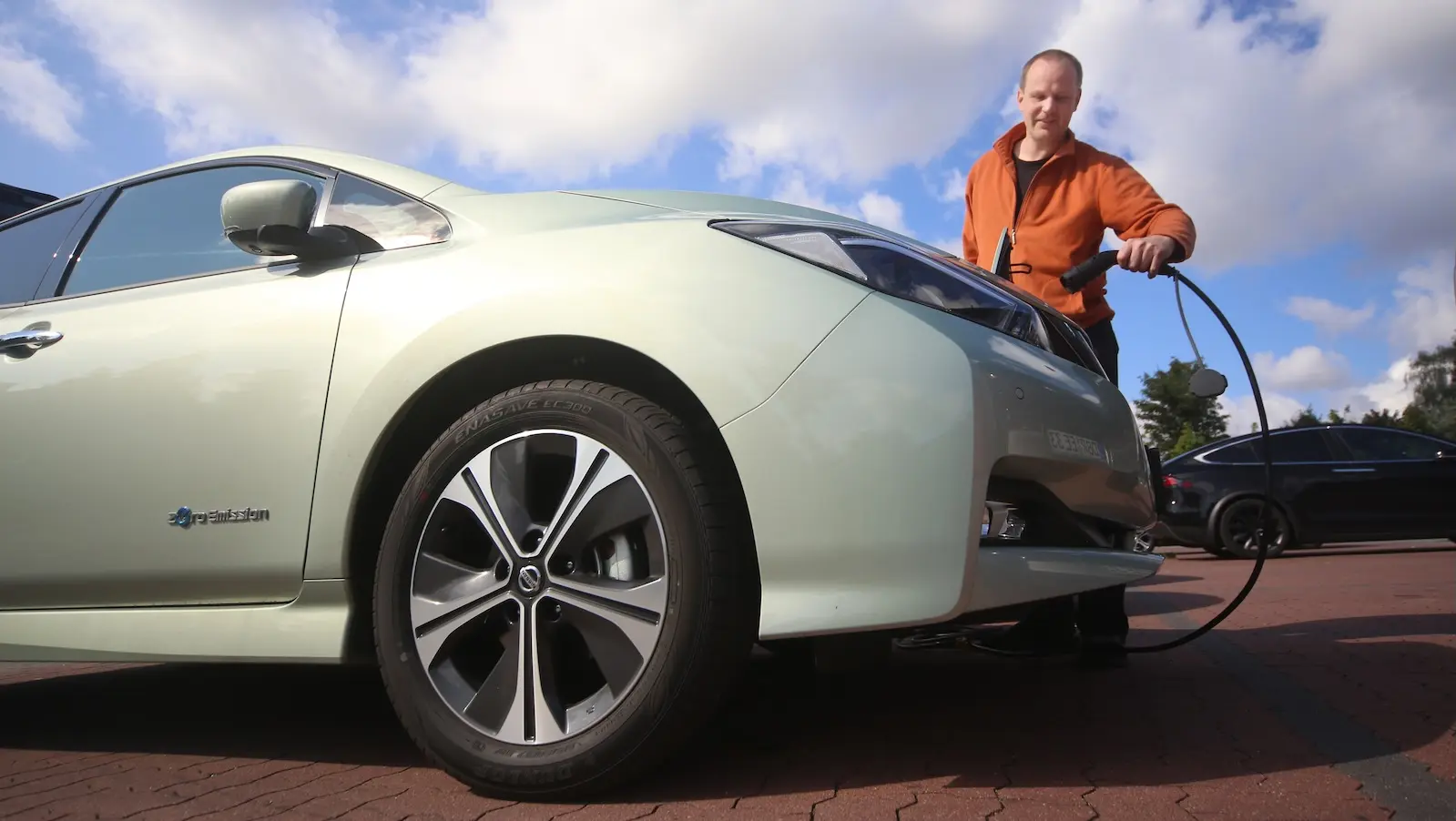
Seth Frader-Thompson, president of EnergyHub, noted that as hardware costs for bidirectional chargers continue to fall and industry standards mature, the technology will become "dramatically more accessible" over the next several years. Currently, models like the Nissan Leaf and the Ford F-150 Lightning are among the few capable of bidirectional transfer in the U.S. market, but giants like Volkswagen, Hyundai, and General Motors have pledged to integrate V2G capabilities into their upcoming EV lineups.
The Power of the Virtual Power Plant
The Massachusetts pilot is a quintessential example of a "Virtual Power Plant" (VPP). A VPP is a cloud-based distributed power plant that aggregates the capacities of heterogeneous energy resources—such as rooftop solar, home batteries, and EVs—to enhance grid reliability.
The "magic" of the VPP lies in the power of numbers. While a single car battery might not seem significant in the context of a statewide grid, the aggregation of thousands of vehicles creates a resource equivalent to a large-scale power station.
"If you have a higher number of batteries out there in a virtual power plant, you can actually use less energy from each individual battery," said Chip Silverman, director of grid services at Sunrun. "But collectively, when you patch them all together, it comes out to a very large resource."
This aggregation also allows for "active managed charging." This technique ensures that EVs do not all begin charging the moment their owners get home at 5:00 PM—a scenario that could crash the grid. Instead, the utility can stagger charging times throughout the night when demand is low and wind power is often at its peak, ensuring the grid remains balanced.
Chronology and Future Outlook
The Massachusetts pilot is part of a broader timeline of V2G development in the United States.
- 2022: The first bidirectional chargers received UL certification in the U.S., clearing a major regulatory hurdle.
- 2023: Several school districts, most notably in Oakland, California, began using electric school buses for V2G, demonstrating the tech’s efficacy with large-capacity batteries.
- 2024 (Present): The Massachusetts coalition launches its consumer-facing pilot, focusing on residential EV owners.
- 2025-2030: Industry analysts expect a "tipping point" where bidirectional charging becomes a standard feature in EVs, similar to how fast-charging became standard over the last decade.
The success of the Massachusetts initiative will be measured not just by the amount of energy returned to the grid, but by the level of consumer participation and the reliability of the software coordination. If the pilot proves successful, it is expected to be scaled up across the entire Northeast, providing a blueprint for other regions facing similar energy transitions.
As the planet continues to warm and the demand for air conditioning increases, the ability to tap into a mobile fleet of batteries may become more than just a "superpower"—it may become a necessity. By turning cars into active participants in the energy ecosystem, Massachusetts is proving that the path to a cleaner, more reliable grid is already parked in our driveways. Far from being a burden on the electrical infrastructure, the electric vehicle is poised to become its most vital protector.

