
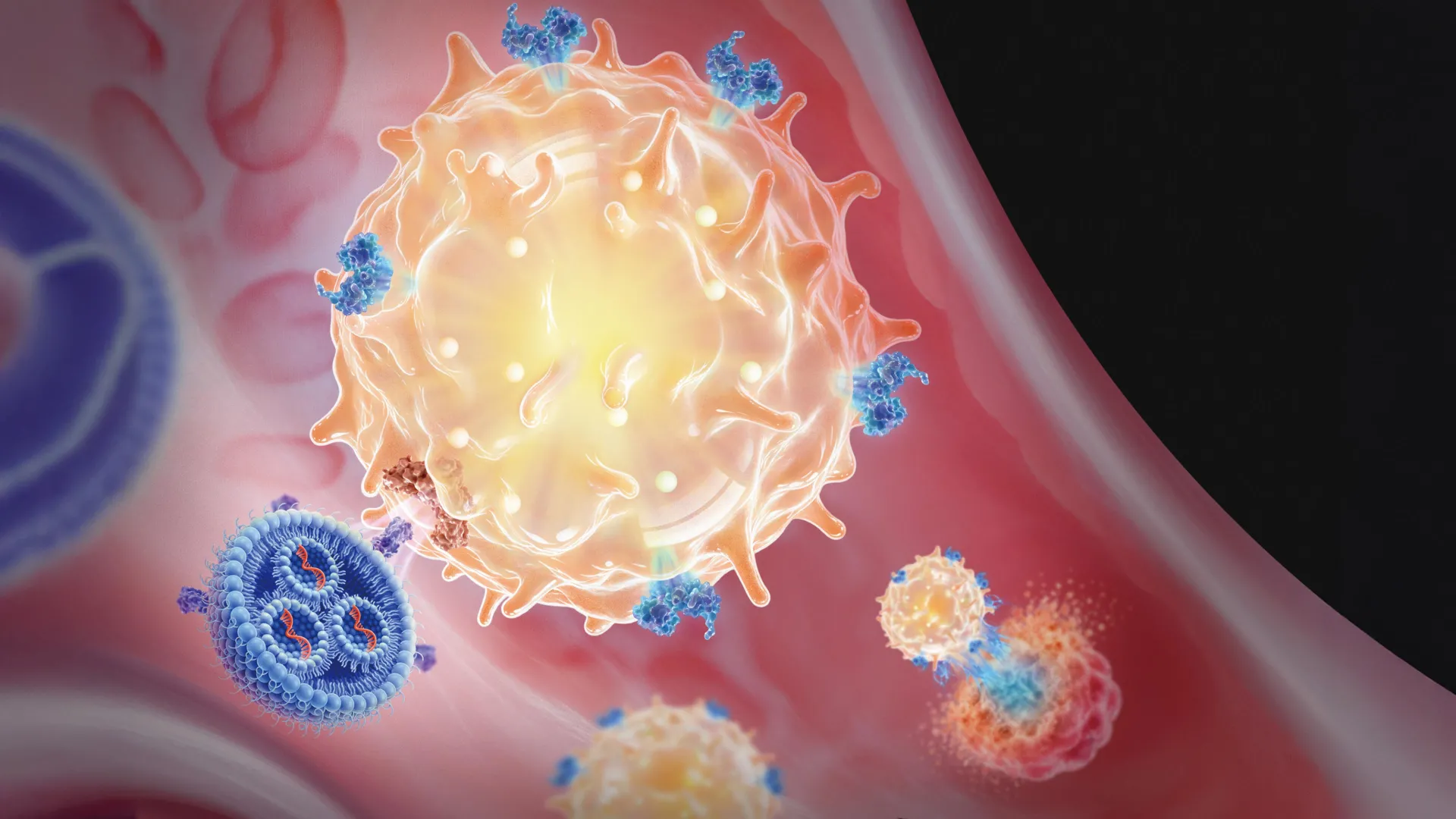
The landscape of modern medicine is witnessing a profound paradigm shift as bioengineers at the Massachusetts Institute of Technology (MIT) unveil a groundbreaking technique that transforms immune cells into precision cancer fighters directly inside a patient’s body. Published in the esteemed journal Nature Biotechnology, this pioneering study bypasses the grueling, expensive, and logistically complex ex vivo manufacturing processes that have historically defined cell-based immunotherapies. By utilizing sophisticated lipid nanoparticles to deliver targeted genetic instructions straight to natural killer (NK) cells in vivo, the MIT research team has successfully eliminated tumors and reversed severe autoimmune damage in preclinical models, signaling a potential new dawn for the accessibility and affordability of advanced cellular medicine.
The Evolution of Cell Therapies: Overcoming Historical Roadblocks
To fully appreciate the significance of MIT’s recent breakthrough, it is necessary to examine the trajectory of immune cell engineering over the past two decades. Traditional cell-based therapies—most notably chimeric antigen receptor (CAR) T-cell therapies—have fundamentally transformed oncology, particularly in the management of hematological malignancies. Since the U.S. Food and Drug Administration (FDA) granted its first landmark approvals for CAR-T therapies in 2017, these living drugs have offered unprecedented remissions for patients suffering from refractory B-cell leukemias, lymphomas, and multiple myeloma.
The mechanism behind CAR-T therapy relies on extracting a patient’s own T cells, transporting them to a specialized, highly regulated biotechnology facility, and using viral vectors to insert genetic material that codes for a chimeric antigen receptor. Once reintroduced into the patient, these engineered T cells act as guided missiles, seeking out and destroying cells carrying specific surface antigens, such as CD19.
Despite their clinical triumphs, conventional CAR-T treatments are plagued by severe logistical and economic bottlenecks. The manufacturing cycle typically spans several weeks, requiring leukapheresis, complex genetic modification, rigorous quality control testing, cryogenic shipping, and subsequent lymphodepleting chemotherapy for the recipient. This intricate pipeline culminates in staggering financial costs—often exceeding hundreds of thousands of dollars per dose—alongside a high risk of manufacturing failures and patient deterioration while waiting for the product to be prepared. Furthermore, standard CAR-T therapies are notoriously difficult to apply to T-cell malignancies or autoimmune diseases, because engineered T cells naturally target and destroy one another, neutralizing the therapeutic efficacy through fratricide.
Shifting the Paradigm: The Rise of Natural Killer Cells and In Vivo Delivery
Recognizing these inherent limitations, researchers have increasingly turned their attention toward natural killer (NK) cells as an alternative cellular vehicle. Unlike T cells, NK cells are part of the innate immune system and possess an intrinsic ability to recognize and lyse stressed, malignant, or virally infected cells without prior sensitization. Crucially, because NK cells are distinct from T cells, they can be engineered to target abnormal T cells—such as those driving T-cell lymphomas or autoimmune disorders—without triggering cell-on-cell destruction.
However, producing CAR NK cells outside the body traditionally suffered from many of the same manufacturing hurdles that encumber CAR-T therapies. Seeking a radical departure from conventional methodology, the MIT research team, led by senior author Daniel Anderson alongside lead authors Yuang Chen, Julia Monkovic, and Haseeb Mughal, asked a transformative question: Could the genetic engineering process be executed entirely inside the living body?
"The manufacturing challenges with CAR NK cells are significant," explains Daniel Anderson, a professor in MIT’s Department of Chemical Engineering and a member of the Koch Institute for Integrative Cancer Research and the Institute for Medical Engineering and Science. "The idea here is you can deliver a nanoparticle that will modify your own NK cells with a CAR construct and teach them to attack tumor cells."
Engineering the Delivery System: Precision Nanoparticles and Messenger RNA
The technological cornerstone of this breakthrough lies in the design and optimization of advanced lipid nanoparticles (LNPs)—the same foundational delivery architecture that proved instrumental in the rapid deployment of mRNA-based COVID-19 vaccines. These microscopic fatty spheres are engineered to encapsulate messenger RNA (mRNA), which serves as a temporary set of genetic blueprints instructing the host’s natural killer cells to manufacture specialized chimeric antigen receptors.
To ensure that these genetic instructions reach their intended cellular destination rather than being indiscriminately absorbed by the liver, spleen, or other tissues, the MIT researchers implemented a sophisticated surface-coating strategy. They decorated the exterior of the lipid nanoparticles with specific antibody fragments. These biological tags act as homing beacons, recognizing and binding exclusively to surface receptors present on natural killer cells.
Once the nanoparticle successfully docks with an endogenous NK cell and is internalized, the enclosed mRNA is released into the cell’s cytoplasm. The cellular machinery immediately translates the genetic code, producing the bespoke chimeric antigen receptor. This newly minted CAR migrates to the surface of the NK cell, effectively upgrading an ordinary immune cell into a targeted, serial killer of diseased tissue. By tailoring the mRNA instructions, scientists can program the NK cells to recognize various surface markers depending on the pathological target, ranging from CD19 on B cells to CD3 on malignant or autoreactive T cells.
Preclinical Success: Eliminating Tumors and Reversing Autoimmune Pathology
To evaluate the translational viability of this in vivo reprogramming technique, the research team conducted a series of rigorous preclinical evaluations in murine models, yielding striking therapeutic results.
In initial experiments targeting an aggressive form of melanoma, systemic administration of the targeted lipid nanoparticles successfully modified approximately 80 percent of the targeted NK population in vivo. When challenged with tumor growth, the treatment exhibited profound anti-tumor activity: three out of five mice treated with the specialized nanoparticles experienced complete, durable remissions.
The researchers subsequently investigated the technology’s efficacy against T-cell lymphoma utilizing advanced humanized murine models—mice engineered to harbor functional human immune cells. In this stringent model, repeated administrations of the nanoparticles resulted in substantial tumor regression, ultimately culminating in the complete eradication of the tumors after a regimen of five injections. Crucially, the therapeutic outcomes achieved via in vivo nanoparticle delivery matched the efficacy of traditional CAR NK cells manufactured externally in a laboratory setting, proving that intracellular reprogramming inside the living body can achieve parity with complex ex vivo cell processing.
Beyond oncology, the MIT team sought to test the versatility of the platform in addressing autoimmune disorders, where the immune system aberrantly attacks healthy host tissues. They focused on autoimmune hepatitis, a debilitating condition wherein autoreactive T cells direct their destructive capacity against hepatocytes, the primary functional cells of the liver. By engineering nanoparticles to instruct NK cells to hunt down and eliminate these specific disease-driving T cells, the researchers interrupted the autoimmune cascade. Following a single nanoparticle injection, the autoreactive T cells were successfully cleared from the systemic circulation, allowing the damaged liver tissue to structurally and functionally regenerate.
"This study is an excellent example of the power of nano delivery systems and their ability to potentially treat cancer and other diseases," notes Robert Langer, MIT’s David H. Koch Institute Professor and a co-author of the study.
Broader Implications, Future Horizons, and Clinical Translation
The implications of successfully engineering immune cells in vivo extend far beyond the specific confines of melanoma, lymphoma, and autoimmune hepatitis. If successfully translated from murine models to human clinical trials, this technology could democratize access to advanced cellular therapies, transforming them from bespoke, hospital-intensive interventions into off-the-shelf treatments readily available in standard clinical settings.
By eliminating the need for cell harvesting, complex laboratory culture, genetic transduction facilities, and cryogenic transport logistics, the cost of goods and the administrative burden associated with cell therapies could plummet by orders of magnitude. Furthermore, the modular nature of mRNA-lipid nanoparticle platforms allows scientists to rapidly redesign the genetic payload to address emerging therapeutic targets, viral infections, or newly identified genetic mutations in real time.
Looking forward, the research team is actively investigating the expansion of this delivery technology to other complex autoimmune conditions driven by dysfunctional T cells, including multiple sclerosis and rheumatoid arthritis. However, researchers and clinicians emphasize a note of scientific caution: while the preclinical data published in Nature Biotechnology is exceptionally promising, all experiments to date have been conducted in animal models. Extensive toxicological evaluations, pharmacokinetic profiling, and phased human clinical trials will be mandatory to verify both the safety profile and the long-term clinical efficacy of the treatment in human patients.
Financial support for the research was provided by Sanofi, the Marble Center for Cancer Nanomedicine, and a Koch Institute Support (core) Grant from the National Cancer Institute. As investigators continue to refine the precision and stability of these nanocarrier systems, the horizon of modern medicine draws closer to an era where complex immunological diseases can be systematically dismantled not through elaborate external laboratories, but by awakening the body’s own native defenders from within.

