
The United States political landscape underwent a seismic transformation this past Tuesday as the Democratic Party secured decisive victories across the country, effectively capturing control of both the House of Representatives and the Senate. This midterm outcome serves as a direct rebuke of the current administration’s policy trajectory and indicates a profound desire among the electorate to restore traditional institutional checks and balances. Following years of heightened political polarization, the 2026 cycle has recalibrated the legislative branch’s role, effectively constraining the executive authority that President Donald Trump sought to exercise throughout his second term.
A Chronology of the 2026 Midterm Cycle
The path to this political realignment was paved with significant milestones that shaped voter sentiment long before ballots were cast.
- Early 2026: Persistent inflationary pressures and the escalating costs of the ongoing military engagement involving Iran created a baseline of voter dissatisfaction.
- Spring 2026: Public discourse reached a boiling point following a series of executive orders that bypassed congressional oversight, leading to widespread protests and legal challenges regarding the limits of presidential power.
- Summer 2026: Primary elections signaled a shift in party dynamics, with grassroots organizations—particularly those affiliated with the Democratic Socialists of America (DSA)—finding success in nominating candidates who prioritized socioeconomic reform and institutional accountability.
- October 2026: The final weeks of the campaign saw an intensified debate over the future of NATO and US foreign commitments, as candidates sparred over the economic burden of international military aid.
- November 3, 2026: Election Day witnessed record-breaking turnout, with results confirming a Democratic sweep that defied historical midterm trends, which traditionally favor the party out of power.
Institutional Resilience and the Democratic Mandate
The core narrative of the 2026 midterms is the survival of the American democratic system. Following the turbulence of the January 6 Capitol riot and subsequent efforts to reshape the electoral landscape, many analysts feared a permanent drift toward an authoritarian model. Instead, the electorate demonstrated a robust commitment to the principles of separation of powers.
According to post-election data from the Associated Press, approximately 30% of voters identified the health of American democracy as the most pressing issue facing the nation. Furthermore, nearly 70% of respondents expressed a belief that Congress had failed to exercise sufficient oversight of the presidency. By granting the Democrats control of both chambers, voters have effectively mandated a transition from a centralized executive-led government to a more traditional, committee-driven legislative model.
This shift grants the Democratic caucus significant tools to exert pressure on the White House. Beyond the power of the purse—which allows Congress to block funding for initiatives deemed harmful or unconstitutional—the new leadership is expected to establish investigative committees to review executive actions from the past two years. This institutional pushback will likely force the administration to provide transparency on topics ranging from trade policy to the logistical management of foreign military engagements.
The Rise of a New Democratic Vanguard
For the Democratic Party, the 2026 results represent more than just a victory; they represent a fundamental revitalization. After years of struggling to articulate a unified vision, the party successfully leveraged a diverse coalition of voters. The results were particularly notable in regions previously considered Republican strongholds. In Kansas, the capture of a Senate seat for the first time since 1932 sent a shockwave through the national political establishment, while victories in Texas and South Carolina signaled that the Democratic platform of economic protection and civil rights is gaining traction even in deep-red territories.
Central to this success is a new, younger generation of legislators. The election of at least five candidates endorsed by the Democratic Socialists of America to the House of Representatives has highlighted a distinct move toward progressive policies. These figures are campaigning on a platform of universal healthcare, affordable housing, and stricter regulatory oversight of corporate interests. Brandon Bohrn, an expert in trans-Atlantic relations at the Bertelsmann Foundation, noted that these wins have invalidated the long-held assumption that progressive candidates could not succeed on a national stage. This internal shift suggests that the Democratic Party will spend the next two years engaged in a vigorous debate over its ideological future, aiming to cement these gains ahead of the 2028 presidential race.
Republican Turmoil and the Future of Trumpism
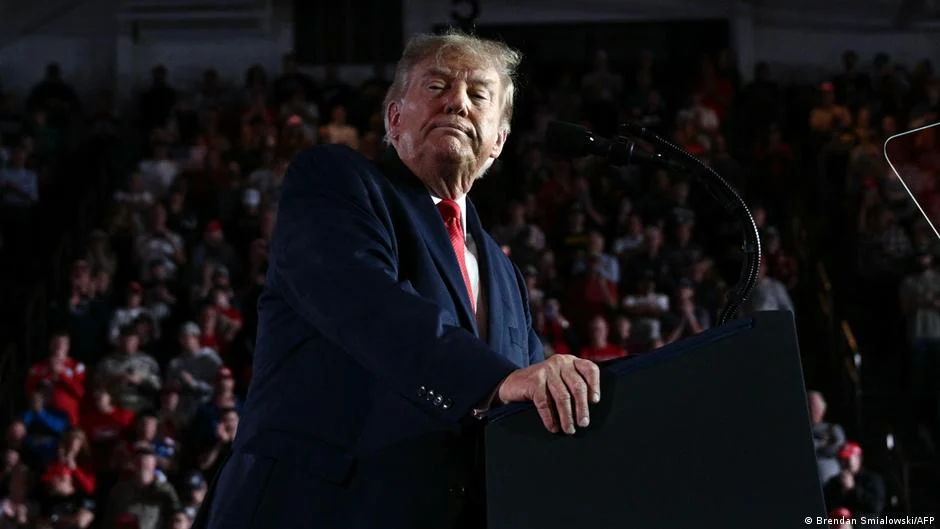
Conversely, the Republican Party now faces a period of existential reflection. President Trump, maintaining his characteristic stance, has rejected responsibility for the losses via his Truth Social platform. However, the scale of the defeat has emboldened internal critics who had been previously sidelined.
The primary challenge for the GOP is the impending vacuum of leadership. Because the U.S. Constitution prohibits a third presidential term, the Republican Party must now navigate a contested nomination process for 2028. This transition is expected to be contentious, as the party grapples with the question of whether to double down on Trumpian populism or pivot toward a more moderate, traditional conservative platform. The failure to maintain congressional majorities has made this internal power struggle an unavoidable necessity for the party’s survival.

Geopolitical Implications: Iran and Europe
The election results have sent immediate ripples through the global geopolitical order. For Iran’s leadership, the change in the U.S. legislative branch is being viewed with cautious optimism. The war, which has been a significant drain on the American treasury and a primary driver of domestic energy price spikes, has made the President’s foreign policy increasingly unpopular. There is now an expectation that the administration will be forced to pivot toward a diplomatic resolution to mitigate domestic political fallout.
The impact on Europe is equally profound. Ian Lesser, an expert at the German Marshall Fund, suggests that the Democratic victory provides a potential lifeline for the trans-Atlantic alliance. With control of the budget, Congress can move to stabilize military funding for NATO and ensure that the U.S. remains a predictable partner. While the Democrats may not be able to dismantle every policy enacted by the current administration, their ability to block aggressive, unilateral trade measures and tariff hikes will be a welcome relief for European policymakers.
Analysis: A New Era of Divided Governance
The 2026 midterm results have effectively ended the period of unchallenged executive governance. The implications for the remainder of the presidential term are clear: the executive branch will be forced into a state of perpetual negotiation. Whether the administration chooses to cooperate with the new congressional leadership or enters a state of legislative paralysis depends on the White House’s willingness to adapt to the new reality.
The electorate has spoken with a singular, clear voice: they expect the government to function as a system of checks and balances. The next two years will be defined by rigorous oversight, a potential change in the trajectory of U.S. foreign policy, and a intense, behind-the-scenes battle for the soul of the Republican Party. As the dust settles on this election, it is evident that the United States has entered a period of recalibration, with democratic institutions emerging as the primary winners of the 2026 cycle. The transition will not be seamless, and friction between the branches of government is all but guaranteed, yet the restoration of parliamentary oversight stands as a definitive outcome of this historic election.

