
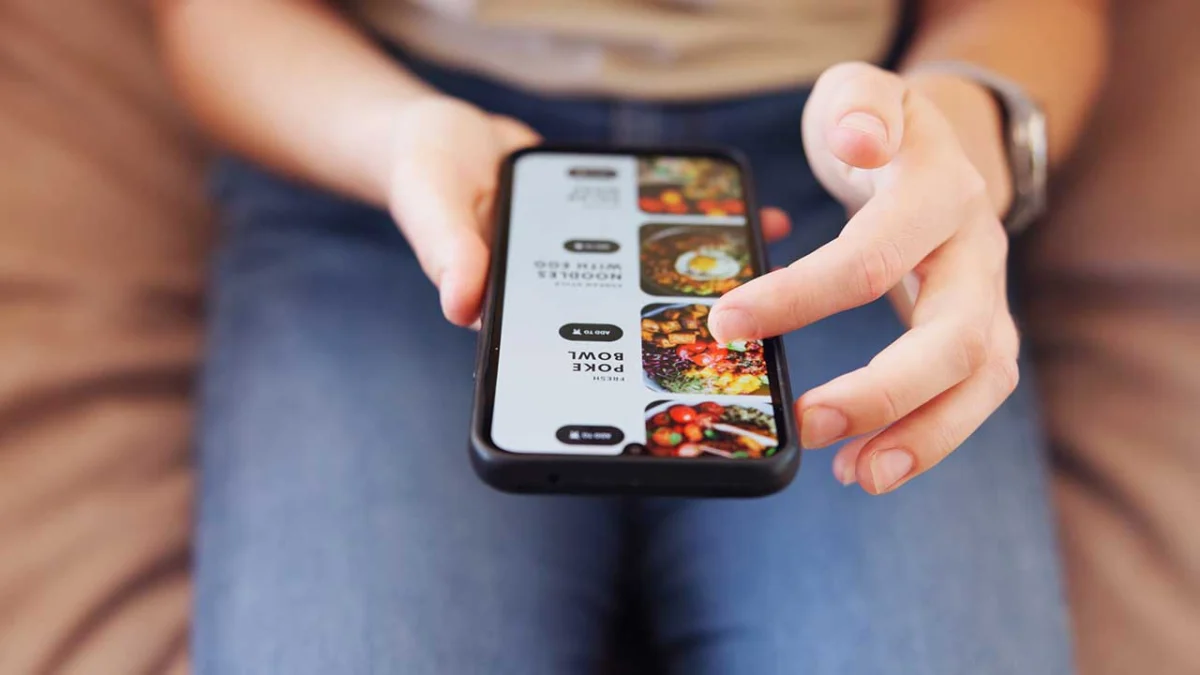
The modern convenience of food delivery and takeout comes with a staggering environmental price tag that is only recently being fully quantified by environmental researchers and industry analysts. According to the nonprofit Upstream’s Reuse Wins report, the disposable containers, cups, lids, and utensils distributed by U.S. restaurants generate nearly 9 million tons of waste annually—a figure roughly equivalent to the weight of 25 Empire State Buildings. Of this massive waste stream, approximately 80% is generated specifically by takeout and delivery services, a sector that exploded in volume during the early 2020s and has remained a staple of American consumption habits. As the limitations of recycling and the failure of "green" rating apps become more apparent, a new industrial model is emerging: the circular "borrow-and-return" network.
The Failure of Information-Based Solutions
The journey toward sustainable takeout began not with physical infrastructure, but with digital information. Between 2018 and 2022, a wave of "green rating" apps, most notably PlasticScore and Jybe, attempted to leverage consumer power to force industry change. These platforms functioned similarly to Yelp, allowing diners to rate restaurants based on the sustainability of their packaging. The goal was to create a market incentive for businesses to ditch expanded polystyrene (commonly known as Styrofoam) and single-use plastics in favor of compostable or recyclable alternatives.
However, these information-based models faced a fundamental hurdle: the "critical mass" problem. For a rating system to be effective for a general user, it requires a high density of reviews within a specific geographic area. In most American cities, the volume of active users never reached the threshold necessary to make the data reliable or actionable. By 2024, both PlasticScore and Jybe had largely disappeared from the market, signaling a shift in the environmental movement away from merely "ranking" waste and toward "eliminating" it through systems of reuse.
The Mechanics of the Reuse Revolution
Replacing the rating apps is a more capital-intensive and logistically complex approach: the reusable container service. These companies operate on a "borrow, return, repeat" cycle that treats food packaging as a durable asset rather than a disposable commodity. Most of these services utilize high-quality, BPA-free polypropylene containers. These are specifically engineered to be lightweight, heat-resistant, and durable enough to withstand approximately 1,000 industrial dishwashing cycles.
The operational flow is designed to be as frictionless as possible for the consumer. A diner orders food through a participating restaurant or a third-party delivery app, opting into the reusable program for a small fee or via a subscription. After the meal, the consumer returns the container to a drop-off point—often a smart bin or a participating restaurant—where it is collected, professionally sanitized, and redistributed.
The Environmental Math: Breaking Even and the Transportation Trap
While the shift to reusables is intuitively better for the planet, the actual environmental payoff is governed by a complex set of variables. A landmark life-cycle study from the University of Michigan, published in the journal Resources, Conservation & Recycling in 2023, provided the most granular data to date on the efficacy of these systems. The researchers found that the environmental "break-even point"—the moment when a reusable container becomes more sustainable than its single-use counterpart—varies depending on the metric being measured.
To offset the higher greenhouse gas emissions generated during the manufacturing of a durable plastic container, it must be used between 4 and 6 times. To offset the cumulative energy consumed by the repeated washing and transport of that container, the number of uses must reach between 8 and 13. For materials like stainless steel or glass, the break-even point is significantly higher, sometimes requiring over 100 uses to justify the initial carbon footprint of production.
However, the University of Michigan study highlighted a critical "catch" that could negate the benefits of the entire system. Researchers noted that if even 5% of customers make a dedicated trip by car solely to return a container, the carbon emissions from that vehicle trip outweigh the savings of the reuse system. For these networks to succeed, returns must be integrated into "trip-chaining"—the practice of returning containers while on the way to work, the grocery store, or during the next food pickup.
A Shifting Market Landscape: 2024–2026
The landscape of reuse service providers has undergone significant consolidation and evolution over the past two years.
DeliverZero and the Minnow Acquisition:
Once the most prominent player in the U.S. market, DeliverZero established a foothold in New York, Los Angeles, and Denver by integrating directly with major delivery platforms like Uber Eats and DoorDash. At its height, the company reported a remarkable 98% return rate. However, scaling a logistics-heavy business proved challenging. In early 2025, DeliverZero was acquired by Minnow Technologies, a company specializing in contact-free food pickup lockers. The acquisition led to a temporary pause in DeliverZero’s consumer-facing operations. As of mid-2026, the combined entity is reportedly developing a "next-generation" system that integrates container return bins directly into food-locker hardware, potentially solving the "dedicated trip" problem by placing return points in high-traffic office lobbies and apartment complexes.
Recirclable’s Regional Expansion:
In the Northeast, Boston-based Recirclable has found success by employing a "library book" model. Users download a free app and "check out" containers at no cost. They are only charged a replacement fee if the container is not returned within a 14-day window. This model relies on behavioral "nudges" rather than upfront fees. In December 2025, the company successfully expanded into Western Massachusetts, demonstrating that reuse networks can thrive in smaller metropolitan areas and college towns, not just in Tier-1 cities like New York.
The Institutional Stronghold: Reusables.com and Topanga:
While consumer-facing apps face logistical hurdles, the "closed-loop" environments of corporate and university campuses have become the most successful proving grounds for reuse. Reusables.com has pioneered the use of "Tap-to-Reuse" technology, utilizing RFID tags and QR codes to track assets. Their system has reported a 99.6% return rate at institutions like Simon Fraser University. Similarly, Grubhub has partnered with the tech platform Topanga to offer "ReusePass" on dozens of American campuses. Because students eat at the same dining halls daily, the "return" becomes a natural part of their routine, eliminating the transportation emissions associated with residential returns.
Municipal Leadership and Regulatory Pressure
In some regions, the private sector is being supplemented—or led—by municipal government initiatives. The city of Ann Arbor, Michigan, has become a national model for city-managed reuse. By supplying a standardized fleet of containers and managing the collection infrastructure, the city removes the competitive barrier between restaurants, allowing a resident to return a container from "Restaurant A" to a bin located near "Restaurant B."
This shift is occurring against a backdrop of increasing regulatory pressure. Several states have moved to ban per- and polyfluoroalkyl substances (PFAS)—often called "forever chemicals"—which were historically used to grease-proof paper takeout packaging. As traditional "compostable" paper products are found to contain these chemicals or fail to break down in backyard compost bins, the move toward durable, washable plastics and metals is increasingly seen as the only viable long-term solution.
The Path Forward: Challenges and Implications
The transition to a circular takeout economy is not without its critics or its hurdles. Restaurant owners, already operating on thin margins, often express concern over the service fees associated with reuse platforms, which can range from $0.25 to $1.00 per order. Furthermore, the sanitation requirements are rigorous; containers must be washed in industrial machines that reach temperatures high enough to kill pathogens, a process that consumes significant water and electricity.
From a sociological perspective, the success of these programs depends entirely on a shift in consumer mindset. For decades, the "convenience culture" of the United States has been built on the "linear" model of take, make, and dispose. Moving to a circular model requires a return to older habits of stewardship and responsibility.
As we move toward the latter half of the decade, the data suggests that the "Wild West" era of experimental green apps is over. In its place, a more mature, infrastructure-heavy industry is taking shape. Whether through city-wide mandates, university-led programs, or tech-integrated lockers in urban centers, the goal remains the same: ensuring that the convenience of a 20-minute meal does not result in a 500-year legacy of plastic waste. For consumers, the message is clear: the most sustainable container is not the one that claims to be compostable, but the one that is used, washed, and used again.

