
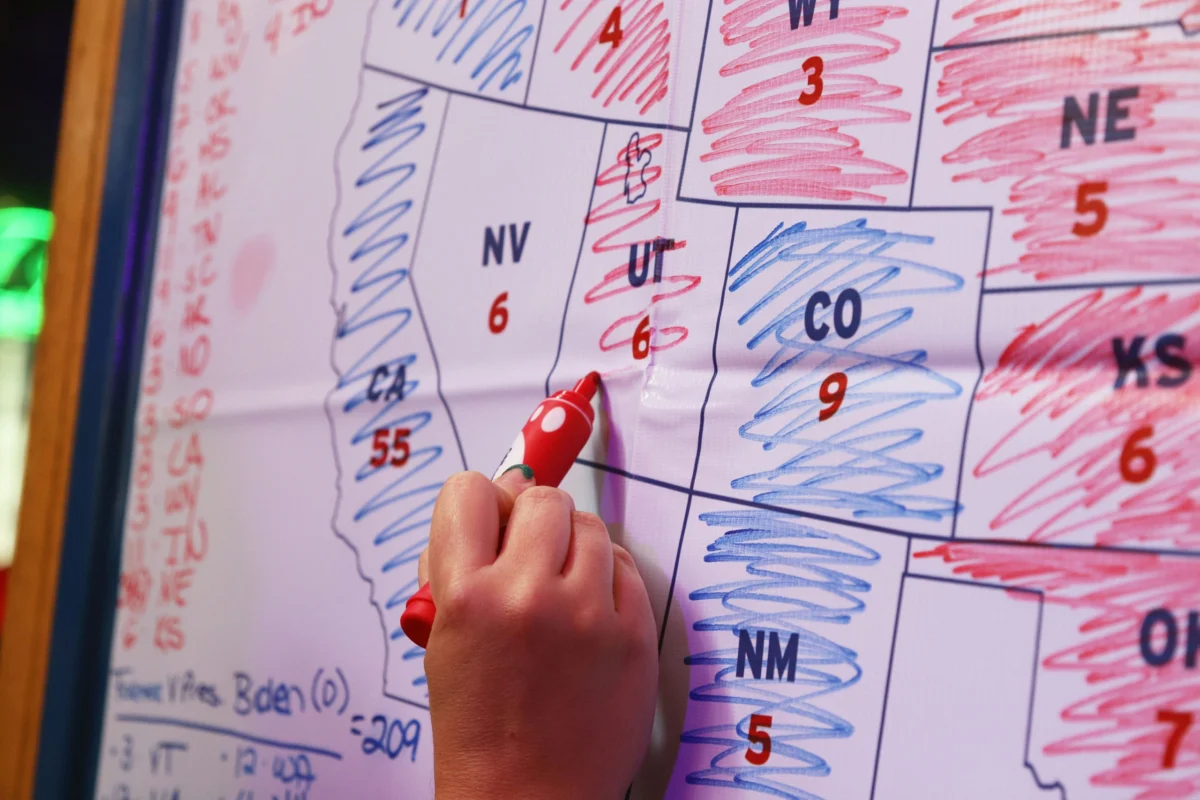
Democracy runs on mathematics, yet the structural mechanisms that govern modern society remain largely opaque to the very citizens they are intended to serve. From the complex algorithms used in legislative redistricting to the arithmetic nuances of the Electoral College and ranked-choice voting, the health of a representative government is fundamentally tied to numerical choices. As the United States grapples with intense political polarization and a growing crisis of trust in institutional integrity, educators are increasingly recognizing that "civic quantitative literacy"—the intersection of mathematics and political science—is not merely an academic exercise, but a prerequisite for a resilient and informed electorate.
The False Dichotomy of Curricular Priorities
In the modern K-12 landscape, discussions regarding classroom priorities are frequently framed as a zero-sum game. School boards and administrators often operate under the assumption that an emphasis on STEM subjects necessarily comes at the expense of the humanities. Consequently, if a district prioritizes high-level mathematics, science, and English language arts, social studies and civics are often relegated to the periphery.
This framing, however, represents a false dichotomy. By treating these disciplines as siloed entities, schools are missing a critical opportunity to foster "applied learning." Concepts such as proportional representation, political data analysis, and the statistical underpinnings of voter turnout are inherently mathematical. By integrating these topics, educators can simultaneously fulfill core curriculum requirements and address the "when will I ever use this?" question that plagues math teachers across the country.
A Chronology of the Math-Civics Movement
The movement to synthesize these fields has gained significant momentum over the past decade as public interest in democratic mechanics has surged.
- 2019: The conversation gained national attention when educators and researchers began highlighting the intersection of math and civics as a powerful tool for teaching democratic values, moving beyond rote memorization of government structures toward an analytical understanding of how they function.
- 2023–2024: A multi-institutional research team, led by experts from the University of Southern California (USC) and Wellesley College, launched a comprehensive study to evaluate the current state of math-civics integration.
- October 2026: The USC-Wellesley team released their findings, documenting the current barriers and pathways for implementing these concepts in K-12 classrooms across six states: California, Florida, Illinois, Massachusetts, New York, and Texas.
- Current Outlook: The research team is now transitioning into an advocacy phase, working to embed these concepts into state learning standards and developing pedagogical support for districts ready to pilot integrated curricula.
Data and Methodology: The USC-Wellesley Findings
The research project, which involved 123 educators, school officials, and curriculum providers, provides a clear snapshot of why this integration is currently stalled. While 100% of participants expressed enthusiasm for the potential to make classroom learning more relevant, they noted that existing math-civics instruction is almost entirely ad-hoc.
Current teaching of these subjects is frequently tied to election-cycle events—such as analyzing polling data during a presidential year—rather than being embedded into the year-round curriculum. This "election-cycle dependency" leaves a gap in student understanding during non-election years, preventing the development of a longitudinal grasp of institutional mechanics.
Furthermore, the data suggests that structural barriers remain the primary obstacle. In elementary education, the hurdle is a lack of teacher training in interdisciplinary approaches. In secondary education, the challenge is systemic: curriculum is often divided by department, and elective-only models of "math for social justice" or "data science in government" fail to reach the broader student population who would benefit most from this foundational knowledge.

Implications of Civic Quantitative Literacy
The inability to interpret the mathematical foundations of democracy has profound consequences for the public square. Without a grasp of how maps are drawn, citizens are less equipped to recognize the impacts of gerrymandering. Without an understanding of tallying methods, voters may struggle to evaluate the merits of electoral reforms like ranked-choice voting or the nuances of the Electoral College.
When students learn to apply statistical analysis to voting patterns—examining variables such as race, age, and income—they move beyond ideological arguments and toward evidence-based reasoning. This shift from partisan rhetoric to quantitative analysis can act as a natural check against misinformation. A student who understands how data visualization can be used to skew perception is inherently more resilient to political manipulation.
Official Perspectives and Educational Advocacy
Anna Saavedra, Director of the Center for Civic Society at the USC Schaeffer Institute, and Ismar Volić, a professor of mathematics at Wellesley College and director of the Institute for Mathematics and Democracy, argue that the current educational model is fundamentally insufficient for modern citizenship. Their advocacy focuses on three distinct pathways:
- State Standard Alignment: Engaging with state departments of education to formally include quantitative civic concepts in official learning standards.
- National Frameworks: Partnering with national panels, such as those developing student civics learning frameworks, to ensure that mathematical competency is treated as a core component of civic readiness.
- Pedagogical Support: Working directly with core math curriculum providers to develop modules that replace abstract word problems with real-world democratic data.
From a pedagogical standpoint, proponents of the movement note that civics classes are often more flexible regarding interdisciplinary instruction than math classes. However, they argue that the most impactful lessons occur when a math teacher uses a geometry lesson to explain districting, or when a statistics teacher uses voter turnout data to teach regression analysis.
A Path Toward a More Resilient Democracy
The argument for math-civics integration is ultimately one of democratic health. In an era defined by high-stakes debates over the fairness of democratic systems, the capacity to evaluate those systems is a necessity rather than a luxury.
When students analyze the mathematical foundations of government, they are not just learning to calculate; they are learning to participate. They are moving from passive consumers of political information to active participants who can evaluate the integrity of the systems that govern their lives. As the USC-Wellesley research indicates, the enthusiasm among educators is present, and the curricular opportunities are clear. The challenge for the coming years lies in moving from isolated, teacher-led initiatives to a systemic, state-supported approach that ensures all students have the quantitative tools required to sustain a functioning democracy.
By bridging the gap between the classroom and the ballot box, the educational system can empower the next generation of voters and leaders to demand greater transparency, accountability, and equity from their institutions. As the researchers conclude, education for citizenship that lacks a quantitative component is, by definition, incomplete. The integration of math and civics is a necessary evolution of the modern curriculum, providing the analytical rigor required to navigate the complexities of 21st-century governance.

