
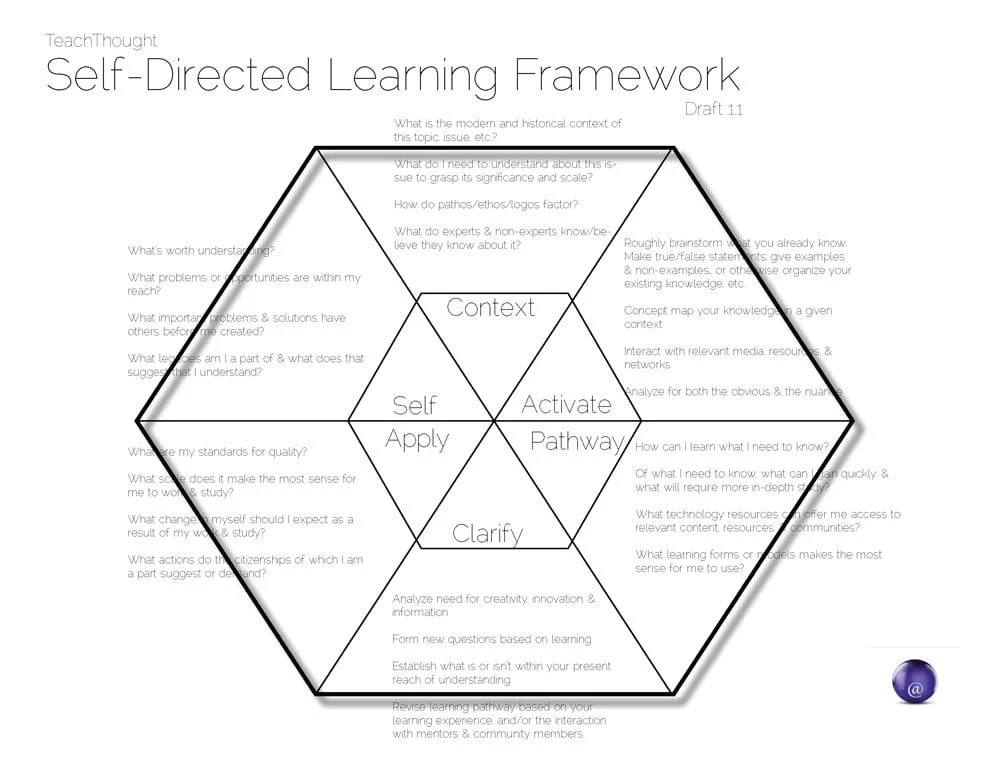
Education systems globally have historically prioritized content mastery and response strategies, operating under the assumption that the ultimate goal of learning is the accurate answering of pre-determined questions. However, contemporary pedagogical research and evolving educational philosophies suggest a paradigm shift is necessary. When the primary objective of schooling transitions from rote memorization to cultivating genuine critical thinking, the emphasis must shift from how students answer questions to how they formulate them. Authentic understanding is not demonstrated by the ability to regurgitate facts, but by the capacity to ask incisive, high-level questions that reveal both comprehension and a profound desire to know more.
The Evolution of Assessment and the Limits of Traditional Curricula
For decades, standardized educational frameworks have relied heavily on assessment structures designed to measure student retention. Written assessments—ranging from multiple-choice and true/false questions to matching, short-answer, and essay formats—serve primarily a traditional academic purpose: to elicit a verifiable response that can be graded against an established rubric. While these methods offer measurable metrics for administrative accountability, they often bottleneck deep cognitive engagement.
In a typical classroom environment, educators face severe systemic constraints. Instructors must manage classrooms containing upwards of thirty students while navigating aggressively paced curriculum maps. Under pressure to ensure that every student masters standardized content regardless of background knowledge, literacy levels, or personal interest, teachers frequently resort to universal, broad-brush inquiries. This top-down approach prioritizes systemic efficiency over personalized cognitive development.
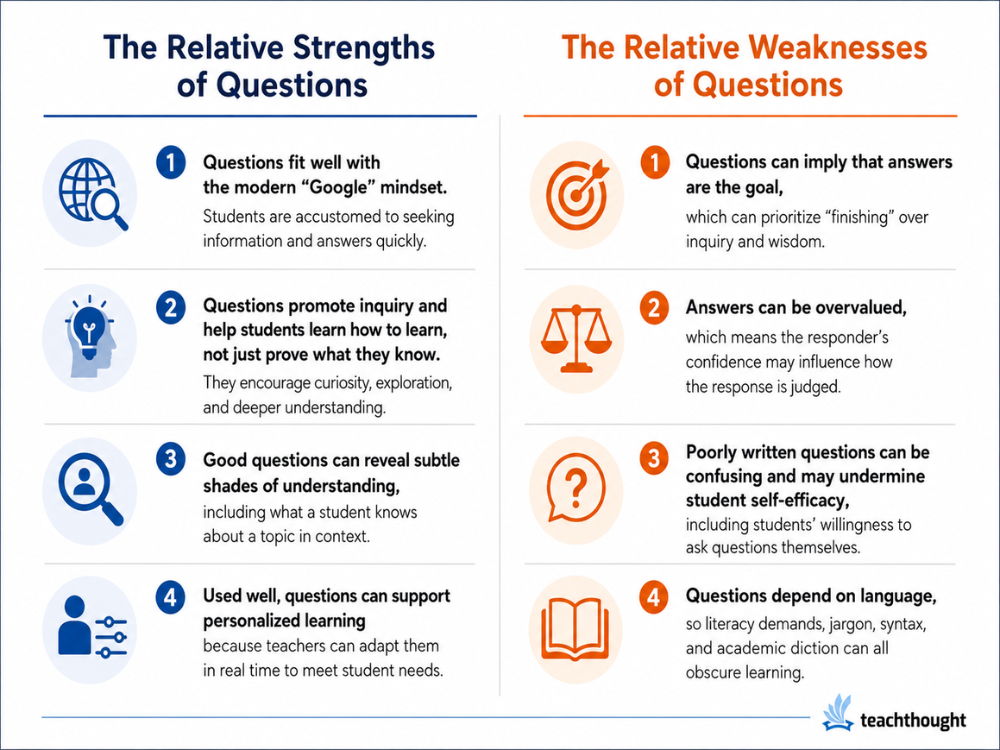
Educational experts note that when teachers exclusively drive the questioning process, the dynamic is fundamentally constrained. Conversely, when students generate their own inquiries, the entire pedagogical pattern reverses. Authentic student-generated questions are inherently personal, reflecting individual cognitive gaps, curiosities, and conceptual intersections rather than an attempt to guess what the teacher is thinking.
The Spectrum of Inquiry: From Traditional Recall to Self-Directed Learning
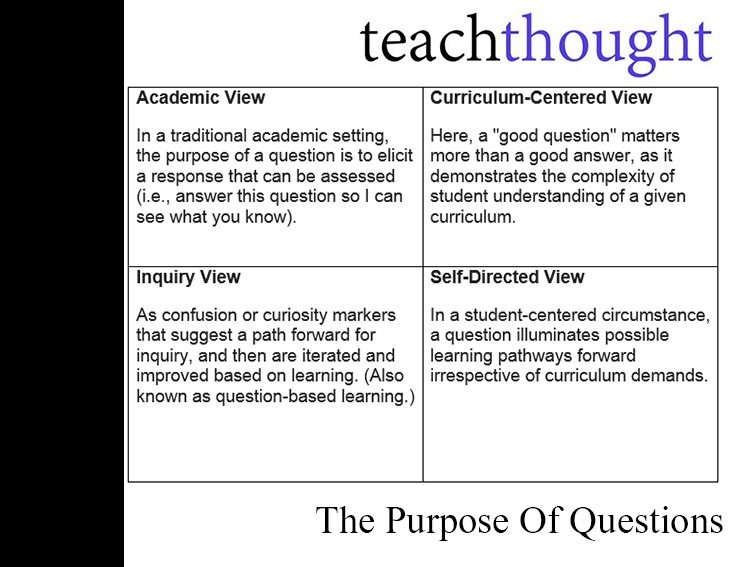
To understand the shifting role of questions in modern education, theorists categorize the purpose of questioning across a spectrum ranging from traditional academic verification to progressive self-directed learning.
At the traditional end of the spectrum, questions serve as verification tools to assess baseline knowledge. Moving toward a curriculum-centered view, the quality of the question begins to outweigh the answer, acting as a marker of conceptual complexity. Further along, the progressive inquiry view treats questions as markers of confusion and curiosity that map out paths for active investigation—a framework commonly known as question-based learning. Finally, at the most progressive level, the self-directed learning model requires students to construct their own learning pathways entirely, utilizing personal inquiries to guide their educational journey irrespective of rigid curriculum demands.
Despite the modern push toward advanced cognitive strategies, foundational knowledge remains essential. Debates surrounding Bloom’s Taxonomy often mistakenly pit lower-level cognitive tasks—such as defining terms, recalling dates, and memorizing facts—against higher-level analysis and creation. Critics of traditional schooling often label lower-order thinking as obsolete, associating it with rote industrial-era factory work.
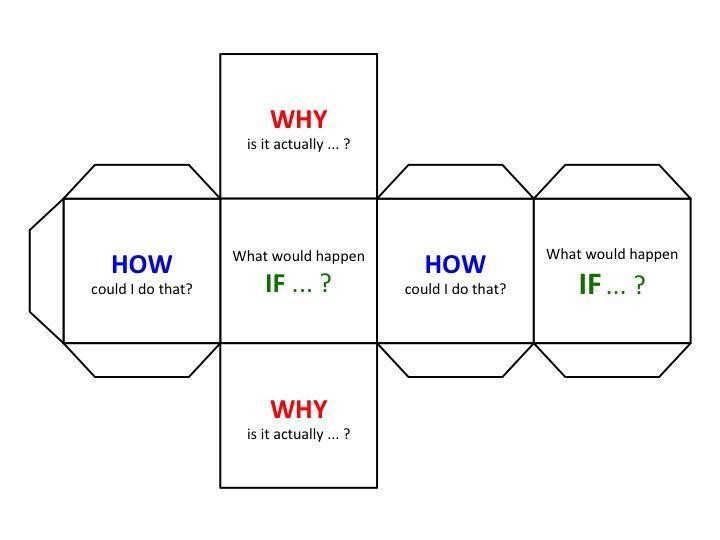
However, educational theorists emphasize that foundational facts and lower-level questions provide the critical foothold necessary for complex analysis. As educational analyst Grant Wiggins noted, the original formulation of Bloom’s Taxonomy sought to show how simple behaviors integrate to form complex cognitive actions. A student cannot effectively engage in high-level critical analysis regarding historical conflicts without first retaining basic factual frameworks regarding chronology, geography, and cultural context.
Essential Questions and Cognitive Dissonance in the Modern Classroom
At the heart of advanced pedagogical strategies are essential questions. Defined by education scholars as broad in scope, timeless by nature, and perpetually arguable, essential questions are designed to stimulate genuine inquiry into core concepts. Examples of essential questions utilized in modern curricula include: "What is justice?", "Is art a matter of taste or principles?", and "How far should we tamper with our biology and chemistry?" Such inquiries provoke deep thought, require students to weigh empirical evidence, and stimulate the ongoing reassessment of foundational assumptions.
Furthermore, effective questioning frequently triggers cognitive dissonance—the psychological discomfort experienced by an individual holding two competing beliefs simultaneously. When educators or peers introduce Socratic-style questions that challenge deeply ingrained perspectives, students are forced to reconcile competing viewpoints. This cognitive friction promotes self-reflection, compelling learners to critically examine the validity of their own beliefs and adjust their mental models accordingly.
Practical Frameworks for Cultivating Student Inquiry
To transition classrooms from passive reception to active inquiry, educators increasingly implement structured methodologies designed to elevate student voice. Two prominent strategies include Think-Pair-Share and the implementation of classroom "Wonder Walls."
The Think-Pair-Share collaborative learning strategy unfolds in distinct phases. First, an instructor poses a thought-provoking problem, allowing students individual time to formulate independent thoughts. Next, students pair up to discuss their perspectives, explicitly generating secondary questions during their dialogue. Finally, pairs share their insights with the broader class, establishing a collaborative inventory of questions that subsequently guide upcoming research projects and instructional units.
Similarly, the creation of a physical or digital "Wonder Wall" offers a dedicated space for students to post spontaneous inquiries that arise during lessons or independent study. By regularly reviewing these sticky-note contributions, educators validate student curiosity and integrate learner-generated questions directly into the formal curriculum. This practice fosters a dynamic culture of inquiry where student curiosity acts as a primary catalyst for academic engagement.
Broader Implications and Future Outlook
The systemic shift toward student-led questioning carries significant implications for future workforce development and educational policy. As automated systems and artificial intelligence increasingly assume routine administrative and analytical tasks, the human capacity to formulate novel, complex, and ethical questions becomes an indispensable economic and civic asset.
Educational institutions that successfully pivot from answer-driven instruction to inquiry-based frameworks are better positioned to cultivate adaptive thinkers, innovators, and problem-solvers. By transforming classrooms into incubators of curiosity where questions hold precedence over static answers, modern education aligns more closely with the demands of an unpredictable and rapidly evolving global landscape.

