
With less than two months remaining before the highly anticipated 2026 midterm elections, the political landscape of the United States stands at a crucial inflection point. Across the country, the conclusion of primary election cycles has laid bare a profound internal realignment within the Democratic Party. As voters prepare to cast ballots in contests that could drastically reshape the balance of power in Washington—with Democrats eyeing potential majorities in both the House of Representatives and the Senate—the growing influence of the party’s progressive and democratic socialist wings has ignited a fierce debate over its ideological future.
To unpack these shifting dynamics, the Guardian’s national reporting team has deployed correspondents from Washington to the Midwest and the West Coast. This comprehensive coverage comes amid a backdrop of significant primary victories for progressive candidates, mounting tensions between established party centrists and democratic socialists, and aggressive campaigning from Republican strategists attempting to frame the Democratic platform as radical.
The Primaries and the Rise of the Progressive Left
The 2026 primary season will long be remembered as a turning point for the progressive movement within American politics. Over the past several months, democratic socialist and progressive candidates have achieved unprecedented electoral successes, sweeping competitive primaries in key battleground states and urban centers alike.
Among the most notable developments is the trajectory of high-profile progressive figures, including Alexandria Ocasio-Cortez, who made headlines by officially rejoining the Democratic Socialists of America (DSA) following a seven-year membership lapse. This move underscored a broader institutional consolidation of the left wing of the party, signaling that democratic socialism is no longer viewed merely as an insurgent fringe movement, but as an increasingly organized and influential force within mainstream Democratic politics.
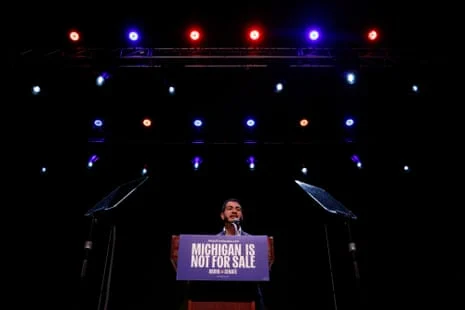
In the Midwest, Michigan’s Senate primary yielded a landmark victory for progressive champion Abdul El-Sayed. El-Sayed’s successful nomination campaign galvanized a coalition of working-class voters, young activists, and progressive organizers, proving that platforms centered on universal healthcare, aggressive climate action, and economic populism can win over diverse electorates in crucial swing states. Similar primary upsets and competitive races in Florida, Alaska, and Wyoming have demonstrated that the appetite for progressive governance extends far beyond traditional blue strongholds.
Ideological Friction: Centrists Push Back
The ascendance of the progressive left has not occurred without friction. Established centrist Democrats have grown increasingly vocal about their concerns regarding the party’s leftward drift, warning that radical policy proposals and the polarizing branding of democratic socialism could alienate suburban swing voters and jeopardize vulnerable seats in competitive districts.
Throughout the primary season, centrist factions mounted counter-campaigns to protect incumbent moderates and block candidates perceived as too far to the left. Critics from the moderate wing argue that a platform dominated by democratic socialist ideals plays directly into Republican narratives, making it difficult for the party to build the broad-based coalitions necessary to secure durable legislative majorities. This internal friction has turned several primary contests into proxy wars for the soul of the Democratic Party, raising critical questions about how disparate factions will coexist and cooperate in the post-election landscape.

The Republican Counter-Strategy
As Democrats grapple with their internal ideological division, the Republican Party has seized upon the progressive surge as a central pillar of its midterm strategy. Led by figures like Donald Trump, Republican campaigns across the country have launched concerted efforts to brand the entire Democratic platform as "radical" and "communist."
In states like South Carolina and other traditionally conservative strongholds, GOP messaging heavily emphasizes the policy positions of the party’s democratic socialist wing, attempting to tie moderate candidates to progressive proposals on taxation, climate regulation, and government spending. Political analysts note that this strategy is designed to energize the conservative base while peeling away moderate and independent voters who may feel uneasy about the shifting ideological center of gravity within the Democratic Party.
Despite these Republican attacks, progressive candidates have increasingly leaned into pressing local and systemic issues that resonate broadly with voters. Midterm platforms this cycle have expanded beyond traditional ideological talking points to address urgent, tangible concerns, including disaster insurance availability, datacenter regulations, the right-to-repair movement, and comprehensive green infrastructure policies.
Broader Impact and Implications for Washington
The outcome of the upcoming November midterms will carry profound implications for American governance. If Democrats succeed in capturing the House and potentially the Senate, the legislative agenda pursued by the party will depend heavily on the internal power dynamics between its progressive and centrist blocs.
Should progressive lawmakers secure a larger and more influential caucus in Congress, they are expected to push aggressively for transformative legislation, challenging establishment norms on corporate influence, environmental policy, and economic inequality. Figures such as labor economist and commentator Robert Reich have argued that the current cycle marks the accelerating decline of "corporate Democrats," clearing the way for a more populist, worker-focused party platform.
Conversely, a narrow majority would likely empower centrist lawmakers to act as a decisive brake on the progressive agenda, necessitating careful negotiation and compromise to pass major federal legislation. The ability of Democratic leadership to manage these competing factions will determine not only the legislative productivity of the next Congress but also the long-term viability of the modern Democratic coalition as it heads toward the 2028 presidential cycle.
As the campaign enters its final, high-stakes weeks, the intersection of grassroots progressive organizing, centrist defense strategies, and Republican opposition sets the stage for one of the most consequential midterm elections in modern United States history.

