
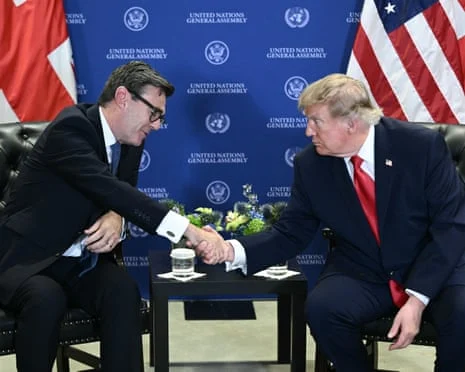
President Donald Trump addressed the 81st United Nations General Assembly in New York on Tuesday, delivering a wide-ranging, combative speech that spanned domestic achievements, aggressive foreign interventions, and a landmark security pact concerning the Arctic. The address set the tone for a frantic day of bilateral diplomacy, which included high-level meetings with international leaders, tense exchanges with the press, and shifting economic policies against the backdrop of an ongoing conflict in the Middle East and a protracted war in Ukraine.
The UN address and subsequent events underscored the friction between the Trump administration’s unilateral "America First" posture and a deeply unsettled international order. As global bodies grapple with widening geopolitical fault lines, the administration’s actions at home and abroad continue to provoke sharp divisions among foreign allies and domestic lawmakers alike.
The UN General Assembly Address: Defiance and Strategic Posturing
Taking the podium before a global audience of diplomats, Trump dedicated the opening moments of his speech to commemorating the United States’ upcoming 250th anniversary, quickly pivoting to tout his administration’s domestic economic metrics, low crime rates, and stringent immigration enforcement.
Moving to international affairs, Trump aggressively defended the military campaign launched against Iran earlier this year in coordination with Israel. Framing the offensive as a necessary pre-emptive strike against a long-ignored nuclear threat, Trump issued a stark ultimatum to Tehran. He warned the Iranian regime that it must choose between "potential greatness or obliteration," threatening to "annihilate" the country and drive it into "hell" should it fail to capitulate and negotiate a comprehensive deal.

The rhetoric drew immediate condemnation from domestic opponents. Senate Minority Leader Chuck Schumer sharply criticized the speech, pointing out the paradox in Trump’s self-presentation as a peacemaker while simultaneously threatening the total destruction of a sovereign state. Schumer announced that Senate Democrats would force another vote on a War Powers Resolution to curtail the conflict and withdraw American forces from active combat zones.
Trump also touched on the war in Ukraine, expressing optimism that the conflict could be resolved more quickly than commonly understood. He noted that he had signed a powerful new sanctions package into law, warning that he would not hesitate to deploy it if Moscow failed to engage seriously in peace negotiations. However, the optimism stood in sharp contrast to the reality on the ground, where fighting remains intense.
The Greenland Security Pact and Transatlantic Diplomacy
One of the most consequential diplomatic developments of the assembly was the formalization of an unprecedented trilateral security agreement between the United States, the Kingdom of Denmark, and Greenland. The deal grants the United States permanent control over security and strategic operations within Greenland, alongside provisions to construct two major military facilities in the Arctic territory.
Trump hailed the accord as a historic milestone for North American and European defense, asserting that it provides a complete shield against adversarial incursions in the Arctic and North Atlantic. Danish Prime Minister Mette Frederiksen and Greenlandic Prime Minister Jens-Frederik Nielsen echoed the sentiment at a joint signing ceremony, emphasizing that the agreement solidifies Greenland’s alignment with the Western alliance while respecting the territorial integrity of Denmark and the self-determination of the Greenlandic people.
The breakthrough on Greenland stood in sharp relief against lingering tensions elsewhere in Europe. Earlier in the day, Trump held a cordial bilateral meeting with the United Kingdom’s new prime minister, Andy Burnham. The encounter marked a notable departure from the frequently strained relations Trump maintained with Burnham’s predecessor, Keir Starmer. While the meeting covered broad economic and security topics—ranging from Rolls-Royce manufacturing partnerships to global energy and immigration—a notable point of friction emerged over the controversial Chagos Islands deal. Starmer’s previous government had proposed transferring sovereignty of the islands to Mauritius while retaining joint US-UK operations at the Diego Garcia military base for 99 years, an arrangement Trump dismissed outright as a "terrible deal."

Latin American Policy and the "Shield of the Americas"
Trump dedicated a significant portion of his remarks and subsequent schedule to Latin American policy, aggressively defending his administration’s muscular interventionism in the Western Hemisphere. Highlighting the January military raid in Caracas that led to the capture of former Venezuelan president Nicolás Maduro, Trump justified the subsequent oil agreements brokered with interim president Delcy Rodríguez using the blunt maxim, "To the victor belong the spoils."
Later on Tuesday, Trump addressed the "Shield of the Americas," a coalition of 14 right-wing and far-right Latin American governments. During the meeting, he urged member nations to formally designate cartels as narco-terrorists and impose crushing economic sanctions. Equating transnational drug cartels to ISIS, Trump reiterated his administration’s hardline stance, which includes carrying out unauthorized drone strikes against vessels in the Caribbean and Pacific and demanding that Mexico aggressively reclaim sovereign control over territories allegedly dominated by cartels.
The administration’s aggressive regional posture also extended to Cuba, with Trump declaring the island nation an "absolute failed state" facing unprecedented internal pressure, signaling that Washington actively seeks regime change.
Economic Turbulence: Diesel Export Embargo and Trade Shifts
Economic pressures at home began to bleed into the administration’s foreign policy maneuvering on the sidelines of the UN summit. Responding to mounting panic among Republican lawmakers over skyrocketing domestic diesel prices ahead of the upcoming midterm elections, Trump voiced support for a potential embargo on US diesel fuel exports. Treasury Secretary Scott Bessent confirmed that the administration is actively evaluating the feasibility of a full or partial export ban to stabilize domestic markets.
The fuel crisis has been exacerbated by multiple geopolitical factors, including ongoing disruptions from the US-Israeli campaign against Iran and Ukrainian strikes on Russian oil infrastructure, which have severely strained global fuel supplies.

In a parallel trade maneuver, Trump announced that Washington is pursuing a "massive" potash procurement deal with Belarus to supply American farmers and ranchers. The move represents a strategic pivot away from Canada—traditionally the United States’ largest supplier of the fertilizer ingredient—amid an escalating trade war between Washington and Ottawa, while simultaneously opening diplomatic channels with Minsk despite its close ties to Moscow and internal human rights abuses.
Domestic Scandals and Controversies Overshadow Diplomatic Agenda
While international diplomacy dominated the president’s schedule, the administration remained dogged by domestic controversies. ProPublica published a bombshell investigative report on Tuesday alleging that the FBI under Trump deliberately shut down an anti-corruption investigation into Republican Senator Susan Collins of Maine. The probe stemmed from allegations by a convicted former defense contractor, Kao, who claimed he funneled illegal campaign contributions in exchange for government contracts directed to his company, Navatek. Collins’ deputy chief of staff, Annie Clark, categorically denied the allegations, calling them false and outlandish claims manufactured by a criminal attempting to deflect accountability.
Meanwhile, the White House faced continued fallout from its unprecedented decision to bar journalists from CNN, MS Now, and Politico from entering White House grounds. The move prompted a federal lawsuit from the media outlets alleging First Amendment violations, leading major television networks and print newsrooms to suspend their participation in the traditional White House press pool. The resulting standoff was on vivid display when Trump publicly rebuked a CNN reporter during the UN General Assembly, insisting the network had no right to cover him.
Adding to the administration’s legislative headaches, a high-profile Republican defection materialized as Senator John Curtis of Utah published an open letter calling on the Senate Judiciary Committee to launch a sweeping investigation into the personal and business dealings of Donald Trump Jr. The call follows reports detailing foreign financial backing for Trump Jr.’s recent wedding and extensive involvements in foreign real estate, cryptocurrency, and prediction markets, drawing direct parallels to past congressional inquiries into the Biden family.
Conclusion
The events surrounding the 81st United Nations General Assembly captured the dichotomy of the current political landscape: an assertive executive branch projecting military and economic dominance on the global stage, counterbalanced by persistent domestic legal battles, congressional friction, and economic vulnerabilities. As the administration navigates delicate negotiations with adversaries in Iran, secures strategic assets in the Arctic, and seeks to consolidate influence in the Western Hemisphere, the coming months will test the sustainability of its unilateral approach both abroad and at home.

