

The intersection of entertainment production and educational administration has long provided a fertile ground for organizational analysis. Directors, writers, and producers navigate intense practical constraints, deliver moral instruction under high-stakes conditions, and must continuously forge a connection with an audience that is not always receptive. In many ways, the role of a television showrunner mirrors that of a school principal or university president, albeit backed by a significantly larger financial budget. This parallel prompted a closer examination of the 2022 autobiography Directed by James Burrows, written by the legendary sitcom director who helped shape the landscape of American television through iconic series such as Cheers, Frasier, Taxi, Friends, and Will & Grace.
Burrows, who passed away in June at the age of 85, occupied a rare space in the television industry. Unlike the film industry, where directors traditionally steer the creative vision, television production is primarily a writer’s medium driven by narrative arcs and showrunners. Yet Burrows achieved extraordinary success as a director by cultivating remarkably close relationships with his casts and crews, building strong organizational cultures, and establishing deep communities on his sets. Marketed as a source of practical guidance for aspiring directors, writers, and actors, his memoir naturally invited speculation regarding whether its insights into relationship management, cultural cohesion, and technical mastery could translate into valuable lessons for education leadership.
A Chronological Look at Burrows’s Legacy and the Memoir’s Reception
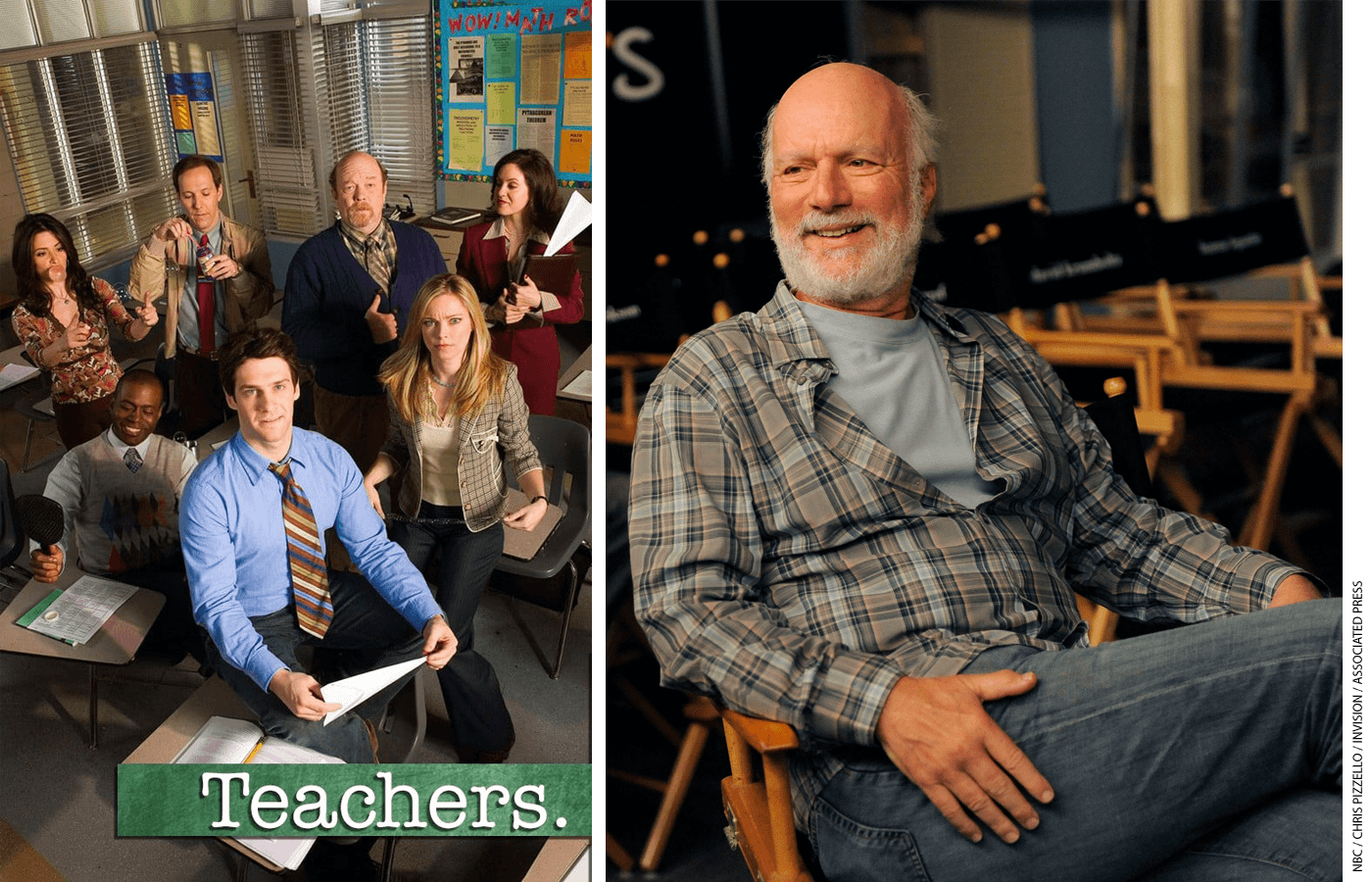
Spanning a career that began in local theater before transitioning into the golden age of multi-camera sitcoms, Burrows directed more than 100 series, including critical triumphs and occasional misfires, such as the 2006 comedy Teachers, which was canceled after airing just six episodes. When Directed by James Burrows hit bookshelves in 2022, education policy analysts and leadership experts anticipated a manual on artistic and operational management. However, a comprehensive review of the text reveals a notable gap between the book’s anecdotal charm and actionable leadership strategies.
The autobiography traces Burrows’s professional trajectory with a genial and lighthearted tone, filled with reminiscences of famous collaborators and behind-the-scenes friendships. Yet, when examining the mechanics of the artistic leadership that earned him widespread industry acclaim, the narrative offers sparse concrete methodology. For educators searching for rigorous frameworks to manage institutional change, the memoir largely sidesteps the granular complexities of leadership in favor of nostalgic reflection.
The Cultural Challenge: Building Community Versus Managing Reality
Throughout his career, Burrows frequently emphasized the necessity of fostering community within a production company and training actors to function cohesively as a group built on mutual respect. Translating this objective to the educational sphere highlights a shared challenge for school superintendents and university deans: establishing a unified institutional culture among diverse stakeholders.
According to Burrows, his primary strategy for building ensemble rapport was remarkably straightforward: ensuring that the cast had ample opportunities to form friendships outside of work. To illustrate this approach, he recounted flying the nascent, pre-fame cast of Friends to Las Vegas on a corporate private jet for an evening of dining and gambling, allowing them to bond before the show premiered. Burrows reported that this environment enabled the six core actors to build deep rapport within just two episodes, eventually leading them to play poker in his dressing room as genuine friends.
Yet, this simplistic prescription exposes a fundamental limitation when applied to complex organizational settings like schools and universities. In standard educational environments, forced familiarity frequently breeds friction, professional burnout, or administrative conflict rather than universal adoration. Educational leaders operating in real-world classrooms are routinely forced to confront scenarios where professional proximity does not naturally translate into interpersonal harmony. The memoir notably omits guidance on how leaders should intervene when team members fail to bond organically, offering no troubleshooting strategies for dysfunctional workplace dynamics.
Balancing Structure and Spontaneity in Rehearsal and Instruction
Another prominent theme in Burrows’s reflections involves the delicate balance between rigorous preparation and creative spontaneity. The director routinely advised casts to rehearse material thoroughly until the mechanics became second nature, minimizing the conscious effort required for actors to interact seamlessly on stage. Simultaneously, he exercised strict caution to avoid over-rehearsing, recognizing that excessive repetition could strip performances of their freshness and vitality.
This tension resonates deeply with instructional leaders and classroom teachers. Educators constantly strive to craft lesson plans that are meticulously structured while preserving enough flexibility to navigate teachable moments, accommodate student inquiries, and respond to unexpected classroom developments. While Burrows successfully identified this critical pedagogical tension, his text stops short of analyzing how leaders can systematically identify and maintain that precise equilibrium.
Zero-Tolerance Policies and the Myth of the Difficult Talent
One of the more definitive stances Burrows maintained throughout his career was his intolerance for unprofessional behavior and toxic personalities on set. He openly rejected the long-standing industry myth that difficult, disruptive individuals are inherently worth accommodating because of their exceptional talent, arguing instead that acting is a professional craft rather than an unteachable mystic art. Burrows asserted that there was no room for prima donnas on his productions.
For modern leaders navigating institutional politics, this hardline stance offers an appealing conceptual model. However, the autobiography fails to provide tactical advice for leaders who lack Burrows’s unique industry stature, established authority, and charismatic capital. Instead of detailing how to successfully establish and enforce behavioral norms when starting from a position of relative weakness, Burrows pivoted to discussing contractual luxuries, such as his personal "fun clause," which permitted him to walk away from any project that ceased to bring him personal enjoyment.

Broader Implications: The Parallels Between Hollywood Memoirs and Educational Leadership Literature
Ultimately, the analysis of Burrows’s autobiography yields an unexpected takeaway regarding the broader genre of educational leadership literature. Prior to examining Burrows’s book, leadership researchers often turned to deep-dive literature chronicling the creation of complex television dramas, such as Jonathan Abrams’s All the Pieces Matter, which explored the rigorous production of HBO’s The Wire, or analytical texts examining the writers’ rooms of satirical mainstays like The Simpsons. These works frequently offer realistic, nuanced reflections on bureaucratic friction, network politics, clashing incentives, and public criticism—providing an analytical mirror to the real-world pressures faced by K-12 superintendents and higher education administrators.
In contrast, Burrows’s memoir offers a polished, frictionless perspective defined by perpetual good cheer. This stylistic choice mirrors a pervasive trend within educational leadership publishing, where contemporary guidebooks frequently specialize in optimistic platitudes, cheerful bromides, and simplified frameworks. Complex institutional challenges, severe budget deficits, red tape, and systemic bureaucratic dysfunction are routinely minimized under the assumption that academic excellence is achieved primarily through inspirational rhetoric and vague calls for "courageous conversations."
Historical Context and the Evolution of Educational Management Models
This reliance on feel-good consensus-building traces its roots back decades. In foundational texts such as Leadership for the Schoolhouse, scholar Thomas Sergiovanni argued that traditional corporate and industrial models of leadership were fundamentally incompatible with educational environments. Sergiovanni posited that schools operated primarily as moral communities governed by a "politics of virtue" rather than bureaucratic accountability, efficiency metrics, or standard operational management.
While Sergiovanni’s theoretical framework aimed to honor the distinct mission of schools, it inadvertently inspired an extensive subgenre of educational literature centered on quick fixes, simple platitudes, and superficial leadership recommendations. Over generations, this trend has translated into an institutional culture that often struggles to address operational inefficiencies, confront underperforming personnel, or engage in rigorous programmatic restructuring. Critics argue that this dynamic has fostered a widespread culture of learned helplessness among educational administrators who hesitate to make difficult structural decisions.
Conclusion and Analytical Summary
Ultimately, the examination of Directed by James Burrows reveals a striking convergence between the self-laudatory style of Hollywood autobiographies and the optimistic, overconfident tone of modern educational leadership texts. Both genres frequently bypass messy logistical realities, systemic friction, and uncomfortable trade-offs in favor of narratives defined by harmonious collaboration and charismatic authority. While the entertainment industry operates under very different financial and structural incentives than the public school system, the shared tendency to rely on simplistic cultural remedies highlights a persistent challenge in training effective, decisive leaders for both television production and modern education.

