
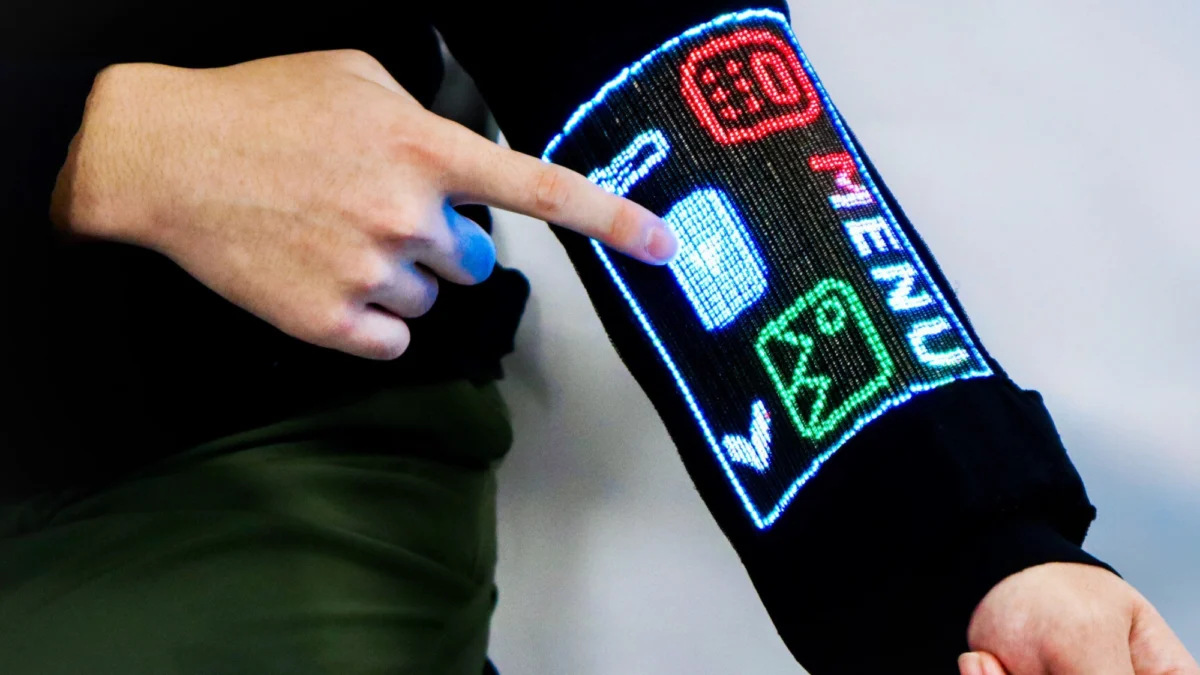
For over a decade, the convergence of consumer electronics and high-fashion textiles has remained an elusive goal for engineers and designers. While the industry has flirted with the concept of "smart fabrics"—most notably through the 2017 collaboration between Levi’s and Google on the Jacquard trucker jacket—these efforts largely focused on peripheral inputs rather than true visual integration. However, a breakthrough from the National University of Singapore (NUS) College of Design and Engineering has shifted the paradigm. By successfully embedding a fully functional, flexible, and washable touchscreen directly into a garment, researchers have achieved a milestone that could redefine the relationship between our bodies and our digital lives.
The Evolution of Wearable Tech: A Historical Context
The pursuit of "smart clothes" has evolved through distinct phases over the past 15 years. The early 2010s were characterized by rigid, bulky wearable devices that prioritized sensor data collection—such as heart rate monitors or pedometers—often housed in plastic casings strapped to the wrist.
The industry experienced a significant shift in 2017 when the Jacquard project introduced the idea of "invisible" technology. The Jacquard jacket allowed users to perform basic gestures on a denim cuff to control smartphone functions like music playback and navigation. Despite the novelty, the project ultimately lacked the versatility to displace the smartphone, leading to its discontinuation in 2023. The fundamental hurdle was always the "display gap." While sensors were relatively easy to weave into thread, high-resolution, flexible, and durable displays remained tethered to rigid glass and silicon substrates.
The NUS research team, led by Assistant Professor Tural Khudiyev, bypassed these limitations by re-engineering the fundamental building blocks of electronics. Rather than attempting to mount a screen onto fabric, they synthesized "electronic yarn" that functions as both a structural textile and a display interface.
Engineering the Digital Thread: The Mechanics of the Fiber
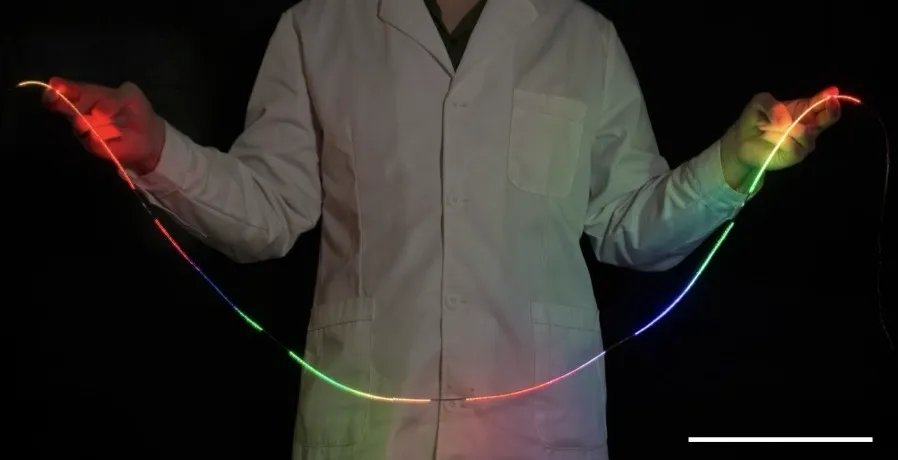
The construction of this touchscreen garment is a feat of micro-manufacturing. The core innovation lies in the creation of a multilayer fiber, measuring less than one millimeter in thickness—a profile thinner than a standard credit card. To achieve this, the research team utilized laser-guided molten solder to precisely bond microchips to insulated wires. This process mirrors the high-precision techniques used in traditional circuit board manufacturing but applies them to a one-dimensional, axially symmetric geometry.

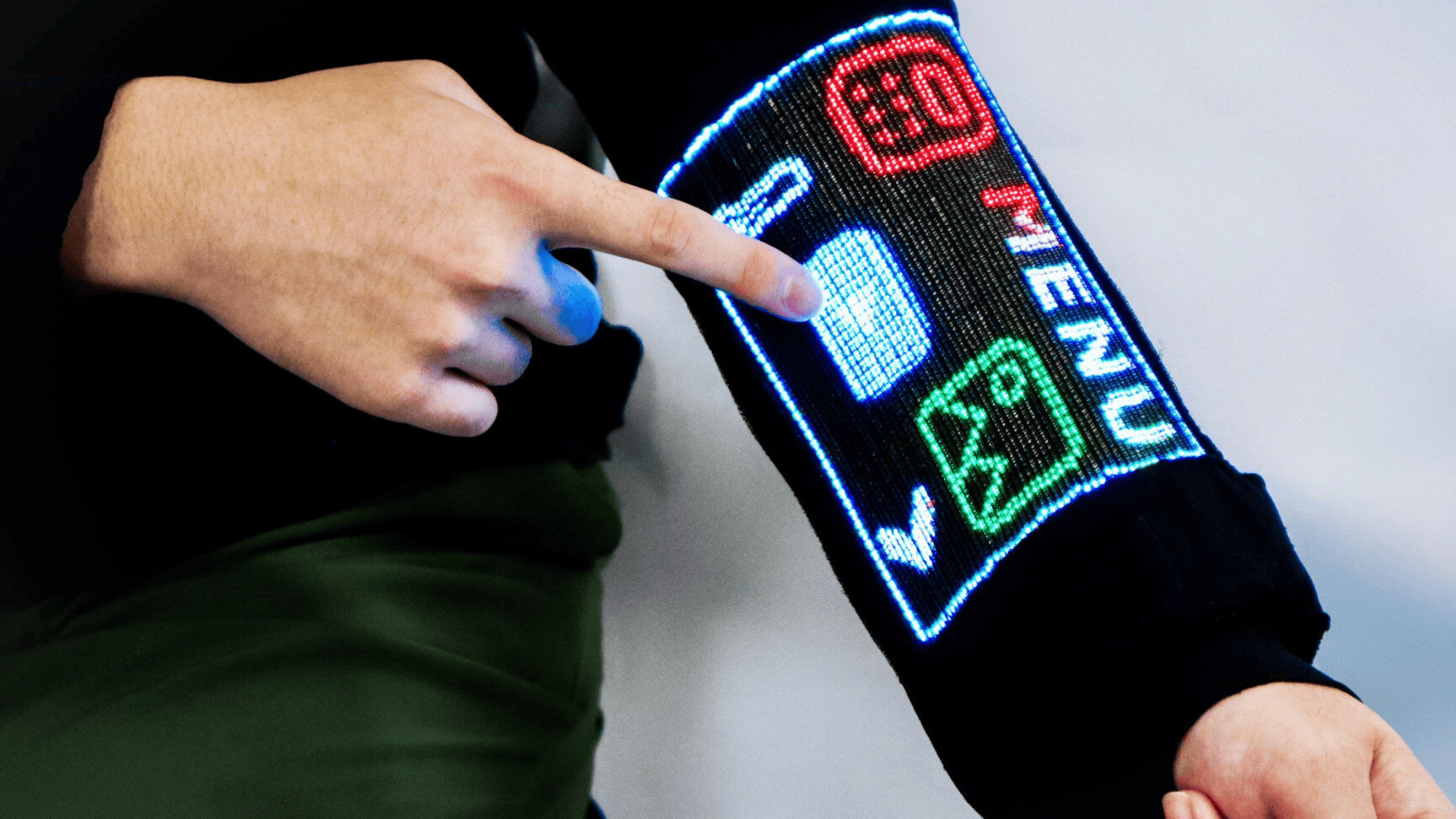
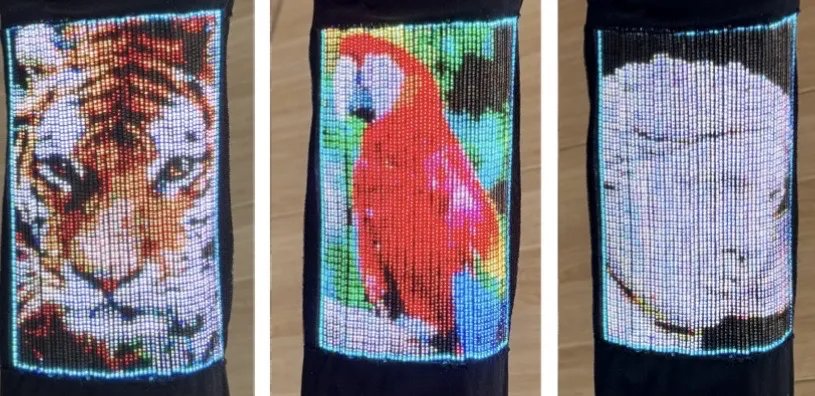
The result is a textile that incorporates more than 5,000 individual microchips and over 20,000 electrical components. When woven into a shirt, these fibers create a 6.6 by 4.3-inch display panel on the inner forearm. The display supports 8-bit color depth, allowing for the rendering of images, videos, and graphical user interfaces.
"A fiber has a one-dimensional, axially symmetric geometry, which makes it difficult to build complex circuitry using approaches developed for conventional two-dimensional electronics," Professor Khudiyev noted. "We overcame this limitation through a new interconnection architecture, which enables thousands of microelectronic devices to be integrated and interconnected along a fiber."
Functional Capabilities and Performance Metrics
The capabilities of the prototype extend well beyond simple touch-sensitive gestures. In controlled laboratory testing, the garment successfully demonstrated the following functions:
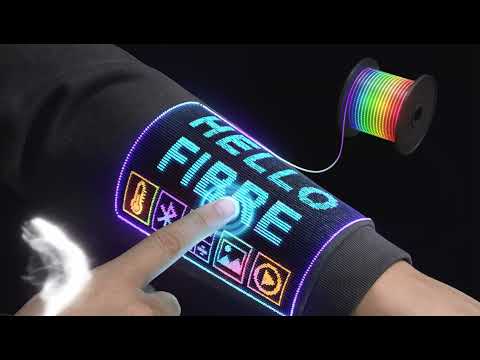
- Multimedia Playback: The sleeve can render video content at 30 frames per second, providing a "shimmering," arcade-style visual profile that serves as a functional, if not high-fidelity, display.
- Interactive Computing: Users can navigate photo galleries, perform complex calculations via a dedicated app, and receive real-time notifications.
- Connectivity: The garment acts as a Bluetooth peripheral, supporting voice commands and data syncing with a standard smartphone.
- Biometric Monitoring: Because the fibers are in direct contact with the skin, the system is capable of reading and displaying body temperature in real-time, moving beyond mere convenience into the realm of health monitoring.
However, the technology is not without its current constraints. While 30 frames per second is sufficient for UI interaction, syncing audio results in a slight drop in performance to 25 frames per second, leading to noticeable choppiness. Furthermore, the power management system remains an area of active development, as the energy demands of thousands of LEDs require efficient, unobtrusive battery integration.
Durability and Real-World Usability
One of the most significant barriers to the adoption of electronic textiles is the harsh environment of everyday life. Clothing is subject to extreme mechanical stress, friction, moisture, and chemical exposure from detergents. To address these concerns, the NUS team subjected the fabric to rigorous stress tests.
The material was successfully run through 50 full laundry cycles and withstood 1,000 instances of extreme mechanical bending and friction. Remarkably, the display and touch sensors maintained nearly 100% of their original functionality after these trials. This durability suggests that the technology is, at least in laboratory conditions, ready to transition from a delicate prototype to a robust, wearable textile. Furthermore, the fabric maintains the breathability of denim or heavy cotton, ensuring that the wearer does not experience the discomfort typically associated with wearing synthetic, heat-trapping materials.
Analysis: Implications for the Future of Human-Computer Interaction
The implications of this development are broad. For decades, the smartphone has acted as a "black mirror" that demands our undivided attention, often leading to what sociologists term "continuous partial attention." By moving the screen from the hand to the forearm, this technology forces a re-evaluation of how we consume information.
From a medical perspective, the ability to monitor health data through a garment that feels no different from a standard shirt offers a non-intrusive pathway for long-term patient care. Elderly individuals or those with chronic conditions could have their vital signs displayed directly on their sleeve, providing immediate feedback without the need for cumbersome medical devices.
However, critics argue that the technology may simply relocate the source of distraction rather than eliminate it. If a user is scrolling through a photo gallery on their sleeve, they are arguably just as distracted as they would be holding a phone. The utility of the device will likely depend on how developers create software specifically designed for the "glanceable" nature of a forearm display, rather than simply porting smartphone applications to a smaller, less capable screen.
The Path to Commercialization
While the researchers have published their findings in the journal Nature, indicating a high level of academic rigor, the path to the retail market remains lengthy. The integration of 5,000 chips into a single garment raises questions regarding mass production costs and the environmental impact of "disposable" electronics. If a smart shirt becomes obsolete or breaks, the recycling of such complex, multi-material waste will be a significant challenge for the textile industry.
Despite these hurdles, the work at the National University of Singapore represents a critical proof-of-concept. It demonstrates that the limitation is no longer the physics of the fiber, but the imagination of the software designers. As the technology scales, we may eventually see a shift where the "smart" element of our devices is no longer a separate, fragile object we carry, but an inherent, durable part of the fabric of our daily lives.
For now, the touchscreen shirt serves as a reminder that the evolution of computing is moving toward total invisibility—a future where the digital world is not something we look at, but something we wear. As the team continues to refine the interface and power systems, the industry watches closely, recognizing that the "smart clothing" era may finally have found its foundation.

