
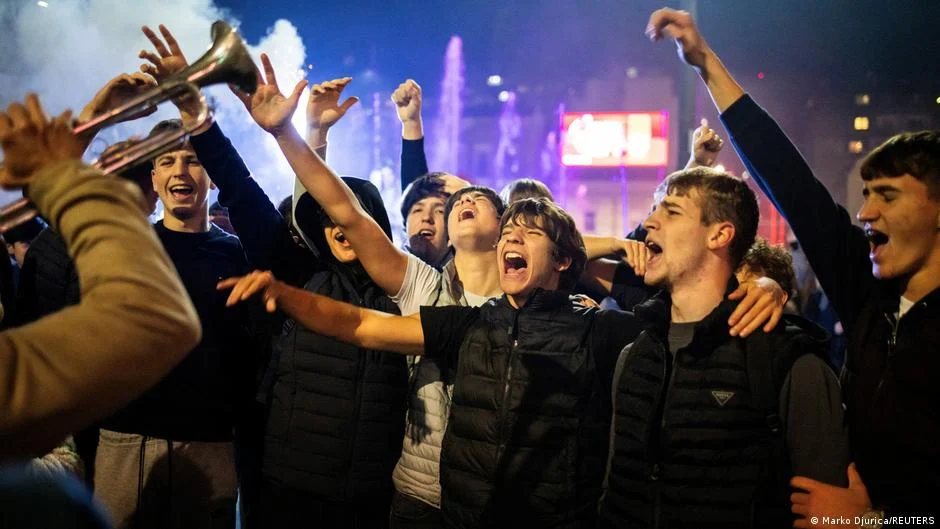
The political landscape of Serbia has undergone a seismic shift following the October 25 parliamentary elections, in which the ruling Serbian Progressive Party (SNS), led by long-time president Aleksandar Vucic, suffered a definitive defeat. The Student List, a broad-based coalition of activists, academics, and professionals, secured 53% of the vote, effectively dismantling the political hegemony Vucic has maintained for over a decade. As the country stands on the precipice of a transition, the atmosphere in Belgrade is a volatile mixture of cautious optimism and intense political anxiety.
For years, Vucic was the undisputed center of gravity in Serbian politics. His administration was characterized by a pervasive influence over both public and private media, a centralized governance model, and a populist style that relied on direct communication through social media platforms like TikTok to bypass traditional press scrutiny. However, the electoral result on October 25 has abruptly curtailed this influence, leading to a scramble among loyalist media outlets to recalibrate their editorial stances in the face of a new political reality.
Chronology of the Collapse
The erosion of Vucic’s power did not happen overnight; it was the culmination of mounting public frustration and a series of systemic failures. The catalyst for the current movement was the tragic collapse of a concrete canopy at the Novi Sad railway station two years ago. The incident, which claimed 16 lives, became a potent symbol of state negligence, corruption, and the erosion of public infrastructure under the weight of patronage-driven contracts.
In the months leading up to the October election, the student-led movement gained momentum as it tapped into a deep-seated desire for institutional integrity. While the SNS attempted to frame the movement as a foreign-backed "color revolution," the electorate signaled a different priority. Following the October 25 results, the political transition has moved with significant speed. Citizens across various municipalities have begun the symbolic process of removing Vucic’s portraits from government buildings, signaling a rejection of the cult of personality that had defined his tenure.
Simultaneously, the Public Prosecutor’s Office for Organized Crime has initiated inquiries into allegations of electoral fraud, while an independent commission has begun scrutinizing the Higher Public Prosecutor’s Office in Belgrade. Critics have long accused the latter of functioning as a tool for the regime to suppress dissent, and the current investigation marks a critical turning point in the pursuit of judicial independence.
The Tension of the Transition
Despite the electoral success of the Student List, the transition of power remains fraught with friction. Vucic, appearing before a reduced cohort of media representatives, has characterized the actions of the victors as "revolutionary terror." He specifically cited the resignation of the general director of the Serbian state broadcaster, RTS, and the dismissal of senior editors as evidence of a purge.
Tensions flared further on Monday when a group of protesters entered the premises of Informer, a television station widely perceived as a mouthpiece for the former government. For years, Informer had been the subject of thousands of complaints from media watchdogs for its aggressive demonization of Vucic’s political opponents. The incident has intensified calls from various journalists’ associations for the revocation of the station’s broadcasting license, citing its role in fostering a toxic media environment.
The anxiety of the transition is compounded by the "lame duck" nature of the current administration. Political analysts, including Dejan Bursac of the Institute for Philosophy and Social Theory at Belgrade University, note that the SNS still controls key levers of government. This power vacuum creates a dangerous window of opportunity for outgoing officials to finalize contracts, shift assets, or destroy incriminating documentation. "A society that was oppressed for so long by a party that acted like a feudal lord now, understandably, expects justice," Bursac observed. "In this power vacuum, people are getting impatient."
Institutional Vulnerabilities and Reform
Transparency Serbia, an organization that has long monitored the integrity of the state apparatus, has warned of the risks inherent in the current period of instability. Zlatko Minic, a representative of the group, highlighted the systemic practice of political defection, noting that many officials who previously served the SNS are already looking to pivot toward the new leadership. While this may facilitate a smoother handover in some sectors, it also poses a risk of institutional inertia and the survival of corrupt networks within the civil service.
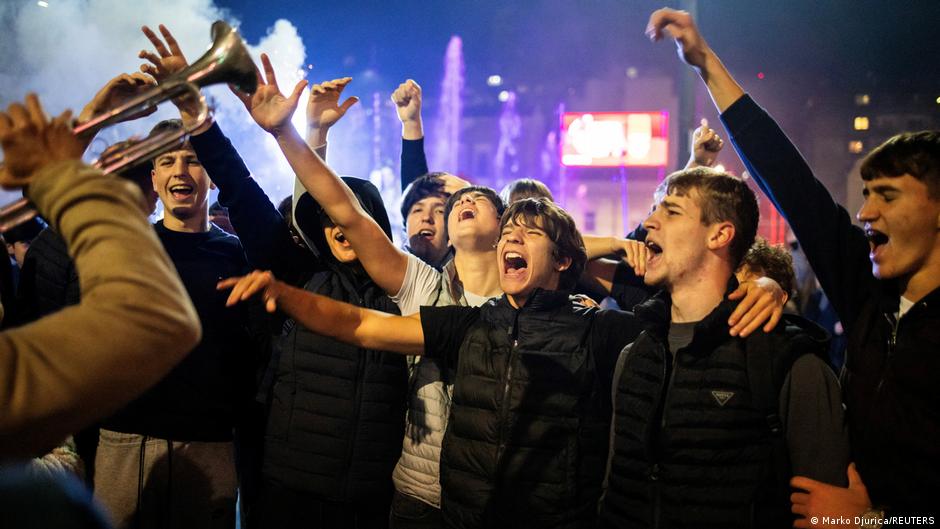
The Student List has adopted a strategy of proactive engagement with elements of the police and administration who were disillusioned by Vucic’s style of governance. By securing these internal channels, the incoming administration aims to prevent the systematic destruction of records and the finalization of illicit financial obligations. The demand for the resignation of leading officials in the judiciary and police force remains a central pillar of their platform, as they seek to ensure that the new government is not hamstrung by holdovers from the previous regime.
A Symbolic Shift in Public Space
The transformation of Pioneers Park serves as a microcosm of the changing national climate. Previously fenced off by Vucic’s supporters and utilized as a pro-government encampment—and reportedly a staging ground for individuals accused of harassing anti-government protesters—the park has been reclaimed by the public. In a gesture of symbolic transition, supporters of the Student List cleared the area of refuse the morning after the election. This act of civic engagement underscores the movement’s focus on reclaiming public space from political tribalism.
Foreign Policy and the Path Forward
Perhaps the most surprising aspect of the Student List’s victory is its broad ideological coalition. The list unites disparate factions, including both left-wing and right-wing elements, as well as pro-European and pro-Russian sympathizers. This internal diversity has necessitated a pragmatic approach to foreign policy, which the leadership insists will remain stable during the transition.
Oliver Toskovic, a psychology professor and incoming member of parliament, has emphasized that the new government’s primary focus is domestic stabilization and European Union accession through genuine, rather than performative, reform. Unlike the previous administration, which the EU accused of using accession talks as a political cover while failing to implement substantive changes, the new leadership aims to align Serbian law with European standards.
However, the government faces a delicate balancing act regarding Russia. Given Serbia’s heavy reliance on Russian energy, the Student List has signaled that an immediate imposition of sanctions would be destabilizing and counterproductive. "Our plan is to stabilize and develop the country, not to destabilize it with some abrupt change of course on foreign policy," Toskovic stated. He added that the energy dependency is a legacy of the previous administration’s policy decisions, which the new government must now navigate with caution.
Regarding the regional tensions that defined Vucic’s foreign policy, the new leadership has signaled a departure from the rhetoric of confrontation. Lead candidate Ilija Srdanovic has expressed openness to renewed dialogue with Pristina, and initial diplomatic outreach has already begun with neighboring Croatia. This shift is intended to reduce regional friction, which many believe was artificially inflated by the previous government to distract from domestic issues.
Implications and Future Outlook
The electoral process is not yet concluded, with a partial repeat of the vote scheduled for November 1 in approximately 50 polling stations due to earlier irregularities. Once these results are certified, the new parliament will be convened, and the formation of a government will begin in earnest.
The primary challenge facing the Student List will be to deliver on the high expectations of a populace that has been starved of accountability. The risk of disillusionment is high; if the new government fails to secure tangible results in its efforts to investigate the previous administration’s corruption, the current momentum may dissipate. Furthermore, the SNS remains a potent political force, and its leadership has already indicated an intention to act as a vigorous opposition, waiting for the inevitable challenges of governance to erode the new administration’s popularity.
Ultimately, the events in Serbia represent a critical stress test for the country’s democratic institutions. The transition from a personalized, semi-authoritarian system to a parliamentary-focused administration requires not just a change in leadership, but a fundamental restructuring of the relationship between the state, the media, and the public. As the Student List prepares to assume full control, the international community, particularly the European Union, will be watching closely to see if Serbia can successfully navigate this delicate transition toward a more transparent and accountable future. The eyes of the nation are fixed on the coming months, which will determine whether this electoral victory was merely a change of faces, or the beginning of a genuine structural transformation.

