
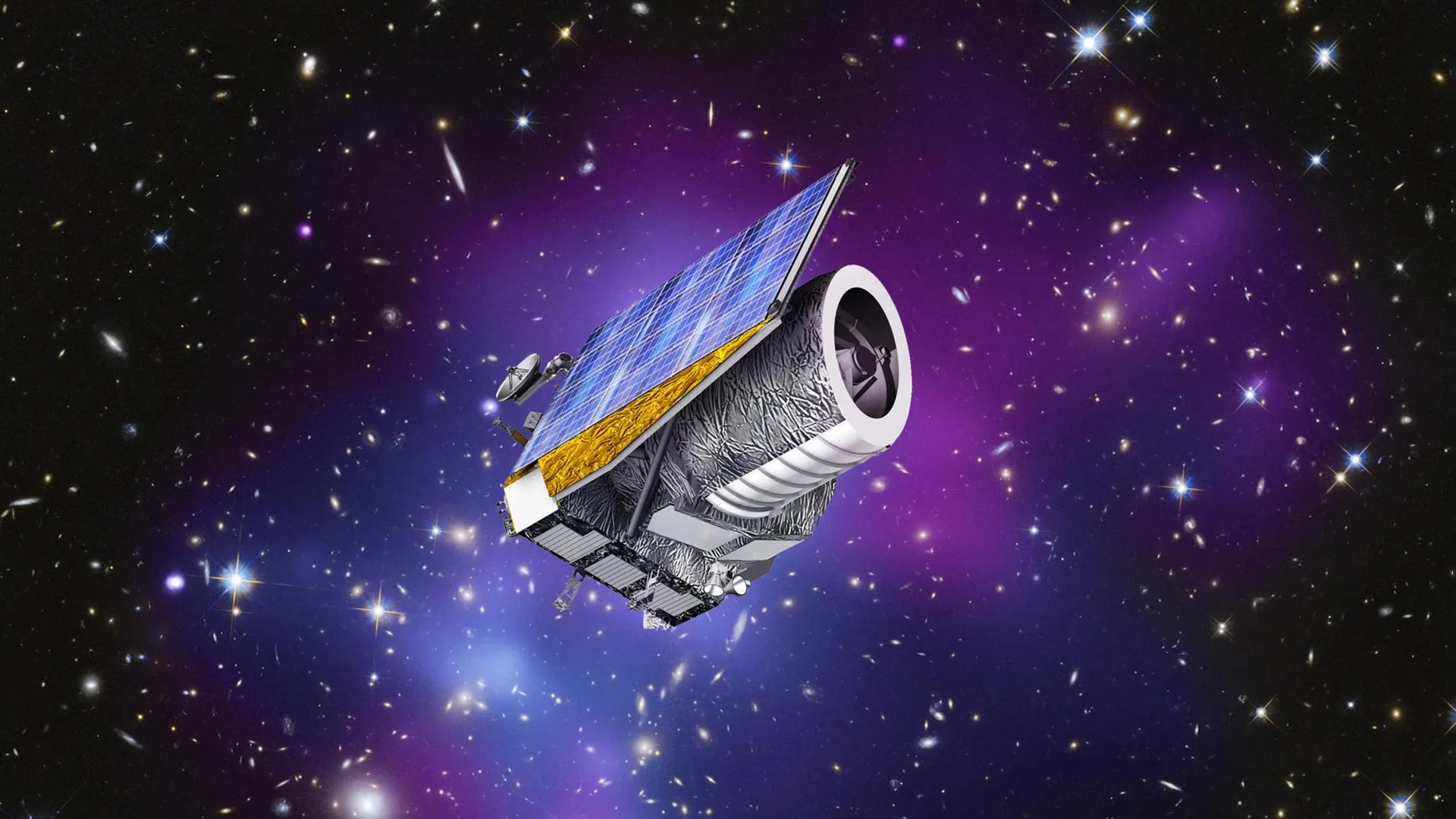
The European Space Agency’s (ESA) Euclid mission, a flagship observatory designed to map the dark universe, has successfully identified a previously unknown comet within our own solar system. This discovery, confirmed by the International Astronomical Union’s (IAU) Minor Planet Center (MPC) on October 8, 2026, marks the first time the telescope has pinpointed a new cometary body, despite its primary mandate being the observation of distant galaxies and the investigation of dark matter and dark energy. The comet, now officially designated C/2026 S1 (Euclid), was captured during routine survey operations between September 16 and 24, 2026, in a region of the sky designated as the Euclid Deep Field North.
A Technological Triumph for Deep-Space Instrumentation
The detection of C/2026 S1 is considered a significant technical achievement, given the fundamental design parameters of the Euclid observatory. Unlike ground-based survey telescopes specifically engineered to scan the sky for Near-Earth Objects (NEOs) and fast-moving solar system bodies, Euclid is optimized for high-resolution, wide-field imaging of the distant cosmos. Because it operates far from the gravitational and atmospheric interference of Earth—situated at the second Lagrange point (L2)—it typically avoids the ecliptic plane, where most solar system debris resides.
The discovery was made possible by specialized software developed by Mikko Pöntinen, a PhD student at the University of Helsinki, working in tandem with the Euclid Consortium’s Solar System Objects Science Working Group. The software was engineered to filter out transient artifacts and identify motion vectors against the static background of distant galaxies. By flagging a "streak" across multiple images, the team was able to verify the object’s trajectory and detect the presence of a fuzzy, active coma, a hallmark of cometary sublimation as the object releases gas and dust.
Chronology of the Discovery
The identification process unfolded over several weeks in late 2026:
- September 16–24, 2026: Euclid records 16 separate exposures across five distinct fields of view in the Deep Field North region.
- Late September 2026: Data processing by the Euclid Consortium reveals a persistent, moving streak that does not correspond to any known cataloged object.
- Late September – Early October 2026: The team conducts a rigorous cross-reference against existing databases maintained by the Minor Planet Center to ensure the object is indeed a new discovery.
- October 8, 2026: Following submission of the observation data, the MPC officially confirms the object as a new comet, C/2026 S1 (Euclid), triggering a global alert for follow-up observations by ground-based observatories.
Orbital Characteristics and Spatial Context
C/2026 S1 (Euclid) is currently situated approximately 1.3 billion kilometers from Earth—a distance roughly equivalent to the gap between the Sun and the region between Jupiter and Saturn. Astronomers have noted that the comet follows an extraordinary orbital path. It is currently positioned well outside the flat, disk-like plane of the solar system where the major planets orbit. Instead, it follows a sweeping, high-inclination trajectory, moving in a path that will take thousands of years to complete.
The high-inclination orbit suggests that the object may originate from the Oort Cloud, a vast, spherical shell of icy debris surrounding the solar system. These ancient remnants, preserved since the solar system’s formation approximately 4.6 billion years ago, provide a "frozen" snapshot of the primordial conditions that existed during the birth of our planetary neighborhood.
Operational Challenges and Scientific Utility
The rarity of such discoveries by Euclid is by design. The telescope’s "step-and-stare" strategy, combined with its deliberate avoidance of the zodiacal dust plane, minimizes the likelihood of encountering asteroids or comets. The zodiacal light—a faint glow caused by sunlight reflecting off interplanetary dust—can obscure the precise measurements required to map the distribution of dark matter.
"Very few comets are expected to be discovered by Euclid," noted Bruno Altieri, an Euclid Archive Scientist. "It was a happy coincidence that the combination of the comet’s unique orbit and Euclid’s scanning pattern allowed us to catch it in multiple frames."
Despite the low frequency of these encounters, the scientific community recognizes the importance of these detections. Every object identified in the survey images must be accounted for to ensure that "noise" from our own solar system does not introduce systematic errors into the mission’s primary cosmological data sets. Consequently, the discovery of C/2026 S1 serves a dual purpose: it cleans the data for the dark energy survey and adds to the census of the solar system.
Implications for the Comet Interceptor Mission
One of the most promising aspects of this discovery is its potential synergy with ESA’s upcoming Comet Interceptor mission. While C/2026 S1 is not a viable target for the interceptor due to its current distance and orbital trajectory, the process of detecting, confirming, and rapidly notifying the global astronomical community serves as a vital "dry run."
Valeria Pettorino, Euclid Project Scientist, emphasized the importance of this workflow. "The process of discovery and alert gives us a real test case for how our two mission teams will coordinate in the future," she stated. The ability to identify incoming or long-period comets early in their approach to the inner solar system is critical for selecting targets that have not yet been heavily altered by solar radiation.
Ancient Archives of the Solar System
Comets are effectively time capsules. As these bodies approach the Sun, the increase in temperature causes volatile ices to transition directly into gas, creating the iconic coma and tail. This process allows astronomers to perform "in-situ" chemical analysis of the material that formed the solar system. By studying the composition of these objects, scientists hope to answer fundamental questions about the delivery of water to the early Earth and the distribution of prebiotic organic molecules.
The discovery of C/2026 S1 underscores the value of multi-mission collaboration. While Euclid was built to peer into the furthest reaches of the universe—studying galaxies up to 10 billion light-years away—its ability to incidentally monitor our local environment provides a unique, albeit unexpected, contribution to solar system science.
Looking Ahead: The Euclid Legacy
As the Euclid mission progresses through its six-year survey, the Consortium expects to gather an unprecedented volume of data regarding the expansion history of the universe. However, the unexpected discovery of C/2026 S1 proves that even an instrument focused on the "dark" side of the universe can illuminate the "bright" objects within our own backyard.
The Solar System Objects Science Working Group, led by contributors including M. Pöntinen, A. A. Nucita, A. Franco, M. Granvik, B. Altieri, S. Kruk, B. Y. Irureta-Goyena, and B. Carry, continues to refine the algorithms used for this discovery. As these data pipelines become more robust, it is likely that additional, previously hidden objects may emerge from the vast datasets generated by the telescope.
This event demonstrates the versatility of modern space observatories. By integrating specialized tracking software into the mission’s data processing pipeline, ESA has effectively turned a premier cosmology tool into a serendipitous planetary defense and discovery asset. As the global astronomical community continues to track C/2026 S1 (Euclid), the data collected will be integrated into the broader understanding of the solar system’s architecture, providing new insights into the dynamics of the objects that traverse the vast, cold spaces beyond the orbits of the gas giants.
The success of the Euclid team in identifying this comet serves as a testament to the sophistication of modern astrophysical data analysis, proving that even as we look to the furthest edges of existence, we are never fully disconnected from the neighborhood that sustains us.

