
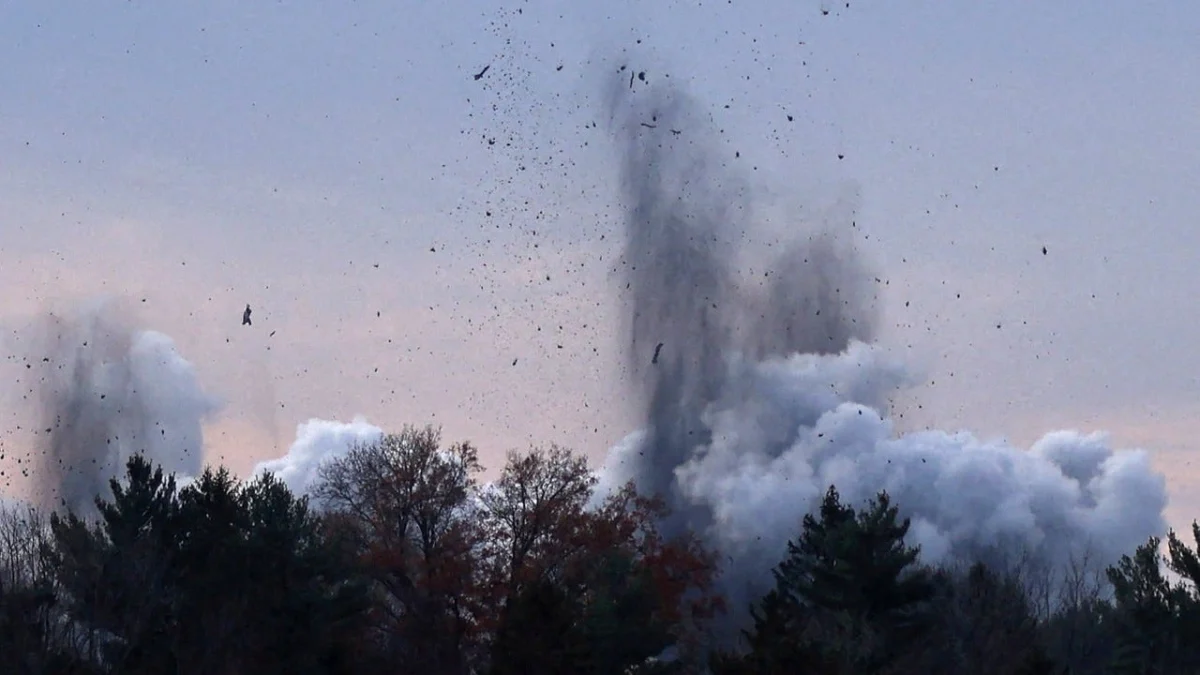
MIDDLETOWN, Iowa — Federal environmental regulators reported Thursday that continuous air monitoring systems have recorded zero detection of airborne lead throughout the region following the high-stakes, controlled detonation of a massive, degraded military chemical stockpile at the Iowa Army Ammunition Plant. The operation, which successfully destroyed roughly five tons of volatile explosive material, had initially triggered regional anxieties over potential toxic dust plumes drifting toward neighboring states, including Missouri.
The Environmental Protection Agency (EPA) confirmed that more than 1,000 targeted environmental samples were collected within the immediate aftermath of the Wednesday blast. Prior to the operation, the agency established a comprehensive scientific baseline by gathering nearly 1,600 baseline samples across multiple environmental vectors—including air, water, soil, and household dust. Despite initial modeling projections that mapped potential dispersion patterns across state lines, post-blast testing has consistently returned reassuring results.
"Following the controlled detonation, EPA sampled homes, public parks with playgrounds, and every drinking water intake in the pre-detonation plume model," the agency stated in an official release. As monitoring efforts progressed, EPA personnel and specialized contractors broadened their footprint to test critical community infrastructure, focusing heavily on local schools, daycare facilities, churches, and public gathering spaces throughout southeastern Iowa.
Chronology of the Operation and Precautionary Measures
The successful destruction of the 68 barrels of degraded lead azide—a highly sensitive and volatile compound traditionally used as a detonator in munitions—marked the culmination of weeks of intensive planning between military officials and environmental regulators. Lead azide becomes dangerously unstable over time, particularly when degraded, posing severe safety risks that necessitate specialized disposal rather than long-term storage or standard transport.
Leading up to the mid-week detonation, federal and state agencies coordinated an unprecedented environmental shield:
- Baseline Establishment: Nearly 1,600 samples of air, soil, water, and dust were collected in the weeks preceding the blast to map pre-existing conditions.
- Watershed Protection: Partnering closely with local monitoring teams, extensive testing of the Mississippi River watershed was completed both prior to and immediately following the blast to safeguard regional aquatic ecosystems and drinking water supplies.
- Agricultural Safeguards: The EPA coordinated directly with the U.S. Department of Agriculture (USDA) to collect continuous soil and crop samples from surrounding farms in the predicted path of the dust plume.
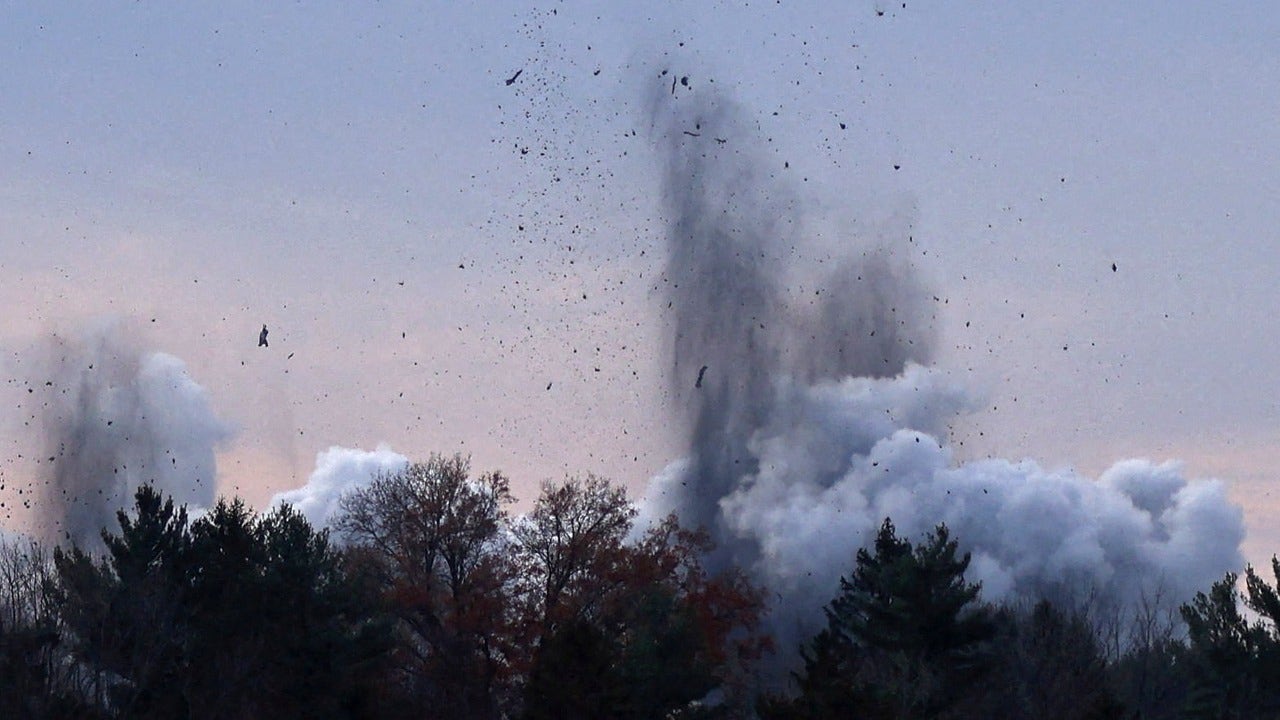
- The Blast: On Wednesday, November 25, 2026, the U.S. Army executed the controlled detonation of the approximately five-ton stockpile at the Middletown facility, mitigating a long-standing hazard safely.
- Post-Blast Sweep: Within 24 hours of the explosion, over 1,000 targeted samples were analyzed, with air cassettes continuously replaced to track atmospheric stability.
Comprehensive Environmental Monitoring and Official Responses
The sheer scale of the operation drew direct attention from top federal leadership. EPA Administrator Lee Zeldin commended the seamless execution of the protocols, noting late Wednesday that the controlled detonation "exceeded expectations in a big way."
President Donald Trump also took to social media to praise the military and supporting agencies, writing on Truth Social, "Great job by the Army, and others, in Iowa!!!"
The unified response framework relied heavily on cross-agency collaboration. By partnering with the USDA, the EPA ensured that agricultural commodities and livestock grazing areas were thoroughly cataloged and protected from potential heavy metal contamination. Furthermore, municipal water treatment plants along the Mississippi River corridor were kept on high alert, with real-time sensor integration ensuring that public drinking water supplies remained entirely uncompromised.
On Thursday, field teams transitioned into a deeper phase of community reassurance. While atmospheric monitors continued to show pristine air quality metrics with zero airborne lead spikes, field crews systematically replaced specialized air sampling cassettes to maintain unbroken data streams. Soil and dust sampling protocols inside residential zones and public parks were scheduled to reach completion by late Thursday afternoon.

Broader Implications and Military Legacy in Middletown
The Iowa Army Ammunition Plant, spanning thousands of acres near Middletown, has long served as a cornerstone of U.S. munitions production and maintenance. However, legacy manufacturing and storage facilities frequently grapple with the complex challenge of neutralizing aging, unstable energetic materials. Lead azide, in particular, is notoriously sensitive to friction, static electricity, and shock, making its ultimate disposal a high-risk engineering feat.
The successful, incident-free destruction of the five-ton stockpile offers a modern blueprint for how the Department of Defense and civilian environmental agencies can safely manage hazardous ordnance disposal without compromising public health or ecological integrity. By employing rigorous predictive modeling, transparent public communications, and real-time environmental verification, the operation demonstrated that complex military remediation projects can be executed safely in populated regions.
The EPA confirmed that its specialized personnel will maintain an active physical presence on the ground in Iowa for the foreseeable future. Federal monitors will continue to evaluate data streams and review ongoing sample results to guarantee that the surrounding communities remain fully protected in the wake of the historic detonation.

