
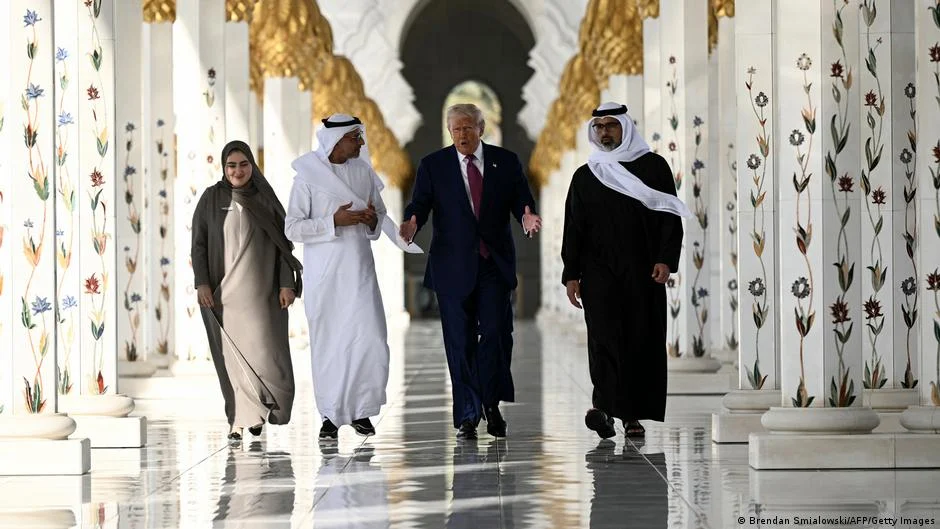
The recent midterm elections in the United States have delivered a clear mandate for the incoming Democratic majority in Congress, with voter exit polls identifying concerns over corruption within the Trump administration as a primary motivator for the electorate. As the political landscape shifts toward a new legislative session beginning in January, senior Democratic lawmakers have signaled their intent to launch a comprehensive series of investigations into the business dealings and foreign policy decisions of the Trump family. At the heart of these anticipated inquiries is the intersection between the administration’s official foreign policy in the Middle East and the significant financial inflows that have benefited the President’s private business interests since his inauguration.
Legislative oversight committees are reportedly preparing to scrutinize a web of financial disclosures that paint a complex picture of the administration’s ties to Gulf nations. According to data released in mid-2025, the Trump family businesses reported a staggering $2 billion in annual income—a threefold increase from the previous fiscal year. Analysts and ethics experts at prominent think tanks, including the Middle East Institute and the Arab Center, have highlighted that a disproportionate share of this growth is linked to entities in the Middle East, raising fundamental questions about the potential for conflicts of interest in diplomatic and economic negotiations.
Chronology of Financial and Diplomatic Intersections
The timeline of these developments reveals a series of overlapping events that critics argue require immediate congressional review. In early 2024, the Trump and Witkoff families co-founded World Liberty Financial, a cryptocurrency venture. Steve Witkoff, who currently serves as the Trump administration’s special envoy to the Middle East, has become a focal point of these investigations. In January 2026, just weeks before the presidential inauguration, a significant portion of this venture was acquired by an investment firm linked to Sheikh Tahnoon bin Zayed Al Nahyan, the United Arab Emirates’ national security advisor and brother to the UAE president.
The timing of this transaction is particularly sensitive given subsequent policy shifts. By May 2026, the United States government moved to approve the sale of advanced artificial intelligence chips to the UAE. This decision proceeded despite internal warnings from various national security advisors who cautioned against the rapid transfer of such sensitive technology. While the Trump administration has consistently denied any link between the private cryptocurrency deal and the national security decision, the proximity of these events has fueled persistent allegations of a "pay-to-play" dynamic.

A lawsuit filed in late October 2026 alleges that an Emirati investment fund, chaired by Sheikh Tahnoon, injected roughly $2 billion into a World Liberty-linked cryptocurrency to artificially inflate the company’s market valuation. This legal action, coupled with the sheer volume of financial data available to the public, has provided a roadmap for congressional investigators who aim to determine whether private wealth accumulation has influenced the trajectory of American foreign policy.
The Scope of Real Estate and Licensing Income
Beyond cryptocurrency, the administration’s real estate footprint in the Gulf region remains under intense scrutiny. Financial reports for 2025 indicate that the Trump organization accrued $59.5 million in foreign real estate licensing income—a tenfold increase compared to 2023. Public records confirm that nearly two-thirds of this revenue originated from projects in Saudi Arabia, the UAE, Qatar, and the Maldives.
Ethics watchdogs have long argued that these licensing agreements create an inherent conflict for a sitting president. When developers in the Gulf—many of whom maintain intimate ties to their respective royal families—simultaneously lobby the US government for permits, economic favors, or diplomatic alignment, the lines between public service and private gain become increasingly blurred. The concern among lawmakers is that the President’s business partners may be using their commercial leverage to secure geopolitical concessions, thereby compromising the integrity of American national interest.
The ‘Flying Palace’ and the Presidential Library Controversy
A particularly vivid example of these blurred lines involves a luxury jet gifted to President Trump by the Qatari royal family in May 2025. Valued at approximately $400 million, the aircraft was intended for use as a diplomatic asset, yet its acceptance sparked an immediate firestorm in Washington. Critics immediately questioned the propriety of a sitting president accepting a gift of such magnitude from a foreign government, noting that it bypassed traditional procurement processes.

While the administration initially framed the jet as a transition of assets to the Donald J. Trump Presidential Library Foundation, the future of the aircraft remains uncertain. There is growing speculation that the President intends to retain the plane for personal use after his term concludes. The library itself, a non-profit entity, has also become a target for oversight. An investigation by CBS News revealed that the project has received over $100 million in funding from corporate donors and legal settlements. Senator Elizabeth Warren and other members of the oversight committee have publicly stated that the library project will be subject to a formal investigation to determine whether these donations were used as a vehicle to purchase influence within the executive branch.
The Gaza ‘Board of Peace’ and Financial Opacity
Perhaps the most ambitious and controversial project initiated by the administration is the "Board of Peace," established in September 2025 to oversee reconstruction and ceasefire efforts in Gaza. Designed as a multilateral organization, the board granted the President indefinite status as its chairman. Under the current structure, countries seeking permanent membership on the board are expected to donate $1 billion.
However, the operational transparency of this board has been severely lacking. Reports from the Financial Times in May 2026 indicated that the designated World Bank account for these funds was empty, with assets instead diverted to a private JP Morgan account. This arrangement effectively shielded the funds from standard international oversight. With contributions from Morocco and the UAE, alongside massive pledges from the board itself, the total capital managed by the entity reaches into the billions. Zaha Hassan of the Carnegie Endowment for International Peace has argued that the decision to register the board as an international non-governmental organization was a strategic move designed to evade congressional oversight, allowing for opaque financial management under the President’s exclusive control.
The Role of Jared Kushner and Private Equity
The scrutiny also extends to the activities of Jared Kushner, the President’s son-in-law, who has functioned as a volunteer envoy in the Middle East. Kushner’s role has been central to negotiations regarding the Gaza conflict and regional relations with Iran. However, his private equity firm, Affinity Partners, has been at the center of allegations regarding the commingling of diplomatic work and private investment.

A CNN investigation published in October 2026 detailed how Affinity Partners received significant investments into companies connected to leading Israeli military manufacturers. These disclosures coincided with Kushner’s diplomatic travels in the region, where he was reportedly soliciting capital for his firm. The situation is further complicated by allegations presented in the book "Princes and Thieves" by investigative journalist Matthew Cole. The book asserts that Kushner was granted access to a $2 billion fund while working with the UAE to shape US policy. While Kushner has vehemently denied these allegations and threatened legal action against media outlets covering the book, the investigative nature of the text has prompted calls from both sides of the aisle for a formal inquiry.
Implications for the Next Congress
As the new Congress prepares to take office, the "Trump crime family" narrative, as characterized by Representative Robert Garcia, is expected to drive the legislative agenda for the House Oversight Committee. The implications of these investigations are profound, extending beyond individual misconduct to the foundational question of how a president can separate their business empire from the powers of the office.
If the evidence supports the claims of the critics, the potential consequences range from new legislative requirements for presidential financial transparency to formal ethics inquiries that could lead to subpoenas of financial records and testimony from key figures in the administration. Conversely, the administration’s supporters maintain that these investments are legitimate business activities and that the political targeting of the President’s family is a partisan attempt to undermine his policy successes in the Middle East.
As the investigations begin, the focus will remain on the intersection of three factors: the timing of foreign financial transactions, the subsequent shifts in US foreign policy, and the lack of oversight regarding the organizations established during the term. The outcome of these inquiries will likely set a significant precedent for the ethical standards expected of future American presidents, particularly regarding their dealings with foreign entities that have a direct stake in the outcome of American policy. For now, the incoming Congress has made it clear that the financial trail leading from the Middle East to the Trump family will be the primary subject of its early investigations, setting the stage for a period of intense institutional friction in Washington.

