
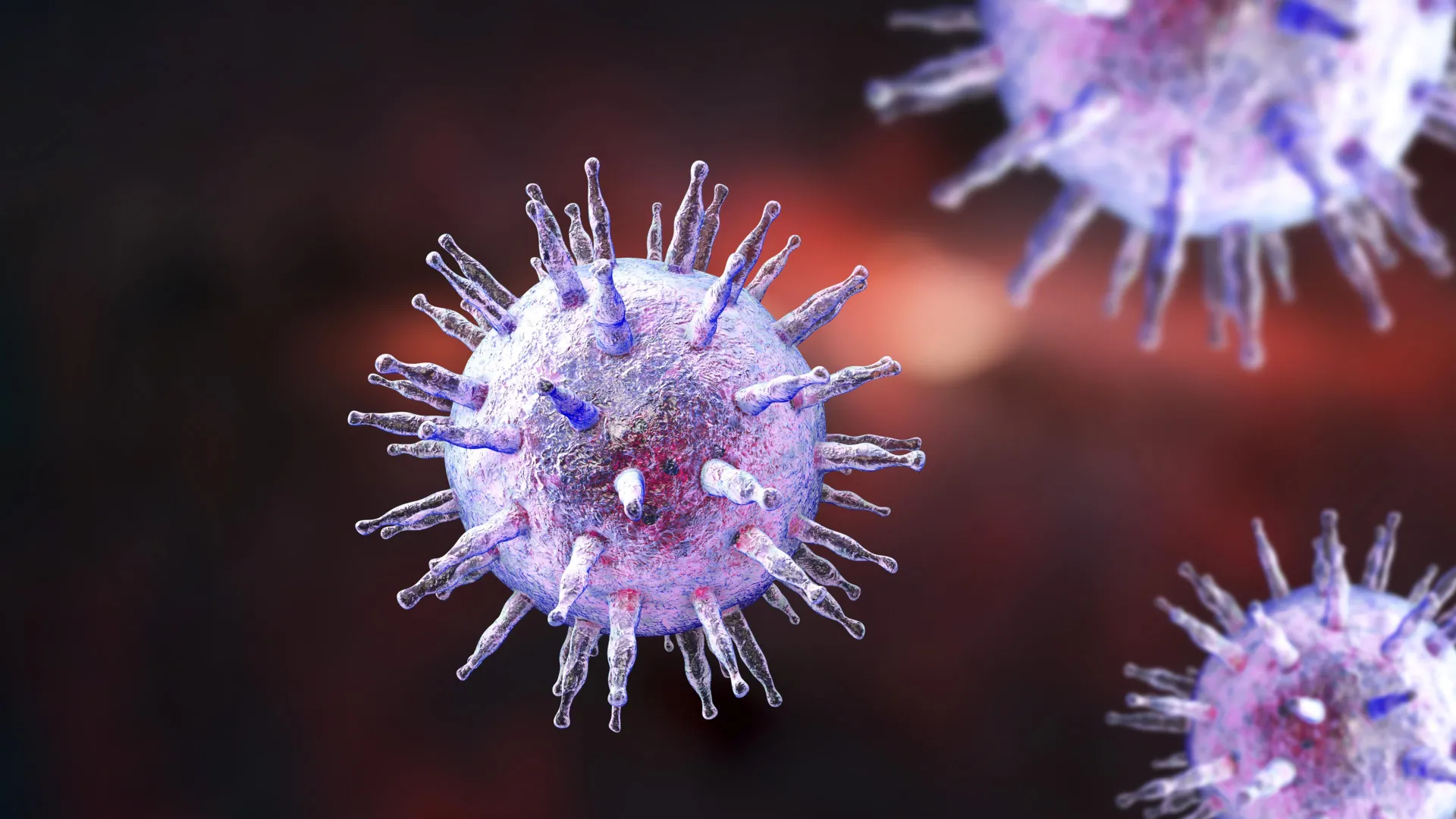
Fred Hutch Cancer Center researchers have announced a significant advance in the effort to block Epstein-Barr virus (EBV), a widespread infection that affects approximately 95% of the global population and is linked to a range of serious health conditions, including several types of cancer, neurodegenerative disorders, and other chronic illnesses. The groundbreaking work, which involved engineering mice to produce human antibodies, has led to the development of novel monoclonal antibodies designed to prevent the virus from attaching to and entering human immune cells. Published in the esteemed journal Cell Reports Medicine, the findings demonstrate that one of these newly developed antibodies was capable of completely preventing EBV infection in mice engineered with human-like immune systems.
A Persistent Challenge: Targeting a Ubiquitous Virus
Epstein-Barr virus, a member of the herpesvirus family, is notorious for its ability to evade immune responses and establish lifelong infections. Its widespread prevalence means that a vast majority of the world’s population carries the virus, often asymptomatically, for their entire lives. While typically dormant, EBV can reactivate under conditions of immunosuppression, leading to significant health complications. The virus’s unique mechanism of infection, which involves binding to a wide array of human B cells, has historically presented a formidable challenge for researchers seeking to develop effective antiviral therapies and vaccines.
Dr. Andrew McGuire, a biochemist and cellular biologist within Fred Hutch’s Vaccine and Infectious Disease Division, elaborated on this long-standing obstacle. "Finding human antibodies that block Epstein-Barr virus from infecting our immune cells has been particularly challenging because, unlike other viruses, EBV finds a way to bind to nearly every one of our B cells," he explained. "We decided to use new technologies to try to fill this knowledge gap, and we ended up taking a critical step toward blocking one of the world’s most common viruses." This statement underscores the innovative approach taken by the research team to overcome a critical hurdle in virology.
Innovative Antibody Strategy Targets Viral Entry Points
A primary obstacle in the development of effective EBV treatments has been the identification of antibodies that can neutralize the virus without eliciting an adverse immune reaction in the host. This concern is particularly acute when antibodies are derived from non-human sources, as they can be recognized as foreign by the human immune system, leading to neutralization of the therapeutic agent itself. To circumvent this issue, the Fred Hutch team focused their attention on two key viral proteins: gp350 and gp42. The gp350 protein plays a crucial role in the initial attachment of the virus to host cells, while gp42 facilitates the fusion of the viral envelope with the host cell membrane, enabling entry into the cell.
By leveraging their specially engineered mouse model, which was designed to generate human antibodies, the scientists successfully identified a total of ten promising monoclonal antibodies. Specifically, they discovered two antibodies that target the gp350 protein and eight antibodies that target the gp42 protein. This comprehensive screening process allowed for the identification of multiple potential candidates for therapeutic intervention.
Crystal Chhan, a pathobiology PhD student in the McGuire Lab, highlighted the broader implications of their findings. "Not only did we identify important antibodies against Epstein-Barr virus, but we also validated an innovative new approach for discovering protective antibodies against other pathogens," she noted. "As an early-career scientist, it was an exciting finding and has helped me appreciate how science often leads to unexpected discoveries." This sentiment reflects the potential of the research methodology to accelerate the development of treatments for a range of infectious diseases.
Further in-depth analysis, meticulously supported by Fred Hutch’s Antibody Tech Core facility, provided critical insights into specific vulnerabilities on the EBV surface. These identified "weak points" are expected to be invaluable in guiding future vaccine design strategies, aiming to elicit a more potent and targeted immune response. In the final stages of testing, one of the gp42-targeting antibodies demonstrated a remarkable ability to completely block EBV infection in the experimental model. Concurrently, a gp350-targeting antibody provided significant partial protection, indicating that targeting different viral components may offer complementary or synergistic benefits.
Critical Implications for Transplant Recipients
The potential impact of this research is particularly profound for individuals undergoing solid organ or bone marrow transplants. In the United States alone, over 128,000 people receive such life-saving procedures each year. A common necessity for these patients is the use of immunosuppressive drugs, which are vital for preventing organ rejection. However, these medications also inadvertently create an environment where EBV, if present, can reactivate and proliferate unchecked. Currently, there are no targeted therapies specifically designed to prevent this critical complication.
A serious and potentially life-threatening consequence of uncontrolled EBV infection in transplant recipients is post-transplant lymphoproliferative disorders (PTLD). PTLD is a form of lymphoma that can arise following transplantation, with the vast majority of cases being directly linked to EBV. The uncontrolled replication of the virus triggers abnormal proliferation of B cells, leading to the development of cancerous growths.
Dr. Rachel Bender Ignacio, an associate professor and infectious disease physician at Fred Hutch and the University of Washington School of Medicine, emphasized the unmet need in this patient population. "Post-transplant lymphoproliferative disorders (PTLD), most of which are EBV-associated lymphomas, are a frequent cause of morbidity and mortality after organ transplantation," she stated. "Preventing EBV viremia has strong potential to reduce the incidence of PTLD and limit the need to reduce immunosuppression, thereby helping preserve graft function while improving overall patient outcomes. Effective prevention of EBV viremia remains a significant unmet need in transplant medicine." This highlights the urgent clinical relevance of the Fred Hutch team’s work.
Patients can acquire EBV through donor organs that carry a latent form of the virus. In individuals who have been previously infected, the suppression of their immune system can allow the dormant virus to reactivate and multiply. Children undergoing transplants are considered especially vulnerable, as a significant proportion of this age group may not have been exposed to EBV prior to their transplant. This makes them susceptible to primary infection and subsequent complications.
Charting a Course Towards Preventive Antibody Therapy
The research team envisions a future where these newly developed monoclonal antibodies could be administered as an infusion, serving as a prophylactic measure to prevent EBV infection or reactivation. This therapeutic strategy would be particularly beneficial for high-risk groups, such as transplant recipients and potentially immunocompromised individuals. By intervening early in the viral lifecycle and blocking its entry into host cells, such a therapy holds the promise of significantly reducing the incidence of PTLD and other EBV-related complications.
Fred Hutch has proactively taken steps to protect its intellectual property related to the discovered antibodies by filing patent applications. Dr. McGuire and Ms. Chhan are actively collaborating with other researchers and an industry partner to accelerate the translation of this research from the laboratory bench to clinical application. The immediate next steps in this pipeline are expected to involve rigorous safety testing in healthy adult volunteers. Following successful safety evaluations, the program would then progress to clinical trials in patient populations deemed to be at the highest risk of EBV-related complications, such as transplant recipients.
Reflecting on the journey and future prospects, Dr. McGuire expressed optimism. "There’s momentum to advance our discovery to a therapy that would make a huge difference for patients undergoing transplant," he said. "After many years of searching for a viable way to protect against Epstein-Barr virus, this is a significant stride for the scientific community and the people at the highest risk of complications from this virus." This statement underscores the profound impact that this scientific advancement could have on improving patient care and outcomes in a critical medical field.
The development of these monoclonal antibodies represents a pivotal moment in the long-standing effort to combat Epstein-Barr virus. By targeting the virus’s critical entry mechanisms and utilizing advanced human antibody technology, Fred Hutch researchers have paved the way for potentially life-saving preventive therapies, offering a beacon of hope for millions worldwide, especially those facing the unique challenges of post-transplant immune suppression. The ongoing collaboration and progression towards clinical trials signal a tangible commitment to bringing this groundbreaking discovery to those who need it most.

