
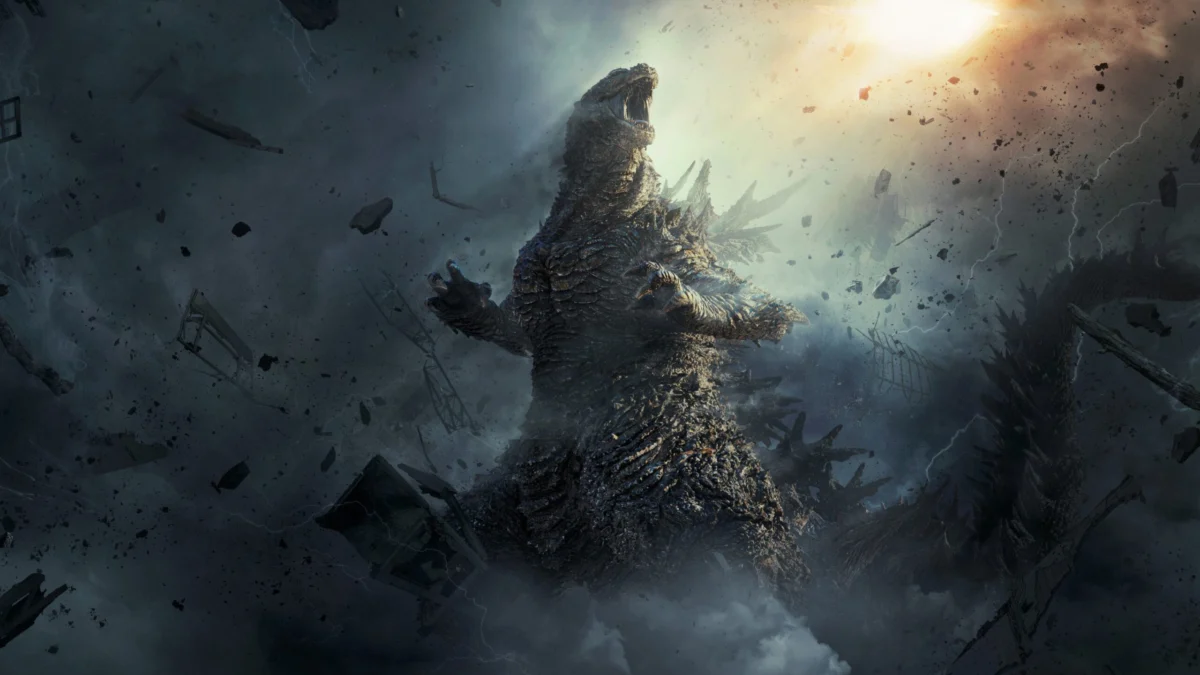
The cinematic landscape is poised for a significant shift this weekend as Godzilla Minus Zero stomps into North American theaters, projected to dominate the box office with an opening weekend haul of approximately $30 million. Debuting across 3,254 locations, the sequel to the critically acclaimed 2023 hit Godzilla Minus One represents a milestone in international film distribution. As the first Japanese production ever filmed specifically for the IMAX format, the film is expected to overindex on premium large-format screens, signaling a growing appetite among domestic audiences for high-budget, non-English language spectacles.
Directed by Takashi Yamazaki, the film continues the narrative established in the previous installment, picking up two years later as the titular kaiju regenerates to face a new, formidable threat in the context of a recovering, postwar Japan. The success of this release is not occurring in a vacuum; it follows the unprecedented trajectory of its predecessor, which became the highest-grossing live-action Japanese film in North American history.
The Godzilla Phenomenon: A Chronology of Success
The rise of the Godzilla franchise in the United States over the past two years serves as a case study in how niche international content can achieve mainstream viability. In late 2023, Godzilla Minus One debuted during a period of uncertainty for the industry, as the dual WGA and SAG-AFTRA strikes left a vacuum in the release schedule. Despite these hurdles—or perhaps aided by the lack of competition—the film outperformed expectations.
- December 2023: Godzilla Minus One enters the U.S. market, surprising analysts with an $11.4 million opening.
- Early 2024: Through strong word-of-mouth and critical acclaim, the film sustains its theatrical run, ultimately grossing $57 million domestically.
- March 2024: The film achieves global recognition at the Academy Awards, securing the Oscar for Best Visual Effects.
- Current Outlook: With the release of Godzilla Minus Zero, Toho and distributor GKids are attempting to leverage this momentum, utilizing the film’s status as an IMAX-native production to solidify its position as a global tentpole.
Chief film critic for Variety, Owen Gleiberman, has already lauded the project, characterizing the sequel as an even grander expansion of the themes and visual spectacle introduced in the 2023 original. This critical reception is crucial, as the film relies on maintaining the high standard of visual fidelity that won its predecessor an Academy Award.
Animated Challenges: The Cat in the Hat Reimagined
While Godzilla captures the top spot, the remainder of the box office is defined by a diverse array of offerings, led by Warner Bros. Animation’s The Cat in the Hat. Projections suggest an opening between $20 million and $25 million from 4,000 domestic venues. This figure is modest compared to previous Dr. Seuss adaptations, such as the 2018 hit The Grinch ($67 million) and the 2012 release The Lorax ($70 million).
The theatrical environment for animated features has undergone a structural shift. While the 2003 live-action adaptation starring Mike Myers struggled with its $100 million-plus budget—eventually grossing $134 million—the current animated iteration, voiced by Bill Hader and directed by Alessandro Carloni and Erica Rivinoja, is operating under a $92 million production budget. Analysts note that the film’s success will be measured by its longevity rather than a massive opening weekend.
The studio is looking to replicate the success of recent "long-tail" animated films like Sony’s 2024 Garfield, which bowed at $23 million but eventually scaled to $91 million domestically and $257 million globally. The Cat in the Hat possesses a clear advantage in its target demographic; there has been a notable lack of family-oriented animated content since the release of Forgotten Island in September. Furthermore, the film will face no direct competition in its genre until the late November release of Disney’s Hexed, potentially allowing it to dominate the family segment for nearly a month.
Niche Markets and Independent Success
Beyond the major studio releases, the market is seeing a strategic expansion in how indie and international films are distributed. Searchlight’s Wild Horse Nine, a dark buddy comedy starring John Malkovich and Sam Rockwell, is targeting a more mature demographic. Directed by Martin McDonagh, the film is launching in 1,000 theaters—a significant increase in footprint compared to the limited rollout of McDonagh’s 2022 film, The Banshees of Inisherin.
While The Banshees of Inisherin proved that a slow, deliberate release strategy can lead to box office endurance, Wild Horse Nine is attempting to find its audience more aggressively. The plot, which follows two CIA officers in Chile during a military coup, positions the film as a potential contender for the upcoming awards season. With a projected opening of $5 million to $7 million, the film is designed to build steady interest through reviews and festival buzz rather than massive opening weekend numbers.
Simultaneously, the Indian epic Ramayana: Rise of a Legend is testing the limits of international crossover success. Sony is distributing the film in 1,300 theaters, the widest North American release ever for an Indian production. Projected to earn $6 million over its first four days, the film enters a market already warmed by titles like Kalki 2898 AD and Devara Part 1. These films have demonstrated that domestic audiences for regional Indian cinema are consistent, often "legging out" over several weeks as they cater to specific diaspora populations while increasingly capturing wider interest.
Market Implications and Future Outlook
The current distribution strategy across these four major films highlights a bifurcated industry. On one end, there is the massive, technical spectacle of Godzilla Minus Zero, which aims to maximize revenue through premium formats like IMAX. On the other, there are films like The Cat in the Hat, which rely on franchise longevity and the absence of direct competition, and smaller, auteur-driven projects like Wild Horse Nine that prioritize critical prestige and long-term sustainability.
For theater owners, the success of this weekend is vital. With exhibition houses keeping approximately 50% of ticket sales, the sheer variety of these offerings serves as a safeguard against a total box office downturn. The diversity of the slate—ranging from monster epics and family animation to political dramedies and mythological epics—reflects a broader trend in Hollywood: the necessity of appealing to specific, highly motivated demographics rather than relying solely on the "four-quadrant" blockbuster model.
As the industry moves toward the end of the year, the performance of Godzilla Minus Zero will likely be scrutinized for what it suggests about the sustainability of international blockbusters. If the film performs at or above the $30 million projection, it will reinforce the theory that domestic audiences are increasingly platform-agnostic, provided the quality of the visual effects and the strength of the narrative meet high expectations. Conversely, the performance of The Cat in the Hat will serve as a bellwether for the health of animated IP adaptations in a post-pandemic market that is no longer guaranteed to deliver massive opening weekends for established properties.
Ultimately, this weekend is less about the competition between the films themselves and more about the diverse ways in which modern cinema is consumed. Whether through the premium, large-scale experience of a kaiju battle or the steady, word-of-mouth growth of a character-driven drama, the current slate suggests that the North American box office is continuing to adapt to a more fragmented, yet highly specialized, global media environment. As theater chains track the real-time data, the focus remains on whether these films can maintain their momentum into the holiday season, where the competition will only intensify with the arrival of major studio tentpoles.

