
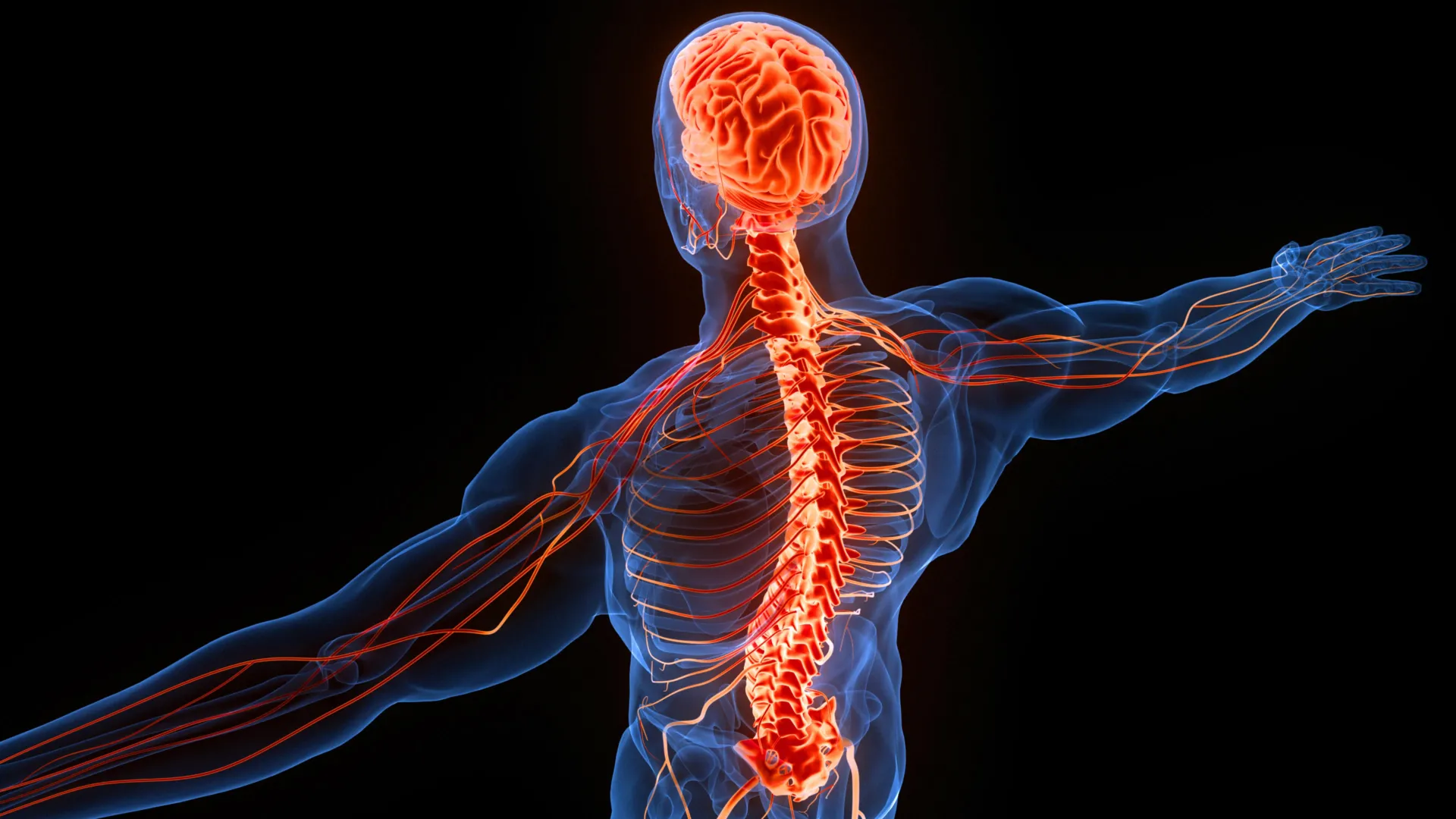
The human nervous system is defined by a peculiar anatomical paradox: the left hemisphere of the brain governs the right side of the body, while the right hemisphere manages the left. This contralateral organization—a hallmark of vertebrate biology—has long baffled evolutionary biologists and neuroscientists alike. Why would an organism evolve a design that necessitates such complex, long-distance neural signaling? New research suggests the answer does not lie in a specific survival advantage, but rather in a 500-million-year-old evolutionary "blueprint" established by the primitive visual systems of our earliest vertebrate ancestors.
The Evolutionary Hypothesis: An Ancient Precedent
Dr. Martin Wessendorf, a neuroscientist and associate professor emeritus at the University of Minnesota, and cognitive neuroscientist Daniel Wang have proposed a compelling explanation for this architectural quirk. In a study recently published in the journal Frontiers in Neuroanatomy, the researchers argue that the crossed-wiring of our motor and sensory systems is a secondary inheritance, a byproduct of how evolution built new neural circuits around a pre-existing visual template.
For decades, the prevailing assumption in neuroscience was that crossed connections must have provided an adaptive benefit, perhaps related to spatial navigation or predator avoidance. However, Wessendorf and Wang’s analysis suggests a more parsimonious, albeit surprising, reality: the crossed arrangement is a structural legacy. By examining the neural pathways of tetrapods—including mammals, birds, reptiles, and amphibians—the researchers posit that the visual system’s ancient, reversed mapping acted as a template for subsequent evolutionary developments in movement and touch.
Chronology of a Neural Design
To understand why the brain is wired this way, one must look back to the Cambrian Period, roughly 500 million years ago. During this era, the first jawless fish developed rudimentary visual systems.
- The Cambrian Foundation (500 Million Years Ago): The optic chiasm—the structure where nerve fibers from the eyes cross—likely emerged in these early vertebrates. Because the lens of the eye naturally inverts light, objects in the right visual field are projected onto the left retina. To maintain a coherent map of the environment, the brain evolved to route this information to the contralateral (opposite) side.
- The Rise of the Optic Tectum: This visual processing center, known as the superior colliculus in mammals, became the brain’s "command hub." Crucially, it established a map where sensory input and motor output were aligned across the midline.
- The Expansion of Tetrapods (350–400 Million Years Ago): As vertebrates transitioned to land, new sensory pathways, such as the dorsal column (which processes touch and vibration) and the spinothalamic tract (which processes pain), emerged. Instead of developing a new, non-crossed architecture, these systems adopted the existing midline-crossing pattern.
Analyzing the Sensory and Motor Pathways
The research highlights three primary pathways that demonstrate this "evolutionary reuse" of crossed circuits:
- The Tectospinal Pathway: This is the most direct link to the ancient optic tectum. It allows for rapid, reflexive motor responses to visual or auditory stimuli. When a person turns their head toward a sudden noise, they are utilizing a circuit that has remained largely conserved for hundreds of millions of years.
- The Rubrospinal Pathway: Originating in the red nucleus of the midbrain, this system is critical for limb control. Its presence across diverse vertebrate groups suggests that the "crossed-wire" mandate was already deeply embedded in the brainstem before mammals even existed.
- The Corticospinal Tract: This is the most complex of the systems. In primates, it facilitates fine motor control, such as the dexterity of human fingers. Interestingly, the study suggests that the corticospinal tract did not evolve to be crossed for the sake of movement; rather, it evolved from an older, sensory-regulating pathway that was already crossed. Evolution simply "repurposed" the existing circuit for manual control.
The Data Behind the Design
The study’s data points to a striking consistency across species. While fish lack the sophisticated dorsal column pathway found in mammals, they possess other crossed-wiring features in their brainstems. This continuity suggests that the crossed architecture is a "conservative" trait. In biology, "conservative" traits are those that persist through generations despite significant environmental changes. If a system is not broken, evolution rarely replaces it with a fundamentally different structure; instead, it modifies the existing framework.
By comparing the neuroanatomy of sharks and rays—some of the oldest extant vertebrates—with that of modern humans, Wessendorf and Wang identified that the crossed-wiring of the spinothalamic tract is a primitive feature. The fact that this configuration is found in cartilaginous fish implies that the "midline-crossing" rule predates the evolution of limbs themselves.
Implications for Modern Neuroscience
The implications of this research are significant for both evolutionary biology and the treatment of neurological conditions. If the brain’s crossed architecture is a structural inheritance rather than an optimal design, it provides context for why certain neural injuries are so difficult to repair.
"We are looking at a system that has been layered upon for half a billion years," notes Dr. Wessendorf. "When we study neurodegenerative diseases or spinal cord injuries, we are not just looking at a biological system; we are looking at a historical record."
The findings also challenge the "adaptationist" view, which suggests that every feature of the human body must have a current survival utility. In this case, the crossed-wiring of the brain is not necessarily "better" than a non-crossed system would be. Rather, it is a historical artifact. The nervous system is built like a palimpsest—a manuscript where the original text has been scraped off and written over, yet the faint traces of the older writing remain visible beneath the new.
A New Framework for Future Studies
The research team believes their hypothesis is testable. By utilizing advanced imaging and paleontology, scientists can now search for specific anatomical markers in the fossilized skulls of ancient jawless fish. Finding the skeletal housing for an optic chiasm in a 500-million-year-old fossil would provide the "smoking gun" for their hypothesis.
Furthermore, this perspective changes how researchers might approach human motor control. If the corticospinal tract is a sensory pathway that was co-opted for movement, then researchers looking to restore motor function after injury might find more success by targeting the sensory-integration mechanisms of the brain rather than just the motor output regions.
Broader Impact
The human brain is often lauded as the most complex machine in the known universe, but this research serves as a humbling reminder of its humble origins. We are not designed from a blank slate; we are the product of an additive, iterative process that prioritizes stability over wholesale redesign.
The crossed-wiring of our nervous system remains one of the most enduring examples of biological history. It stands as a testament to the fact that the brain does not merely reflect our current needs, but preserves the anatomical memory of the first creatures to navigate the ancient oceans. As neuroscience moves forward, acknowledging this deep-time perspective will be essential for understanding not only how our brains work, but why they work the way they do—a legacy of 500 million years of evolutionary refinement.

