
Recent polling data compiled by Emerson College and The Hill highlights a continuing trend of razor-thin margins in critical United States Senate races as the nation moves closer to the upcoming midterm elections. In historically safe and deep-red Texas, Democratic challenger James Talarico has managed a narrow one-percentage-point lead over his Republican opponent, Ken Paxton. Meanwhile, in Michigan, progressive candidate Abdul El-Sayed leads Republican contender Mike Rogers with 48 percent of the vote compared to Rogers’s 46 percent. These competitive dynamics underscore an evolving electoral landscape where national issues, local candidate profiles, and shifting demographic alignments complicate traditional party advantages.

The prospect of a competitive Senate race in Texas has long been categorized as a distant goal for national Democrats. The state has consistently voted for Republican candidates in statewide federal elections for decades. The last significant challenge occurred six years ago during the 2020 cycle, when former Representative Beto O’Rourke narrowed the gap to three percentage points against incumbent Republican Senator Ted Cruz. However, the current political environment has introduced new volatility. Following a high-stakes Republican primary in which scandal-plagued state Attorney General Ken Paxton unseated longtime incumbent Senator John Cornyn with the explicit backing of President Donald Trump, political analysts noted potential vulnerabilities for the GOP nominee. Talarico’s emergent lead, though statistically within the margin of error, signals that suburban shifts and voter fatigue with prolonged controversies could alter the traditional calculus in Texas. Conversely, the gubernatorial contest in the Lone Star State shows a different trajectory, with Democratic challenger Gina Hinojosa lagging behind incumbent Republican Governor Greg Abbott by three percentage points.
In the industrial Midwest, the Michigan Senate race presents distinct demographic splits. Polling indicates that Abdul El-Sayed enjoys strong support among independent voters, propelling him slightly ahead of Mike Rogers, a former U.S. congressman. Conversely, Rogers maintains strong backing among older demographics and non-college-educated voters, mirroring broader national trends regarding educational polarization. These diverging voter coalitions reflect the broader volatility of Great Lakes battlegrounds, where economic anxieties and federal policy debates heavily influence public sentiment.
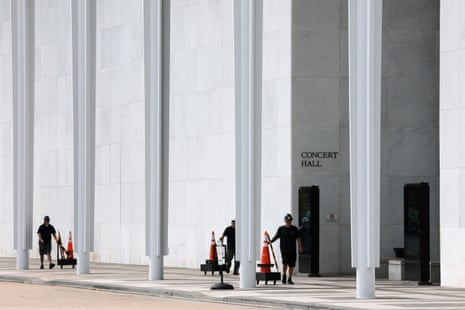
Beyond the immediate electoral battlegrounds, the broader legislative and judicial landscapes in Washington are experiencing acute friction. Tensions heightened recently when a federal judge issued an order requiring the Trump administration to provide a 30-day notice before executing any major modifications or potential demolition plans regarding the historic Kennedy Center. The directive followed the abrupt closure of the cultural institution by its Trump-appointed leadership, who cited acute public safety risks stemming from severe structural deterioration. Critics and Democratic lawmakers, including trustee Representative Joyce Beatty, have expressed deep skepticism, viewing the closure as potential retaliation after federal courts blocked efforts to integrate President Trump’s name onto the building’s facade alongside President John F. Kennedy’s. The dispute has further intensified debates concerning federal property management, congressional oversight, and the boundaries of executive authority.
The immigration policy debate continues to create acute political friction for Republican incumbents facing tough re-election bids. Representative María Elvira Salazar of Florida released a campaign ad directly criticizing the administration’s mass deportation efforts, noting that a substantial percentage of detained individuals lacked criminal records and warning that Hispanic voters who supported the party in 2024 feel alienated. Democrats quickly countered by highlighting Salazar’s previous legislative record, pointing out that she voted in favor of substantial funding increases for Immigration and Customs Enforcement and the Department of Homeland Security earlier in the year. The divergence between campaign messaging and past voting behavior highlights the difficult tightrope Republican lawmakers must walk in competitive districts as the 2026 midterms approach.
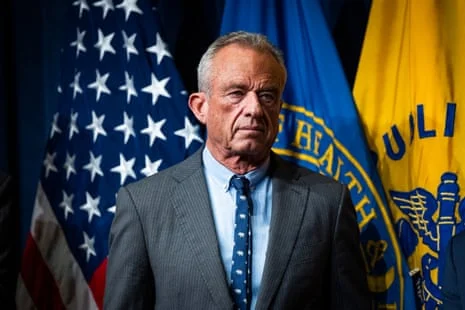
Concurrently, the intersection of domestic health policy and federal administration remains a focal point of public discourse. Health and Human Services Secretary Robert F. Kennedy Jr. recently addressed a conference hosted by Children’s Health Defense, an organization he formerly led. During his remarks, Kennedy detailed efforts to align federal public health agencies with long-standing vaccine-skeptical policy goals, even as public health authorities grapple with ongoing measles outbreaks across multiple states. Lawmakers from both parties continue to debate the broader implications of these administrative shifts, particularly as public trust in institutional health guidance remains under intense scrutiny.
As campaigns enter their final phases, both political parties are recalibrating their strategies to address economic pressures, foreign policy tensions—including ongoing debates over the sanctions framework targeting Russian energy—and regional governance issues. With control of both chambers of Congress hanging in the balance, these localized contests and federal policy clashes will serve as critical barometers of the American electorate’s mood ahead of the November elections.

