
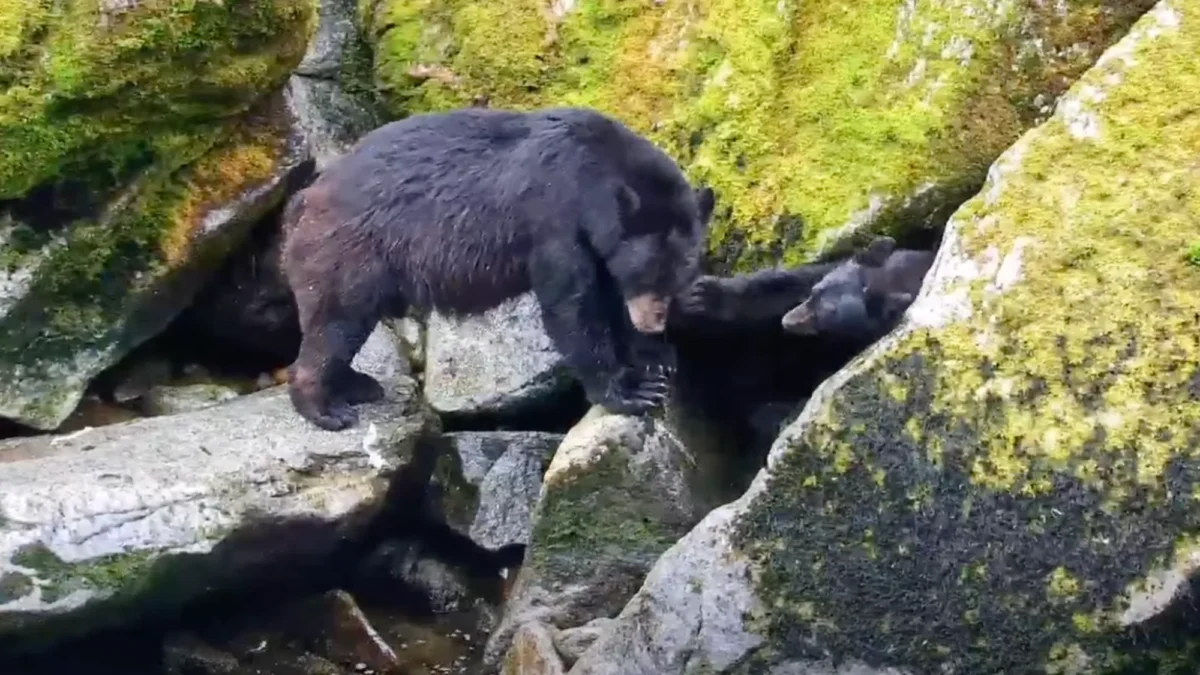
The U.S. Forest Service has officially recognized a young black bear (Ursus americanus) named Nugget for his persistent and playful harassment of his larger sibling, Crescent, marking one of the most documented behavioral interactions at the Anan Wildlife Observatory this year. The distinction, dubbed the 2026 Annoying Sibling Award, highlights the complex social dynamics observed among the bear population residing within the Tongass National Forest in southeastern Alaska. Throughout the summer months, rangers and researchers monitored a series of interactions that provided a rare, extended glimpse into the developmental social behaviors of juvenile black bears as they navigate the transition from maternal dependency to independent survival.
A Chronology of the Interaction
The behavior that led to Nugget’s recognition was not a singular event but a sustained pattern of interaction observed throughout the mid-summer peak of the salmon run. According to logs from the U.S. Forest Service, the specific "tussle" that secured the award occurred during a routine surveillance period at the Anan Creek site.
For approximately 30 minutes, observers watched as Nugget, characterized by his notably smaller stature and a distinct, goggle-like fur pattern around his eyes, repeatedly jabbed at his sibling. Despite the size disparity, Nugget maintained a strategy of retreating and re-engaging, effectively testing the boundaries of his sibling’s tolerance. Crescent, the larger of the two, exhibited a high degree of restraint, often allowing the play-fighting to continue before finally signaling for the interaction to cease. This behavioral loop—a mixture of physical prodding and controlled grappling—is considered a vital component of play-based learning, allowing juvenile bears to refine their motor skills, test strength, and establish social hierarchies without the high stakes of territorial combat.
The Ecological Significance of Anan Creek
The Anan Wildlife Observatory serves as a critical junction for biological research in Alaska. Located within the Tongass National Forest—the largest national forest in the United States—the area is a highly managed ecosystem that facilitates a massive concentration of wildlife. The site is anchored by Anan Creek, which hosts one of the most robust pink salmon runs in the region. This annual biomass influx is the primary driver of the local bear population’s summer activity.
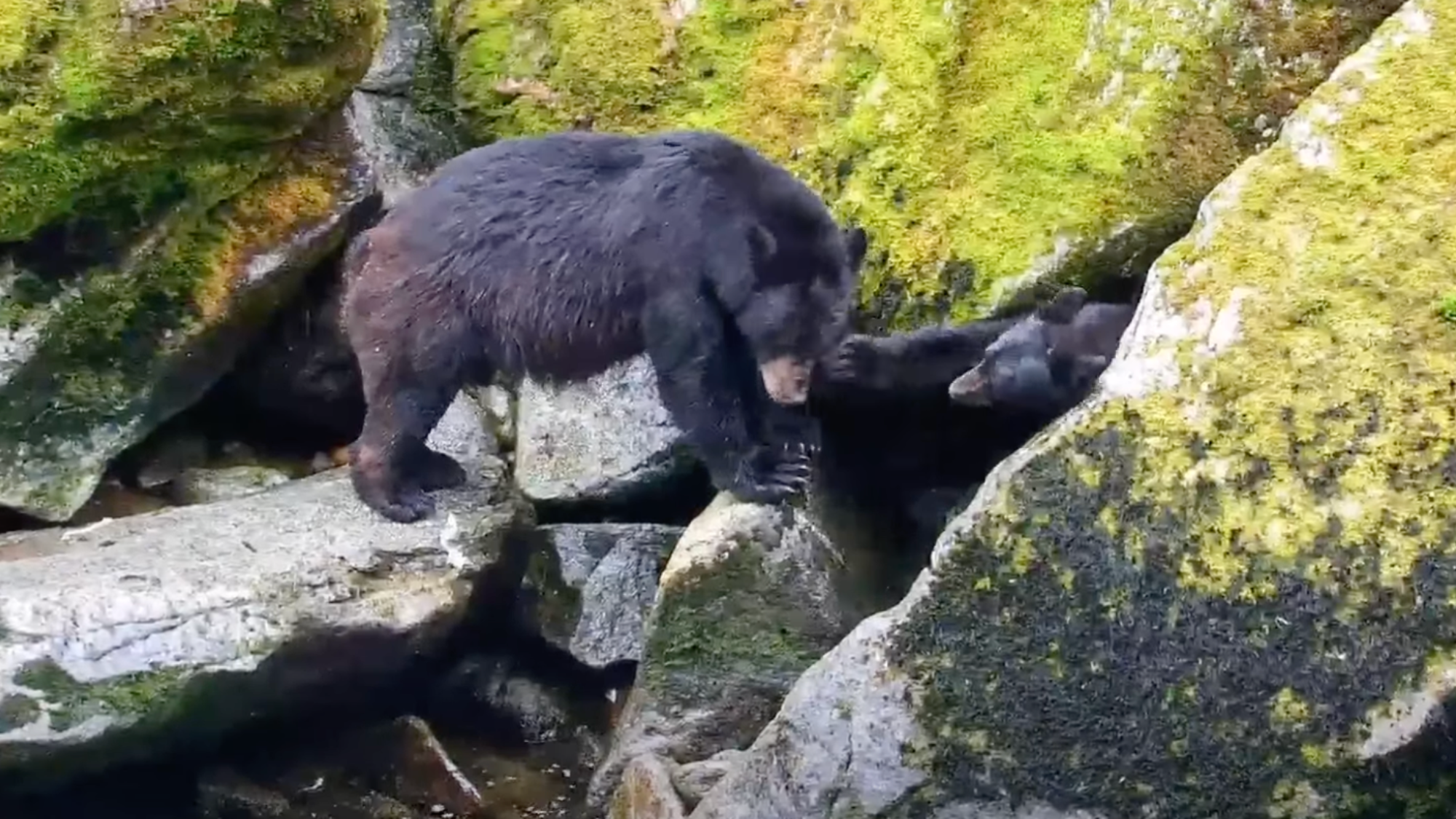
Current data from the Friends of Anan organization indicates that 39 individual bears are regular visitors to this specific drainage. The population is diverse, consisting of 31 black bears and eight brown bears (Ursus arctos). The seasonal convergence of these animals is not merely for sustenance; it serves as a classroom for cubs. Adult females bring their offspring to the creek to master the mechanics of fishing. The presence of these bears allows researchers to collect longitudinal data on individual growth rates, health indicators, and social interaction patterns that are otherwise difficult to capture in the dense, remote wilderness of the Alaskan Panhandle.
Data-Driven Insights into Bear Behavior
The study of bears at Anan Creek contributes to a broader understanding of ursine behavior, particularly regarding how resource abundance influences social tolerance. In environments where food is scarce, bears are typically solitary and aggressive. However, at high-density sites like Anan, the constant availability of salmon allows for a unique level of "social lubrication."
Researchers use these observations to compare Alaskan black bear behavior with better-documented populations, such as the famous "Fat Bear" cohorts in Katmai National Park. While Katmai provides insights into metabolic preparation for hibernation, the Anan observations focus on social ontogeny. The "Annoying Sibling" behavior exhibited by Nugget is a classic example of social play, which, according to evolutionary biologists, serves to prepare young bears for the physical demands of adulthood. By engaging with a larger sibling, Nugget is effectively "sparring" in a low-risk environment. The fact that this behavior is documented and archived by the U.S. Forest Service assists in mapping the social networks of the 39 known bears, helping biologists understand how individual personalities and familial bonds influence the group’s stability.
Official Perspectives and Public Engagement
The U.S. Forest Service has leveraged the popularity of these bears to promote conservation awareness and public stewardship of the Tongass National Forest. By characterizing these interactions with human-centric awards, the agency has successfully increased public engagement through platforms like Facebook and the live-stream portal provided by explore.org.
In a statement regarding the incident, forest rangers noted that these scenes are common but rarely captured with such clarity. "It was like watching two siblings fight until the bigger sibling had enough," the rangers stated in their official social media recap. "Well-managed ecosystems and recreation sites on national forests like the Tongass provide unique opportunities to witness scenes like this that define the character of our wildlife."

The agency emphasizes that while these interactions appear anthropomorphic, they are grounded in the necessity of survival. The "goggles" that distinguish Nugget, his shifting coat color, and his penchant for "getting in his sibling’s business" are all distinct traits that allow researchers to track his development from a cub into a sub-adult.
Broader Implications for Wildlife Management
The tracking of bears at Anan Creek is part of a larger, multi-faceted initiative to manage the interface between human recreation and wildlife habitat. With the proximity of the site to the state capital of Juneau and its inclusion in major Alaskan cruise itineraries, the management of these bears is a balancing act. The data collected from these "bear awards" and the constant monitoring of the creek are not just for public amusement; they are essential for identifying changes in the ecosystem.
For instance, fluctuations in the salmon run can lead to changes in bear temperament and increased conflict. By monitoring social behaviors like those displayed by Nugget and Crescent, rangers can identify when bears are becoming stressed or when social hierarchies are being disrupted by external pressures. The 2026 season has been marked by high levels of bear activity, which the Forest Service attributes to healthy salmon returns and optimal weather conditions.
As the 2026 season concludes, the documentation of Nugget and his sibling serves as a reminder of the complexity of the Tongass ecosystem. The Anan Wildlife Observatory continues to function as a premier destination for both ecological study and public education. Through the careful, non-intrusive observation of individuals like Nugget, the scientific community is better equipped to protect the habitats that these apex predators—and their playful, often annoying siblings—depend upon for survival in the harsh, rugged, and beautiful landscape of southeastern Alaska. As the bears move into the late-autumn phase of their cycle, the insights gained from these summer interactions will be integrated into the long-term management plans for the forest, ensuring that the legacy of Anan Creek persists for future generations of both bears and researchers.

