
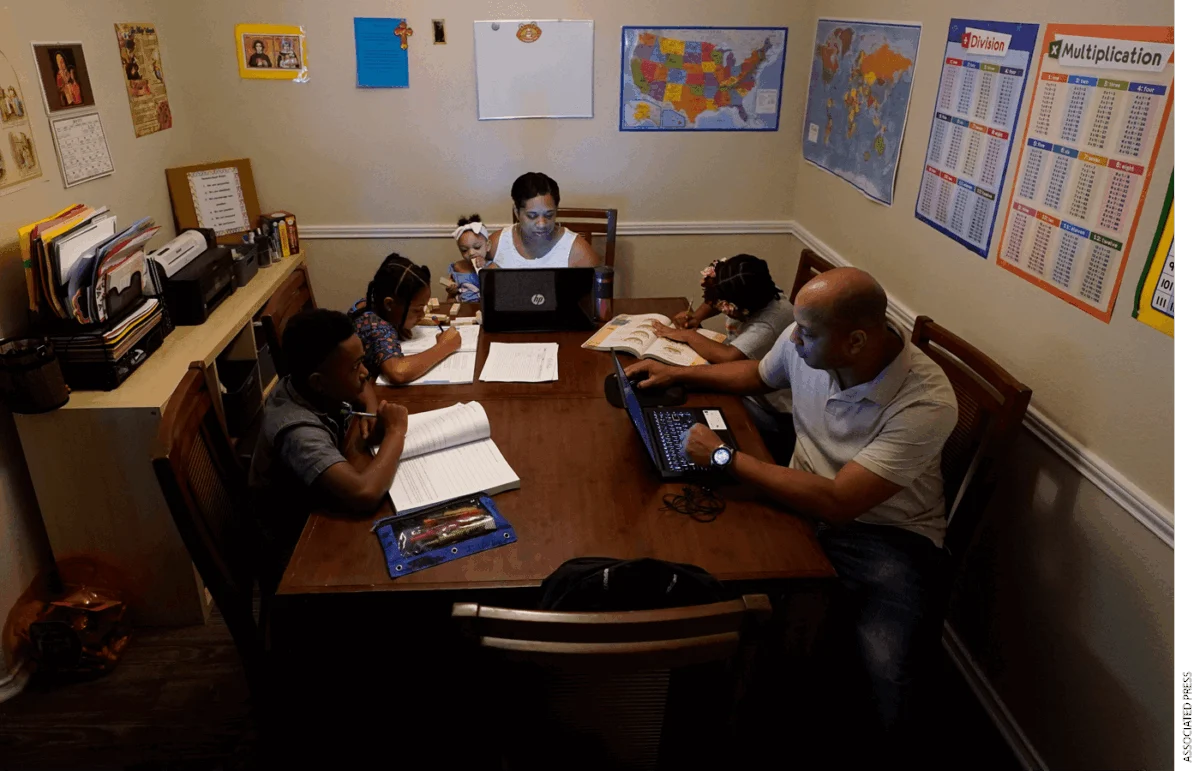
In a significant departure from decades of administrative resistance, public school district leaders across the United States are increasingly viewing the expansion of school choice not as an existential threat to be eliminated, but as a critical source of market data. As homeschooling rates remain at historic highs and state-level support for vouchers and Education Savings Accounts (ESAs) continues to grow, a new vanguard of forward-thinking superintendents is beginning to treat parental exit as a signal for systemic reform. This shift represents a fundamental transformation in the American educational landscape, where public districts are transitioning from geographic monopolies to competitive service providers.
The current movement is characterized by a "competitive adaptation" strategy. In rural North Carolina, public districts are experimenting with microschool models that integrate artificial intelligence into middle school curricula and offer vocational training through student-managed entrepreneurial ventures, such as operating local Airbnbs. Similarly, in rural Indiana, district leaders have responded to the rise of homeschooling by launching nature-based public microschools designed to retain families who find traditional "brick-and-mortar" environments ill-suited for their children’s needs. These initiatives suggest that the boundary between "public school" and "alternative education" is becoming increasingly porous.
The Post-Pandemic Shift: A Chronology of Educational Volatility
The current climate of competition is the result of a multi-year trajectory that accelerated during the global health crisis of 2020. Before the pandemic, school choice was largely a matter of policy debate centered on charter school caps and limited voucher programs. However, the period between 2020 and 2026 has redefined the relationship between families and the public system.
In 2020, the onset of the COVID-19 pandemic forced millions of families into "crisis homeschooling" or remote learning. This period served as a mass-market trial for alternative educational delivery. While many expected a full return to traditional enrollment by 2022, the data suggests otherwise. By 2023, several states, including Florida, Arizona, and West Virginia, passed "universal" school choice legislation, decoupling state funding from physical district attendance and allowing it to follow the student via ESAs.
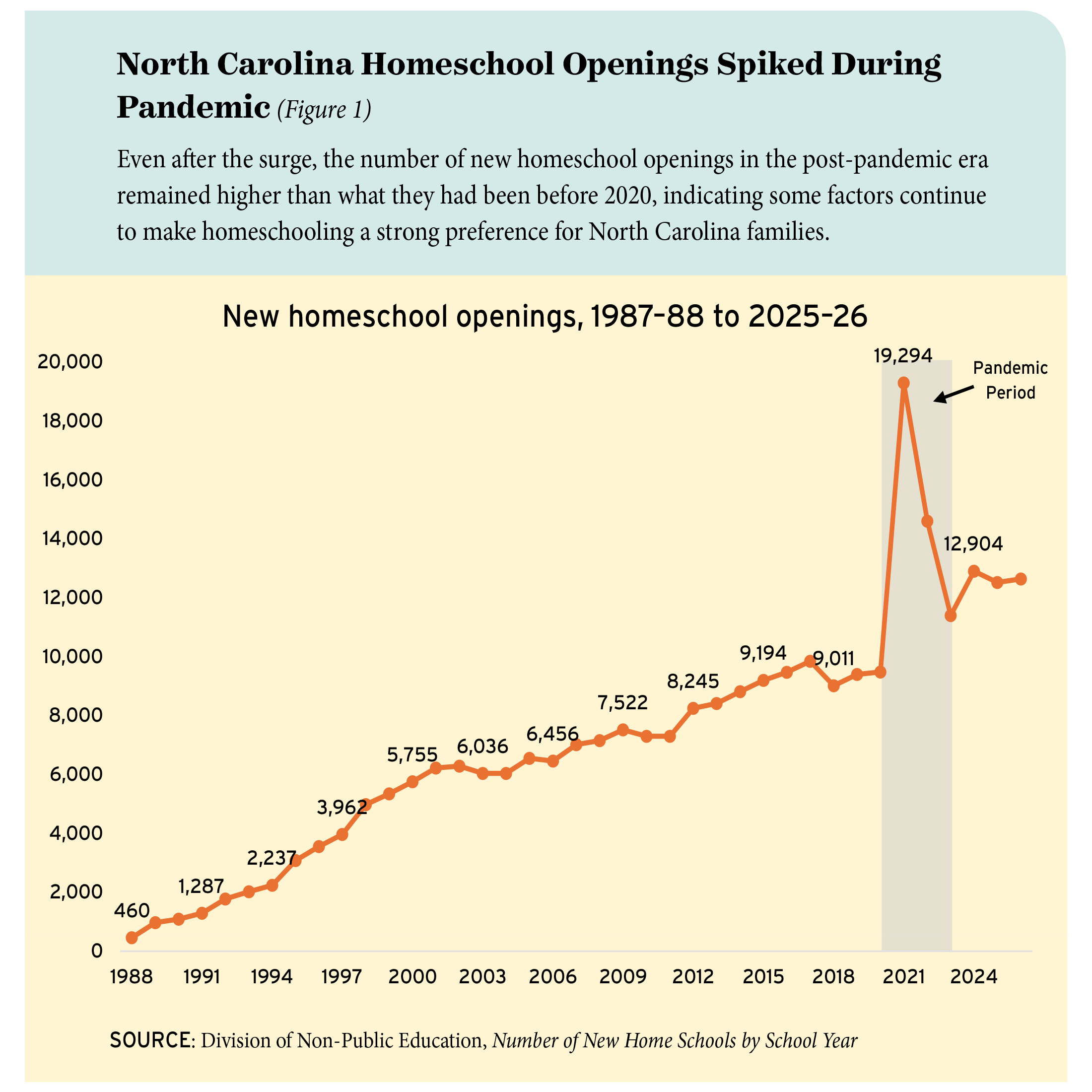
By the 2025–26 school year, the results of this shift became undeniable. In North Carolina, a state often cited as a bellwether for national trends, homeschooling numbers reached 95,190 individual schools serving an estimated 152,897 students. Although the initial spike occurred during the 2020–21 academic year—surging from approximately 9,400 to over 19,000 new openings—the 2025–26 data shows that new homeschool registrations remain elevated at 12,643 annually, a figure significantly higher than pre-pandemic benchmarks. This chronology indicates that the movement away from traditional public schools is not a temporary artifact of the pandemic, but a structural realignment of parental preferences.
Decoding the Data: Why Families Are Choosing "Different"
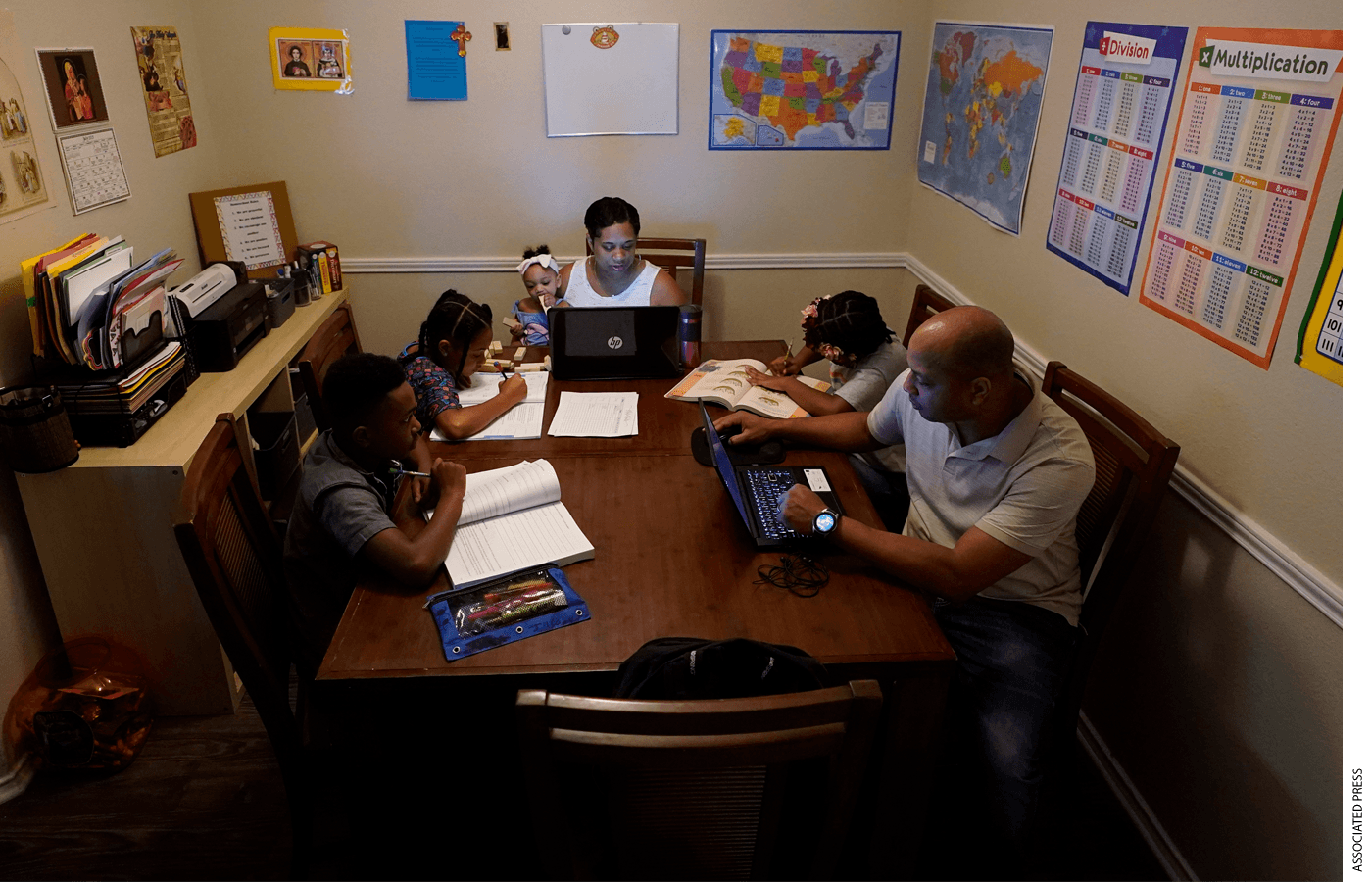
To understand this realignment, researchers and policymakers are looking closely at the stated motivations of parents. North Carolina’s registration process provides a unique window into these drivers by asking parents to identify their primary reason for choosing homeschooling. The data from the 2025–26 academic year reveals a stark reality for public administrators.
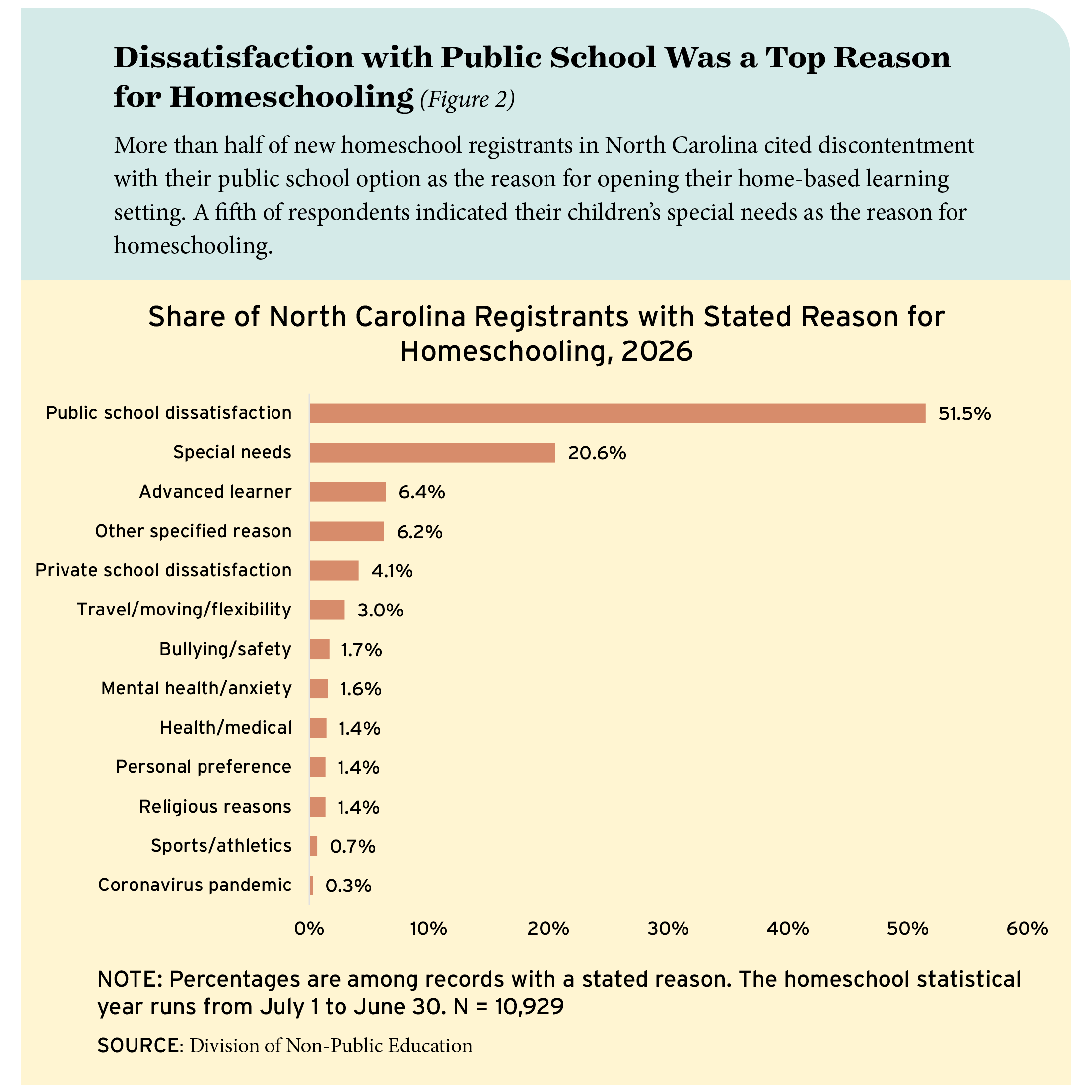
According to state records, 51.5 percent of parents who provided a reason for homeschooling cited "dissatisfaction with the public school system." This represents a massive increase from the 25.6 percent recorded in 2020–21. Perhaps most tellingly, public school dissatisfaction was reported to be 12 times more common than private school dissatisfaction (4.1 percent). Other significant drivers included:
- Special Needs Support: 20.6 percent of parents cited the need for individualized instruction for children with special needs.
- Advanced Learners: 6.4 percent moved to homeschooling to accommodate children who required more rigorous or specialized academic pacing.
- Safety and Culture: Smaller but significant cohorts cited bullying, mental health concerns, or a desire for religious-based instruction.
The evolution of these responses suggests that while the pandemic initially drove families away due to health concerns and school closures, the current exodus is fueled by a deeper, more enduring critique of public school efficacy, safety, and flexibility.
Strategic Responses from District Leadership
Rather than lobbying for legislative restrictions on choice, several prominent district leaders are advocating for a more "customer-centric" approach. West Virginia Board of Education President Paul Hardesty recently articulated this new reality, stating that public schools are "competing for enrollment, whether we want to believe it or not." Hardesty’s solution is for districts to become more "accommodating, receptive, and accessible."
Practical applications of this philosophy are emerging nationwide:
- Career-Connected Pathways: In Alabama, Jefferson County Superintendent Walter B. Gonsoulin Jr. has overseen the launch of more than 20 high school career academies. These programs allow students to earn industry-recognized certifications alongside their diplomas, directly competing with private vocational alternatives.
- Marketing and Outreach: Districts like Des Moines, Iowa, have begun employing sophisticated data analytics to track exactly when and why families leave. This information is used to fuel marketing campaigns that highlight the specific strengths of public offerings, such as extracurricular diversity and specialized AP programs.
- The "Find Your Fit" Initiative: North Carolina’s Department of Public Instruction has launched a comprehensive "Find Your Fit, Build Your Future" campaign. This initiative rebrands the public system as a suite of choices, highlighting magnet schools, early college high schools, and Career and Technical Education (CTE) credentials.
These responses indicate that when public schools are forced to compete, they often innovate, creating specialized environments that were previously the sole domain of the private sector.
Official Perspectives and the Role of Parental Voice
The shift toward a more responsive public system is also being institutionalized through new advisory structures. In North Carolina, Superintendent Maurice "Mo" Green recently established a statewide Parent Advisory Council. This follows the groundwork laid by former Superintendent Catherine Truitt, whose commission included representatives from the charter, private, and homeschool sectors.
The rationale behind including homeschool and private school parents in public school advisory boards is pragmatic. As Truitt noted, to remain the "first choice" for families, the public system must understand the specific reasons why families are choosing to opt out. By listening to the concerns of those who have already left, districts can identify "blind spots" in their service delivery—whether those involve a lack of academic rigor, insufficient support for neurodivergent students, or a school culture that parents find unappealing.
However, many experts, including Anna J. Egalite of North Carolina State University, argue that the current data collection is still too broad. Egalite suggests that states should refine homeschool registration to include more granular, optional questions. If a parent selects "dissatisfaction," districts need to know if that dissatisfaction stems from academic standards, school safety, a perceived lack of transparency, or the absence of flexible scheduling.
Analytical Implications: The Future of the Public-Private Hybrid
The long-term implications of this trend point toward a more fragmented and specialized educational market. As public schools adopt the features of microschools and career academies, the traditional definition of a "district school" is being rewritten.
1. Funding and Resource Allocation:
The continued rise of school choice will likely put pressure on traditional funding formulas. Districts that fail to adapt may face "enrollment cliffs," leading to school closures and budget shortfalls. Conversely, districts that successfully innovate may find themselves attracting students across district lines, effectively operating like public-sector "brands."
2. The End of the Geographic Monopoly:
For over a century, the primary advantage of public schools was their geographic convenience. With the rise of virtual learning, microschools, and state-funded ESAs, geography is no longer a guaranteed barrier to exit. This forces public schools to compete on quality, culture, and specific outcomes rather than just proximity.
3. Data-Driven Governance:
The future of public school administration will likely rely more heavily on market research and parental feedback loops. The "one-size-fits-all" model is being replaced by a "portfolio" model, where a single district may oversee a variety of different school types—from traditional labs to AI-driven microschools—to meet the diverse needs of its population.
Conclusion
The evidence from North Carolina and other pioneering states suggests that the "school choice" movement has moved past the point of ideological debate and into the realm of permanent market reality. Public school leaders who embrace this reality are discovering that competition can be a catalyst for long-overdue improvements in transparency, flexibility, and academic specialization.
By viewing homeschoolers and private school families not as "lost" students, but as a "focus group" of dissatisfied customers, the public system has an opportunity to reinvent itself. The ultimate success of the public education system in this new era will depend on its ability to stop viewing parents as a captive audience and start treating them as stakeholders with the power to take their children—and their funding—elsewhere. As the 2025–26 data clearly shows, when families are given the option to seek "different," they will do so in record numbers unless the public system can prove it is the best fit for their child’s unique future.

