
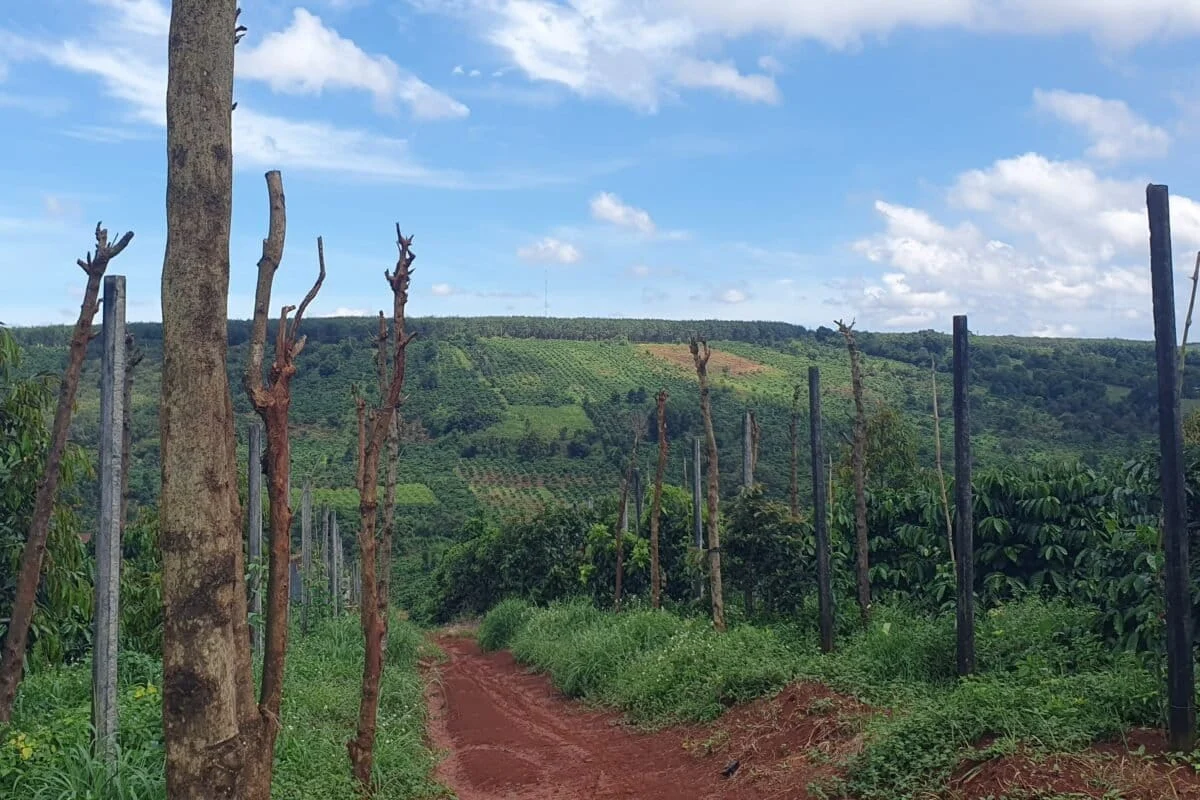
The rapid expansion of the global coffee trade has come at a staggering environmental cost for Southeast Asia, with a new investigation by the Berlin-based watchdog group Coffee Watch revealing that decades of unchecked deforestation for coffee production have devastated the Central Highlands of Vietnam. As the world’s second-largest coffee producer and the primary source of the planet’s Robusta supply, Vietnam has undergone a radical landscape transformation that now threatens the very industry that drove its economic rise. The investigation, which synthesized satellite imagery, government records, and historical land-use data, paints a sobering picture of an ecological crisis decades in the making, where nearly half of the region’s forest cover has vanished to make way for the bean that fuels the world’s mornings.
Vietnam’s rise to coffee prominence is a relatively recent phenomenon in the context of global agricultural history. Today, the nation supplies nearly 40% of the world’s exports of Robusta coffee (Coffea canephora), a hardier, more caffeine-rich variety often used in instant coffee and espresso blends. However, this productivity has been achieved through a massive conversion of primary and secondary tropical forests into monoculture plantations. According to the Coffee Watch report, forest cover in the Central Highlands—a region responsible for 95% of the country’s coffee output—plummeted from 42.8% in 1990 to just 19% by 2020. This loss represents one of the most concentrated periods of land-use change in the region’s history, leaving behind a fragmented landscape that is increasingly vulnerable to the effects of climate change.
A Chronology of Rapid Expansion and Forest Loss
The timeline of Vietnam’s coffee boom is inextricably linked to the country’s "Doi Moi" economic reforms initiated in the late 1980s. Prior to this period, coffee production was a relatively minor component of the national economy. However, as the government sought to integrate Vietnam into the global market, the Central Highlands were identified as a prime location for agricultural development due to their fertile volcanic soils and favorable climate.
The most aggressive period of forest clearing occurred between 1995 and 2010. During these fifteen years, global demand for Robusta coffee surged, and Vietnam positioned itself to meet that demand. High coffee prices on the international market, combined with government-sponsored migration programs that moved hundreds of thousands of people from the northern provinces to the Central Highlands, created a "coffee rush." This era saw the conversion of vast tracts of tropical moist forest into agricultural plots. By the time the rate of deforestation began to stabilize at lower levels in the 2020s, the damage was largely irreversible.
Today, the investigation finds that the remnants of the region’s tropical moist forests are confined to steep, inaccessible terrain. These remaining pockets of biodiversity are often found only at high elevations or within the boundaries of formally designated protected areas, where the rugged geography provides a natural barrier against further encroachment. However, even these areas remain under pressure as the search for fertile soil continues.
The Ecological Toll: The Nutrient Treadmill and Habitat Fragmentation
The environmental consequences of this rapid transition from forest to monoculture are multifaceted and severe. One of the most critical issues highlighted by Coffee Watch is the phenomenon known as the "nutrient treadmill." In a natural forest ecosystem, nutrients are cycled through the soil by a diverse array of plant and animal life. When these forests are cleared for coffee, the soil is initially rich, but intensive monoculture farming quickly exhausts its natural fertility.
To maintain the high yields required for economic viability, farmers are forced to apply increasing amounts of chemical fertilizers and pesticides. This creates a cycle of dependency: as the soil health declines, the amount of fertilizer required increases, which in turn further degrades the soil’s biological health. This exhausted soil is also more prone to erosion, particularly on the sloped terrain of the Central Highlands. Without the root systems of native trees to hold the earth in place, heavy tropical rains wash away the topsoil, leading to sedimentation in local waterways and a permanent loss of agricultural productivity.
Furthermore, the loss of forest cover has disrupted the regional hydrological cycle. Forests act as natural sponges, absorbing rainwater and slowly releasing it into the ground to recharge aquifers and maintain steady river flows. With the forests gone, the region has experienced more frequent cycles of flash flooding and severe drought. This water instability is a direct threat to coffee production itself, which requires significant irrigation during the dry season.
Policy Drivers and International Financing
The investigation by Coffee Watch does not place the blame solely on individual farmers. Instead, it points to a systemic failure involving government policy and international development financing. In the 1990s and early 2000s, international lenders and development agencies provided significant financial support to modernize Vietnam’s agricultural sector. Much of this funding was directed toward the expansion of the coffee industry, often without adequate environmental safeguards or long-term land-use planning.

Government policies during this era prioritized rapid economic growth and poverty reduction through export-oriented agriculture. While these policies were successful in lifting millions of people out of poverty and making Vietnam a global economic player, they often overlooked the environmental externalities. The lack of clear land-tenure rights also contributed to the problem, as farmers often cleared forest land to establish a presence and claim ownership, a practice that was frequently overlooked by local authorities in the interest of boosting production quotas.
The Impending Climate Crisis and the Robusta Belt
Perhaps the most alarming finding in the report is the vulnerability of the remaining coffee industry to climate change. The Central Highlands are already feeling the effects of rising temperatures and erratic rainfall patterns. Coffee Watch warns that approximately 50% of Vietnam’s current Robusta-growing areas could become unsuitable for coffee production in the coming decades if current climate trends continue.
The loss of forest cover has exacerbated these risks. Forests provide a cooling effect through evapotranspiration and shade, creating a microclimate that can buffer coffee plants against heatwaves. In the absence of these natural buffers, coffee trees are directly exposed to extreme weather. The report notes that the synergy between deforestation and climate change is creating a "perfect storm" that could lead to widespread crop failures and economic instability for the 600,000 smallholder farmers who depend on coffee for their livelihoods.
Shifting Toward Sustainability: Industry and Expert Reactions
In response to the findings, industry experts and environmental organizations are calling for a fundamental shift in how coffee is produced in Vietnam. Ly Thi Minh Hai, the Vietnam country director at the international environmental nonprofit RECOFTC, acknowledged the historical role of coffee in driving forest loss but emphasized that the sector is currently in a state of transition.
"Vietnam’s coffee sector should not be defined by the deforestation challenges of the past," Minh Hai stated. She noted that the current focus is shifting toward "improving the productivity, resilience, and sustainability of existing coffee-growing landscapes" rather than expanding into new areas. According to Minh Hai, this transition involves moving away from monoculture and toward agroforestry—a practice where coffee is grown alongside shade trees and other crops.
This approach offers multiple benefits: shade trees help regulate temperature, improve soil health through leaf litter, and provide farmers with additional sources of income, such as fruit or timber. RECOFTC is currently working with local communities to secure forest tenure, which they believe is the foundation for preventing further encroachment. By giving local people legal rights to manage their forests, there is a greater incentive to protect them from illegal clearing.
The Path Forward: Managing Existing Landscapes
The future of the Vietnamese coffee industry likely depends on its ability to adapt to a new regulatory and environmental reality. The European Union, a major market for Vietnamese coffee, has recently introduced the EU Deforestation Regulation (EUDR), which requires companies to prove that their products—including coffee—were not grown on land deforested after December 31, 2020. This regulation is putting immense pressure on the Vietnamese government and exporters to improve traceability and ensure that no further forest is lost.
To meet these challenges, the Vietnamese coffee sector is being urged to adopt "climate-smart" and regenerative farming practices. This includes rejuvenating aging plantations that are currently producing low yields and introducing more efficient irrigation systems to cope with water scarcity. The goal is to produce "more with less"—increasing the value and quality of the coffee produced on existing land rather than seeking to increase the quantity through land expansion.
As Minh Hai concluded, "The future of Vietnam’s coffee sector will not be measured by how much land we cultivate, but by how well we manage the landscapes we already have." The findings of the Coffee Watch report serve as a stark reminder that the era of unchecked expansion is over, and the survival of one of the world’s most vital coffee regions now depends on its ability to heal the very environment it once exploited.

