

The Paradigm Shift in School Discipline
For much of the 20th century, school discipline was viewed through a lens of authority and accountability. Drawing on the "Common School" traditions of the 19th century, educators generally believed that schools were social institutions designed to induct children into the norms of civil society. In this model, rules were clear, and infractions carried predictable consequences intended to reinforce the boundary between acceptable and unacceptable behavior.
However, over the last two decades, a significant shift has occurred. Influenced by movements such as restorative justice and trauma-informed care, many school districts have moved away from punitive measures like suspension and detention. Instead, they have adopted frameworks that prioritize understanding the underlying causes of student misconduct. Nathan Maynard’s The Science of Discipline serves as a modern manifesto for this movement. Maynard posits that most behavioral problems are not signs of character failure or defiance but are "clues" to missing skills, unmet needs, or emotional overload.
Under this "diagnostic" model, the teacher’s role shifts from an enforcer of rules to a mentor and guide. If a student is disruptive, the goal is not merely to stop the behavior but to understand what the student is struggling to express. This philosophy suggests that by removing the "heavy hand" of authority and replacing it with curiosity and empathy, a child’s better instincts will naturally emerge.
Chronology of Educational Philosophy and Discipline Trends
The current tension in American schools is the result of a long-standing philosophical evolution. Understanding this timeline is crucial for contextualizing the debate surrounding Maynard’s work:
- The Enlightenment Roots (18th Century): The roots of the "student-centric" approach can be traced back to Jean-Jacques Rousseau, who argued in Emile that children are naturally good and that society’s institutions are what corrupt them. This stands in direct contrast to the Madisonian view—as expressed by James Madison in Federalist No. 51—that institutions are necessary because human beings are not inherently "angels."
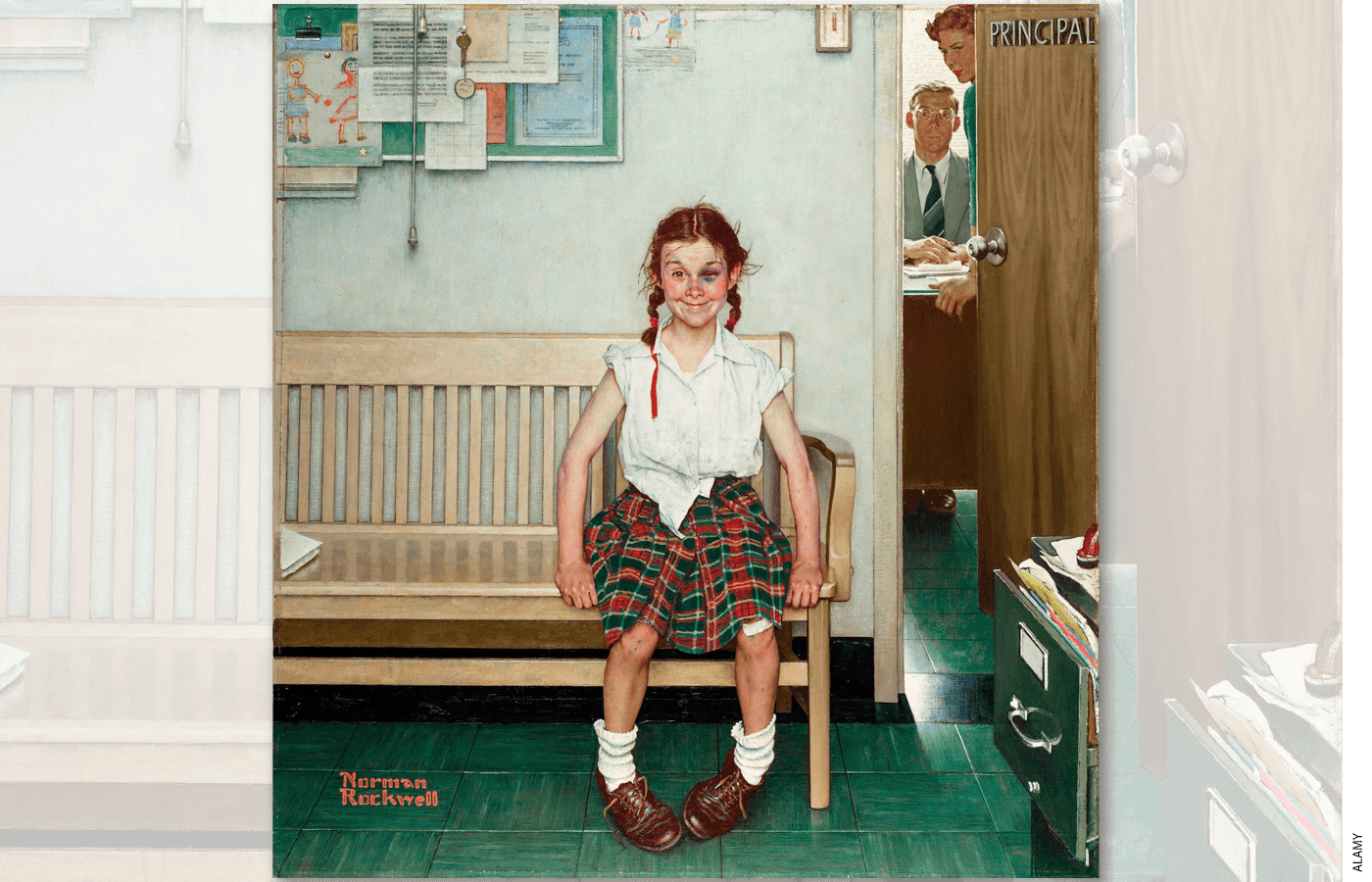
- The Traditional Era (1950s-1980s): Exemplified by the imagery of Norman Rockwell, this era emphasized the "Young Lady with the Shiner" dynamic—where adults provided a firm but fair framework of authority. Discipline was viewed as an external tool used to build internal self-command.
- The Zero-Tolerance Movement (1990s-early 2000s): In response to rising concerns about school safety, many districts adopted "zero-tolerance" policies. This era saw a sharp increase in suspensions and expulsions, which critics argued led to the "school-to-prison pipeline," particularly affecting minority students.
- The Restorative Justice Turn (2010s-Present): During the Obama administration, federal guidance encouraged schools to find alternatives to exclusionary discipline. This led to the widespread adoption of Social-Emotional Learning (SEL) and restorative practices, focusing on repairing harm and building relationships.
- The Current Re-evaluation (2020s): Post-pandemic, many schools have reported a surge in behavioral issues and violence. This has led to a growing pushback against restorative models, with some educators and parents calling for a return to clearer consequences and more traditional "character-based" discipline.
Supporting Data: The Rise of the Therapeutic Classroom
The shift toward the models Maynard describes is supported by significant financial and institutional momentum. According to market research by Tyton Partners, the U.S. market for Social-Emotional Learning (SEL) reached approximately $1.72 billion in 2021, a 45% increase over just a few years. This growth reflects a systemic commitment to the idea that emotional regulation and behavioral "skills" are as central to schooling as academic subjects.
However, data on the effectiveness of these shifts remains mixed. A 2019 study by the RAND Corporation found that while restorative practices improved school climate in some instances, they did not consistently lead to improved academic outcomes and, in some cases, were associated with a decrease in math scores for certain student populations. Furthermore, teacher surveys often reveal a disconnect; a 2023 survey by the EdWeek Research Center found that only 23% of teachers felt that restorative justice was "very effective" at improving student behavior, with many citing a lack of resources and the "removal of consequences" as primary frustrations.
The Core Argument: Diagnosis vs. Formation
Critics of the Maynard approach, such as Robert Pondiscio of the American Enterprise Institute, argue that the "science" of discipline often functions as a "bait-and-switch." While the framework promises neurological insights, it is fundamentally a moral philosophy. The primary critique is that by treating every instance of misconduct as a "skill gap" or an "unmet need," schools are abdicating their responsibility to form student character.
Pondiscio and other traditionalists argue that behavior is not always "communication"—sometimes it is simply a choice. When a student cuts in line, torments a classmate, or defies a teacher, it may not be because they lack the "skill" of cooperation, but because they are succumbing to ordinary human temptations of selfishness or cruelty.
The traditionalist view emphasizes two key concepts:

- Accountability as Education: Learning that choices carry costs (such as detention or loss of privileges) is a vital part of growing up. These "manageable forms of discomfort" help students internalize the reality that they are responsible for their actions.
- The Observer Effect: Discipline is never just about the interaction between one adult and one child. Every other student in the classroom is watching. If a disruptive student is "rewarded" with a leadership role or a "replacement skill" session instead of a corrective consequence, it signals to the rest of the class that misconduct earns status and attention.
Official Responses and Stakeholder Perspectives
The debate has drawn responses from across the educational and political spectrum.
Proponents of Restorative Models: Advocates like Nathan Maynard argue that traditional discipline relies on "shame and fear," which "kills curiosity and smothers empathy." They contend that for students who have experienced trauma, punitive measures only exacerbate their distress, making the classroom an unsafe environment for learning. They see the teacher as a "diagnostician" who must look beneath the surface to find the "why" behind the "what."
Teacher Unions and Practitioners: Organizations like the American Federation of Teachers (AFT) have expressed a nuanced view. While supporting the goals of restorative justice, AFT President Randi Weingarten has frequently noted that these programs are often "dumped" on teachers without the necessary staffing or training, leading to chaotic environments where teachers feel they have lost the authority to maintain order.
Economic and Sociological Perspectives: Economists George Akerlof and Rachel Kranton provide a third lens through their work on "Identity and Schooling." They argue that schools are social institutions that shape a student’s identity. In their view, students are motivated by the "social roles" they inhabit—such as "scholar" or "leader." They suggest that the most effective discipline system is not one based on endless negotiation, but a "shared culture" where good conduct carries status and self-command earns respect.
Broader Impact and Implications for the Future
The outcome of this debate will have profound implications for the future of American civil society. If schools continue to move toward a therapeutic model, the primary "product" of the education system may shift from the "informed citizen" to the "self-regulated individual."

The Madisonian perspective reminds us that a free society depends on citizens who are capable of governing themselves. If schools stop teaching the habits of self-command and the acceptance of shared norms, they may fail in their most fundamental civic duty. As Pondiscio notes, the central question of school discipline cannot be what makes adults feel "humane" in the moment; it must be what best serves children over the long term.
A healthy school environment likely requires a synthesis of both approaches. Educators must be capable of understanding the trauma and needs of individual children (the diagnostic), but the institution must remain capable of upholding the standards and habits required for life in a community (the formative). The challenge for modern schools is to recognize that behavior can be both "communication" and "character in embryo"—and that treating it as one while ignoring the other is a disservice to the student and society alike.
As the 2026 academic year approaches, school boards and policymakers are increasingly under pressure to find a middle ground that restores order to classrooms while maintaining the dignity of every student. The success of this effort will depend on whether schools can move beyond the "false choice" between permissiveness and punishment, landing instead on a model that builds character through both empathy and accountability.

