
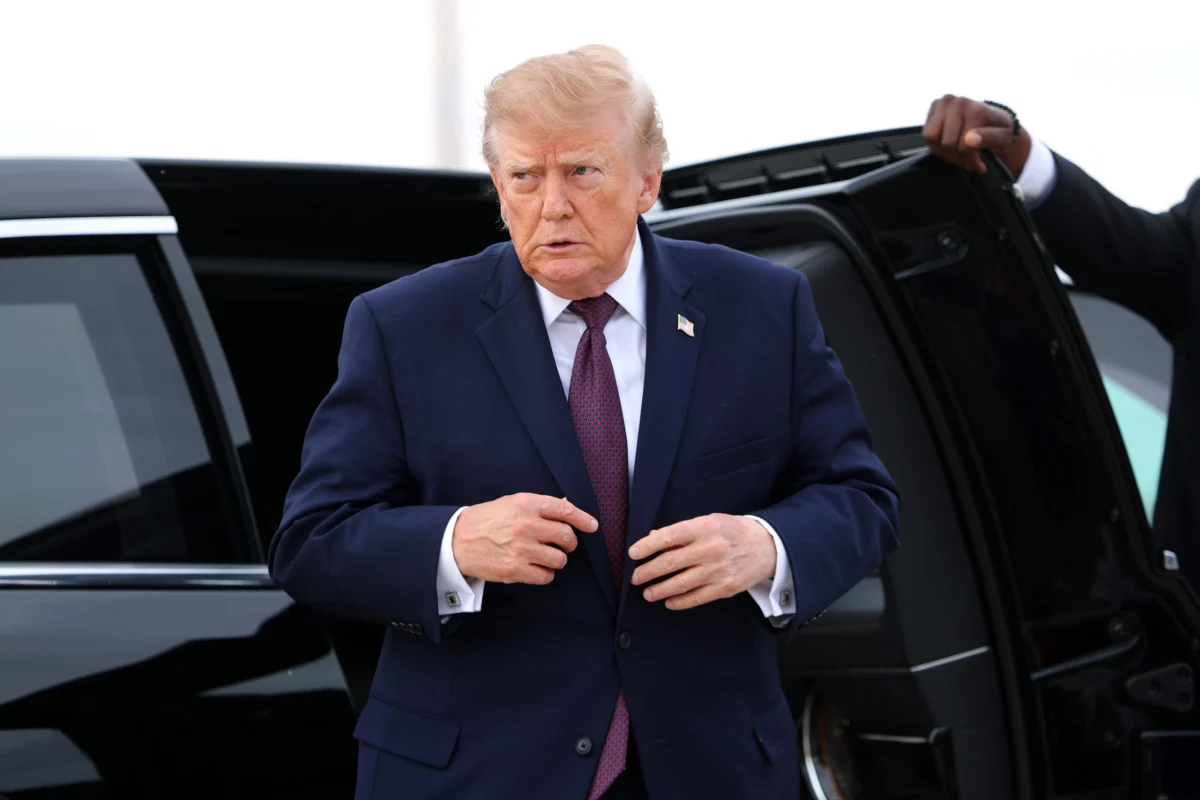
The modern American political landscape is increasingly defined by a profound departure from the post-war tradition of peaceful power transitions. As the 2026 midterm elections approach, the intersection of federal executive action, heightened scrutiny of voting procedures, and deep-seated ideological polarization has prompted political scientists and historians to draw unsettling parallels to the volatile era of Reconstruction. Recent federal directives, including executive orders targeting voter rolls and Department of Justice investigations into electoral administration, have ignited a national debate over the extent to which the federal government should intervene in state-run elections.
The Evolution of Election Oversight
In recent months, President Trump has utilized executive authority to address concerns regarding election integrity, specifically targeting perceived vulnerabilities in blue-state voting systems. These efforts include mandates for more aggressive purging of voter registration rolls and heightened federal monitoring of poll workers. Critics argue that these measures serve to intimidate election officials and undermine public confidence in democratic outcomes. Proponents, however, maintain that these actions are necessary to preemptively secure the ballot box against potential fraud, citing concerns that have become central to the current administration’s platform.
The Department of Justice has also expanded its reach, initiating investigations into outcomes in key jurisdictions. This shift marks a departure from traditional federal restraint, where the responsibility for election administration primarily rested with state and local governments. As these investigations intensify, legal scholars have expressed concern that the politicization of the Department of Justice could establish a precedent for future administrations to preemptively invalidate results that do not align with their political objectives.
A Historical Precedent: The Reconstruction Era
To understand the potential gravity of the current political climate, historians often look back to the 1870s, a decade marked by the violent aftermath of the Civil War and the collapse of federal oversight in the South. The Colfax Massacre of 1873 serves as a sobering case study in the consequences of disputed election results. Following the 1872 gubernatorial race in Louisiana, where pro-civil-rights Republican William Pitt Kellogg faced anti-civil-rights Democrat John McEnery, the refusal to accept defeat triggered widespread instability.
The resulting violence reached a zenith on Easter Sunday, 1873, in Colfax, Louisiana. A white militia, seeking to overthrow the Reconstruction government, besieged a courthouse defended by Black citizens and state militia members. The ensuing massacre resulted in the deaths of over 100 Black men. This event was not merely a local skirmish but a symptomatic failure of the federal government’s ability to enforce democratic mandates in the face of insurrectionist sentiment.
The political instability in Louisiana persisted throughout the decade. Kellogg’s tenure was plagued by constant challenges from the state legislature, eventually leading to his impeachment. The eventual resolution, the Compromise of 1877, involved the withdrawal of federal troops from the South in exchange for the presidency of Rutherford B. Hayes. This withdrawal effectively signaled the end of Reconstruction and ushered in the era of Jim Crow, characterized by systemic disenfranchisement and state-sanctioned segregation.
The Long-Term Impact of Disputed Authority
The systemic erosion of voting rights following the Compromise of 1877 provides a blueprint for how political instability can solidify into institutional inequality. By 1890, states across the South began codifying discriminatory practices, such as the Separate Car Act in Louisiana, which mandated racial segregation in public transportation. This law became the focal point for the 1896 Supreme Court case Plessy v. Ferguson, which established the "separate but equal" doctrine.
The impact on education was particularly profound. As states adopted compulsory education laws, the legal framework of segregation was applied to school systems. In Louisiana, the adoption of these laws in 1912 cemented a dual-education system that would persist for decades, depriving generations of Black students of equitable resources and opportunities. The historical trajectory from disputed election outcomes to the codification of segregation highlights the danger of allowing partisan recalcitrance to dismantle established democratic guardrails.
Implications for Modern Public Education
The current political volatility carries significant implications for the American education system, which serves as both a primary battleground for cultural debates and a reflection of societal divisions. Observers note that the politicization of election results could exacerbate existing disparities in school funding and curriculum content.
There is mounting concern that the 2026 midterms will intensify the movement toward unregulated privatization. If election outcomes are increasingly treated as contested, the stability of educational funding—often dependent on local and state tax levies—could be jeopardized. Furthermore, the politicization of curricula, including how history is taught and how schools manage the needs of diverse student populations, suggests that the "great equalizer" of American society faces a period of unprecedented turbulence.
If state legislatures mirror the obstructionism of the 1870s, the potential for a "separate and unequal" education system becomes a tangible risk. Analysts suggest that if political trust continues to evaporate, the nation may witness a widening chasm in educational quality between states that prioritize public equity and those that lean into ideological restructuring.
Data and Expert Perspectives
Political analysts emphasize that the threat to democratic stability is not merely a matter of partisan rhetoric but a structural concern for financial and social institutions. A report from the Center for Educational Equity notes that when the legitimacy of an election is questioned, the subsequent policy shifts often lead to "political gaslighting," where data and facts are secondary to partisan narrative.
Data regarding school funding disparities already indicate a trend of geographical polarization. States that have adopted aggressive school choice and voucher programs often see a redirection of funds away from traditional public school districts. When this is coupled with the current climate of distrust in federal and state oversight, the long-term impact on student outcomes remains a primary concern for educators and policy analysts alike.
Looking Toward 2026
The consensus among experts is that the stability of the 2026 midterm elections will depend on three fundamental pillars: the acceptance of electoral results regardless of the winner, the defense of voting rights against partisan limitation, and the preservation of the judiciary’s role as an independent arbiter.
The risk of repeating the history of the 1870s lies in the potential for political actors to prioritize short-term power gains over the long-term health of the union. If the tradition of peaceful transition is replaced by a cycle of suspicion and retaliation, the potential for civil unrest increases. As the nation approaches these midterms, the memory of events like the Colfax Massacre remains a warning of what can happen when democratic institutions lose their ability to mediate conflict.
The challenge for the American electorate and its leaders is to distinguish between legitimate oversight and the destabilizing influence of political recalcitrance. The preservation of the union, and the integrity of the institutions that support it—including the education system—depends on a collective commitment to the rules of the democratic process. Without this, the country risks sliding into an era of deeper division, where the institutions intended to unite the citizenry instead serve to keep it separate, unequal, and in a state of perpetual crisis.
As voters prepare for the upcoming cycle, the focus remains on whether the current political environment can be stabilized through the strengthening of independent institutions, or whether the country is headed toward a defining moment of systemic failure. The historical record suggests that the consequences of such failure are not easily reversed, and the toll on the nation’s social fabric can last for generations.

