
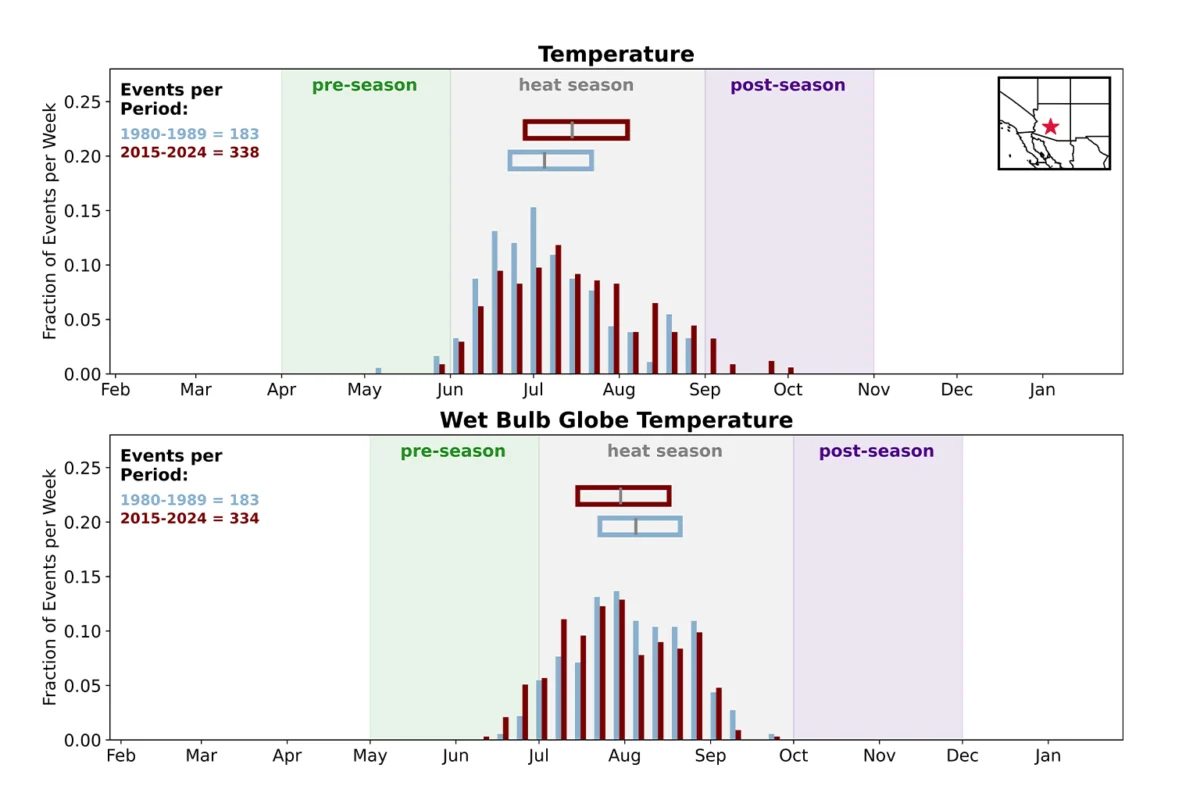
The predictable rhythm of the seasons—a cycle that has defined agricultural, economic, and social life for millennia—is fracturing under the pressure of global climate change. For generations, temperate regions followed a reliable progression: the thawing of winter, the vitality of spring, the intensity of summer, and the transition of autumn. However, a landmark study published in the journal AGU Advances has confirmed that this cyclical stability is being dismantled. Researchers analyzing over four decades of global weather records have identified a profound transformation in the planetary climate, characterized by the expansion of summer-like conditions and a dangerous, non-uniform surge in extreme heat that is increasingly encroaching upon the spring and autumn months.
The research, led by climatologist Casey Ivanovich of the NASA Goddard Institute for Space Studies, in collaboration with Benjamin Cook of Monash University and Sonali Shukla McDermid of New York University, paints a sobering picture of a world where seasonal norms are becoming relics of the past. By isolating the hottest 5% of daily temperatures across the globe from 1980 through the present, the team has provided empirical evidence that the "shoulder seasons" are rapidly losing their temperate character.

A Data-Driven Analysis of Global Warming Trends
To understand the scope of this shift, the research team utilized comprehensive datasets from both NASA and the European Centre for Medium-Range Weather Forecasts. The study focused on two primary metrics: maximum ambient air temperature, which defines dry heat, and wet-bulb temperature, which provides a measure of humid heat. The results are stark: over half of the planet’s surface area has experienced a significant lengthening of the dry heat season, while nearly half has seen an equivalent extension in the humid heat season compared to the 1980-1989 baseline.
This expansion is not a global monolith. The study highlights that the shift is asymmetric, manifesting differently depending on geographical location. While Western Europe, southern Africa, and portions of northwest India are enduring earlier, more aggressive springs, regions such as eastern China, northern Africa, eastern Europe, and the western United States are finding that the summer heat is lingering well into the fall. This geographic variability suggests that while anthropogenic climate change is the primary driver of the increase in frequency and intensity of heatwaves, regional feedback loops and localized atmospheric dynamics are dictating the specific timing and severity of these impacts.
The Human Toll and Health Implications
The transition from a four-season cycle to an extended summer of extreme heat carries severe consequences for public health. Erica Fleishman, director of the Oregon Climate Change Research Institute, notes that the human body possesses a limited capacity to adapt to rapid, sustained environmental changes. While extreme dry heat poses significant risks, the increase in humid heat is particularly alarming.

When humidity levels rise, the human body’s primary cooling mechanism—evaporative cooling through sweat—becomes ineffective. The body becomes trapped in a feedback loop of rising internal temperatures, significantly increasing the incidence of heat stress, heat exhaustion, and fatal heat stroke. Between 2000 and 2019, an estimated 489,000 heat-related deaths occurred annually worldwide. Alarmingly, 45% of these fatalities were concentrated in Asia, with another 36% in Europe. With the 2026-2027 El Niño cycle exacerbating these trends, some projections suggest that an additional 451,000 heat-related deaths could occur during this specific period compared to historical averages, underscoring the urgent need for a shift in public health policy.
Ecological and Economic Consequences
Beyond the immediate human health impact, the encroachment of summer into the shoulder seasons is wreaking havoc on agriculture and ecosystem stability. The phenomenon of "dry heat" serves as a major stressor for plant life. As the atmosphere becomes increasingly arid during what were once cooler months, vegetation faces heightened water demand and soil moisture depletion. This results in reduced crop yields, lowered forest productivity, and, in severe instances, mass vegetation mortality.
Furthermore, the extension of the heat season significantly alters the risk profile for natural disasters. In the western United States, the convergence of late-season heat and historical wildfire patterns has led to a lengthening and intensification of the fire season. The consequences of this are twofold: the direct destruction caused by wildfires and the secondary public health crisis caused by the inhalation of wildfire smoke. In regions like the Pacific Northwest, where the healthcare system was historically designed to handle winter surges of influenza and respiratory infections, hospitals are now seeing a secondary, summer-season surge in respiratory patients due to smoke exposure.

The intensification of heat is also affecting the Atlantic hurricane season. As ocean temperatures rise, hurricanes gain more fuel, leading to more powerful, destructive storm systems. The long-term impacts of these storms—ranging from post-traumatic stress disorder in survivors to the development of toxic mold in water-damaged infrastructure—create a cycle of instability that communities struggle to recover from before the next cycle begins.
The Failure of Existing Infrastructure
Perhaps the most critical implication of the study is the inadequacy of current government mitigation strategies. Most municipal and state-level cooling infrastructures, including public pools, cooling centers, and heat-emergency protocols, are designed around a traditional mid-summer timeframe. As these heat events move into the spring and autumn, these resources are often unavailable or unprepared for the demand.
Power grids present another critical point of failure. Electrical infrastructure is typically built to withstand peak cooling demands during July and August. When prolonged, unexpected heat waves occur in May or October, the grid may face stress levels for which it was not designed, leading to potential brownouts or total system failures. This leaves the most vulnerable populations—particularly the elderly and those in low-income housing—exposed to extreme conditions without the necessary support systems.

A Call for Adaptive Policy and Future Research
The findings from Ivanovich and her team serve as a clarion call for policymakers to move beyond static, historical models of climate risk. The "new normal" requires a dynamic approach to infrastructure, urban planning, and emergency management.
"We need to be ready to deal with extreme heat when historically we haven’t had to think about it," Ivanovich stated. This includes retrofitting buildings for better thermal efficiency, updating municipal zoning laws to account for the "urban heat island" effect, and developing flexible healthcare responses that can be scaled up during unseasonable heat events.
The research team is currently moving into the next phase of their study, utilizing advanced climate modeling to quantify the exact contribution of anthropogenic climate change to these specific seasonal shifts. By isolating the "human fingerprint" on these weather patterns, they hope to provide governments with the data necessary to justify the massive investment required to adapt to a warming world.

As the climate continues to evolve, the distinction between the seasons is likely to continue to blur. The era where spring offered relief from winter and autumn provided a reprieve from summer is fading. In its place, the world is entering a period characterized by persistent, pervasive heat that challenges the limits of human biology, the resilience of agricultural systems, and the capacity of modern governance to protect its citizens. Addressing this will require not only global efforts to mitigate carbon emissions but also a radical rethink of how we design the physical and social structures that support modern life. Without a shift toward proactive adaptation, the human and economic costs of this seasonal erasure are set to climb alongside the global thermometer.

