
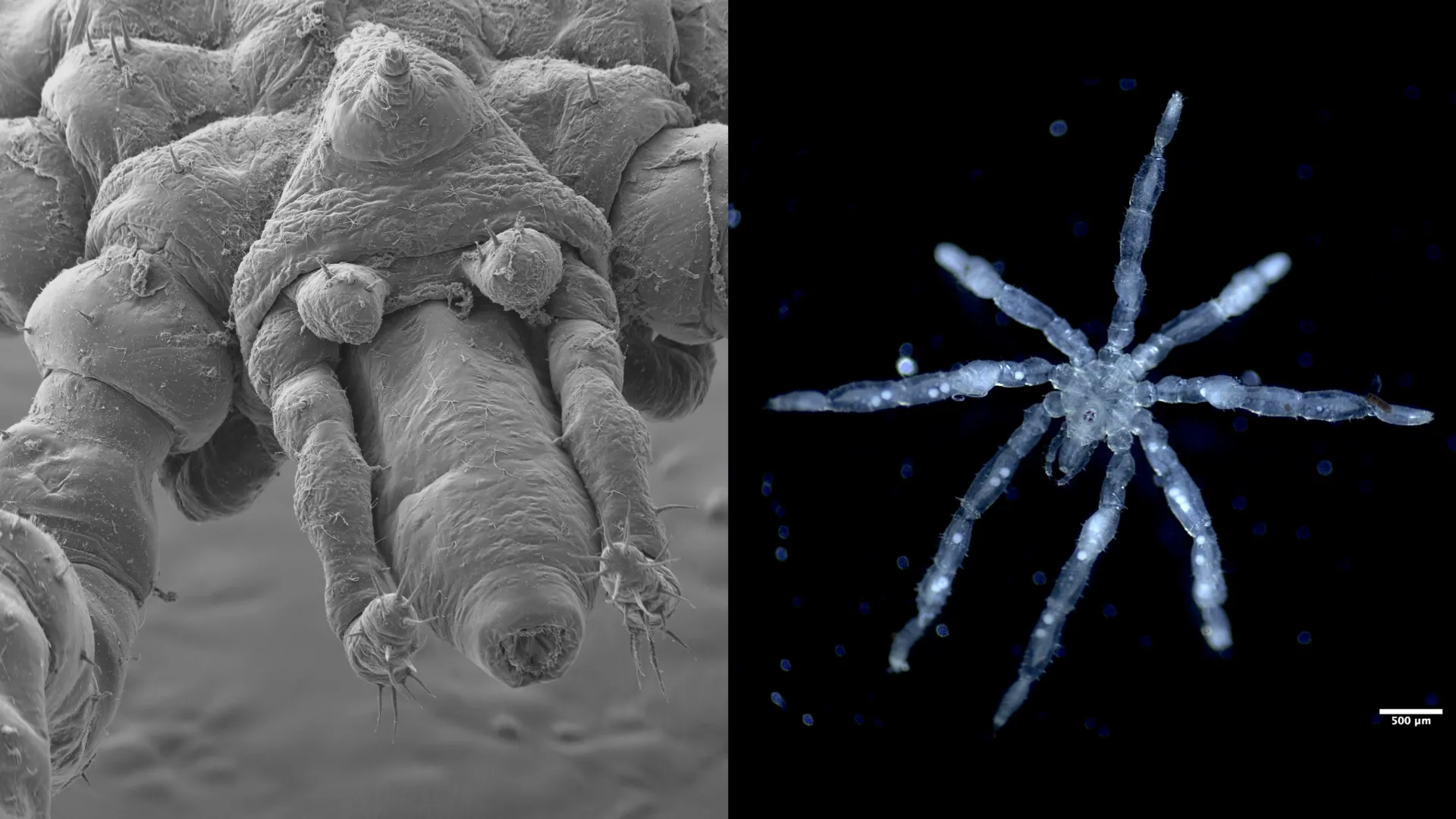
For nearly a century, the biodiversity of the Salish Sea’s benthic zones remained largely stagnant in the scientific record, at least regarding the elusive and biologically bizarre order known as Pantopoda, or sea spiders. This long-standing gap in marine taxonomy has finally been bridged by researchers at the University of British Columbia (UBC). By synthesizing traditional morphological observation with contemporary genomic sequencing, the research team has formally described two previously unknown species of sea spiders. These findings, published in the journal Organisms Diversity & Evolution, represent a significant advancement in our understanding of the Pacific Northwest’s marine invertebrate population.
The identification of these species—Callipallene pilosuspedes and Tanystylum kiixin—serves as a critical baseline for environmental monitoring in a region currently facing the multifaceted pressures of anthropogenic climate change, ocean acidification, and habitat degradation.
A Century of Taxonomic Stasis
The last time a new species of sea spider was formally described from the Salish Sea, the scientific community was operating in a vastly different technological landscape. For decades, researchers have focused heavily on charismatic megafauna—such as orcas, salmon, and seals—often at the expense of the foundational invertebrates that underpin the marine food web.
Cormac Toler-Scott, the lead author of the study and a graduate of UBC’s zoology program, initiated this research to address a fundamental lack of baseline data. "I was interested in how sea spiders are impacted by climate change and human disturbance, because marine invertebrates in the Salish Sea are particularly at-risk, and I couldn’t find anything," Toler-Scott noted. "That’s largely because people don’t know much about what species exist here and what their lifestyle is."
Without a clear taxonomic map, conservationists are effectively flying blind. The study underscores a vital scientific principle: one cannot protect an ecosystem if the individual components—the species—remain unidentified. The lack of basic biological inventory for marine arthropods in the region has long hindered efforts to gauge the resilience of these creatures against rising sea temperatures.
Evolutionary Oddities of the Pantopoda
Sea spiders, which diverged from other arthropods roughly 500 million years ago, represent one of the most eccentric branches on the evolutionary tree. While they share a common ancestry with terrestrial spiders, scorpions, and horseshoe crabs, they have occupied a purely marine niche for half a billion years.
Their physiology is a departure from conventional animal biology. Most notably, they possess a sucking proboscis, a specialized appendage used to feed by extracting bodily fluids from host organisms, such as anemones, hydroids, and sponges. This parasitic lifestyle is particularly common among the smaller, shallow-water species found in the Salish Sea.
Perhaps their most fascinating trait is their respiratory and reproductive strategy. Lacking specialized respiratory organs like lungs or gills, sea spiders breathe through their thin exoskeletons, absorbing oxygen directly through their skin. Furthermore, they exhibit a form of "paternal care" that is rare in the animal kingdom. While the female’s ovaries extend throughout her legs—a unique anatomical feature—it is the male that assumes the burden of parenting. Using specialized, leg-like appendages near their heads known as "ovigers," males collect the eggs, coat them in a protective secretion, and carry the developing embryos until they are ready to hatch.
The Anatomy of the New Discoveries
The research team conducted extensive field operations between September 2023 and August 2024, deploying scuba divers to depths of 18 meters across diverse marine environments, including Quadra Island, Vancouver, Bamfield, and Victoria. The resulting specimens provided the raw material for the study’s comprehensive morphological and genetic analysis.
Callipallene pilosuspedes: The Groomer
The naming of Callipallene pilosuspedes—derived from the Latin for "hairy feet"—is a direct nod to the striking, long, curved spines that characterize its lower limbs. Beyond its hirsute appearance, the species possesses an array of distinctive physical traits. Its eyes are a vivid red, and its mouth is a triangular structure surrounded by sensory tendrils, providing a complex sensory apparatus for navigating its environment.
The species demonstrates high levels of dexterity. Microscopic observation revealed that C. pilosuspedes utilizes its ovigers not only for reproduction but as grooming tools. By wrapping these appendages around its legs, the spider uses comb-like spines to clear debris and parasites from its body, a necessary behavior for a creature living in the often-silt-heavy waters of the Salish Sea.
Tanystylum kiixin: An Ecosystem in Miniature
The second species, Tanystylum kiixin, derives its name from a Huu-ay-aht First Nations village site. The name, pronounced ‘kee-hin,’ is culturally significant, referencing the sound of the ocean waves crashing against the shore.
In contrast to the fastidious nature of C. pilosuspedes, T. kiixin presents a more cluttered biological profile. Its ovigers are significantly less flexible, which appears to impede its ability to groom itself. Consequently, these specimens were frequently found to be covered in sediment, detritus, and an array of commensal parasites. This led researchers to characterize the spider as a living "ecosystem within an ecosystem," where the creature serves as a mobile habitat for microorganisms, a testament to the complex layers of life existing on the seafloor.
DNA Analysis and the Future of Marine Inventory
The research team’s methodology represents a shift toward modern genomic standards in taxonomy. By sequencing the DNA of these specimens, the team has provided a definitive benchmark for future biological surveys. This genetic database allows for the identification of species that might otherwise be overlooked due to superficial similarities, a common pitfall in historical marine taxonomy.
The creation of an identification guide, a central deliverable of the project, will serve as a foundational tool for other researchers working in the Pacific Northwest. However, the study also highlights the sheer volume of work that remains. Despite the successful identification of two new species, the researchers acknowledge that the Salish Sea likely holds a wealth of undocumented biodiversity.
"I only had one field season," Toler-Scott said, "but there’s definitely more diversity out there that we haven’t documented."
Implications for Climate Resilience
The broader implications of this research are tied to the pressing concerns of marine management. The Salish Sea is an interconnected system, and arthropods play a pivotal role in the food chain, serving as both predators and prey. As the region experiences warmer winters and altered nutrient cycling, the stability of these invertebrate populations serves as an early warning system for the health of the entire ecosystem.
The funding provided by the Natural Sciences and Engineering Research Council of Canada (NSERC) for this project underscores the federal government’s increasing focus on foundational marine science. As researchers continue to map the unseen inhabitants of the Salish Sea, the data gathered will be essential for the design of Marine Protected Areas (MPAs) and for predicting how unique creatures—from the red-eyed C. pilosuspedes to the debris-covered T. kiixin—will respond to a rapidly shifting climate.
The discovery serves as a reminder that even in well-studied waters, nature retains the capacity to surprise. While the image of a hairy, red-eyed spider might be jarring to the casual swimmer, these organisms are integral to the silent, persistent processes of the deep. With this research, the scientific community has taken a significant step toward shedding light on the cryptic, ancient, and endlessly complex lives of the Salish Sea’s most unusual residents.

