
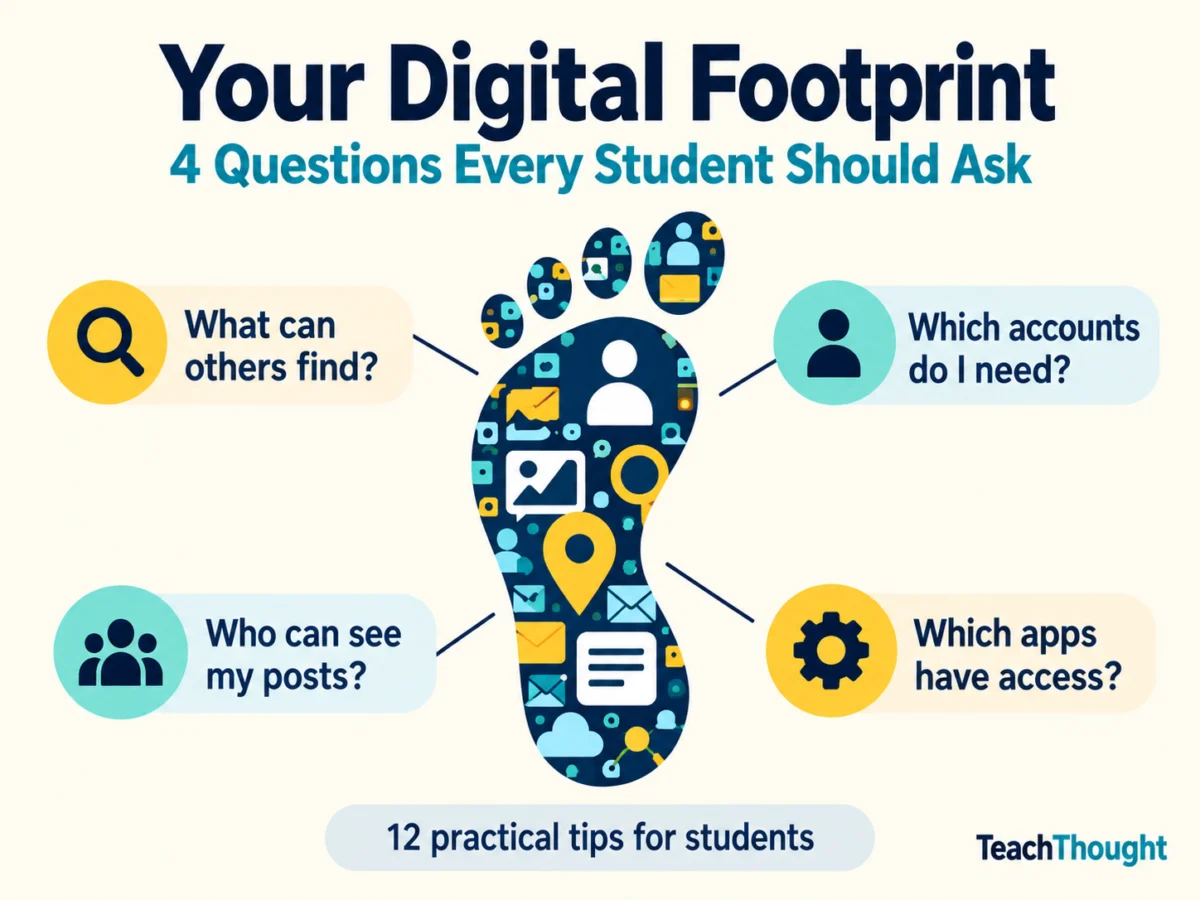
In an era where children and adolescents learn, socialize, and build identities online almost exclusively through connected devices, the concept of the digital footprint has evolved from a theoretical cyber-safety talking point into a critical life skill. Educational institutions, cybersecurity agencies, and child welfare advocates are increasingly emphasizing that a young person’s online legacy—composed of intentional posts, inadvertent metadata, and corporate data collection—can significantly impact future academic admissions, employment opportunities, and personal security. Educators and parents are now tasked with moving beyond generic warnings about internet safety, implementing instead proactive, structured frameworks that empower students to manage their digital identities responsibly.
To address this growing educational imperative, experts in digital citizenship have outlined a comprehensive 12-step roadmap designed to help students audit, curate, and protect their online presence. This initiative arrives at a time when digital exposure begins earlier than ever, necessitating systemic institutional support alongside parental guidance.
The Evolution of Digital Footprints and Modern Vulnerabilities
The term "digital footprint" refers to the comprehensive trail of data left behind by individuals on the internet. This trail is broadly categorized into two types: active and passive footprints. An active footprint consists of data that a user intentionally submits online, such as social media posts, blog comments, photos, and filled-out registration forms. A passive footprint, conversely, is created without the user’s explicit consent or active participation, encompassing browsing history, IP addresses, location data collected by applications, and cookies deployed by tracking servers.
According to data compiled by cybersecurity research firms and consumer protection agencies, the average child is digitally represented by hundreds of images and data points before they even reach their teens—a phenomenon often referred to as "sharenting." As these children transition into middle and high school, they assume direct control over their digital profiles, frequently lacking the long-term perspective required to evaluate the permanence of online actions. Law enforcement and privacy advocates have repeatedly noted that impulsive online behavior, unvetted app permissions, and poor credential management expose minors to risks ranging from identity theft and targeted phishing to cyberbullying and future professional disqualification.
A Structured Approach: The 12 Practical Steps for Students
To combat these vulnerabilities without fostering paranoia, educators recommend initiating structured, low-stress audits and habit-building exercises. Rather than demanding invasive inspections of personal accounts, schools are encouraged to guide students through self-assessment checklists.
1. Conducting the Initial Digital Audit
The foundational step involves encouraging students to perform a private, self-guided inventory of their online footprint. By evaluating public information—such as what appears when searching their own name or preferred usernames—students can gauge their current digital exposure. This includes identifying dormant accounts that still harbor personal data, assessing who can view shared media, and auditing which third-party applications hold active permissions to access personal profiles.
2. Cultivating Digital Citizenship and Empathy
A digital footprint is not merely a record of security vulnerabilities; it is also a mirror of character. Instructors stress that ethical online behavior is a core component of digital citizenship. Students are taught to practice baseline digital etiquette: asking permission before uploading photographs of peers, properly attributing external intellectual work, and contributing constructively to online forums rather than engaging in destructive rhetoric.
3. Rigorous Management of Privacy Settings
Default settings on most consumer platforms prioritize data collection over user privacy. Educational programs now prioritize teaching students how to locate and optimize audience restrictions, tagging approvals, and location-sharing toggles across all utilized platforms. Cybersecurity experts emphasize that while private accounts restrict casual browsing by strangers, they do not prevent authorized connections from capturing, screenshotting, or redistributing sensitive material.
4. Account Consolidation and Pruning
Over time, users accumulate dozens of unused accounts linked to forgotten email addresses. These legacy portals represent persistent security liabilities. Students are advised to systematically catalog active services, archive necessary data, and formally close accounts that no longer serve a purpose. Crucially, educators clarify that deleting an application from a mobile device does not terminate the underlying server-side account.
5. Strategic Pre-Posting Evaluation
Impulse control remains one of the greatest challenges for adolescent internet users. The "pause before posting" rule encourages students to evaluate the permanence of residential addresses, schedules, real-time locations, and background details in photographs—such as school emblems, street signs, or sensitive documents. The guiding metric provided to students is straightforward: "Would I be comfortable if this reached an audience far beyond my intended recipients?"
6. Fortifying Credentials with Modern Authentication
Weak credentials remain an entry point for unauthorized account access. Modern cybersecurity guidelines instruct students to utilize distinct, complex passwords for every critical platform, supported by password management software and multi-factor authentication (MFA) wherever available. Educational institutions stress compliance with internal IT policies while aligning external practices with federal cybersecurity recommendations.
7. Auditing Third-Party App Permissions
The convenience of "Log in with Google" or "Sign in with Apple" often masks significant data-sharing agreements. When students link existing accounts to external services, they frequently grant those third parties expansive access to personal data. Routine audits of connected apps—alongside device-level permissions governing cameras, microphones, contacts, and geolocation—help minimize unnecessary data exposure.
8. Compartmentalizing Communications via Secondary Email Addresses
To mitigate the risks of spam, data breaches, and unwanted promotional tracking, privacy advocates suggest that students maintain a secondary, well-secured email address dedicated exclusively to optional app sign-ups and non-critical registrations. Meanwhile, primary, professional-grade email addresses should be reserved for academic correspondence, college applications, and formal communications.
9. Decoding Terms of Service and Privacy Policies
While corporate privacy policies are notoriously dense, teaching students to identify key clauses regarding data retention, third-party sharing, and user rights fosters critical digital literacy. Classrooms increasingly utilize simplified excerpts from actual privacy policies—such as institutional disclosures—to train students to look beyond the user interface and understand the underlying business model of free applications.
10. Recognizing the Finality of Transmission
A foundational rule taught in digital safety curricula is that sending is synonymous with publishing. Digital media sent to an individual can be instantly duplicated, screenshotted, or forwarded. Students learn that deletion is rarely absolute. In the event of a misstep, response protocols focus on mitigation: removing the content promptly, requesting the cooperation of secondary sharers, and seeking trusted adult intervention when situations escalate.
11. Understanding Passive Data Collection
Beyond visible social media profiles, algorithms continuously record search queries, viewing habits, and navigational metadata. Educational modules help students differentiate between public-facing profiles and the internal data aggregation performed by search engines, web browsers, and operating systems. Familiarizing students with built-in activity controls enables them to manually review, pause, or purge stored behavioral data.
12. Deploying Privacy Tools Purposefully
Finally, students are introduced to technical privacy enhancements—such as browser privacy settings, tracker blockers, and virtual private networks (VPNs)—with an emphasis on understanding their specific functions and limitations. Educators clarify that while specialized tools can obscure network traffic or block analytical trackers, no single software application can rectify poor posting habits or erase data already shared with third-party platforms.
Broader Implications and Institutional Response
As schools integrate these 12 principles into standard curricula, educational researchers are evaluating the broader societal impacts of early digital literacy. Analysts note that proactive digital footprint management correlates strongly with reduced rates of cyberbullying, enhanced academic integrity, and improved preparedness for collegiate and professional environments.
Furthermore, consumer protection agencies and legislative bodies continue to monitor the collection of minors’ data by technology conglomerates, pointing toward potential regulatory shifts that may mandate stricter default privacy settings for younger users. However, policymakers universally agree that regulatory frameworks alone are insufficient without foundational education. By transforming digital footprint maintenance from a reactive panic response into a manageable, routine habit, educators are equipping the next generation with the critical thinking skills required to navigate an increasingly interconnected world safely and responsibly.

