
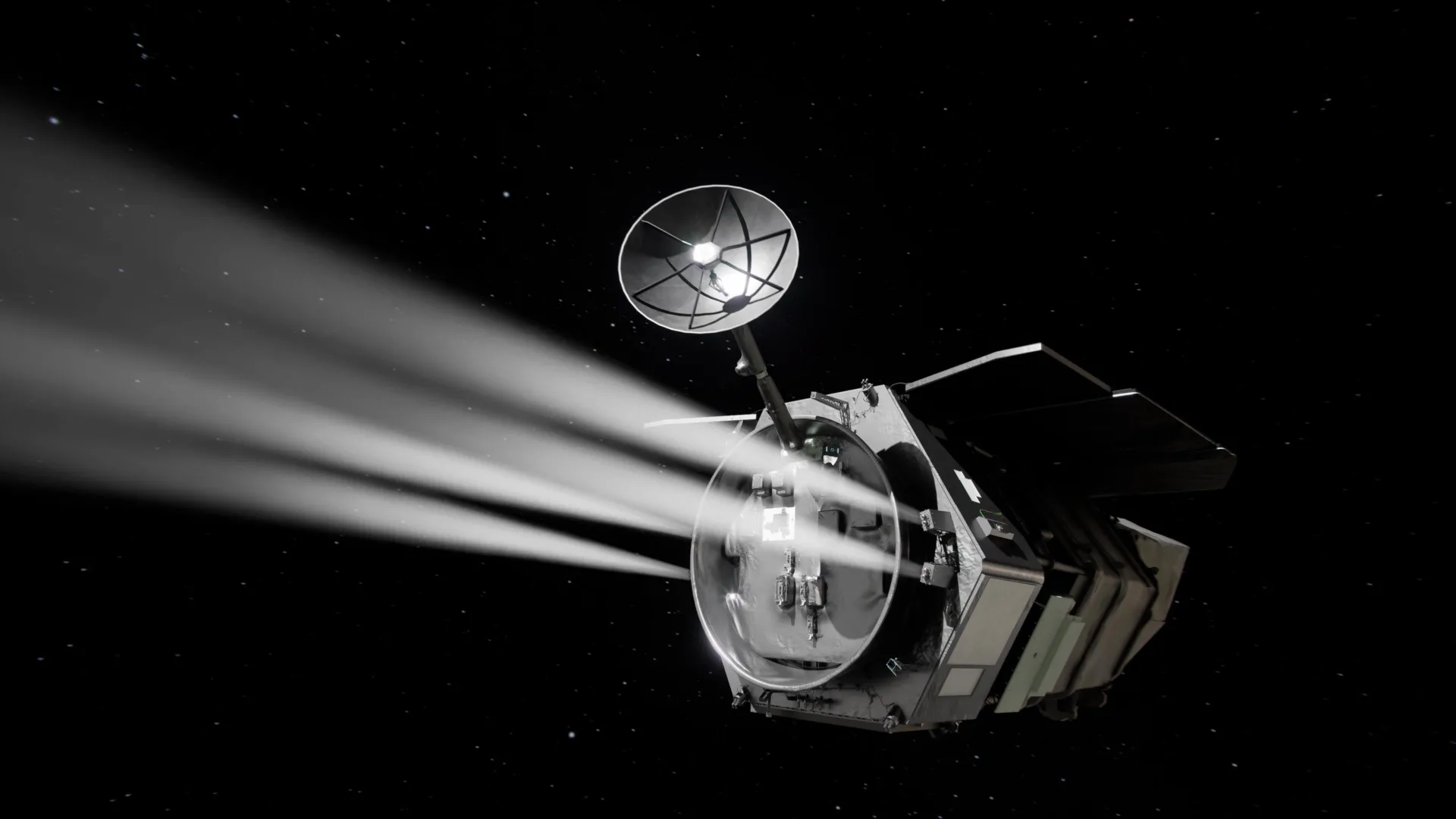
The Nancy Grace Roman Space Telescope, NASA’s next flagship observatory designed to unlock the mysteries of dark energy and exoplanet demographics, has embarked on its mission with a level of efficiency that has fundamentally altered its operational outlook. Originally conceived as a 10-year mission, the observatory is now projected to sustain scientific operations for at least 22 years. This remarkable extension is the result of a synergistic combination of precise launch dynamics, significant mass-management strategies during the engineering phase, and an exceptionally accurate initial course correction maneuver.
A New Horizon for Space Observation
The Roman Space Telescope represents a monumental leap in infrared astronomy. Named after the "Mother of Hubble," Dr. Nancy Grace Roman, the observatory is tasked with conducting wide-field surveys of the cosmos. Its primary mission goals include measuring the expansion rate of the universe, probing the nature of dark energy, and performing a census of planets orbiting distant stars.
While the primary mission was designed for five years, with a planned five-year extension, the recent performance metrics suggest that the spacecraft’s propellant—the primary life-limiting consumable—will last significantly longer than the initial 10-year budget allowed. In the vacuum of space, where resupply is currently impossible for observatories stationed at the Sun-Earth Lagrange Point 2 (L2), the fuel-to-longevity ratio is the ultimate determinant of a mission’s scientific legacy.
Chronology of a Precision Launch and Deployment
The timeline leading to this fuel windfall began long before the launch vehicle cleared the tower. During the integration and testing phase at NASA’s Goddard Space Flight Center, engineers maintained a conservative propellant budget, assuming a maximum spacecraft mass of 21,605 pounds (9,800 kilograms). This "worst-case scenario" planning is standard in aerospace to ensure that the mission can meet its delta-v (change in velocity) requirements even if the spacecraft proves heavier than anticipated.
However, as the final assembly concluded, the Roman Space Telescope tipped the scales at just 17,760 pounds (8,056 kilograms). This significant reduction in mass created a dual benefit: the spacecraft required less energy to maneuver, and there was physical room within the propellant tanks to load extra fuel that would have otherwise been deemed unnecessary for a 10-year mission.
On August 31, the mission team executed the first mid-course correction (MCC-1). The maneuver was designed to fine-tune the observatory’s trajectory toward the L2 point, a stable gravitational "parking spot" located roughly one million miles from Earth. The results were stellar: the burn was executed with more than 99% accuracy, consuming a mere 40 pounds (18 kilograms) of propellant. This was a stark contrast to the 441 pounds (200 kilograms) originally allocated for the maneuver, effectively conserving over 400 pounds of fuel in a single operation.
Technical Breakdown: The Science of Fuel Savings
The math behind the mission extension is rooted in the fundamental laws of orbital mechanics. Propellant in space is not merely for navigation; it is the currency of longevity.
- Mass-Induced Efficiency: Because the spacecraft launched at 17,760 pounds rather than the budgeted 21,605, the propulsion system encountered less resistance to acceleration. This "mass-budget gap" allowed engineers to fill the tanks to their maximum capacity. The extra fuel added at launch is estimated to contribute approximately four years of additional mission life.
- Execution Accuracy: The 99% accuracy of the MCC-1 maneuver means that the trajectory error—the "drift"—is minimal. In orbital navigation, initial errors must be corrected later with larger, more fuel-intensive burns. By getting the trajectory right the first time, the team saved an estimated four years of operational life.
- Future Projections: The second mid-course correction (MCC-2), scheduled for later this month, is now expected to be significantly smaller than originally planned. This "compounding interest" effect—where one efficient maneuver makes all subsequent maneuvers easier—is projected to save another four years of fuel.
Official Perspectives from NASA Goddard
The sentiment at NASA’s Goddard Space Flight Center is one of professional triumph. Jamie Dunn, center director at Goddard, emphasized that the extension is a direct result of institutional excellence. "As a result of exquisite planning by our orbital dynamics team, brilliant execution by the operations team, and a precise launch from SpaceX, Roman has fuel for at least 22 years of potential science operations," Dunn noted.
Alison Rao, the Roman propulsion lead at NASA Goddard, provided insight into the decision-making process that allowed for the surplus. "A spacecraft’s mass changes throughout the design and build process, so we base the propellant budget on a set maximum value so we won’t come up short," Rao explained. "We track the propellant needed based on actual mass throughout integration and testing as well, to make sure we have wiggle room. Since Roman’s was lower than we budgeted for, we were able to fill the propellant tanks to their capacity rather than only filling them as much as we needed to for the 10-year requirement."
Implications for Future Scientific Discovery
The extension of the Roman mission from 10 years to over two decades has profound implications for the scientific community. The mission is designed to provide a panoramic view of the universe, and time is the most valuable variable in astronomical observation.
- Long-Baseline Studies: With two decades of operational life, Roman can perform long-term monitoring of celestial phenomena. This includes the observation of supernovae over much longer timescales and the detection of more distant, fainter exoplanets that require prolonged exposure times to identify.
- Synergy with Other Observatories: The extended lifetime ensures that Roman will overlap with future missions, such as the next generation of large-scale ground-based observatories and potential follow-up space missions. This allows for cross-calibration and multi-messenger astronomical observations that were not possible under the original 10-year constraint.
- Legacy Data: The volume of data collected will increase exponentially. Scientists will have a vastly larger dataset to search for rare cosmic events, such as microlensing signals from elusive black holes or evidence of ancient galactic collisions.
Maintaining the Orbit: The L2 Advantage
Once the Roman Space Telescope completes its journey, which is expected to take approximately 100 days from launch, it will enter a halo orbit around the L2 point. In this environment, the telescope will be shielded from the thermal interference of the Sun, Earth, and Moon.
Maintaining this orbit is a relatively low-energy affair, requiring only periodic station-keeping maneuvers—essentially small "nudges" to keep the telescope in its intended path. These maneuvers are scheduled to occur roughly once every 28 days. Because the initial trajectory was so precise, the fuel requirement for these ongoing maneuvers is also expected to be lower than the initial conservative estimates, further bolstering the mission’s longevity.
Conclusion
The Roman Space Telescope’s journey began with a remarkable display of precision, effectively doubling its potential lifespan before it even reached its permanent destination. By successfully navigating the complexities of mass budgeting and orbital dynamics, NASA has secured a generational scientific asset. As the telescope prepares to settle into its permanent home at L2, the global scientific community looks forward to two decades of unprecedented insights into the dark side of the universe, made possible by a few hundred pounds of saved propellant and a commitment to operational excellence. The Roman Space Telescope stands as a testament to the fact that in space exploration, meticulous planning is the foundation upon which scientific history is built.

