
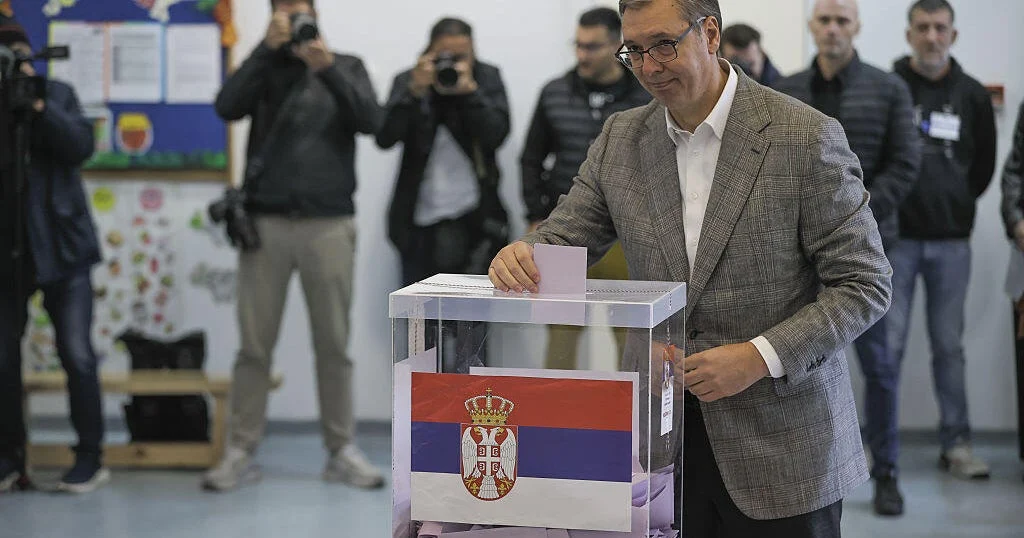
The political landscape of the Western Balkans underwent a seismic transformation on Sunday as Aleksandar Vucic, Serbia’s long-serving and formidable leader, conceded defeat in a high-stakes snap parliamentary election. Following 14 years of holding virtually absolute power, Vucic and his ruling right-wing Serbian Progressive Party (SNS) were unseated by a diverse, grass-roots, student-led opposition movement that managed to galvanize the electorate in unprecedented numbers.
Speaking to a somber gathering of supporters at his party’s election night headquarters roughly an hour and a half after polls closed, Vucic acknowledged the projected results. He stated that his opponents—running under the umbrella of the youth-backed Students’ List—were on track to secure between 135 and 140 seats in the 250-member National Assembly. Meanwhile, Vucic’s SNS party is projected to retain approximately 105 seats.
"The Students’ List has won," Vucic told his followers, before attributing the defeat to external factors, pointing fingers at independent domestic media outlets, alleged interference from unnamed European countries, and what he characterized as an "American deep state." According to figures provided by Vucic during his concession speech, the SNS captured roughly 1.7 million votes, while the opposition Students’ List amassed an impressive 2.2 million ballots.
The announcement triggered immediate, jubilant celebrations across Belgrade and other major Serbian cities. Crowds of citizens flooded the streets, sounding car horns, cheering, and chanting "Aleksandar is gone" in a cathartic release of tension that had accumulated over years of mounting political friction.
The Catalysts of Change: The Novi Sad Tragedy and Systemic Grievances
The downfall of Vucic’s administration did not happen overnight; rather, it was the culmination of mounting public anger that reached a boiling point in late 2024. A defining moment for the anti-government movement occurred when 16 people were killed due to the catastrophic collapse of a concrete canopy at a railway station in the northern city of Novi Sad.
The tragedy ignited a national firestorm. Citizens, particularly university students, blamed the disaster on systemic corruption, rampant cronyism, and lax oversight during hurried renovation projects overseen by the state. What began as localized grief and anger quickly morphed into a sustained, nationwide anti-corruption movement. For two years, students organized demonstrations, demanding accountability, transparency, and democratic reforms.
Despite controlling nearly all mainstream media outlets and framing himself as an indispensable statesman capable of steering Serbia through geopolitical storms, Vucic found himself unable to suppress the momentum of the youth movement. To outmaneuver traditional political labeling, the newly formed Students’ List adopted an unconventional strategy: none of the university students who shaped the movement actually ran for office. Instead, their candidate pool comprised a diverse coalition of little-known experts, farmers, athletes, artists, and civil society professionals. This non-partisan approach resonated deeply with a weary electorate desperate for a return to solidarity, institutional integrity, and democratic governance.
A Tense Election Day Marked by Massive Turnout and Irregularities
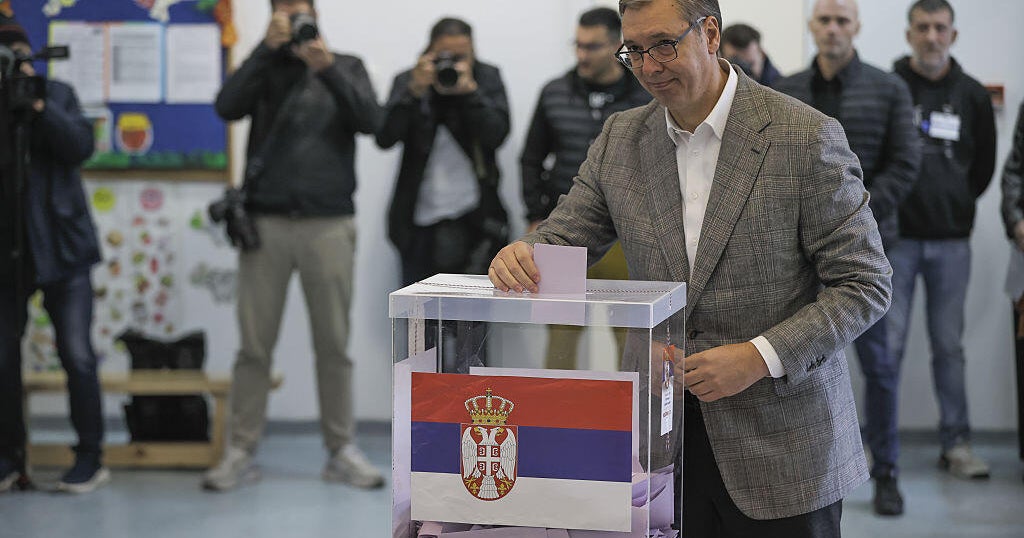
Sunday’s vote was characterized by unprecedented civic engagement. Independent election monitors predicted that overall voter turnout could approach 70%—a level of participation not witnessed in Serbia since the historic ouster of Slobodan Milosevic in 2000.
Long queues snaked around polling stations both within Serbia and internationally. Members of the Serbian diaspora faced logistical hurdles, with some forced to cast their ballots in the dead of night due to authorities tying voting hours strictly to local Serbian time. The heavy voter turnout reflected the high stakes of the election, which pitted a deeply entrenched regime against a coalition demanding fundamental change.
The atmosphere in Belgrade throughout election day was exceedingly tense. Security measures were visibly heavy; riot police cordoned off the central district surrounding the state election commission headquarters, special police vehicles were stationed near public parks where pro-Vucic loyalists had maintained a continuous camp for over a year, and groups of black-clad men were reported congregating across various strategic locations in the capital.
Independent election monitors documented numerous irregularities during the voting process. Reports surfaced of voters photographing their ballots—a tactic often used to prove compliance under duress—alongside attempted vote-buying schemes. These incidents underscored ongoing international concerns regarding the fairness of the electoral environment. Both local watchdogs and international observers had repeatedly criticized the pre-election period, citing severe government dominance over media channels, state surveillance of activists, cyberattacks against independent platforms, and sporadic violence against journalists and political opponents during municipal elections earlier in the year.
Geopolitical Implications and Broader Regional Echoes
The electoral defeat of Aleksandar Vucic carries profound implications not only for Serbia’s domestic trajectory but also for the wider European geopolitical landscape. Over his 14-year tenure, Vucic maintained a complex balancing act between courting European Union membership and maintaining close ties with traditional allies such as Russia, whose President Vladimir Putin had openly endorsed his leadership. Vucic’s recent tactical pivot—resigning from the presidency last month specifically to lead his party’s parliamentary campaign—ultimately failed to shield him from the winds of political change.
The European Union, which has long kept a watchful eye on Serbia’s democratic backsliding as a candidate nation for accession, will likely view the transition of power as an opportunity to recalibrate diplomatic relations. However, the incoming administration will face immense structural challenges, ranging from economic reform and institutional repair to navigating delicate regional disputes in the Balkans.
Furthermore, the triumph of the Serbian student movement mirrors parallel political shifts across Central and Eastern Europe. Political analysts have drawn direct comparisons between the events in Belgrade and the recent electoral defeat of a long-standing autocratic leader in Hungary, where high youth mobilization played a critical role in unseating Viktor Orbán after 16 years in power.
As Serbia prepares for a historic transfer of legislative power to the youth-backed opposition, the events of October 2026 serve as a stark reminder of the capacity of grassroots civil movements to dismantle entrenched authoritarian structures through democratic means. The new parliament, once seated, will face the monumental task of rebuilding public trust, dismantling systemic corruption, and steering the Balkan nation toward a more open and transparent future.

